

NearSight Biosciences Submits IPO Prospectus Following Breakthrough mμSORS Non-Invasive Glucose Monitor Published in Nature Metabolism
On February 5, 2025, marking a strong start in the Year of the Snake (Yisi), the non-invasive blood glucose monitoring technology and its clinical results—jointly developed by NearView Technology, the Department of Endocrinology at Ruijin Hospital affiliated with Shanghai Jiao Tong University School of Medicine, the Shanghai Institute of Endocrine and Metabolic Diseases, the Department of Dermatology at Ruijin Hospital affiliated with Shanghai Jiao Tong University School of Medicine, the University of Shanghai for Science and Technology, the Shanghai Institute of Microsystem and Information Technology of the Chinese Academy of Sciences, and the Medical Chip Research Institute at Ruijin Hospital affiliated with Shanghai Jiao Tong University School of Medicine—were officially published in the prestigious international journal Nature Metabolism. This milestone signifies that an accurate and universal non-invasive blood glucose solution is gradually becoming a reality.
Non-invasive blood glucose monitoring, which impacts the quality of life for hundreds of millions of diabetes patients worldwide and has the potential to revolutionize diabetes management, is a highly promising field. Research in this area dates back to the 1990s at the Massachusetts Institute of Technology (MIT). Over the past few decades, countless teams and enterprises both domestically and internationally have dedicated themselves to this endeavor, including industry leaders such as Apple, Samsung, and Huawei. However, due to significant physiological variations among individuals and numerous environmental interference factors affecting human activity, accuracy remains an insurmountable bottleneck despite substantial investments and diverse technological approaches attempted by various parties. Generalizability also presents a formidable obstacle. Consequently, developing a non-invasive blood glucose monitoring solution that meets medical-grade standards is undoubtedly fraught with significant challenges.
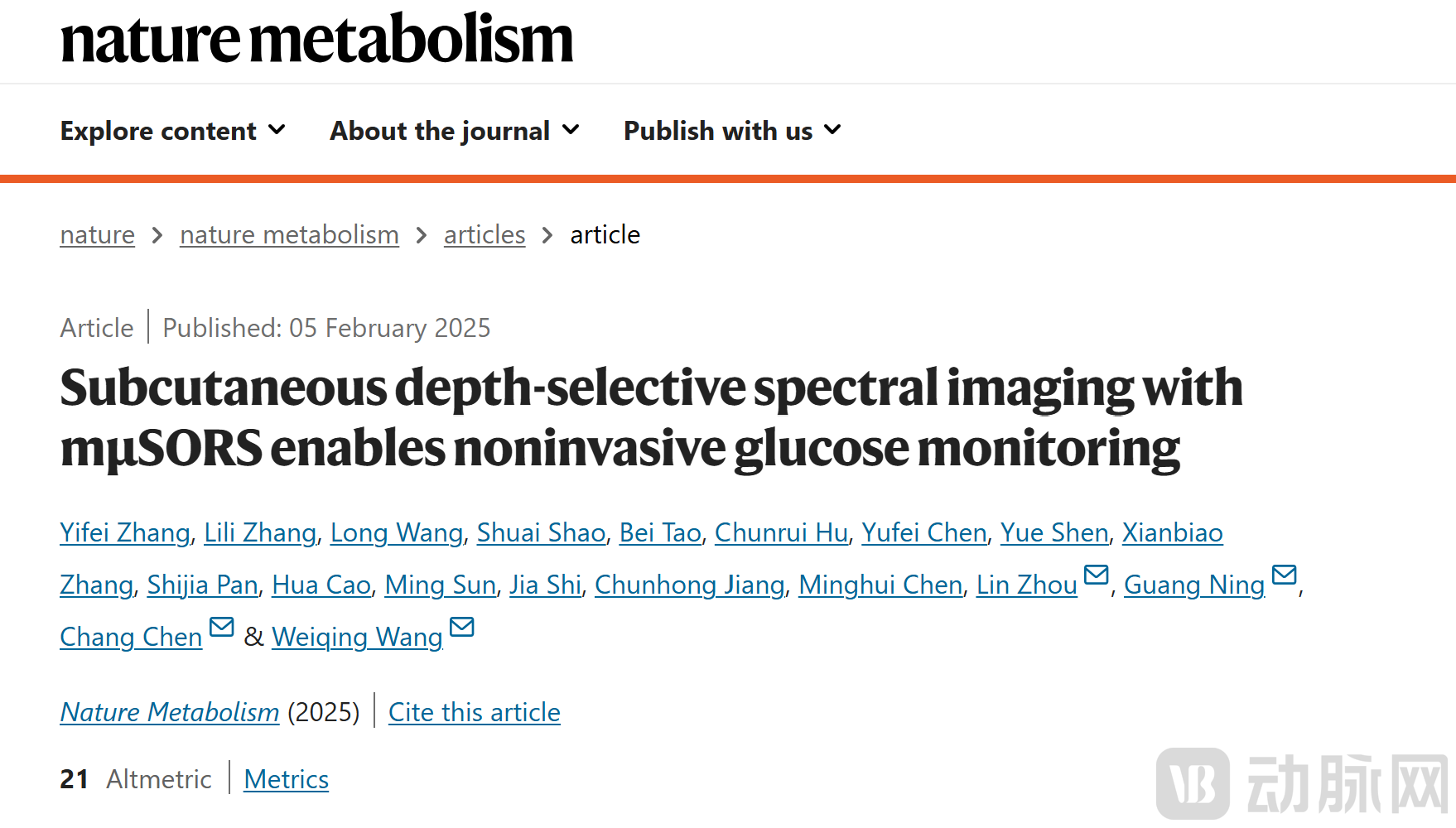
At 6:00 p.m. on the first working day after the 2025 Spring Festival, the research paper titled “Subcutaneous depth-selective spectral imaging with mμSORS enables non-invasive glucose monitoring,” published in collaboration between Shanghai NearView Technology Co., Ltd. and Professor Wang Weiqing’s team from the Department of Endocrinology at Ruijin Hospital, Shanghai Jiao Tong University School of Medicine, was officially released online on the Nature publisher’s website in the top-tier journal Nature Metabolism.
Paper Link:https://www.nature.com/articles/s42255-025-01217-w
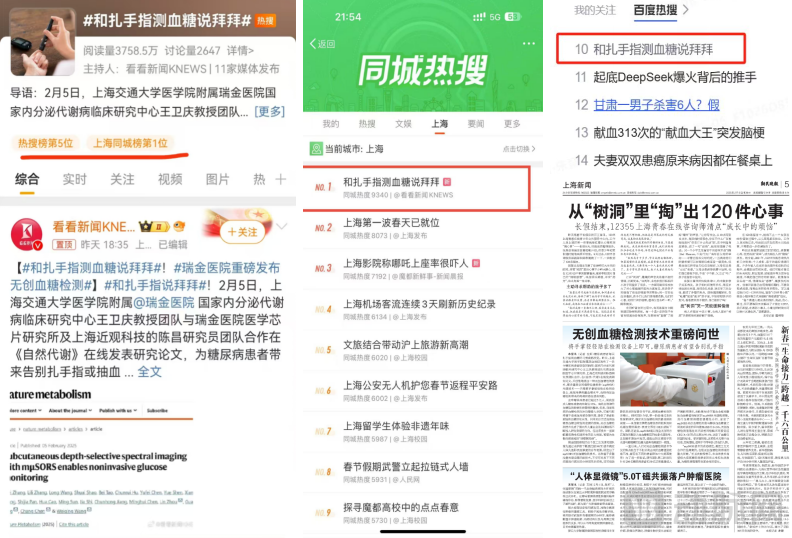
Ruijin Hospital’s official WeChat account released a related report at the earliest opportunity: “Say Goodbye to Finger Pricks! Ruijin Hospital Makes a Major Announcement: Non-Invasive Blood Glucose Monitoring Is Here”, instantly sparking widespread attention and being reposted and reported by multiple media platforms. Related topics surged to the top of local city searches and into the top ten trending lists on Baidu and Weibo within a single day.
During the review process, Dr. Christoph Schmit, Editor-in-Chief of the journal; Professor Andreas Birkenfeld, a Raman spectroscopy expert responsible for the review; and diabetes specialists Professor Ioan Notinghe and Professor Eric Renard, among other reviewers, separately gave high praise to this work, describing it as having “broad readership appeal, novel optical system design, representing a significant breakthrough by achieving the first non-invasive direct detection in humans, and featuring a large volume of clinical data with convincing results.”
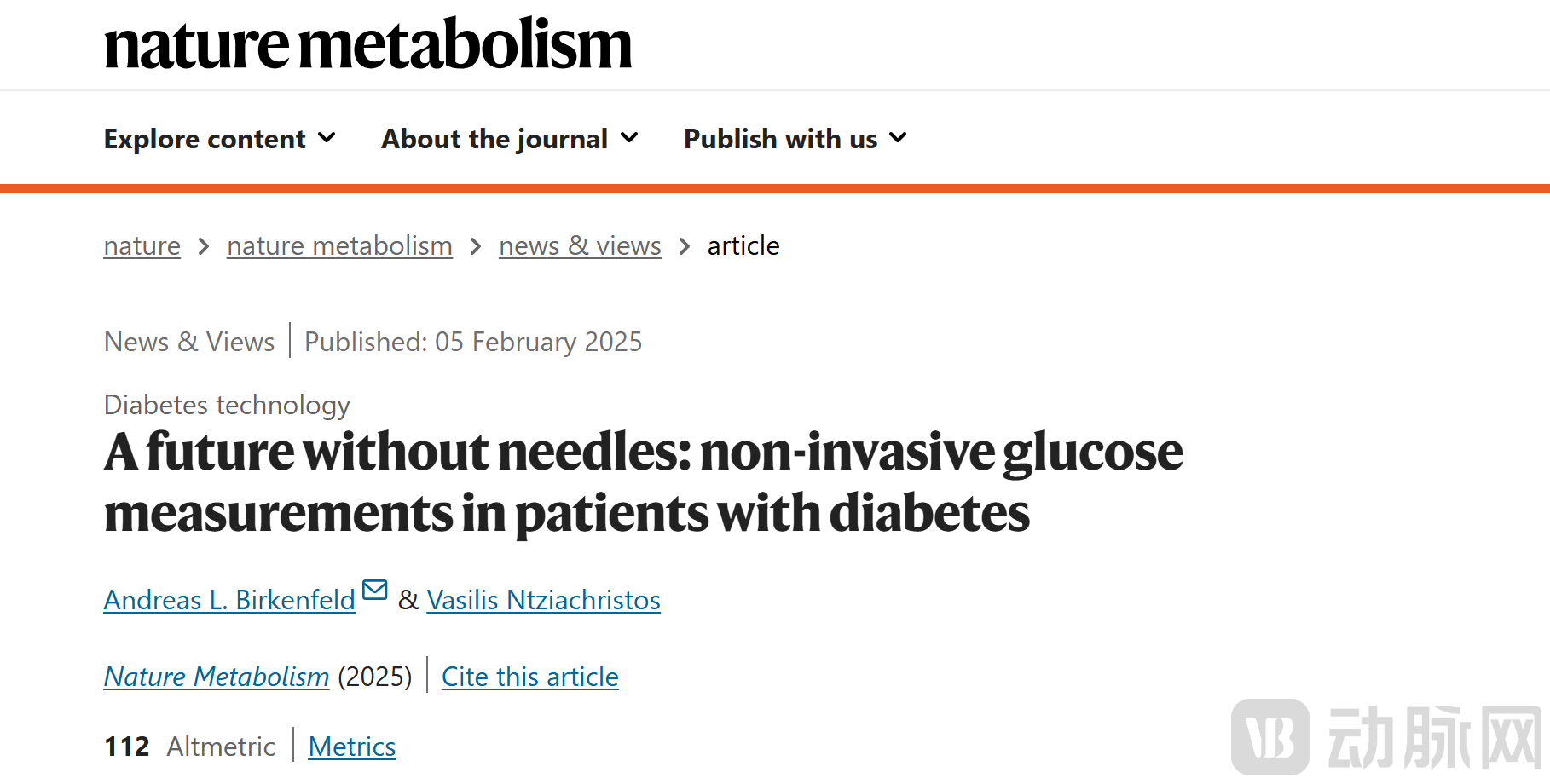
On the same day, the News & Views section of Nature Metabolism published an expert commentary co-authored by Professor Andreas L. Birkenfeld from the German Center for Diabetes Research and Professor Vasilis Ntziachristos from the Technical University of Munich, titled “A future without needles: non-invasive glucose measurements in patients with diabetes.” The authors argue that the primary challenge in achieving non-invasive glucose monitoring lies in the fact that human skin acts as a complex barrier; signals excited across various skin layers are typically mixed, creating a bottleneck in the accuracy of traditional transdermal optical methods for detecting blood glucose levels. In contrast, the depth-selective mμSORS technology proposed through Chinese medical-engineering collaborative research can selectively probe Raman spectra in the dermal vascular region, thereby significantly improving the accuracy of non-invasive blood glucose detection in humans. Extensive clinical data sufficiently confirm the feasibility of this principle, marking a compelling major step forward in the arduous journey toward needle-free, non-invasive glucose monitoring. (The full translation of the commentary is appended below.)
Expert Commentary Paper Link:https://www.nature.com/articles/s42255-025-01221-0
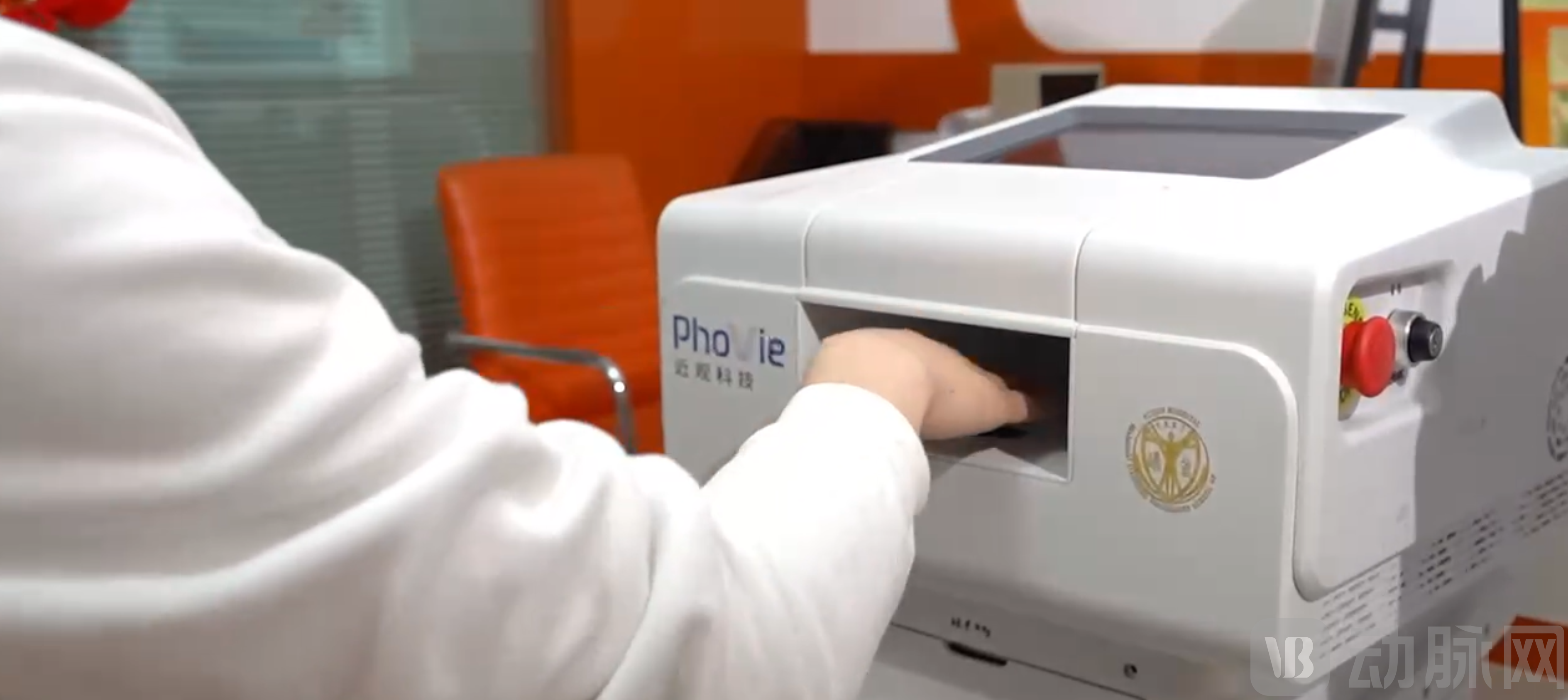
Shanghai Jinguang Technology Co., Ltd. (hereinafter referred to as “Jinguang Tech”) specializes in the research and development of non-invasive blood glucose monitors based on spectroscopic technology. The currently reported depth-selectable multiple micro-spatial offset Raman spectroscopy imaging (mμSORS) represents an internationally leading solution for non-invasive blood glucose monitoring. Jinguang Tech has developed a product prototype based on the technical principles demonstrated in the paper. During use, simply place the thenar eminence of either hand against our non-invasive blood glucose monitor for a few minutes to achieve precise blood glucose measurement, ensuring a completely painless and non-invasive process!
Leveraging its exceptional versatility and convenience, this prototype achieves the goal of universal, on-demand testing for multiple users. It eliminates the need for personal data entry or cumbersome finger-prick blood calibration; simply placing the palm against the device for a few minutes enables rapid and accurate blood glucose measurement. Notably, it is suitable for individuals of all ages, skin tones, and body types, meeting the application needs of high-traffic settings such as hospitals, communities, and elderly care facilities. This innovation promises to make diabetes management simpler, easier, and safer!
Over the past year, the product prototype has been evaluated and experienced by domestic and foreign dignitaries, as well as leaders and experts from leading enterprises in the academic and industrial ecosystems. To date, hundreds of individuals have completed blood glucose monitoring trials and provided feedback. The product has been featured by major media outlets including CCTV’s Xinwen Lianbo (News Broadcast), Chao Wen Tianxia (Morning News), Shanghai Television, First Financial Daily, and Oriental Finance, thereby raising public awareness and attention toward blood glucose health and garnering widespread anticipation from various sectors.
The development of this product integrates cutting-edge technologies from multidisciplinary fields, including clinical medicine, medical engineering, and data algorithms.
Professor Wang Weiqing, an endocrinology expert at Ruijin Hospital and the final corresponding author of the research paper, stated“The successful development of the mμSORS non-invasive blood glucose monitoring technology is a classic example of interdisciplinary collaboration between medicine and engineering, as well as a significant breakthrough in the field of non-invasive blood glucose monitoring. We believe that this technology will greatly improve compliance and quality of life for diabetic patients, bringing revolutionary changes to diabetes management.”
Dr. Mei Zhongtao, CEO of Jinguan Technology and a medical device expert, stated“As a Class III medical device, non-invasive glucose monitors must undergo a lengthy and rigorous approval process by the National Medical Products Administration (NMPA), which further increases the challenges of development. To ensure the safety and efficacy of our device, the technical team at Jinguan Technology collaborated closely with the clinical team at Ruijin Hospital between 2022 and 2024. Through three clinical studies, we collected over 300,000 sets of μSORS spectral data—calibrated against gold-standard venous blood glucose measurements—from 265 subjects for algorithmic analysis and modeling. Although this process was time-consuming and costly, we have remained committed to a patient-centric approach in our research and development.”
Dr. Zhou Lin, an algorithm expert at Jinguan Technology and one of the co-corresponding authors of the research paper, stated: “Our algorithmic analysis of the data obtained from clinical studies was conducted entirely on independent subjects. The mean absolute relative difference (MARD) between the readings of the mμSORS non-invasive blood glucose monitor and venous blood glucose values was only 14.6%, with 99.4% of the readings falling within the clinically acceptable zones (Clarke Error Grid Zones A+B). These results were achieved without the need for calibration or modeling using individual-specific data, providing robust evidence of the generalizability and accuracy of this non-invasive blood glucose monitoring technology, and serving as the strongest proof that this non-invasive glucose meter is ready for practical application.”
Overall, compared with existing non-invasive blood glucose monitoring technologies or products, our developed non-invasive glucometer offers three major advantages: multi-user compatibility, no need for individual data calibration, and accuracy that meets international standards.
Chen Chang, Chairman and Chief Scientist of Jinguan Technology and a researcher (one of the co-corresponding authors of the research paper), stated: “Over the past few decades, academic teams and enterprises of all sizes, both domestically and internationally, have made relentless efforts in the field of non-invasive blood glucose monitoring. Related research has remained a hot topic in the technology sector, often regarded as the ‘Mount Everest’ of biosensing that many strive to conquer, with various technical approaches emerging continuously. Ideal non-invasive blood glucose monitoring should be rapid and accurate, calibration-free, easy to use, and cost-effective. However, due to the complexity of the human body—including individual variability, physiological fluctuations within an individual over time, and molecular-level complexity of tissues—achieving non-invasive blood glucose monitoring is extremely challenging. Transdermal detection represents the most direct approach, but it must overcome two key scientific challenges: 1) precision in penetrating to the appropriate subcutaneous depth, and 2) specificity for directly identifying glucose molecules. We have accumulated ten years of technological research in addressing these scientific issues, and thanks to the three-year full support from Professor Wang’s clinical research team in the Department of Endocrinology at Ruijin Hospital, we have successfully completed the systematic validation of the scientific principles, thereby paving the way toward non-invasive blood glucose monitoring. With the fundamental principles resolved, the next steps involve miniaturization and cost reduction, which will require time and resources. We are continuing our efforts.”
Chip technology enables high-precision, large-scale, and low-cost manufacturing, serving as a powerful pathway for bringing large medical devices or scientific instruments into the consumer electronics market. Jinguan Technology, a cross-disciplinary high-tech enterprise that integrates integrated circuit (IC) chip technology with biotechnology, is currently raising additional funds to develop portable, and even wearable, non-invasive glucose monitors based on silicon photonics chip technology. In the future, it aims to provide patients with more affordable and miniaturized solutions for non-invasive glucose management. The scientific principle underlying this technological approach stems from another breakthrough by Jinguan Technology, titled “Scalable Miniature On-chip Fourier Transform Spectrometer For Raman Spectroscopy,” with preliminary results already published on arxiv.org.
https://arxiv.org/abs/2411.01196
For more information, please follow the Photonic View official account or contact us via email at public@photonicview.com.
Appendix: Full Translation of Expert Commentary in Nature Metabolism
Saying Goodbye to Needles: The Era of Non-Invasive Blood Glucose Monitoring for Diabetes Patients Has Arrived
Andreas L. Birkenfeld & Vasilis Ntziachristos
Human skin is a sophisticated and complex barrier, characterized by distinct structural layers and diverse compositions. However, this complexity poses significant challenges for non-invasive detection based on conventional optical techniques. When optical signals penetrate the skin, the mixed signals excited from various layers are difficult to separate, hindering accurate non-invasive blood glucose monitoring. The depth-selective mμSORS technique proposed in this study overcomes the limitations of traditional optical methods in penetrating complex skin layers by precisely detecting Raman spectra from the cutaneous vascular region, thereby significantly improving the accuracy of non-invasive blood glucose detection.
Since 1999, continuous glucose monitoring (CGM) technology has revolutionized diabetes management, evolving from bulky professional devices to finger-prick blood sampling, and now to minimally invasive real-time monitoring devices utilizing microneedle technology, significantly enhancing patient experience. However, these microneedle-based devices measure glucose in the interstitial fluid rather than in the blood. This measurement approach presents certain limitations: first, when blood glucose levels fluctuate, there is a time lag for glucose to diffuse from capillaries into the interstitial fluid, resulting in delayed readings; second, fluctuations in interstitial fluid volume caused by changes in hydration pose challenges to the quantitative accuracy of glucose concentration measurements. Therefore, despite significant advances in CGM technology, there remains substantial room for improvement in blood glucose monitoring techniques.
The next era of CGM is non-invasive blood glucose monitoring. In recent years, this field has been extensively explored, with Raman scattering spectroscopy regarded as the most promising technique for non-invasive blood glucose monitoring due to its ultra-high molecular specificity (e.g., for glucose). However, compared to photoacoustic technology, which can resolve depth information with high resolution through time-gating techniques, optical methods—including Raman spectroscopy—typically collect averaged signals from the excited region. This results in the mixing of signals from microvasculature, interstitial fluid, and skin tissue at different depths, thereby significantly limiting the accuracy of optical non-invasive blood glucose monitoring methods. In this study, the authors employed depth-selective Raman spectroscopy to enhance signal detection from vascular-rich skin layers, thereby significantly improving the accuracy of Raman spectroscopy-based non-invasive blood glucose monitoring.
Spatially Offset Raman Spectroscopy (SORS) is an emerging Raman scattering spectroscopic technique that enhances the detection capability of deep-layer signals by introducing a specific spatial offset distance between the signal detector and the focal point of the incident light. The underlying principle is as follows: when laser light irradiates the surface of the sample, most photons are scattered at the surface; however, a portion of these scattered photons undergo multiple scattering events, penetrate into deeper layers of the material, and eventually emerge from the surface at positions distant from the excitation point, where they are detected. In this study, the authors employed multiple micro-Spatially Offset Raman Spectroscopy (mμSORS) with five different offset distances. The fiber-optic ring configuration with larger offset distances enabled the detection of Raman signals from the vascular-rich skin layers while effectively suppressing interference from surface skin signals, thereby significantly improving the accuracy of non-invasive blood glucose monitoring.
This study conducted a synchronous comparative analysis of non-invasive blood glucose measurements obtained via mμSORS and venous plasma glucose levels at various time points during a 5-hour oral glucose tolerance test (OGTT) in a clinical trial involving 230 participants with and without diabetes. The mean absolute relative error between the two methods was 14.6%, and 99.4% of the non-invasive measurements fell within the clinically acceptable region of the consensus error grid, demonstrating the robust capability of this non-invasive detection technology. The optimal measurement results were obtained from the dermal-epidermal junction (DEJ), where the skin is rich in capillaries. Furthermore, the authors demonstrated that the mμSORS technology can measure blood glucose without requiring individual-specific calibration or model training, exhibiting excellent generalizability. Measurement accuracy remained consistent across the physiological range of glucose concentrations and was independent of the subject’s gender, skin tone, or whether the left or right hand was measured. These findings provide evidence supporting the underlying principles of this non-invasive blood glucose monitoring technique and its potential for clinical application.
Although mμSORS non-invasive blood glucose monitoring demonstrates significant potential, there is still room for improvement before it can be widely adopted by the diabetic population. First, the accuracy of this technology declines when predicting hypoglycemia (≤4 mmol/L), which represents a critical clinical need. Second, the measurement time for mμSORS is relatively long, taking approximately 8 minutes per test. This not only limits its application in monitoring rapid blood glucose fluctuations—particularly during hypoglycemic events—but also makes it susceptible to interference from patient movement and other physiological changes, thereby reducing the reliability of the detection. Furthermore, the weak Raman scattering signals not only increase the difficulty of signal acquisition but also impose higher requirements on the sensitivity and reliability of the device. This issue may need to be addressed through innovative technologies that further enhance signal intensity or improve the signal-to-noise ratio. Currently, mμSORS devices are comparable in size to desktop computers, which limits their portability for home use or on-the-go applications. Finally, to promote the global adoption of mμSORS technology, validation of its accuracy across populations with diverse skin tones is required.
Overall, mμSORS represents a significant step forward in the field of non-invasive blood glucose monitoring, with its advantages in layer-specific skin detection being particularly prominent. Previously, this journal reported on the Depth-Gated Infrared Optical Sensor (DIROS), which first demonstrated the concept of layer-specific blood glucose detection using vascular-rich skin layers. In comparison, mμSORS exhibits weaker layer specificity. This limitation is primarily attributed to two biophysical phenomena: first, the technique relies on photon scattering within tissue, which significantly reduces layer resolution; the depth resolution of mμSORS is at least one order of magnitude lower than that of DIROS. Second, optical depth resolution is highly sensitive to individual skin optical properties, which may vary from person to person or change with hydration levels and other parameters, thereby introducing additional variability. Nevertheless, the results of this study robustly demonstrate the capability of mμSORS for non-invasive blood glucose monitoring and suggest the potential for a transition from current minimally invasive continuous glucose monitoring (CGM) technologies to non-invasive methods.
Taken together, through proof-of-concept validation in both diabetic and non-diabetic populations, this study confirms that mμSORS technology has elevated non-invasive blood glucose monitoring to a new level. Although further optimization is still needed in certain aspects—such as accuracy within the hypoglycemic range, measurement time, and device size—the data presented demonstrate that this study represents a solid step toward enabling hundreds of millions of people with diabetes to say goodbye to needles and enter a new era of non-invasive, needle-free blood glucose monitoring.
Appendix: Related Links
Paper link:https://www.nature.com/articles/s42255-025-01217-w
Expert Commentary:https://www.nature.com/articles/s42255-025-01221-0
Ruijin Official WeChat:Say Goodbye to Finger Pricks! Ruijin Hospital Makes a Major Announcement: Non-Invasive Blood Glucose Monitoring Is Here
Jinguan Technology:Shanghai Jinguang Technology Co., Ltd.