

Autonomix Medical Files IPO Prospectus: Revolutionizing Neuromodulation with 3,000x Sensitivity Neural 'GPS' System

Autonomix
Medical Device Developer
According to GLOBOCAN 2022 data, there were 510,000 new cases of pancreatic cancer worldwide in 2022, ranking 12th in incidence, and 467,000 deaths, ranking 6th in mortality. In China, there were 120,000 new cases of pancreatic cancer in 2022, ranking 10th in incidence, and 110,000 deaths, ranking 6th in mortality.
As the "king of cancers," pancreatic cancer is not only highly malignant but also causes unbearable pain for patients. This is because pancreatic cancer cells may infiltrate nerves, leading to inflammation and severe pain, while also promoting the growth of metastatic tumors and resulting in lower survival rates. Current methods for treating pancreatic cancer-related pain lack precision and may lead to unnecessary side effects and potential risks.
To address this clinical pain point, Autonomix Medical (hereinafter referred to as “Autonomics”) offers a simple, rapid, and safe neuroablation system designed to sense pancreatic neural conduction, target and ablate pain-transmitting nerves, and confirm successful ablation, with the entire procedure completed within a 15- to 20-minute endovascular intervention.
Autonomix, founded in 2014 and headquartered in Minnesota, USA, is dedicated to advancing precise nerve-targeted therapies. By accurately locating and treating specific nerves, the company enables physicians to deliver more personalized treatment plans, thereby improving patient prognosis and quality of life.
1Listed Company Lianchuang Enters the Market; Its Products Were Previously Acquired by Boston Scientific and AbbVie
Autonomix’s core team boasts over 80 years of experience in the medical device industry, with members having developed numerous medical products that have profoundly impacted people’s lives. For instance, the Watchman™ cardiac device, invented by Chief Medical Officer Dr. Robert Schwartz, was acquired by Boston Scientific in 2011; additionally, the Resonic cellulite treatment device, launched by the Chief Executive Officer, Chief Financial Officer, and Executive Chairman, was acquired by AbbVie in 2021.
President and Chief Executive Officer Brad Hauser is a globally recognized leader in medical technology innovation and a board member of the American Society for Laser Medicine and Surgery (ASLMS). With over 20 years of extensive experience, he has demonstrated forward-thinking leadership in the fields of laser, radiofrequency, acoustic wave, and cryogenic technologies, with his innovative solutions widely applied in the treatment of vascular conditions, adipose tissue, and skin disorders.
Hauser previously served as President and Chief Executive Officer of Soliton, where he led the RESONIC brand from its early commercial launch to its acquisition by Allergan Aesthetics for $550 million. Additionally, he held the positions of Vice President of Product and Clinical Strategy, Vice President of Research and Development, and Senior Vice President of Research and Development at ZELTIQ Aesthetics, Inc., helping to grow the CoolSculpting business from $100 million to over $350 million before its sale to Allergan for $2.4 billion within four years;
Chief Medical Officer Dr. Robert Schwartz is a serial inventor of medical devices. He developed the Watchman™ Left Atrial Appendage Closure Device, which effectively reduces the risk of stroke in patients with non-valvular atrial fibrillation (NVAF) and the bleeding risks associated with long-term oral anticoagulant therapy through a one-time procedure. The device was acquired by Boston Scientific and has generated over $1 billion in revenue.
Dr. Schwartz previously served as Director of the Center for Vascular Biology and Interventions at the Mayo Foundation, and also held positions as Professor and Associate Professor at the Mayo Clinic College of Medicine. He is a Fellow of the American College of Cardiology, a member of the American Heart Association, and a member of the Society for Cardiovascular Angiography and Interventions. He has received numerous awards, including the Andreas Gruentzig Award for Basic Research in Coronary Restenosis from Thoraxcenter/European Society of Cardiology, and possesses extensive experience in the field of interventional cardiology therapies.
Chief Technology Officer Landy Toth, a mechanical engineer and medical device expert, is the principal inventor behind Autonomix’s development efforts. He has developed and commercialized various wearable and interventional diagnostic medical technologies, bringing over 20 years of experience in the medical industry and a proven track record of successfully commercializing multiple medical device technologies in startup environments.
In addition, the team includes a co-founder of a publicly listed medical device company, a financial expert with over 30 years of experience, and a former executive from AbbVie, all working together to enhance visibility into the nervous system and develop next-generation precision-guided neurotargeted therapies.
2Neural signal detection sensitivity is approximately 3,000 times higher than that of existing technologies
The peripheral nervous system is responsible for transmitting pain and other sensory stimuli from various parts of the body to the brain, and for relaying commands from the brain to various organs throughout the body to regulate their functions. However, both types of neural transmission can be significantly affected by a variety of disease states.
Currently, the most advanced neural sensing technologies rely on transmitting neural signals via wires to bulky external devices for processing. This approach is effective in cardiology because the electrical signals generated by the myocardium are relatively strong and can be transmitted to external processing units for analysis. However, neural signals are extremely weak and cannot be effectively transmitted to external devices. Consequently, existing neural sensing devices have limited practical utility for targeted therapies across the entire body.
Therefore, to date, there are few clinically available techniques for assessing neural activity, making it difficult for physicians to monitor and analyze nervous system activity in real time for the accurate diagnosis and treatment of nerve-related disorders. In traditional therapeutic approaches, physicians often have to perform blind interventions over broad areas in an attempt to target the correct nerves. This method frequently lacks precision, easily misses the target nerves, and may cause collateral damage to surrounding neural structures.
Autonomix has leveraged technological innovation to miniaturize bulky electronic sensing devices into microchips measuring 1x2 millimeters. These microchips can detect and process neural signals within a few millimeters of the target nerve. Due to their proximity to the nerve, they offer thousands of times greater sensitivity than existing devices. This advancement enables physicians to detect and precisely target individual nerve fascicles responsible for symptoms, eliminating concerns about missed diagnoses or misdiagnosis.
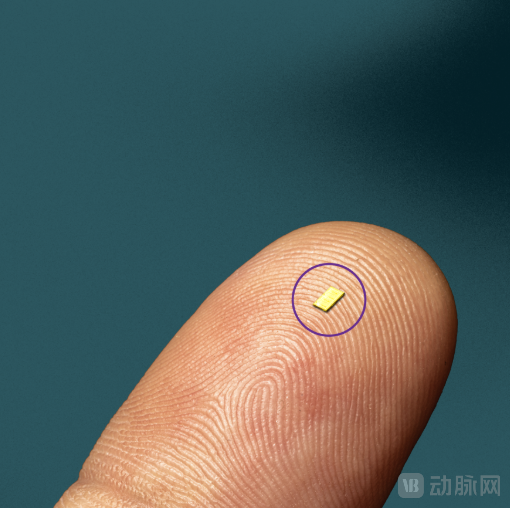
Autonomix's Proprietary Microchip
Developing this microchip involves far more than simply “shrinking its size.” Achieving a level of performance suitable for precise and demanding medical applications, while integrating high-sensitivity signal amplification, processing, and transmission capabilities into such a compact form factor, presents substantial technical challenges. It requires high-precision semiconductor manufacturing processes and significant R&D investment. Autonomix not only holds exclusive patent rights to the development and manufacturing methodology for this microchip but has also demonstrated its efficacy in animal models.
3Precision Sensing, Localization, and Ablation of Human Nerves: Targeting a $100 Billion Market
Autonomix’s core product combines microelectrode arrays with radiofrequency ablation technology to precisely sense and locate neural signals within the body, detecting and differentiating neuropathic pain signal activity. With its minimally invasive nature and high precision, the system can be applied to the treatment of various conditions, including chronic pain management, hypertension, and heart disease.
Specifically, the system comprises the following components:
Microchip Sensor Array: A microchip based on an application-specific integrated circuit (ASIC) that amplifies neural signals, precisely locates target nerves, and converts analog signals from within the body into digital signals that can be transmitted directly to a computer screen. It enables real-time, on-site readout without the need for wired transmission.
Autonomix’s sensing antennas are up to 3,000 times more sensitive than currently available technologies, with sufficient sensitivity to detect signals as low as 0.5 microvolts, whereas the minimum detectable value for current technologies is 10–15 microvolts. Its unique basket-like design enables three-dimensional localization of neural signals to facilitate precise treatment.
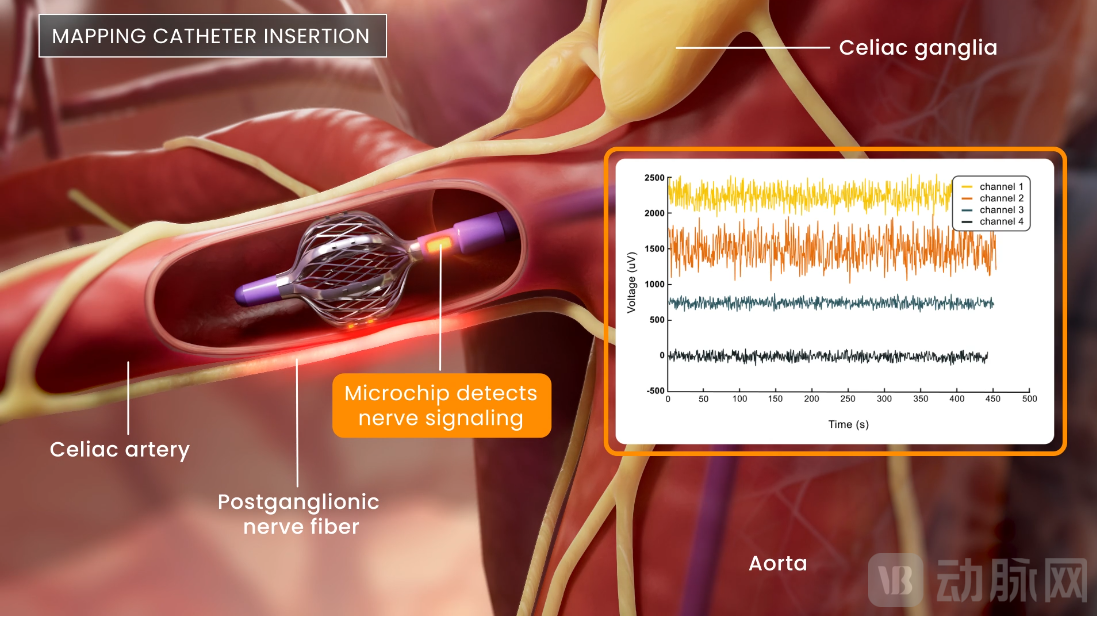
Autonomix System is detecting neural signals
Sensing Catheter: A microchip sensor array is mounted on a catheter, which is inserted into the body via minimally invasive surgery to detect and localize neural signals in vivo;
Radiofrequency Ablation Catheter: Utilizes radiofrequency (RF) technology to ablate target nerves, thereby reducing or eliminating pain. Additionally, the system is equipped with a set of catheters that can be replaced according to the target anatomy, enhancing the system's flexibility and adaptability to meet the requirements of different patients and diverse treatment needs;
Control Unit and Display Screen: Used to control and monitor the operation of the entire system, including sensing neural signals, the RF ablation process, and verification of signal cessation.
In terms of workflow, the system inserts a sensing catheter into the body via minimally invasive surgery, utilizing its high-sensitivity sensors to detect neural signals and locate hyperactive nerves within the patient. The sensing catheter is then withdrawn, and a radiofrequency ablation catheter is inserted to deliver radiofrequency energy to the target nerve, thereby disrupting its function. Upon completion of the ablation, the sensing catheter is reinserted to verify the cessation of neural signals, ensuring the success of the treatment.
Autonomix has selected pancreatic cancer as the first among its many potential targeted indications. Preliminary results from the company’s ongoing first-in-human trial demonstrate that pain reduction in the first 15 responding patients was both clinically meaningful and durable. The success demonstrated in the treatment of pancreatic cancer pain positions Autonomix to rapidly expand into other indications for cancer-related pain and abdominal pain, significantly broadening the overall market opportunity.
By leveraging minimally invasive surgery and its innovative nerve-sensing technology, Autonomix can identify and locate specific nerves throughout the body. This approach is poised to revolutionize therapeutic electrophysiology and can be applied to a wide range of diseases. It holds significant potential not only in chronic pain management, hypertension, and cardiology but also may have a profound impact on other medical fields requiring precise neural interventions.
“Once we complete our proof of concept, we are poised to target a market valued at $100 billion,” said Executive Chairman Wally Klemp in an interview. In the future, Autonomix is expected to expand its applications to include the treatment of hypertension, other sources of pain (such as lower back and other joint pain), complex regional pain syndrome, other tumor-related pain, and pelvic pain. Furthermore, the scope of the Autonomix system will encompass cardiology indications, urological disorders, pulmonary diseases such as chronic obstructive pulmonary disease (COPD), and gastrointestinal issues like irritable bowel syndrome. “We are essentially building a GPS-like system for the human nervous system. We believe this technology will enable surgical procedures to evolve from ‘blind treatment’ to ‘sense, treat, and verify,’ similar to Medtronic’s RDN procedure, ultimately allowing for novel interventions that were previously impossible,” said Wally Klemp.
4# Final Thoughts
According to statistics from Zhiyan Qianzhan, the market size of China's radiofrequency ablation equipment industry was RMB 2.736 billion in 2019, and reached RMB 1.028 billion in the first quarter of 2024, representing a year-on-year increase of 7.82%.
Currently, the pain management medical device market remains dominated by large foreign manufacturers. However, with continuous technological innovation and deep cultivation by domestic enterprises, leading Chinese companies are gradually expanding their market share in this field. In the domestic radiofrequency therapy device sector, a wave of innovative Chinese companies is emerging:
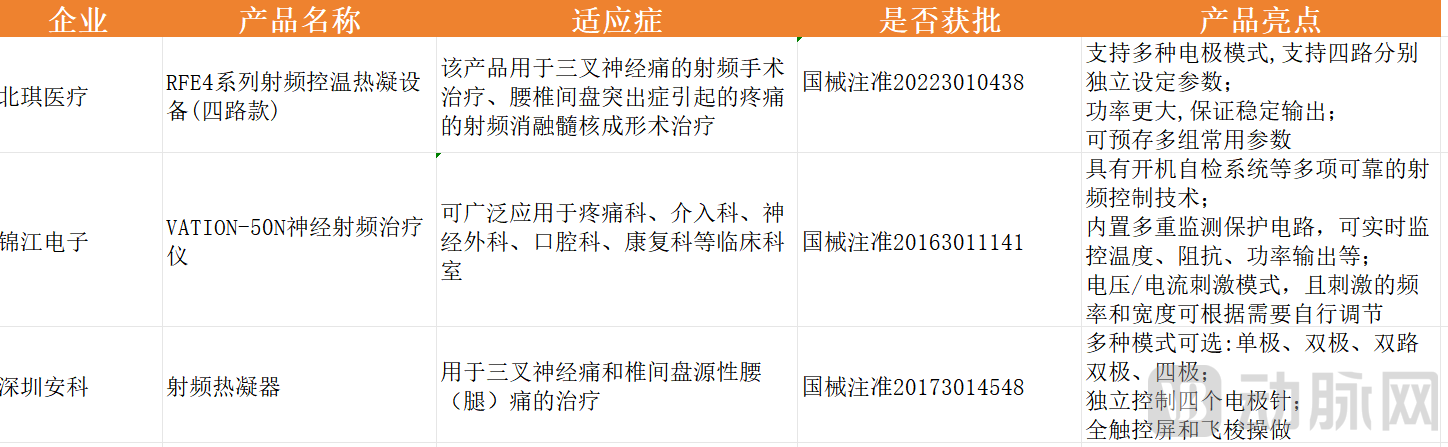 Notable Domestic Companies and Their Products in the Radiofrequency Therapy Device Sector
Radiofrequency ablation technology has evolved from continuous radiofrequency mode to pulsed radiofrequency mode, and from monopolar radiofrequency mode to bipolar radiofrequency mode. With the continuous advancement of radiofrequency ablation technology and the entry of domestic and international enterprises into this field, radiofrequency ablation is expected to be applied in the treatment of a broader range of pain conditions, further expanding the potential market for medical devices used in radiofrequency pain management.