

Global Healthcare Innovation Center's Wang Jingjing Highlights Concept Validation and Builds an Innovation-Driven Industrial Incubation Model
On January 11, the 2025 Second Global Health Industry Innovation Conference, jointly hosted by the Beijing Municipal Science & Technology Commission, the Administrative Committee of Zhongguancun Science Park, the Beijing Municipal Health Commission, the Beijing Tsinghua Industrial Development Research Institute, the Administrative Committee of Zhongguancun Science City, and the Global Health Industry Innovation Center, successfully concluded.
As a key component of the conference, and witnessed by the Beijing Municipal Science & Technology Commission and the Beijing Municipal Health Commission, the Global Health Industry Innovation Center joined forces with more than ten leading Grade-A tertiary hospitals in Beijing to establish the Innovation Translation and Concept Verification Consortium.
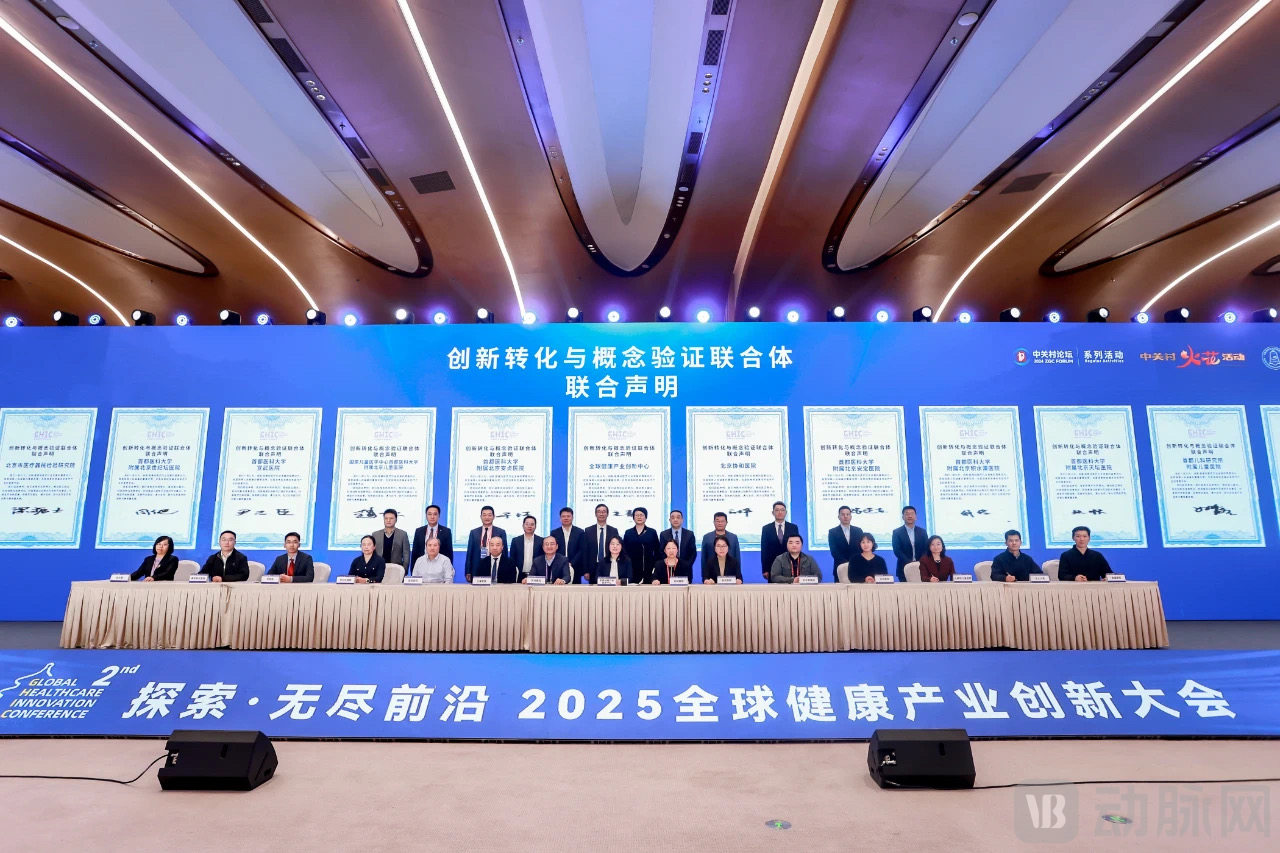
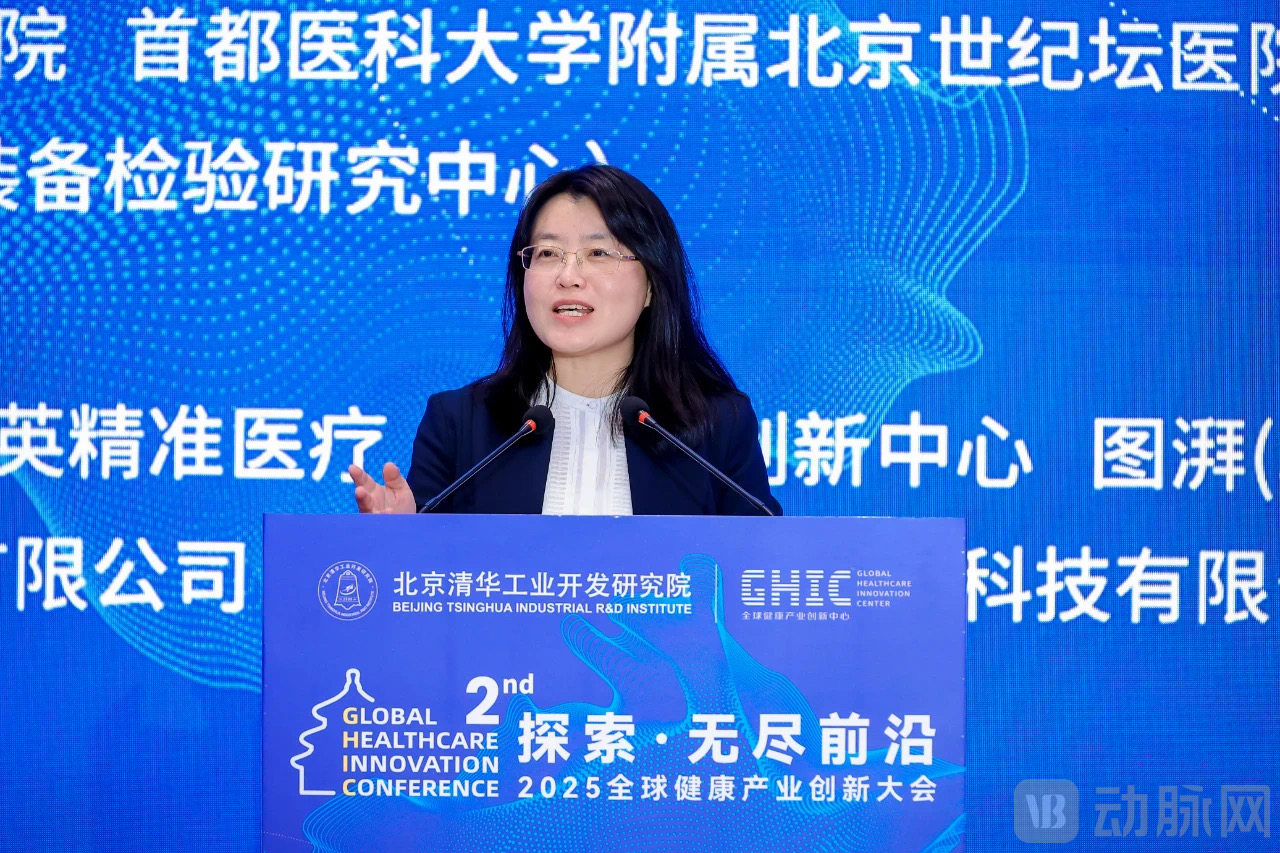
Wang Jingjing, Executive Director of the Global Healthcare Innovation Center (GHIC)With years of experience in incubation and commercialization, she has gained profound insights into the translation of scientific research achievements. She firmly believes that “innovation is the primary driver of development in the healthcare industry, serving not only as a crucial support for safeguarding public health but also as a key means to foster and develop future medical entrepreneurship.” Therefore, this signing ceremony was far from a mere formality; rather, it represented a resonant expression of shared commitment among participants dedicated to advancing the integration of medicine and engineering and facilitating the commercialization of research outcomes.
These figures may indirectly reflect their firm confidence in the commercialization of scientific and technological achievements. According to data from the Beijing Municipal Science & Technology Commission, Beijing has supported nine concept verification platforms and more than 150 concept verification projects in the pharmaceutical and health sector. In 2024, Beijing’s pharmaceutical and health industry achieved positive development: nine Class III AI medical devices received marketing approval, ranking first nationwide; nine innovative medical devices were approved for market launch, ranking second nationwide; and eight well-known foreign pharmaceutical and medical device companies established new R&D or innovation entities in Beijing last year. Last year, the Pharmaceutical and Health Industry Investment Fund completed investment decisions on 44 projects focused on early-stage R&D and industrial implementation, with the total investment amount and leveraged social capital reaching nearly RMB 9 billion.
Those actively engaged on the front lines of translating scientific and technological achievements into practical applications are undoubtedly among the most sensitive to shifting tides. What significant changes occurred in the field of medical technology transfer in 2024, and what development trends emerged in 2025? Director Wang Jingjing provides an in-depth analysis of these questions.
Wang Jingjing pointed out that clinical needs are the starting point and ultimate goal of translating medical scientific and technological achievements into practice. As frontline practitioners, physicians have the deepest understanding of patients’ unmet medical needs. “Although the translation of research findings in medical institutions started later than in universities and research institutes, it has now entered a window period of rapid development.”
From the Perspective of Healthcare InstitutionsHospital experts and administrators have significantly improved their understanding of the translation of scientific achievements, and the enthusiasm for translation among doctors and professors is also increasing day by day.
At the conference, the “Cultivating Innovation Capacity in Beijing’s Healthcare Sector—Exploration Program,” targeted at physicians and university faculty members committed to medical innovation, achieved significant progress.
The “Exploration Program” was jointly launched in 2021 by the Beijing Municipal Health Commission, Tsinghua University, and the Beijing Tsinghua Industrial R&D Institute. It aims to accelerate the cultivation of high-level interdisciplinary talents in the healthcare sector, build a core industrialization team driven by clinical needs, and promote the deep integration of medical institutions, research institutes, and enterprises in innovation translation, as well as in innovation and entrepreneurship.
Currently, the "Exploration Program" has successfully completed its first two phases, and Phase III was officially launched at this conference. It is reported that the Phase III program received 610 applications, with 80 doctors and professors from major hospitals and universities ultimately selected to join.
Looking at the external environment,As the integration of industry, academia, and research accelerates, the healthcare sector continues to advance into the core realms of innovation. Government bodies, industry players, and capital investors have developed a more accurate assessment of the advantages, limitations, and expectations surrounding the translation of medical institutions’ research outcomes, leading to rapid strategic adjustments. For instance, new models that combine industrial investment with accelerators and incubators are gradually replacing pure investment-driven development approaches, as they more effectively promote the deep integration of new technologies with industry.
As a vital bridge for the translation of scientific and technological achievements, GHIC is also actively adapting to these changes.
Wang Jingjing emphasized that proof of concept is a critical link connecting scientific research with product development,“Conduct technology and business proof-of-concept (PoC) activities, shifting the commercialization of scientific and technological achievements upstream to the basic research stage. By implementing a ‘rapid R&D, rapid production, and rapid validation’ approach, establish a streamlined model for transforming scientific and technological achievements that spans from technology PoC and process engineering R&D to commercial value validation, thereby comprehensively accelerating the conversion of basic research into tangible scientific and technological outcomes.”
In response, GHIC is establishing a technology transfer pathway from proof-of-concept to proof-of-value, building an industry incubation model driven by technological innovation. Based on this framework, it has successfully developed a medical device pilot-scale platform and a CGT (cell and gene therapy) pilot-scale platform with an international perspective, both of which are now operating high-quality projects successfully.
In February 2023, GHIC successfully obtained approval, becoming one of the first twelve concept validation platform construction units in Beijing. To date, GHIC has successfully incubated multiple frontier innovative enterprises in the field of medical-engineering convergence, including Topcon Medical (Tuopai Medical), Weici Technology, Huashi Nuowei, Huawei Hengyuan, Chaomu Technology, Puyi Biology, and Qingyuan Kaiwu.
At this conference, “data elements” also became one of the most closely watched topics in the industry.
Data elements, characterized by their uniquely low marginal costs, multi-scenario reusability, and strong permeability and integrability, have become key to new quality productive forces. Meanwhile, original and disruptive technological innovations are also vital components in cultivating these new quality productive forces. The integration of data elements with technological innovation can spawn new industries and business models, thereby empowering the emergence of more new quality productive forces.
Wang Jingjing pointed out that although various industries are eagerly anticipating the accelerated release of data value, the application and development of health and medical data still face numerous challenges,“Issues such as the unclear ownership, legislation, and revenue distribution systems for data elements; the relatively lagging framework for data sharing and security and privacy protection; and the nascent stage of supporting infrastructure.”
Encouragingly, with the implementation of the “Twenty Measures on Data” and the official establishment of the National Data Administration, institutional frameworks governing the confirmation of rights, opening, circulation, and trading of data resources are being progressively refined. An era characterized by the free flow of health data is dawning.
In November 2024, the carotid artery stenting dataset from Xuanwu Hospital of Capital Medical University was registered for asset ownership confirmation at the Beijing International Big Data Exchange, with the transaction completed simultaneously. This deal has ushered in a new model for leveraging data circulation to support the Healthy China initiative, setting a new benchmark for the compliant application of medical and health data across China. According to incomplete statistics from VCBeat, at least 12 medical data asset transactions had been completed in China by the end of 2024.
To invigorate, mobilize, and leverage high-quality data elements, GHIC is also actively exploring data-centric innovations in digital diagnostics and therapeutics. For instance, in 2024, GHIC partnered with Roche Pharmaceuticals to launch the “Digital Health Incubator 2.0,” an innovative solution for clinical incubation and translation. This initiative provides end-to-end industry chain support to address the critical needs of clinical digital diagnostics and therapeutics, enabling efficient and seamless transition from proof-of-concept to implementation.
Wang Jingjing stated that the commercialization of scientific and technological achievements is an endeavor requiring long-term commitment. In the future, GHIC will continue to foster independent innovation driven by clinical needs and facilitated by the integration of medicine and engineering, with a particular focus on the medical devices, diagnostics, and services sectors. By providing comprehensive support for early- to mid-stage projects through its medical device incubation platform, GHIC aims to accelerate the development of Beijing as an international center for scientific and technological innovation.