

Jianhai Tech Files IPO Prospectus: Pioneering AI Health Coaching in China with Domain-Specialized Large Models
Back in July 2024, OpenAI CEO Sam Altman and Arianna Huffington, CEO of AI health and wellness giant Thrive Global, jointly announced the launch of Thrive AI Health in TIME magazine.
Thrive AI Health aims to create a personalized “AI Health Coach” that focuses on managing five key daily behaviors: sleep, diet, exercise, stress, and social interaction.
With the recent surge in popularity of DeepSeek, Chinese large language models have become highly competitive in the global arena, even surpassing foreign counterparts such as OpenAI’s models in certain aspects. Are there any companies in China leveraging domestic AI large models to undertake initiatives similar to those of Thrive AI Health, and what is the current status of these efforts?
The answer is yes. Jianhai Technology is precisely such a company. To help the outside world better understand the innovative transformations driven by AI in the healthcare sector, VCBeat interviewed Mr. Wang Jian, Founder and CEO of Jianhai Technology.

Wang Jian, Founder and CEO of Jianhai Technology, holds dual EMBA degrees.
——“Post-diagnosis disease management is an extremely challenging yet fundamentally sound long-term endeavor!”
Founder of the “Health Coaching Technology Research Institute,” pioneered research on “health coaching” technologies in China;
Committee Member of the Obesity Prevention and Control Branch, China Association for Student Nutrition and Health Promotion;
Standing Director of the Second Council of Zhejiang Health Service Industry Promotion Association;
Distinguished Mentor, College of Computer Science and Technology, Zhejiang University of Technology, et al.
VCBeat: Both Thrive AI Health and Hangzhou Jianhai Science and Technology Co., Ltd. place strong emphasis on two newly defined concepts: “AI health coach” and “changing human health behaviors.” Could you please explain the significance of these two new definitions?
Wang Jian:Let us first address “changing health behaviors.” The majority of diseases stem from unhealthy lifestyle habits. Medical treatments, such as medications and surgeries, merely alleviate or suppress disease symptoms, while the underlying causes remain unaddressed. If patients fail to adhere to medical advice and modify their detrimental habits after treatment, they may experience poor prognosis, disease recurrence, or exacerbation.In the future, an optimal treatment regimen will undoubtedly comprise skilled physicians, effective medications, and robust health behavior management, addressing both superficial symptoms and underlying causes.
“Health Coach” is viewed as a new role that may emerge in the future development of the healthcare industry, with its work focusing on health behavior management. Current physicians and nurses are not adept at facilitating health behavior changes, nor do they have the time to dedicate to this area; thus, there is a need for someone to assume responsibility for managing patients’ health behaviors. Of course, health coaches can also be physicians or nurses, provided they master “health behavior change techniques.” The term “Health Coach” is indeed relatively unfamiliar in China.The “AI Health Coach” concept, jointly proposed by Sam Altman and Arianna Huffington, is a promising idea that will further elevate awareness in the health management industry.
VCBeat: What are the current pain points in “changing people’s health behaviors”? What changes can an “AI Health Coach” bring?
Wang Jian:Changing Human Health Behaviors Is a Counter-Intuitive Process: It can involve cultivating a behavior, such as helping patients with newly diagnosed hypertension transition from consistently forgetting to take their medication to establishing a routine of taking it on time every day; or it can involve improving a behavior, such as guiding patients to shift from a daily diet high in meat and rich foods to one with balanced nutritional intake. Changing an individual’s behavioral habits typically requires 21 days to three months. During the initial 1–7 days, frequent reminders and reinforcement of the patient’s willingness to change are necessary. In the intermediate phase of 7–21 days, continuous reinforcement of both motivation and behavior is needed to facilitate gradual change. In the subsequent 21–90 days, the goal is to make the habit effortless and automatic.
However, helping an individual change their behavior is a highly challenging endeavor. It requires the practitioner to possess strong proficiency in “health behavior change techniques” and demands significant human resources and time. Health coaches often need to implement a three-step approach of “guidance, encouragement, and companionship,” tailored to each individual’s unique circumstances. First, they must foster a strong desire for change and elicit powerful motivation. Second, they should establish behavioral change goals and break them down into specific action plans, ensuring the rationality of goals at each stage and encouraging the individual to persist in achieving them. Finally, they provide long-term companionship throughout the behavior change process, adapting different behavior change strategies based on progress toward goals to ensure ultimate success. In light of the above,Health coaches who can deliver tangible health benefits remain a scarce “luxury” in today’s market.
The collaboration between Sam Altman and Arianna Huffington aims to leverage OpenAI’s scientific principles and Thrive Global’s years of accumulated behavioral change methodologies to help individuals gradually develop healthy lifestyle habits. As large language models such as DeepSeek and OpenAI become increasingly natural in their anthropomorphism and emotional expression,AI health coaches will possess capabilities and advantages that completely surpass those of human health coaches.
In terms of reinforcing motivation, AI can act like your chatty old mother, providing ample care while offering more professional guidance. In the realm of goal setting and task decomposition, AI can automatically and dynamically adjust your behavioral plan in real time based on your specific circumstances—for instance, reminding you to walk home when you are too busy to set aside dedicated exercise time; prompting you to stand up, get a glass of water, and stretch after periods of work; reminding you to take medication on schedule after lunch; advising you to wind down and prepare for sleep after 10 p.m.; and notifying you of fasting requirements and other precautions one day before a follow-up visit. This seamlessly integrates behavioral change plans into your daily life. Furthermore, AI holds distinct advantages in long-term companionship. It can monitor your progress in behavior modification around the clock, offering timely encouragement and support whenever you forget or feel inclined to give up, thereby helping you sustain your willingness and enthusiasm for change.AI Health Coach: Making Health Coaching No Longer a "Luxury" or Out of Reach, and Enabling More People to Enjoy a Healthy Life.
VCBeat: What is Jianhai’s entry point for its “AI Health Coach”? How does it differ from Thrive AI Health?
Wang Jian:Thrive AI Health has not yet released any specific products, nor does it have a clear path to commercialization, making a detailed comparison currently unfeasible. I believe their entry point may be to directly target the consumer market through commercial health insurance.However, the pathway of “entering via commercial insurance” is difficult to implement in China. Hangzhou Jianhai Science and Technology Co., Ltd. has chosen to enter through post-consultation management and follow-up at hospitals. We have always believed that this is the entry point with the most rigid demand for health management, the best management outcomes, and the greatest commercialization opportunities.
We have been researching and translating all foreign health coaching textbooks and papers since 2022, andIn July 2023, the only domestic textbook on health coaching, *How to Become an Integrated Health Coach*, was published.This book was authored by Dr. Meg Jordan, an expert in integrative health research in the United States, and jointly translated by Hangzhou Jianhai Science and Technology Co., Ltd. and Hangzhou Normal University. Building on this foundation, we have been continuously advancing the integration and practical implementation of our business operations:To date, we have deployed follow-up software in 1,500 hospitals, undertaken post-consultation management services for 100 hospitals, and added more than 50,000 new paid managed patients per month.
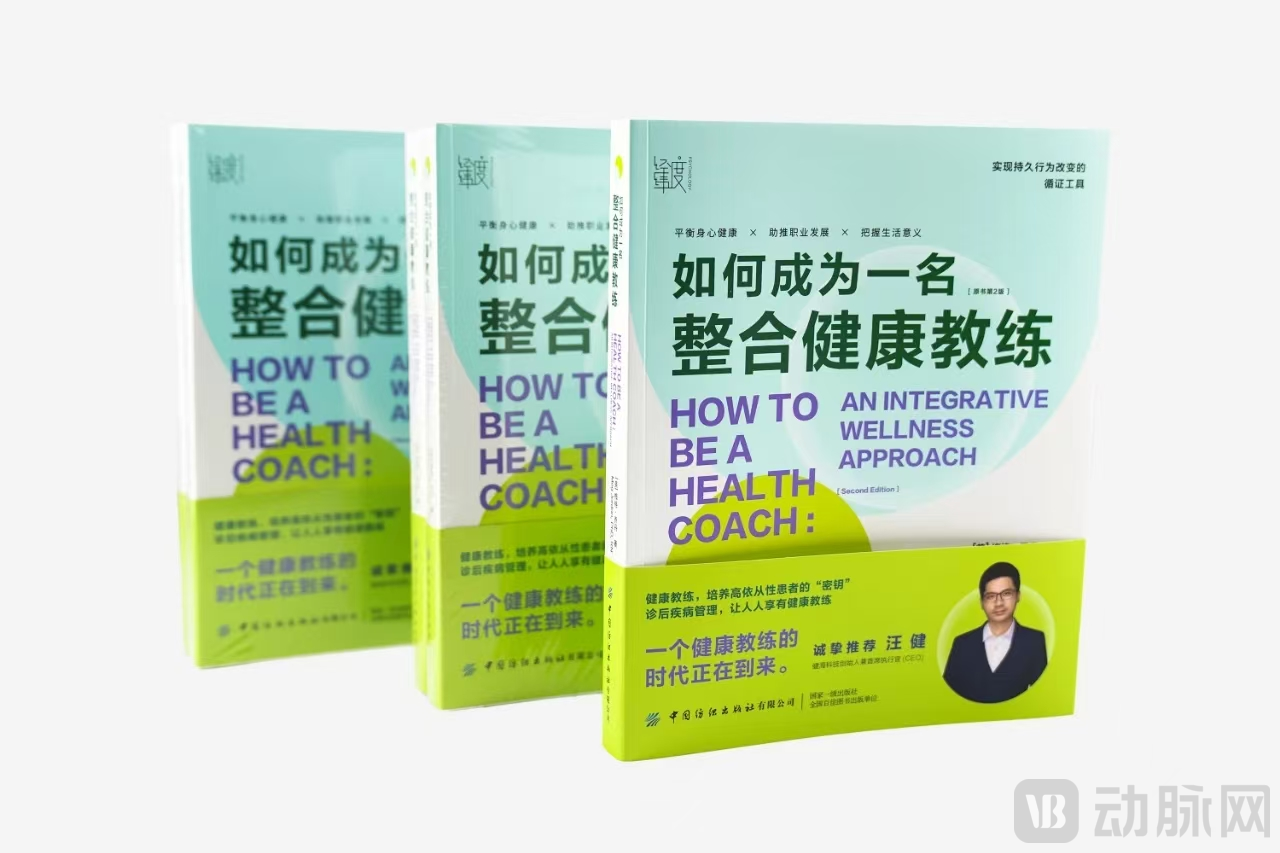
"How to Become an Integrative Health Coach," written by Dr. Meg Jordan, a U.S. expert in integrative health research, and jointly translated by Hangzhou Jianhai Science and Technology Co., Ltd. and Hangzhou Normal University
The core of post-consultation management is proactive health behavior management, aimed at enhancing patients’ disease awareness, addressing issues during rehabilitation, promoting adherence to medical advice, and modifying unhealthy behaviors.
Over the past decade, Jianhai has collaborated with the government to promote the formulation of policies and plans for post-consultation management, while also validating its business model and conducting market education. Since receiving investment from iFlytek in 2018, the company has been exploring opportunities to apply AI in post-consultation management. However, we found the application outcomes less than ideal, as AI remained insufficiently intelligent and lacking in human-centric design. Since the launch of OpenAI’s ChatGPT 3.0, large language models both in China and abroad have been advancing at an accelerating pace.We have chosen to prepare for the launch of our “Blue Ocean AI Large Model + Specialty Health Coach Agent” strategy at this juncture simply because we believe it is the right time, when AI costs are sufficiently low, economic returns are sufficiently high, patient experience improvements are sufficiently significant, and patient safety is sufficiently controllable.
VCBeat: Could you elaborate on the current roadmap and progress of Jianhai Technology’s “AI Health Coach”? Additionally, what are the advantages of its underlying large language model compared to DeepSeek and Qwen?
Wang Jian:Jianhai has made significant progress in the field of “AI Health Coaches” and has a clear plan for the future. Currently, we handle over 400,000 patient calls per month, facilitate more than 800,000 consultations via WeCom and mini-programs, and complete over 2 million proactive health management tasks.
In terms of technological R&D, the company conducted training and algorithm debugging based on the Qwen large language model in 2024, striving to build its own “Blue Ocean AI Large Model.” In the field of obstetrics, we successfully launched the “Maternal and Infant Health Coach Agent” powered by the “Blue Ocean AI Large Model,” deeply integrating it into the workflow of human health coaches.After practical validation, the manual adoption rate of answers and content recommended by the AI agent steadily increased from an initial 32% to 96.7% in December.
In terms of functional expansion, the Maternal and Infant Health Coach agent has achieved a leap from providing general online text-based health knowledge assistance to delivering multimodal online solutions. It can now directly assess and address complex issues, such as evaluating infant stool images for health status or assessing diaper rash through images. Furthermore, it provides precise answers tailored to the specific requirements of the patient’s hospital, thereby avoiding the ambiguous, impractical responses or generic professional outputs that were previously common.
Based on the successful pilot of the intelligent agent for obstetrics and gynecology maternal and infant health coaching,We plan to release four specialty-specific AI agents in orthopedics, endocrinology, gastroenterology, and cardiology, along with three professional AI agents: an AI nutritionist, an AI fitness coach, and an AI pharmacist., further enriching the service scenarios and professional dimensions of the “AI Health Coach.”
Currently, the "Blue Ocean AI Large Model" underpinning Jianhai's "AI Health Coach" demonstrates unique advantages across multiple dimensions. Built upon the Qwen 2.5 large language model, we conducted domain-specific retraining focused on post-discharge management. This process enriched the "Blue Ocean AI Large Model" with 10 billion tokens of trainable corpus dedicated to post-discharge care—including specialized knowledge bases from 48 individual hospitals—and utilized over one million fine-tuning instructions.This initiative specifically addresses the hallucination issues prevalent in large language models, outperforming mainstream medical-domain models—including DeepSeek-R1 and Qwen 2.5—in objective medical evaluations.In particular, DeepSeek-R1 exhibits significant issues with medical hallucinations, whereas our model demonstrates exceptional professionalism and practicality in the comprehension of medical knowledge.
Furthermore, we have conducted in-depth optimization and fine-tuning of the model by leveraging practical feedback from expert physicians and patients, ensuring its high accuracy and reliability in interpreting medical information and providing post-diagnosis management recommendations, thereby fully demonstrating the model’s leading advantages and practical value.
Notably, DeepSeek-R1 demonstrates exceptional performance in anthropomorphism and reasoning capabilities. Our system has integrated the DeepSeek-R1 model, primarily leveraging it to transform over 200,000 pieces of physician-oriented medical science education materials accumulated by us into precise, patient-centric health education content. This ensures that every piece of educational material delivered to patients is tailor-made, overcoming the limitations of previous generic basic health education. This further enhances the precision and effectiveness of Jianhai’s “AI Health Coach” in health management services.
VCBeat: So, based on the “Blue Ocean AI Large Model,” what are Jianhai’s future expansion plans or roadmaps?
Wang Jian:In the future, we will leverage the “Blue Ocean AI Large Model” to continuously conduct in-depth analyses of patient needs, striving to meet their multi-level demands in medical care, health, and consumption. As early as December 29, 2024, at Huawei’s Summit on Empowering Full-Scenario Health Management in Shenzhen, Huawei jointly announced with Hangzhou Jianhai Science and Technology Co., Ltd. the “Post-Consultation Management Solution Based on Huawei Qingyun Wearables,” a product of their collaborative innovation.Another key initiative for us in 2025 is to deeply integrate the “Blue Ocean AI Large Model” with “Huawei Wearables.”
We also note that the current CEO of Thrive AI Health is DeCarlos Love, former head of Google’s health wearables division. The integration of AI health coaches with wearable devices will inevitably become the industry’s optimal and essential combination in the future. Hangzhou Jianhai Science and Technology Co., Ltd. shares this forward-looking perspective and continues to rapidly advance the convergence of these two technologies.