

Tumor NGS Shifts Battlefield: From Disruption to Institutional Integration Amid Industry-Wide Restructuring
Enter2025year, domestic oncologyNGSThe company's operational performance appears to be worse than that of the previous year.
Recently, as business performance failed to meet expectations, two star oncology companies in ChinaNGSEnterprise, a company due to the valuation adjustment mechanism (VAM) agreement, shareholders’ equity interests were frozen, while another company announced a suspension of operations and production. Meanwhile, in public discourse, more aboutTumorNGSRumors of companies shutting down laboratories and laying off staff continue to quietly circulate and gain momentum within the industry.
2020Years ago, tumorNGSAs soon as the industry emerged, it stood in the spotlight. Elites from various sectors flocked in, adopting an aggressive high-profile strategy and leveraging substantial financing to rapidly secure large-scale market share in clinical settings. However, this approach now appears to have reached a dead end. Beyond mere sentiment, it is more crucial to understand whether these twists and turns have ultimately falsified the oncologyNGSclinical value, or propel the industry into a more mature new phase?
Traditional Strategies Are No Longer Viable
Star TumorNGSThe collective stall of enterprises represents, at the very least, the failure of a business strategy; we are currently at a cyclical inflection point.
Time rewinds to2017Year.That is domestic oncologyNGSExtremely prosperous, also10/10A Chaotic Era.Numerous Teams Enter the Oncology SpaceNGSBy purchasing high-throughput sequencers and establishing a molecular diagnostics laboratory, companies could carve out a niche in the fiercely competitive and rapidly emerging market for tumor-targeted therapies. At that time, tumorsNGSThe industry’s ceiling has been pushed to considerable heights under various scenarios, attracting a flood of investment institutions. According to statistics from the VCBeat Orange Database, as of2018By the end of the year, domestic oncology companies with valuations exceeding RMB 1 billionNGSThe company already has more than20Home.
2020Year in China's OncologyNGSThe industry's most glorious moment.2020Year6In [Month], Burning Rock Biotech and Genetron Health listed on the U.S. stock market within a week of each other, raising public funds respectively.2.5hundred million U.S. dollars and2.6hundred million U.S. dollars. According to statistics from the VCBeat Orange Database, a total of financing deals in the field of genetic testing were completed in China that year62Qi, Chao Jinxin200hundred million yuan, of which approximately1/3Funding Flows to OncologyNGSindustry. In addition to producing listed companies, oncology-focused firms such as 3D Medicines Diagnostics and Genetron HealthNGSThe company has also secured impressive large-scale financing.
During this period, the tumorNGSCompanies primarily implement clinical services through an outsourced model, wherein sales representatives from third-party companies interact directly with patients. Patients submit their samples to third-party laboratories, which conduct the tests and deliver reports to the patients using the company’s existing templates. This is an aggressive, high-profile business model; while the promotional costs for both products and services are extremely high, the results are remarkably significant. It is understood that during the peak of the outsourced model, leading domestic oncologyNGSThe annual volume of samples received by the company from hospitals reaches210,000–310,000 copies.
It is also from this stage that the tumorNGSdevelopment has repeatedly hit roadblocks. On one hand, large-scale regulations were soon imposed on the outsourced delivery model, and many early-stage oncologyNGSAs a result, companies have gone bankrupt, making this traditional high-profile, aggressive strategy increasingly unsustainable.
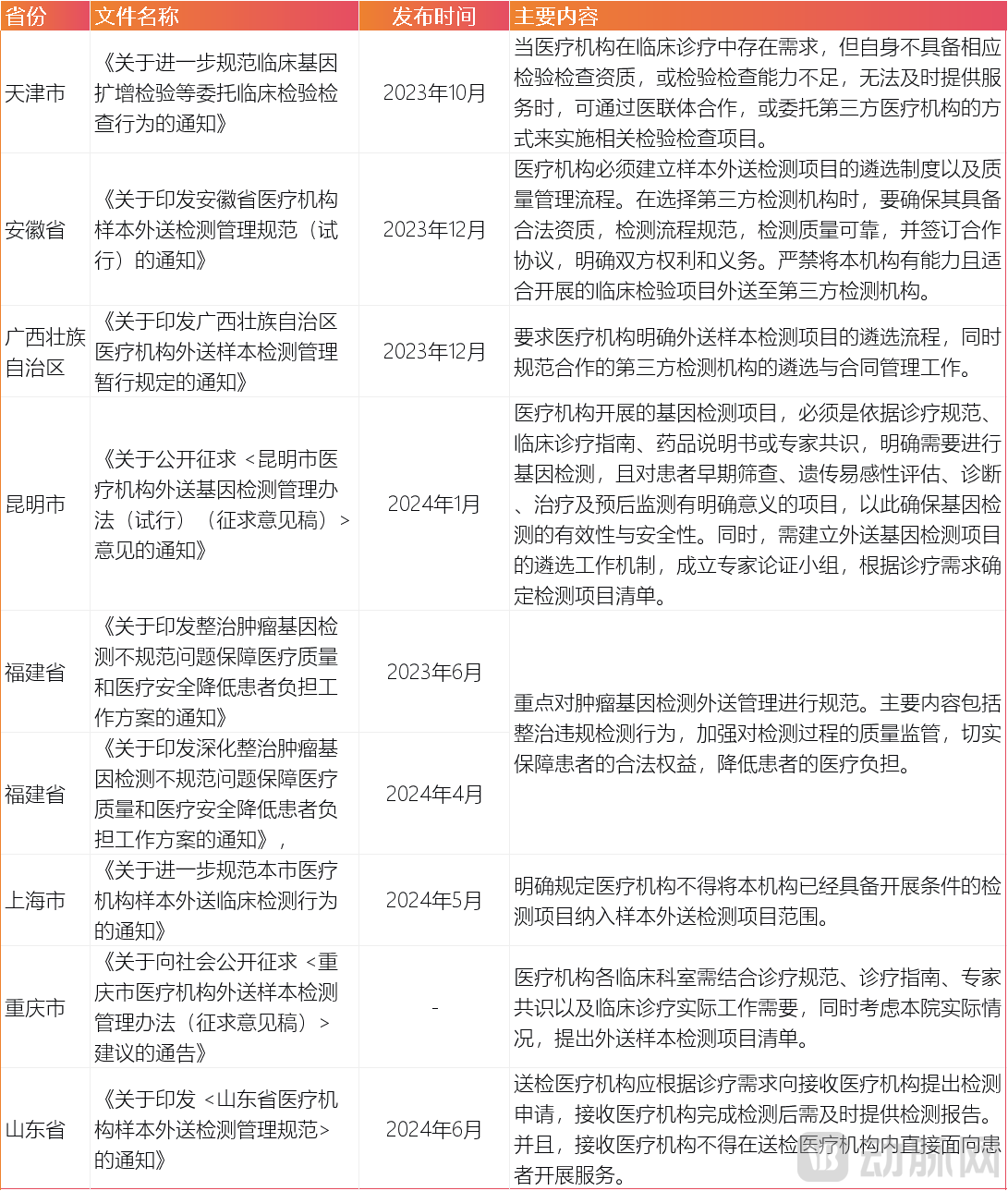
2023In recent years, provinces and municipalities across China have increasingly issued regulations governing the external referral of clinical samples. However, a closer examination of these documents reveals that the regulatory stance on sample referral has shifted from an initial blanket prohibition to standardized management. For instance, both Anhui Province and Shanghai Municipality specify that medical institutions shall not include testing items for which they already possess the necessary capabilities in their list of externally referred tests. Chongqing Municipality requires medical institutions to develop a list of externally referred test items based on their actual operational conditions. Meanwhile, Guangxi Zhuang Autonomous Region explicitly mandates that medical institutions establish clear selection procedures for externally referred test items and standardize the selection and contract management of third-party testing laboratories with which they collaborate.
On the other hand, for tumorsNGSFor the industry, a greater blow comes from the capital side.From2021Since the year, capital towards oncologyNGSattitudes have become more cautious, shifting toward new hotspots such as pathogen metagenomic testing. According to statistics from the VCBeat Orange Database, in the past4Over the years, large-scale financing has rarely occurred in China’s oncology sector.NGSIndustry.
Meanwhile, the secondary market has also lost confidence in traditional strategies for oncologyNGSCorporate Confidence.2022Year8In [Month], Genetron Health announced its “privatization and delisting,” and2023Year10In [Month], the privatization merger agreement was formally signed, with a transaction valuation of approximately1.26 hundred million U.S. dollars.2023Year12Month,Burn Rock Medicine received a Nasdaq delisting warning due to its low stock price. Although laterApproved “Joint Venture” , restored compliance with Nasdaq listing requirements, but trading volume has already from earlyannual 3030.1 plummeted toless than200010,000 shares.And behind the aforementioned freezing of equity interests held by shareholders of Geneseeq, it is also related toIPOrelated to the equity repurchase clauses involved.
Behind the Exit of Capital Lies OncologyNGSLong-term losses under the company’s traditional high-profile, high-investment strategy. According to the annual report,2018Year to2023During the year, Burning Rock Biotech remained in a state of continuous losses, with net losses of1.78 100 million yuan,1.69 100 million yuan,4.07 100 million yuan,7.97 100 million yuan,9.71 billion yuan, with losses continuing into2024first quarter of the year. Genetron Health, also listed on the U.S. stock market, has similarly suffered from long-term losses.2018Aged2022Annual Losses4.65100 million yuan,6.76100 million yuan,30.69100 million yuan,4.96100 million yuan and8.11hundred million yuan, cumulatively exceeding55100 million yuan.
TumorNGSdevelopment, forcing it onto a new track.
From Outpatient Sample Delivery to Hospital Admission
In recent years, from sample out-sourcing to hospital admission, tumorNGSThe company has entered a new battlefield.
At this stage, tumorsNGSAdmission models include two types: bundled external referral and in-house implementation. The bundled external referral model differs from the traditional sample outsourcing model in that the hospital collaborates with third-party testing companies at the institutional level; physicians place orders through the hospital’s internal system, and patients pay directly to the hospital, although the testing is performed off-site. In contrast, the in-house implementation model is similar to routine clinical laboratory tests, with oncology testing facilities established within the hospital.NGSLaboratory: sample flow, data flow, and financial flow are all retained within the hospital.
For TumorsNGSFor enterprises,The reasons why the hospital admission model is not profitable lie in several major challenges, including limited sample sizes, high product prices, and a lack of distribution networks.These three major bottlenecks are mutually causal, virtually forming a tumorNGSThe Impossible Trinity of Corporate Profitability. Limited sample sizes constrain the potential for product price reductions, while an absent distribution network limits the potential for increasing sample sizes. Many smaller-scale oncologyNGSCompanies have been leaving the table one after another.
First, the limited sample size.According to an analysis by the industry self-media outlet “Xiao Li Dao Dao,” taking the in-hospital implementation model as an example, operating costs include personnel costs, reagent and consumable costs, and operational expenses. Operating revenue primarily consists of cash revenue, which is jointly determined by the hospital procurement price of the test kits and the volume of tested samples. For a company with a hospital procurement price of10000Primary TumorNGSEnterprises, with a penetration rate of10%of the hospital, if powered on weekly4times, usingMGI-2000 FCSChips, the hospital's annual surgical volume needs to reach1920platform to achieve break-even. According to IQVIA statistics, the annual surgical volume in China exceeds1920Taiwan's hospitals, approximately only170or so. In other words, in most hospitals in China, cancerNGSIt is difficult for companies to obtain a sample size sufficient to achieve break-even.
Secondly, the high product prices.Despite multiple rounds of price reductions, currently, oncologyNGSProduct prices still frequently reach several thousand yuan, or even tens of thousands of yuan. On the supply side, tumorNGSUnlike conventional clinical testing, which involves substantial investment in fixed assets and personnel, product prices are difficult to reduce if test sample volumes fail to scale up. In the aforementioned case, the product was priced at10000yuan, still struggling to achieve profitability, against the backdrop of tightening external financing, oncologyNGSEnterprises have limited willingness and capacity to reduce prices.
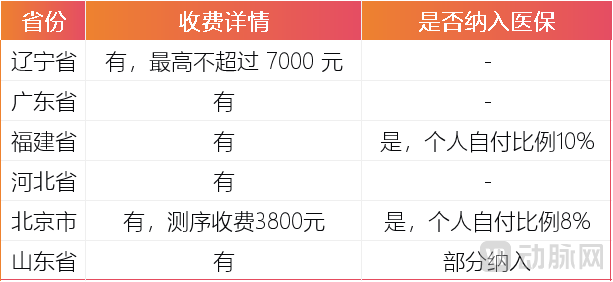
On the payment side, at present, only a very few provinces in China have included oncologyNGSInclusion in the National Reimbursement Drug List (NRDL). Typically, for an innovative diagnostic product to be included in the NRDL, it must first obtain a billing code. According to analysis by Xiao Li Daodao, due to previous oncologyNGSCorporate development has prioritized clinical applications while neglecting distribution channels, resulting in a shortage of billing barcodes. VCBeat’s review of publicly available data reveals that, to date, only a few provinces and municipalities, including Liaoning, Guangdong, and Fujian, have added tumorNGSof the billing barcode, tumorNGSOnly a handful of provinces and municipalities have included it in their medical insurance coverage, with Fujian Province and Beijing being the sole exceptions. In hospitals across most other regions, tumorNGSOnly applicable barcode-based fees can be charged, so reimbursement through medical insurance is naturally not possible.
Finally, the missing channel network.Among the three major bottlenecks to hospital admission, the missing channel network appears to be the easiest to break through, and is also oncologyNGSThe area where enterprises excel. In the past, oncologyNGSFocus marketing efforts on clinical departments to directly obtain outsourced samples. Upon hospital admission, tumorNGSOn the one hand, enterprises need to maintain relationships at the hospital level; on the other hand, they must accumulate resources within pathology-related departments of hospitals. The establishment of this channel network also provides oncologyNGSCompanies have raised new challenges. Previously, industry practitioners told VCBeat that their companies were forming new teams to expand into the in-hospital market.
And at present, these three major bottlenecks are overwhelming small-scale tumorsNGSAfter the enterprise, it is sweeping through the star companies in this industry.
Is Oncology NGS Still a Good Business?
Regarding this issue, we believe the answer is affirmative.
First, tumorNGSThe test has clear clinical value.In targeted cancer therapy, genetic testing has become a necessary step because specific drugs are effective only in particular patient populations. The underlying reason for this is thatThe onset and progression of many tumors are closely associated with specific genetic mutations; only by identifying driver genes can patients be matched with appropriate targeted therapies. For example,In non-small cell lung cancer, detection ofEGFRPatients with genetic mutations, usingEGFR Inhibitors such as gefitinib and erlotinib often achieve favorable therapeutic outcomes; whereas the presence ofALK Patients with gene fusions, crizotinib, etc.ALK Inhibitors are a more suitable choice.
As tumor genetic testing becomes more widely adopted in clinical practice, an increasing number of physicians are inclined to utilize broaderPanelGenetic testing can assess biomarker status, such as tumor mutational burden (TMB) and microsatellite instability (MSI), thereby identifying patients who are likely to respond to immunotherapy. Furthermore, tumor genetic testing plays a role in adjusting chemotherapy regimens, monitoring recurrence risk, and evaluating survival outcomes.
In contrast to more straightforward tumorsPCRgene testing technologies, tumorNGSalso demonstrates irreplaceability. For example,PCRTechnology can only design a limited number of primers and cannot be applied to largePanelmonitoring. In addition, tumorPCRPrimer design can only target known mutation sites, which may result in false negatives. For example, in unknownEGFRGene19Exon Deletion,ALK/ROS1In the monitoring of mutation types such as gene fusions, tumorNGSThe detection rate was significantly higher.
Second, after the early phase of wild growth, domestic oncologyNGSThe maturity of the industry has significantly increased.Among these, the most significant change is the transformation of tumorsNGSEntered the gateway of product compliance.
2018Year7Month,Burning Rock Biotech's“HumanEGFR/ALK/BRAF/KRASGene Mutation Combined Detection Kit (Reversible Terminator Sequencing Method)”Approved for market launch, Became the first multi-gene tumor mutation combination detection kit in China to be approved based on high-throughput sequencing technology and companion diagnostic standards.Thereafter, more than20TumorNGSDiagnostic Kits Obtain Medical Device CertificationIIIClass registration certificate, providing an effective tool for selecting appropriate targeted therapies for patients with high-incidence tumors such as non-small cell lung cancer and colorectal cancer.
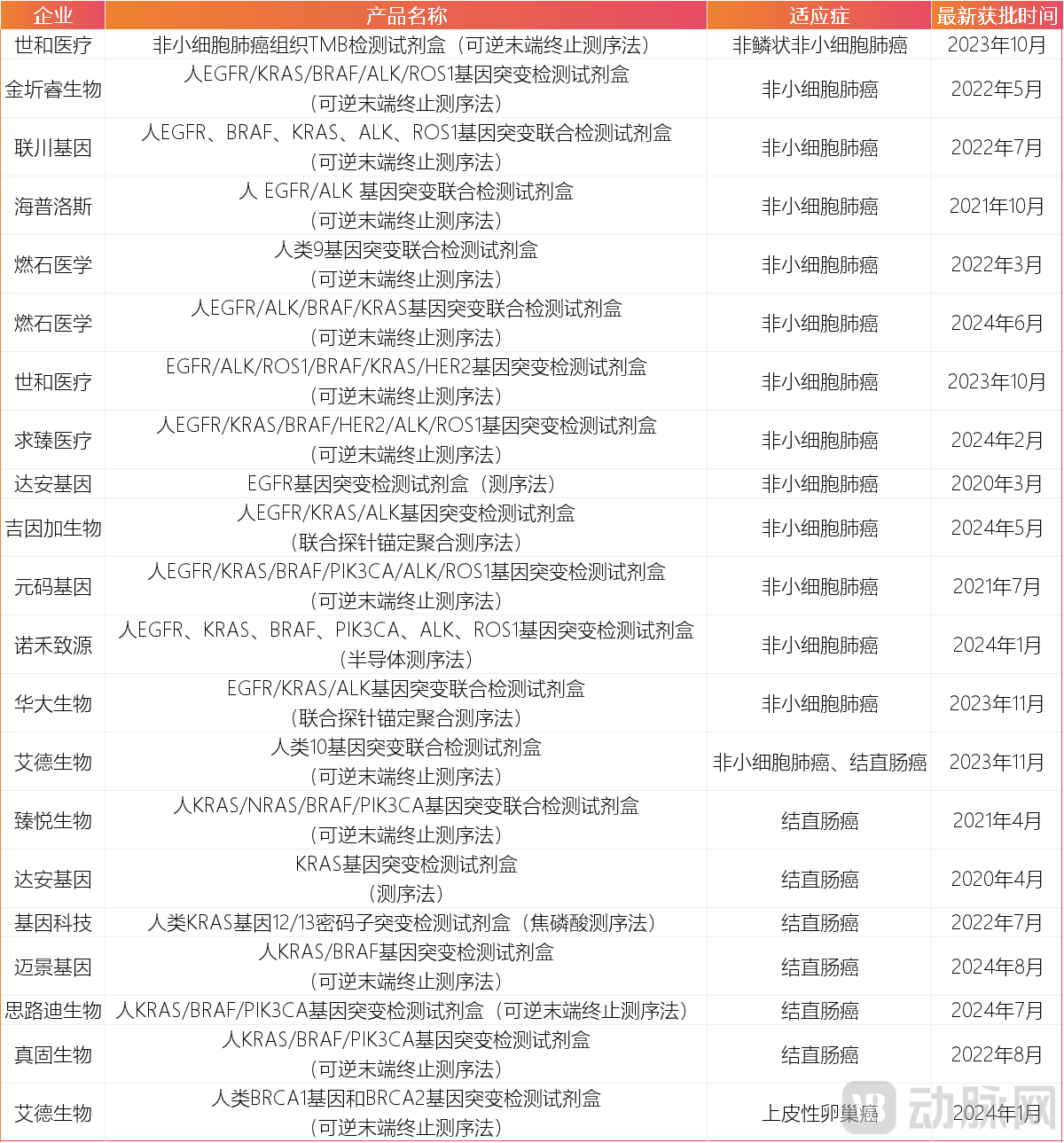
2023Year10Month, Geneseeq Medical's non-small cell lung cancer tissue under the brand name "Shihe No. 1"TMBThe detection kit (based on reversible terminator sequencing) has been approved for market launch. This is the first kit approved in China for detecting tumor mutational burden to predict the efficacy of cancer immunotherapy. Amidst the vigorousNGSLargePanelAmid the wave of product development, the approval of “Shihe No. 1” undoubtedly holds epoch-making significance, further revitalizing the long-quiet domestic oncologyNGSThe industry briefly stirred with excitement.
From targeted oncology drugs to immuno-oncology therapies, tumorsNGSIt is now fully compliant to serve the most common new scenarios in oncology treatment, and a large number of non-compliant service providers have been eliminated.
Third,And most importantly, after years of market education, oncologyNGSIt has been accepted by both physicians and patients, and has been incorporated into the clinical diagnosis and treatment workflow for oncology.For those who remainNGSFor enterprises, most have already established the capability for compliant operations; once they persevere through challenges such as achieving sufficient sample sizes, determining product pricing, and building distribution networks, opportunities for profitability remain.
This is evident from KingMed Diagnostics’ strategic move into oncology.NGScan be seen from the subsequent performance.2023In 2026, KingMed Diagnostics launched a new oncologyNGSProduct "Huimin3000”, covering17 Cancer-type-specific targets and4 Pan-cancer targets, multiple genetic variants,PD-L1expression and microsatellite instability, rapidly capturing market share. According to the financial report released by KingMed Diagnostics,2023In [year], the number of samples received for tumor molecular diagnosis projects exceeded1410,000 cases, including tumorsNGS> Test Items Greater Than710,000 cases. In other words, this oncology [product], which has been on the market for less than a year,NGSproducts, have obtained2twice the sample size of leading enterprises during the peak period of the outbound delivery model. The reason behind this is that “Huimin3000” shall be priced no higher than3000yuan, with a detection range comparable to previous products priced at over ten thousand yuan. As a long-established leader in the third-party clinical testing industry, KingMed Diagnostics holds significant advantages in its distribution network and sample resources.
When the tumorNGSThe dominoes have begun to fall, which may reflect more of an industry consolidation accompanying the transition from an old cycle to a new one. Following this market clearance, business models more aligned with commercial logic will remain, offering the possibility of more precise treatments for cancer patients.
References:
Xiao Li’s Ramblings: Is Implementing NGS In-House a Good Move?
Xiao Li’s Musings: NGS Outsourcing Services “Enter the Hospital”—What Do We Need to Do?