Rehydration Therapeutics Completes Tens of Millions RMB in Angel+ Financing to Accelerate Clinical Translation of Innovative Ophthalmic Small Nucleic Acid Drugs

Rehydration Therapeutics
Innovative Nucleic Acid Drug Developer

3E Bioventures
Healthcare Industry Investment Institutions
Innovation & Entrepreneurship
Early-Stage and Growth-Stage Investment Firms
VCBeat has learned that Rehydration Therapeutics (Shanghai) Co., Ltd., a company focusing on the development of innovative ophthalmic small nucleic acid drugs, recently announced the completion of its Angel+ financing round worth tens of millions of yuan. The round was co-led by 3E Bioventures and Shanghai Engine Fund, with participation from Lotus Capital, Fudan Science Park Capital, Jinshajiang United Runpu Yuanfeng Venture Capital, Yuanxi Haihe Fund and Tsinghua Alumni Seed Fund. Earlier, the company closed its Angel round led by Fudan University Biomedical Transformation Fund (FUBTF) under Furong Investment, which also made a follow-on investment in this round. The successive early-stage financings signal that Rehydration Therapeutics has stepped into a new phase in the R&D of ophthalmic small nucleic acid drugs, extrahepatic targeted delivery and clinical translation.
The proceeds from this round of financing will be primarily used to advance the clinical trials and subsequent clinical development of the company’s core pipeline candidate, YM-101, while also supporting the continued research and development of additional pipeline assets. This includes accelerating preclinical validation, process development, and clinical trial applications for candidate pipelines. Furthermore, the funds will be utilized to strengthen the company’s talent structure, with a focus on recruiting key personnel in clinical management, early-stage R&D, and quality systems, thereby further solidifying the company’s R&D and translational capabilities in the field of innovative ophthalmic nucleic acid therapeutics.
Strategic Deployment of Extrahepatic Small Nucleic Acid Drug Delivery, Focusing on Unmet Needs in Ophthalmology
Oligonucleotide therapeutics have become one of the key directions in global innovative drug R&D, owing to their abundance of targets, well-defined mechanisms of action, and relatively clear development pathways. However, beyond the liver, achieving efficient and precise delivery of oligonucleotide drugs to extrahepatic tissues remains a core challenge long faced by the industry. Ocular diseases, characterized by the accessibility of local administration, relatively well-defined lesion areas, and easily observable clinical endpoints, provide important application scenarios for the tissue-specific delivery and clinical translation of oligonucleotide therapeutics.

Focusing on major unmet clinical needs in ophthalmology, Rehydration Therapeutics has established a differentiated product pipeline targeting dry eye disease, corneal dystrophy, geographic atrophy associated with age-related macular degeneration, thyroid eye disease and uveitis. The company strives to combine the precise modulation capacity of small nucleic acid drugs with the advantages of local ocular delivery, and develop innovative treatment options that are safer, more effective and more accessible.
Core Pipeline YM-101 Is Accelerating IND Filing
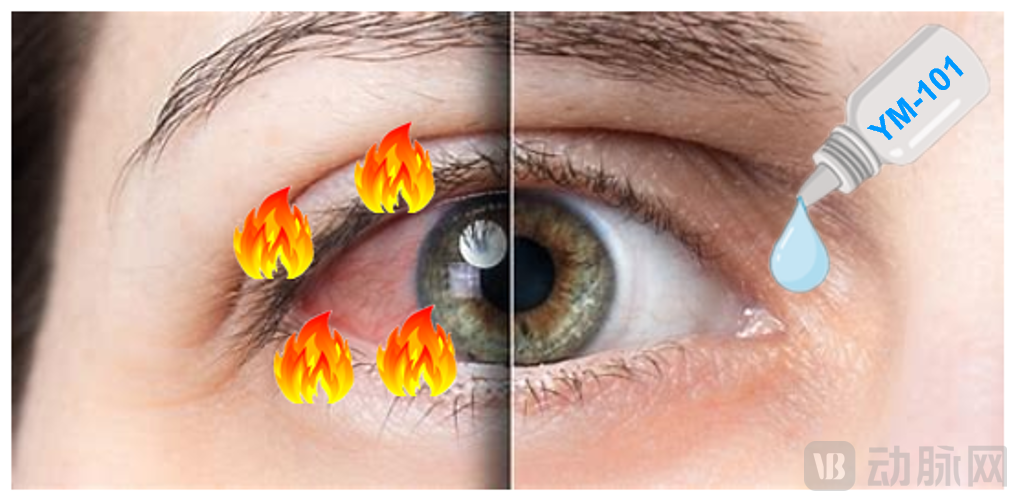
The company's lead candidate YM-101 is developed for dry eye disease and stands as its flagship ophthalmic small nucleic acid drug project. Dry eye disease affects a large patient population with a high recurrence rate. Current therapies suffer from slow onset of action, variable treatment responses and frequent drug resistance. Designed for local ocular administration, YM-101 enables precise modulation of key pathological pathways linked to ocular surface inflammation, offering a differentiated treatment option for patients with moderate to severe dry eye. The candidate has yielded highly positive results in investigator-initiated trials (IIT). The company is systematically advancing key work for IND application, including CMC studies, non-clinical safety evaluation, pharmacodynamic research, quality assessment and clinical development preparation.
In addition to YM-101, the company is concurrently advancing multiple innovative ophthalmic nucleic acid drug pipelines. Among these, YM-102 targets fundus diseases such as geographic atrophy caused by age-related macular degeneration, while YM-103 focuses on ocular surface genetic disorders such as corneal dystrophies. Going forward, the company will remain committed to a clinical need-oriented approach and science-driven innovation, continuously expanding its candidate pipeline in areas including ocular surface inflammation, corneal diseases, retinal degenerative diseases, and immune-related eye disorders. This strategy aims to accelerate the clinical translation of more innovative small nucleic acid drugs for ophthalmology, delivering novel therapeutic solutions with greater clinical value to eye disease patients worldwide.