

WeRay Technology Achieves Full Domestic Production of CT Tubes by Overcoming Key Barriers in Anode Target Disks and Liquid Metal Bearings

Micro X-Ray Tech
Developer of Core Components for Medical Imaging Equipment CT Scanners
CT X-ray tubes, as the core component of medical CT systems, have become a critical technical challenge that global manufacturers of medical X-ray imaging equipment are striving to overcome, due to their extremely harsh operating conditions, specialized material requirements, highly complex manufacturing processes, and technical specifications far exceeding those of other electronic components.
To achieve full localization of CT X-ray tubes, it is essential to overcome multiple core technological barriers, particularly in key components such as the anode target disk and liquid metal bearings.
Anode Target Disk,It is the core component that generates X-rays by withstanding electron beam bombardment; its performance and reliability significantly affect the service life of the X-ray tube, imposing stringent requirements on raw material properties, heat dissipation design, stability during high-speed rotation, and manufacturing processes.Bearing,This represents the most challenging “hard nut to crack” in X-ray tube manufacturing, as its performance directly impacts the stability and precision of the anode target rotation. Particularly for liquid metal bearings, the entire manufacturing process involves more than ten core steps, addressing key technical issues such as molybdenum alloy pretreatment, precision machining, welding, vacuum heat treatment, femtosecond laser processing, precision assembly, and testing and inspection.
During the CT procurement bidding process, X-ray tube specifications are undoubtedly a “mandatory requirement” for every manufacturer. Hospitals generally expect the CT X-ray tubes they purchase to meet higher-throughput examination demands, provide a better user experience, and offer a longer service life. In particular, X-ray tubes equipped with liquid metal bearings are more favored by hospitals due to their advantages over ball-bearing tubes, including longer service life, superior image quality, greater heat capacity, and faster scanning efficiency.
After nearly a decade of development, domestic CT X-ray tube manufacturers have made certain progress in the ball-bearing tube market. However, they have yet to achieve significant breakthroughs in high-end, high-power CT X-ray tubes, which is closely related to their limited independent R&D and design capabilities for core components. In particular, there are few stable and reliable domestic suppliers for critical components such as liquid metal bearings and anode target disks for high-power CT X-ray tubes, posing substantial challenges.To achieve full independent R&D and control over CT X-ray tubes, it is crucial to break through the bottlenecks associated with anode target discs and liquid metal bearings.
Founded in 2021,Micro X-Ray Technology (Suzhou) Co., Ltd. (hereinafter referred to as “Micro X-Ray Tech”) is a professional manufacturer specializing in the research, development, and production of medical X-ray tubes, dedicated to providing customers with stable-quality, high-performance X-ray tubes and comprehensive solutions.The company has successfully achieved in-house production of core components such as target disks, liquid metal bearings, and flat filaments, filed more than 30 patents, and attained independent control over technologies for manufacturing multiple models of CT X-ray tubes and digital radiography (DR) X-ray tubes. It is one of the few domestic manufacturers capable of independently researching, developing, and manufacturing new medical X-ray tubes.
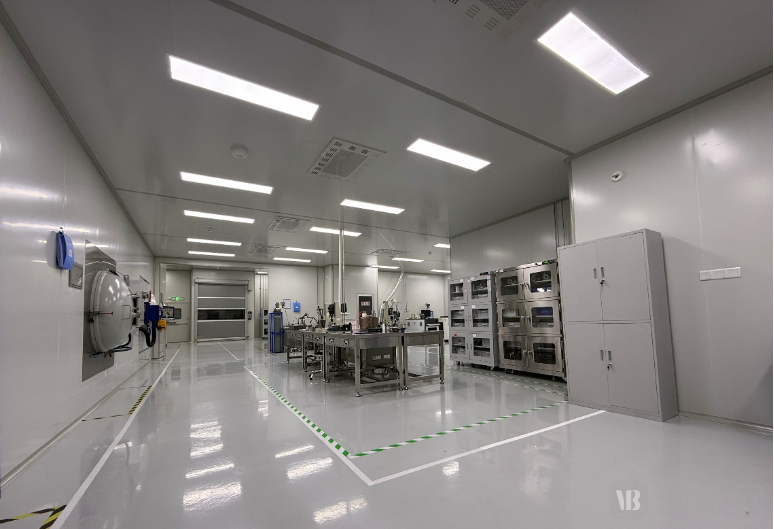
Micro X-Ray Tech boasts an R&D and manufacturing workshop spanning over 3,000 square meters, with successfully established production lines for medical CT X-ray tubes and high-end DR X-ray tubes, achieving an annual production capacity of 1,000 units.
“We are the only domestic X-ray tube manufacturer in China with in-house target disc manufacturing capabilities.”On the other end of the phone, Nie Xipeng, founder of Micro X-Ray Tech, spoke in a light and confident tone.
Nie Xipeng graduated from the Department of Materials Science and Engineering at Zhejiang University. He spent nearly a decade at Siemens Healthineers, specializing in the research and development of X-ray tubes, product lifecycle management, and core component technologies. During this period, he led multiple product and technology development initiatives as well as local sourcing projects for components. He possesses extensive expertise in the manufacturing processes of X-ray tubes and their core components, along with comprehensive experience in R&D, project management, and product lifecycle management.
In recent years, driven by comprehensive policy support spanning from R&D to commercialization and accelerated by the pandemic, domestically produced large-scale X-ray imaging equipment has risen rapidly. The localization of medical CT X-ray tubes, a core component of X-ray imaging systems, has also become an inevitable trend. Nie Xipeng keenly recognized this trend and decided to capitalize on it, committing himself to achieving high-quality domestic substitution for CT X-ray tubes.
Leveraging its extensive industry expertise, Micro X-Ray Tech has rapidly assembled a formidable team specializing in CT X-ray tubes, encompassing technical, quality management system, and sales functions. Core team members each boast over a decade of experience and deep expertise in the CT X-ray tube field. They have participated in the development and product lifecycle management of novel CT X-ray tubes, medical rotating anode X-ray tubes, and stationary anode X-ray tubes, possessing solid technical foundations, extensive R&D experience, and practical capabilities in manufacturing.
Nie Xipeng told VCBeat that the target disc, bearings, and cathode focusing cup are the three core components of a CT X-ray tube. Among these, the anode target disc is the most expensive single component in high-heat-capacity CT X-ray tubes, accounting for approximately 25%–30% of the total cost of the tube. The primary function of the anode target disc is to receive bombardment by high-energy electron beams to generate X-rays; this characteristic directly affects the physical properties of the X-rays, as well as the service life and performance of the CT X-ray tube. Anode target discs are categorized into two types: stationary and rotating. Stationary target discs have limited heat resistance and are difficult to sustain during prolonged continuous operation. In contrast, rotating target discs dissipate heat through high-speed rotation facilitated by high-speed bearings, enabling them to operate continuously for extended periods.
The rotating anode target consists of a metal disc (typically made of tungsten-molybdenum or tungsten-rhenium alloys, responsible for X-ray generation) and a graphite disc (responsible for heat dissipation). During operation, the anode target must withstand bombardment by high-energy electrons. The temperature at the electron beam focal spot can exceed 2000°C, while under test conditions, the average temperature of the target disc can reach up to 1500°C. This extreme high-temperature environment imposes stringent requirements on the physical properties of the target disc. For instance, the brazing material must be capable of withstanding temperatures of at least 1500°C, maintaining its bond strength without degradation or graphite delamination after one hour of heat preservation, while also meeting specific shear strength standards. Furthermore, strict limits are placed on the metal component’s density, carbon content, oxygen content, impurity levels, and thermal deformation.
Constrained by the aforementioned challenges, domestic enterprises have long relied on imported rotating anodes. The ability to independently develop and manufacture rotating anodes for CT X-ray tubes has become a key indicator of the technological prowess of Chinese X-ray tube manufacturers, and even of a nation’s CT X-ray tube industry as a whole.
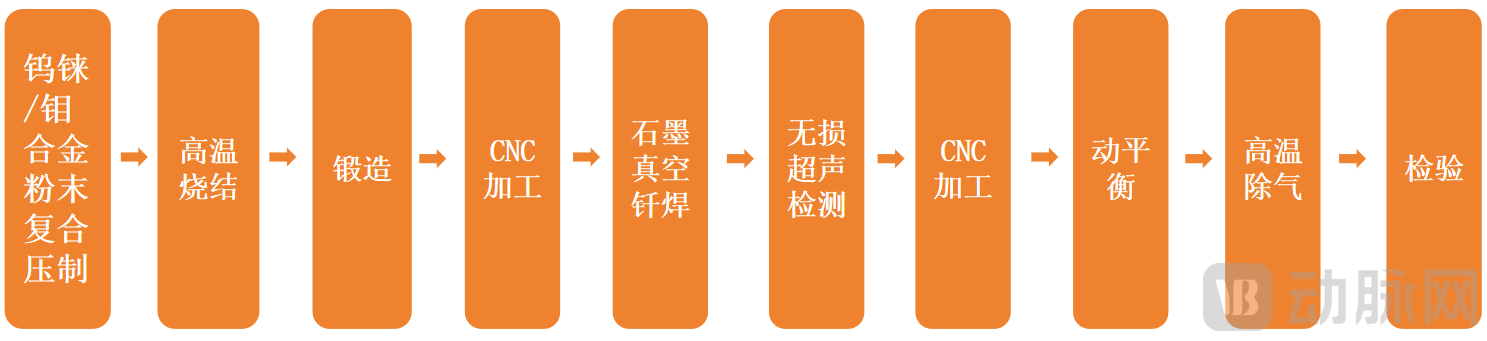
Production Process of Rotating Anode Targets, VCBeat Mapping
Nie Xipeng stated that the greatest challenge in manufacturing x-ray tube anode target discs lies in the welding technology between metal and graphite.Micro X-Ray Tech has successfully overcome a series of technical bottlenecks, enabling high-temperature brazing of target disks using two different alloy solders: zirconium alloy and titanium alloy. The company independently designs and manufactures rotating anode targets whose technical specifications fully match those of foreign competitors. This achievement in independent manufacturing has significantly improved heat dissipation efficiency and service life, ensuring stable operation of the X-ray tube under high-load conditions. Furthermore, the company is equipped with non-destructive testing (NDT) equipment that allows for 100% NDT inspection of target disks, thereby comprehensively guaranteeing their quality.
In 2024 alone, Micro X-Ray Tech supplied brazed target disks to multiple foreign X-ray tube manufacturers, with cumulative shipments exceeding 1,000 units.
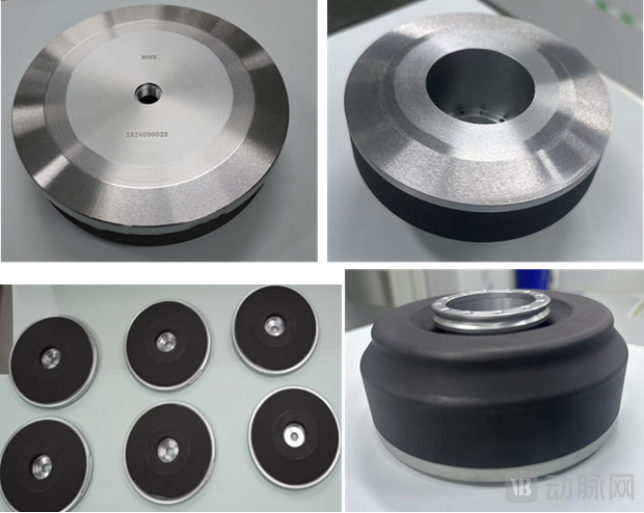
Micro X-Ray Tech's Self-Developed and Manufactured Target Products
Liquid metal bearings are a current research hotspot in the field of X-ray tube assemblies. By filling the gap between the rotor and the bearing with liquid metal to replace steel balls, they transform rolling bearings into hydrodynamic sliding bearings. This transition not only effectively addresses wear and noise issues but also significantly enhances the durability and stability of the X-ray tube assembly.
Since its inception, Micro X-Ray Tech has actively leveraged university-industry collaborations and external partnerships, dedicating substantial R&D resources to successfully develop liquid metal bearings, which have passed rigorous lifespan testing.The company has completed the construction of a fully integrated production line for liquid metal bearings, encompassing processes such as heat treatment, machining, femtosecond laser processing, coating, filling, and testing. Many of the equipment units were independently developed by the company, possessing full proprietary intellectual property rights.These advanced equipment ensure the superior performance and quality stability of bearings, which are ultra-precision components.
Thanks to the application of this technology, the medical X-ray tubes developed by Micro X-Ray Tech can operate stably for extended periods in high-power, high-patient-throughput diagnostic environments, while also extending the lifespan of CT tubes. Currently, Micro X-Ray Tech’s liquid metal bearings have entered the mass production phase.
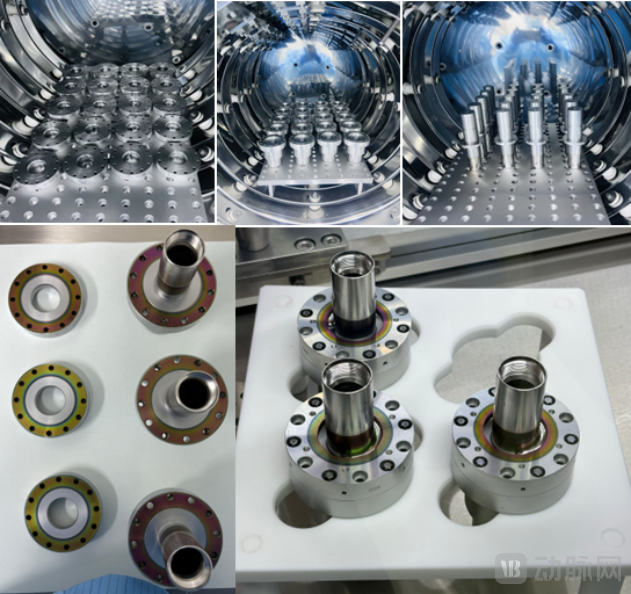
Micro X-Ray Tech's Self-Developed Liquid Metal Bearing
Nie Xipeng pointed out that the representative technology of X-ray tubes is high-voltage vacuum electronics, which constitutes a collection of numerous know-how elements and accumulated experience; improper control at any stage can lead to issues. Even after product development is completed, without effective management, it is difficult to maintain stable quality of X-ray tubes. The lifecycle of an X-ray tube is an eternal and continuous process of constantly identifying problems, solving them, encountering new issues, and resolving them again. Therefore, to manufacture high-quality X-ray tubes, it is essential not only to have strong R&D and product design capabilities but also to implement robust product lifecycle management.
Micro X-Ray Tech’s team holds significant advantages in this area.Leveraging the characteristics of Micro X-Ray Tech’s startup phase, the team designed a product management system tailored for domestic x-ray tube startups. This system ensures both high efficiency and product quality, resulting in a first-pass yield rate exceeding 90% for Micro X-Ray Tech’s in-house products. Based on actual end-user data, the average service life of Micro X-Ray Tech’s MXR360 product meets or exceeds that of well-known international competitors.
Micro X-Ray Tech’s business scope coversSales of certified products and core components such as target disks, as well as providing contracted development and OEM services for X-ray tubes to meet the needs of X-ray machine manufacturers and X-ray tube enterprises.Meanwhile, the company is also actively expanding its whole-machine business.OEM Business, currently in the technical integration and implementation phase with multiple OEM companies.
As of the press date, Micro X-Ray Tech has obtained Class II active medical device registration certificates for three medical X-ray tube assemblies: MXR360 (heat capacity 3.5 MHu, Su Xie Zhu Zhun 20242060137), MXR350 (heat capacity 6 MHu, Su Xie Zhu Zhun 20242060287), and MRX680 (Su Xie Zhu Zhun 20242062010).
It is reported that the company’s MXR750 (with a heat capacity of 7.0 MHu) and MXR180 products are scheduled to obtain medical device registration certificates in 2025.
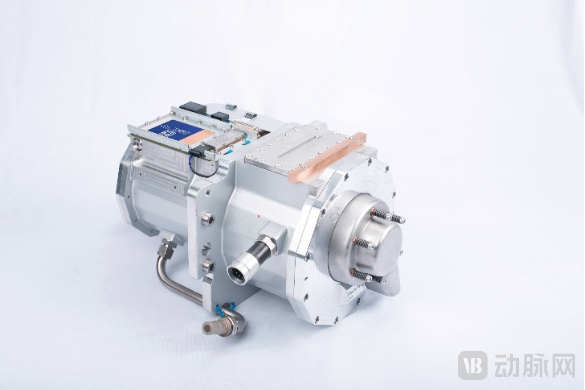
MXR360, Replacement X-ray Tube for Siemens goNow/goUp Series
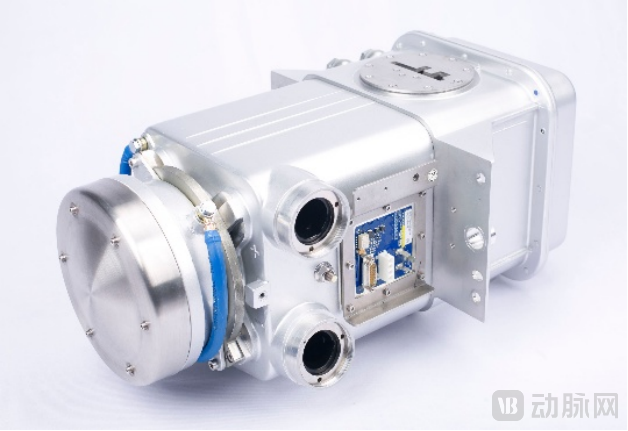
MXR680, Siemens Somatom Emotion 6, Emotion 16, Scope, Scope Power, Perspective, and Emotion PET Replacement X-ray Tube
Driven by its unwavering commitment to X-ray tube technology and the stable, reliable quality of its products, Micro X-Ray Tech’s offerings have been widely adopted by nearly 100 end-user clients, earning consistent acclaim. Furthermore, Micro X-Ray Tech has also collaborated with entities includingInternationally renowned X-ray tube manufacturer Varex Imaging, and domestically prominent healthcare group Universal Global Medicalestablished a close strategic cooperative development relationship.
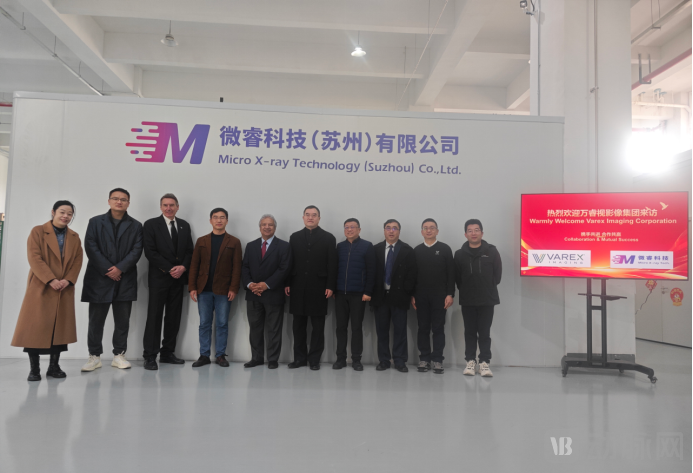
Figure: Mr. Sunny Sanyal, CEO of Varex Imaging Corporation; Mr. Mark Jonaitis, Vice President of Varex Imaging Corporation; Mr. Shaohua Liang, General Manager of Varex Imaging China; and other members of their six-person delegation visited Micro X-Ray Tech for discussions and exchanges, reaching a consensus on close strategic cooperation and development. This marks a new level in the partnership between the two parties.
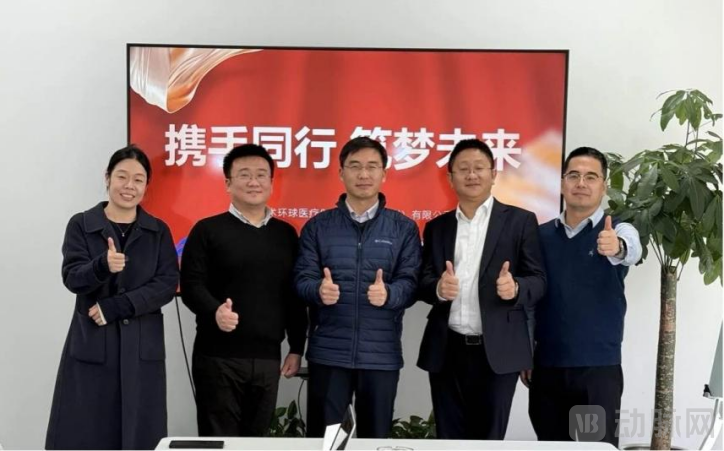
Micro X-Ray Tech and General Universal Medical Reach Strategic Cooperation Consensus
In the image, on the right (3rd person) is Nie Xipeng, founder of Micro X-Ray Tech; on the left (2nd person) is Huang Chongyang, General Manager of General Technology Universal Medical Technical Services Company.
Looking ahead, Micro X-Ray Tech will continue to strengthen its R&D capabilities, further deepen industry-academia-research collaborations, and actively expand its cooperative network with leading medical device manufacturers both in China and abroad. Through technology, innovation, and excellent service, the company aims to provide global customers with more efficient, safer, and more reliable medical imaging solutions.