

Surge in Male Aesthetic Spending: 'Refined Men' Reshaping the Medical Beauty Industry
When Men Pursue Beauty, They Are Even More “Obsessive” Than Women.
According to Deloitte’s “2024 Annual Insights Report on China’s Medical Aesthetics Industry,” men’s spending on medical aesthetic procedures continues to rise, with an annual growth rate exceeding 20%. Moreover, male patients are increasingly willing to explore a wider range of medical aesthetic treatments.
“In the past, many people considered medical aesthetics a ‘basic necessity’ for women. In reality, demand for such services among men has grown increasingly robust in recent years. Some seek to correct congenital defects and boost their self-confidence, while others face pressing needs related to dating, marriage, and job hunting,” said the executive director of a plastic surgery hospital in Chengdu, in an interview with VCBeat. “Since 2020, male-focused medical aesthetic procedures have become a key business priority for our institution.”
In addition to the growing number of participants, male aesthetic medicine now spans all age groups.It is understood that many financially capable men born after 2000 have joined the ranks of “refined gentlemen,” favoring minimally invasive aesthetic procedures such as intense pulsed light (IPL) skin rejuvenation and mesotherapy injections to maintain a youthful appearance. Meanwhile, working men over the age of 30 are keen on hair loss prevention or hair transplantation treatments to combat a “greasy” or unkempt look.
What is even more surprising to the outside world is that the average transaction value for male medical aesthetics customers is higher than that for female customers. Data from iiMedia Research reveals,The average transaction value per male aesthetic client is 2.75 times that of female clients.
Behind the continuously rising demand, another niche segment within the medical aesthetics industry is gradually emerging.
In the past, aesthetic medicine consumption was almost synonymous with women, but this landscape has begun to change.
In the past, men kept their aesthetic medical treatments a closely guarded secret. For instance, even in the entertainment industry, where physical appearance is highly prized, only a handful of male celebrities openly admitted to undergoing such procedures. Today, however, men’s use of aesthetic medicine has become an open secret, with many readily sharing their experiences on social media platforms—a significant shift from just a few years ago.
In other words, as societal attitudes shift, the acceptance and recognition of men undergoing medical aesthetic procedures continue to rise, becoming a significant factor driving industry expansion.
Moreover, there are four underlying reasons behind the surge in demand:
· First, middle-class men with strong purchasing power who opt for medical aesthetic treatments to address appearance-related concerns (such as hair loss prevention);
· Second, there is the growing cohort of men born in the 1990s and 2000s, a significant proportion of whom prioritize their personal image and exhibit strong demand for acne treatment and early anti-aging solutions;
· Third, some men undergo aesthetic treatments themselves while accompanying their partners or family members for medical aesthetic procedures, often at the suggestion of the clinic or their partners.
· Fourth, compared with women, men pay less attention to skincare and sun protection. Coupled with lifestyle habits such as smoking, alcohol consumption, and staying up late among some men, this has led to an increased demand for medical aesthetic services such as skin management.
In response to favorable industry opportunities, some chain medical aesthetic institutions have strategically separated their male-focused services. Specialized male medical aesthetic providers have also emerged in the market, such as Beijing Jiahe Plastic Surgery Hospital and Shanghai Jiulong Plastic Surgery Hospital, which offer procedures including male blepharoplasty, rhinoplasty, and genital rejuvenation; the Yongchun Male Plastic Surgeons Group, which specializes in male breast surgery; Chao Nan Gong She (Super Male Club), which focuses primarily on men’s skincare; and hair transplant specialists like Yonghe Medical and Bilian Sheng.
The resonance between supply and demand is ultimately driving the expansion of the male medical aesthetics market. Taking the non-surgical medical aesthetics market as an example, its scale is projected to reach RMB 227.9 billion in 2025, with men accounting for nearly 15% of the overall market. Therefore, the male non-surgical medical aesthetics market is estimated at approximately RMB 34 billion, representing a substantial market size.
In a continuously growing market, which niche segments offer the greatest market opportunities?
There are significant differences between men and women in the selection of medical aesthetic procedures.
VCBeat has found, through an analysis of major mainstream online medical aesthetics platforms such as Meituan Medical Aesthetics, Tmall Medical Aesthetics, So-Young, and Gengmei, that men show a strong preference for aesthetic procedures related to hair loss prevention (including hair transplantation) and maintaining a youthful appearance (such as photoelectric treatments for skin rejuvenation and whitening, as well as acne and spot removal).
Among these, anti-hair loss (including hair transplantation), as one of the most important sub-sectors, has become a rigid demand. According to data from the National Health Commission, the number of men suffering from hair loss in China has reached 163 million and continues to grow.
To address the issues of hair loss and thinning hair, innovative companies such as Yonghe Medical, Biliansheng, and Damai Microneedle Hair Transplantation have emerged in the market. Taking the publicly listed Yonghe Medical as an example, its latest financial report shows that the number of individuals undergoing hair transplant surgery at Yonghe Medical continued to increase in the first half of 2024, reaching a total of 29,272 (compared to 28,304 in the same period of 2023). The average spending per hair transplant patient also saw synchronous growth, amounting to approximately RMB 22,900 (compared to RMB 22,600 in the same period of 2023), which clearly demonstrates the robustness of the anti-hair loss market.
To expand their market presence, hair transplant clinics are continuously broadening their service offerings to include comprehensive solutions such as hair care maintenance, hair transplantation, and aesthetic design, thereby meeting consumers’ diverse needs through diversified services.
Meanwhile, the booming downstream service sector has presented opportunities for upstream pharmaceutical and medical device manufacturers. Currently, the development of new anti-hair loss drugs and hair transplant robots is accelerating, which will significantly enhance the efficacy of hair health care and attract more male aesthetic seekers.
For instance, HAIRO®, the first-generation hair follicle extraction device developed by Bangce Medical with fully independent intellectual property rights, has recently obtained a Class III medical device registration certificate from the National Medical Products Administration (NMPA). Reportedly, this hair transplant robot is specifically designed for the hair characteristics of Asians. It leverages stereoscopic vision positioning technology to accurately identify hair follicles and employs algorithms to plan and control the robotic arm for follicular unit extraction. The system offers advantages in increasing the multi-follicular unit extraction rate, thereby reducing the number of traumatic wounds, maintaining the integrity of follicular punctures, improving treatment efficiency, and enhancing patient experience.
Maintaining a Youthful Appearance. Since men’s skin tends to produce more sebum than women’s, coupled with neglect in daily skincare routines, men are more prone to issues such as an imbalance of oil and moisture, acne, and post-acne marks. Consequently, acne treatment and spot removal have become essential skincare steps for many men.
Among the products displayed in medical aesthetic institutions, those containing glycolic acid (an alpha-hydroxy acid that moisturizes and accelerates keratinocyte turnover), mandelic acid (which helps regulate sebum secretion), and salicylic acid (which dissolves comedones, unclogs pores, and exerts anti-inflammatory effects) are predominant.
Furthermore, energy-based aesthetic procedures are becoming a popular choice among male patients due to their significant efficacy in spot removal and skin rejuvenation, as well as their gentle, non-invasive nature and rapid recovery. Taking intense pulsed light (IPL) skin rejuvenation as an example, this treatment utilizes photothermal effects to deliver photon energy to the dermis, promoting pigment metabolism, regulating sebum secretion, and stimulating subcutaneous collagen regeneration. This helps improve skin conditions such as laxity, wrinkles, and enlarged pores. According to Deloitte’s “2024 Annual Insights Report on China’s Medical Aesthetics Industry,” the penetration rate of energy-based procedures among male aesthetic seekers remains consistently high.
Besides acne and acne marks, which can make one appear older, eye bags can also contribute to a haggard look.Therefore, lower blepharoplasty has also become a common procedure in male medical aesthetics. Depending on the surgical approach, lower blepharoplasty is categorized into transcutaneous (external) and transconjunctival (internal) approaches. The orbital fat repositioning technique, an improvement upon the external approach, involves neither excising nor removing fatty tissue; instead, the fat is displaced inferiorly and secured at the tear trough area, thereby achieving simultaneous correction of eye bags and augmentation of the tear trough.
It is worth noting that, similar to women, men’s skin also gradually becomes lax and sagging with advancing age, creating an urgent demand for treatments focused on firming and lifting. Consequently, many medical aesthetic clinics are now recommending procedures such as Thermage and Ultherapy to male clients to achieve skin tightening and lifting effects.
Of course, hair loss prevention and maintaining a youthful appearance are not the entirety of male aesthetic medicine; some relatively niche demands are also gradually gaining popularity, supporting a considerable market space.
For instance, in China, many men experience an imbalance between local estrogen and androgen levels in the breast tissue or systemically, leading to mammary gland hyperplasia and resulting in gynecomastia, which is characterized by breast enlargement. Consequently, many patients seek plastic surgery to reduce breast size. To address this demand, medical aesthetic service providers such as the Yongchun Men’s Plastic Surgeons Group have emerged in the industry.
From this perspective, as the male demographic in medical aesthetics continues to expand, there will inevitably be more opportunities for innovation and entrepreneurship tailored to increasingly segmented market demands.
Market size and potential niche opportunities often determine a company’s growth ceiling; however, the effective conversion of commercial value does not rely on blueprints or conceptual visions. Only by strengthening channel development and precisely aligning with market demand can these opportunities be truly realized.
From the current perspective, as competition among medical aesthetics institutions intensifies (data from Qichacha shows that there are over 140,000 existing medical aesthetics-related enterprises in China), traditional marketing is beginning to lose its effectiveness. How to acquire customers efficiently has become a major challenge for many practitioners in the medical aesthetics industry.
Currently, the primary channels for medical aesthetics customer acquisition mainly come from three major segments: offline promotion, online advertising, and content platforms.It should be noted that, strictly speaking, content platforms also constitute a form of online advertising; however, they are treated as a distinct category due to differences in operational logic.
Offline promotion includes outdoor advertising, elevator media, and channel hospitals. In the outdoor advertising sector, representative companies include Changjiang Media and Huayi Media; elevator media is primarily dominated by Focus Media and Xinchao Media, among others. Channel hospitals are fragmented in distribution, with their core customer acquisition strategy relying on referrals through personal networks. In the early stages of the medical aesthetics industry’s development, offline promotion was the primary driver, but the methods were relatively crude and inefficient, particularly as channel hospitals frequently experienced doctor-patient disputes.
Over the past decade, online advertising and platform-driven traffic acquisition have experienced significant growth, becoming key strategic focus areas for the medical aesthetics industry.
In terms of online advertising, search engines, e-commerce platforms, and local lifestyle service platforms—such as Baidu, Tmall, and Meituan—are the core channels. The former primarily operates through bidding-based ranking to secure premium ad placements, thereby more precisely attracting potential aesthetic medicine consumers. Specifically, when users actively search for keywords (e.g., “hair transplantation,” “IPL skin rejuvenation pricing”), search engines accurately recommend relevant institutions; this reflects clear user intent and yields higher conversion rates. The latter facilitates connections between medical aesthetics providers and consumers by recommending services based on users’ direct searches within the platform (keyword-based recommendations) or leveraging algorithmic recommendations derived from search behavior patterns (user profile-based push notifications).
In terms of content platforms, the main players include community, video, Q&A, and article-and-image new media platforms such as Xiaohongshu (Little Red Book), Douyin (TikTok China), Kuaishou, WeChat Official Accounts, So-Young, Gengmei, and Zhihu. Despite differences in presentation formats, the essence of content platforms remains the same: to attract individuals seeking aesthetic treatments through various types of content, ultimately aiming to capture user mindshare.
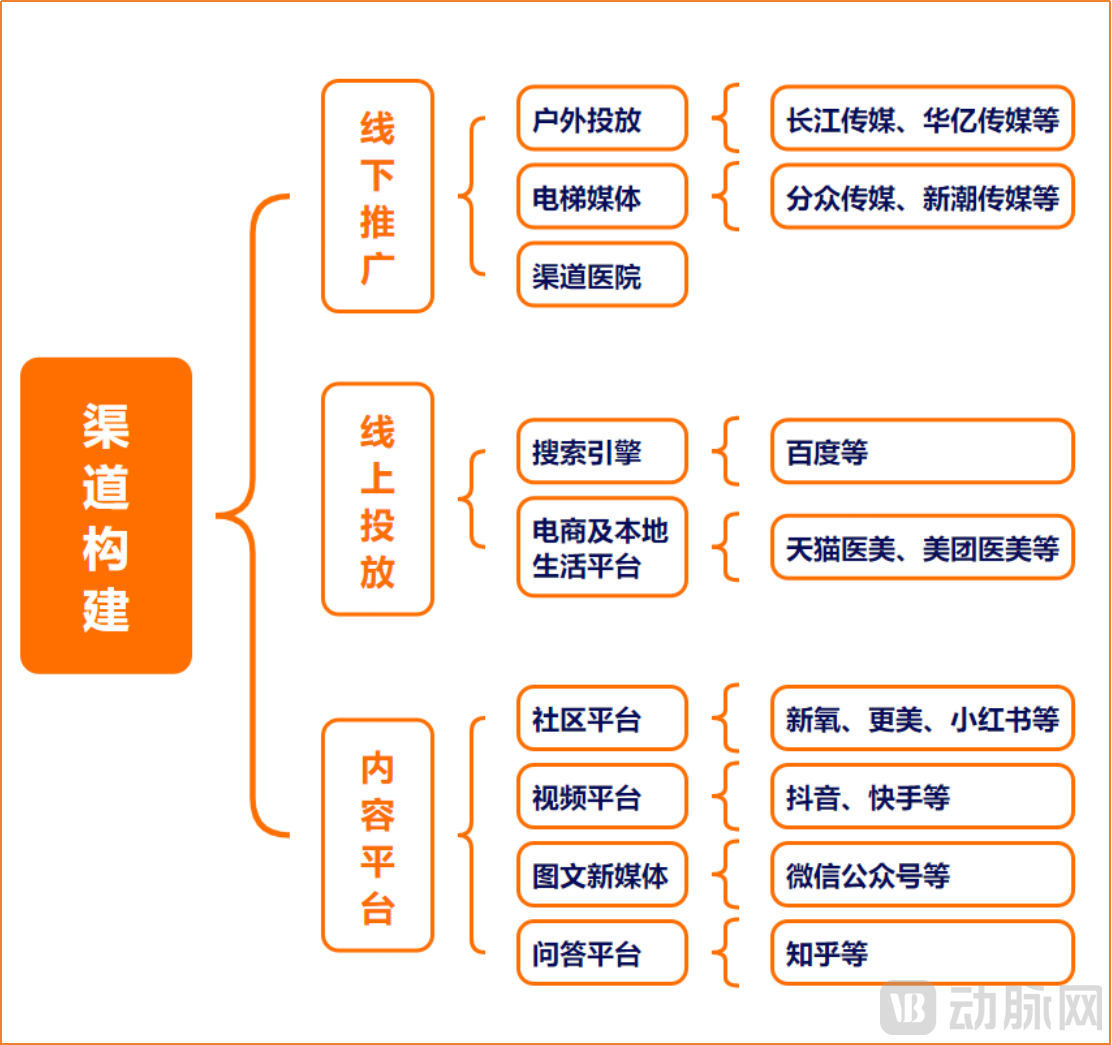 ▲ Classification of Medical Aesthetics-Related Channels | Graphic by VCBeat
Among the aforementioned channels, how should male practitioners in the medical aesthetics industry make their selections to achieve optimal results?
“Male aesthetic consumers are more rational in their spending, prioritizing tangible results and disliking overly aggressive marketing tactics.“The executive dean of the aforementioned plastic surgery hospital stated, ‘This has madeIn channel operations, provide users with more deterministic, evidence-based efficacy demonstrations and offer straightforward pricing.”
Therefore, showcasing real-life case studies (such as before-and-after comparisons for acne treatment and hair transplantation) on content platforms to generate user interest has become a key strategy for attracting male aesthetic seekers. It is understood that Douyin and Xiaohongshu, which are dominated by short videos and image-text posts respectively, have garnered the highest attention due to their suitability for displaying medical aesthetics outcomes. On these two platforms, institutions typically collaborate with medical aesthetics influencers, who share their personal treatment experiences on their accounts to attract user attention and drive conversion.
Take Luo Wangyu, a well-known skincare influencer on Xiaohongshu (Little Red Book), as an example. His video account primarily covers medical aesthetics, skincare, and cosmetics. In terms of brand tone, Luo Wangyu’s professional background as a Ph.D. in medicine and his extensive clinical experience working in the Dermatology Department of Shanghai Ninth People’s Hospital serve as strong credentials for his expertise. Meanwhile, the account places significant emphasis on explaining ingredient compositions and their efficacy.
For another example, Dr. Xu Ye, a Douyin content creator, develops video topics based on common scenarios such as daily work routines, skincare and sun protection, and the treatment of pigmentation and acne. He also shares content with a more male-oriented focus, such as brow lifts and experiences for expectant fathers, to strengthen engagement with male users.
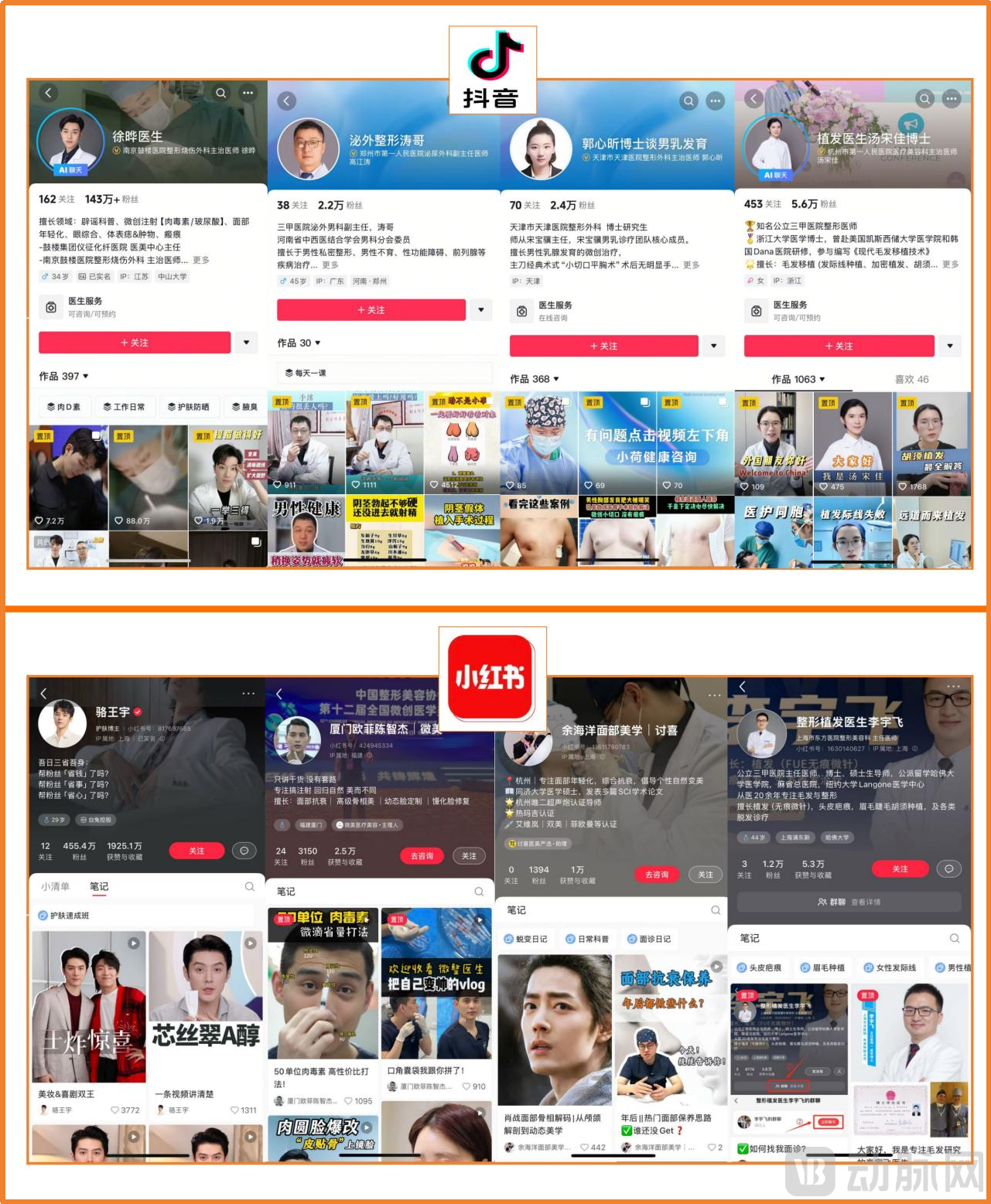 ▲ Some bloggers on Douyin and Xiaohongshu covering male medical aesthetics content. Graphic by VCBeat.
Furthermore, providing users with clear and predictable pricing expectations has become a key strategic focus for medical aesthetic institutions. Taking hair transplantation as an example, companies such as Yonghe Medical have invested heavily in video-based platforms like Douyin (TikTok), with content primarily centered on transparent pricing to alleviate consumer concerns about hidden costs.
Certainly, distribution channels must not be singular. At present,The entire industry is increasingly recognizing that the future of medical aesthetics lies in omni-channel marketing, which involves integrating public-domain and private-domain traffic to build a self-sustaining marketing closed loop for enterprises.A core element is to retain data within the medical aesthetics institution, thereby enabling long-term insights into user needs and facilitating targeted adjustments to product portfolios, development of blockbuster products, and design of promotional campaigns.
It is important to note that for medical aesthetics institutions, channel development drives incremental growth. In addition to exploring new channel strategies, greater emphasis should be placed on improving patient reviews and enhancing the service experience.
After all, the quality of medical services is the core competitiveness of the medical aesthetics industry. It not only determines the trust and loyalty of beauty seekers but also serves as the cornerstone for the industry’s standardization and sustainable development, directly influencing the realization of long-term market value.