

Embracing Digital-Intelligent Transformation to Drive Cost Reduction and Efficiency Gains: Accelerating Smart Manufacturing Advancement and Ecosystem Building in the High-Value Medical Consumables Industry
In recent years, driven by factors such as population aging, rising prevalence of chronic diseases, technological advancements, and supportive policies, the market for high-value medical consumables has ushered in new development opportunities. On one hand, technological innovation is driving product upgrades; on the other, policy guidance is accelerating the substitution of imported products with domestically produced ones, prompting enterprises to transition toward higher value-added offerings.
However, the industry still faces multiple challenges, such as insufficient international recognition, overcapacity in low-end production, monopoly of the high-end market by international giants, and profit compression pressures brought by volume-based procurement. Industrial transformation and upgrading are imminent. Only through digital and intelligent supply chain management, enhancement of original design manufacturing (ODM) capabilities, and global market layout can the industry break free from "OEM dependence" and enhance its comprehensive competitiveness.
Against this backdrop, the event titled ["Rising Winds Over Blue Waves, Setting Sail for New Horizons" 2025 Medical Device Industrial Park Roadshow Series – Shenzhen Stop], jointly organized by Guoke Hengxing, China Merchants Industrial Park, and VCBeat, was successfully held in Shenzhen on February 20. The event focused on high-value orthopedic consumables, neurointervention, cardiovascular intervention, and in vitro diagnostics (IVD), bringing together more than ten companies and investment institutions to engage in in-depth discussions on future development and transformative opportunities in the high-value medical consumables sector, thereby providing innovative solutions to empower industrial transformation and upgrading and enhance the competitiveness of the industry chain.
1Digital Intelligence Transformation Empowers Cost Reduction and Efficiency Enhancement, Facilitating Comprehensive Digital Transformation for High-Value Medical Consumables Enterprises
At the beginning of the meeting, Guoke Hengtai①Vice General Manager & Chief Information Officer (CIO), Guoke Hengxing②General Manager Luo Hua delivered the opening remarks on behalf of the event organizer. He pointed out that, against the backdrop of rapid development in the high-value medical consumables sector, Guoke Hengxing, as a subsidiary of Guoke Hengtai, is a high-tech enterprise dedicated to digital empowerment in the high-value medical device segment. By leveraging advanced management tools, models, and AI capabilities, the company helps high-value medical device enterprises achieve comprehensive digital transformation in their sales scenarios. He expressed his anticipation for collaborative discussions with industry peers on empowering the industrial upgrade of high-value medical consumables and wished the event a complete success.
During the keynote session, Zhao Qinghao from the Industrial Development Department of China Merchants Industrial Park (CMIP) delivered a presentation titled “CMIP’s Industrial Organization and Service System.” As an integrated industrial development platform under China Merchants Shekou, CMIP focuses on five key sectors: digital intelligence technology, life sciences, green technology, intelligent manufacturing, and cultural industries. It has laid out 32 park projects across core cities in China. Leveraging internal financial and industrial resources within the China Merchants Group, as well as external strategic partners, CMIP provides industrial services to tenant enterprises in areas such as market access, financing, technology, and talent. Additionally, it has created multiple service IPs to support business growth and expansion. Its current product portfolio includes Net Valley, Yiku, Smart City, and Innovation Centers, catering to enterprises in science and technology innovation, cultural creativity, and at various stages of growth. High-quality enterprises are welcome to settle in and join the China Merchants Group’s industrial ecosystem.
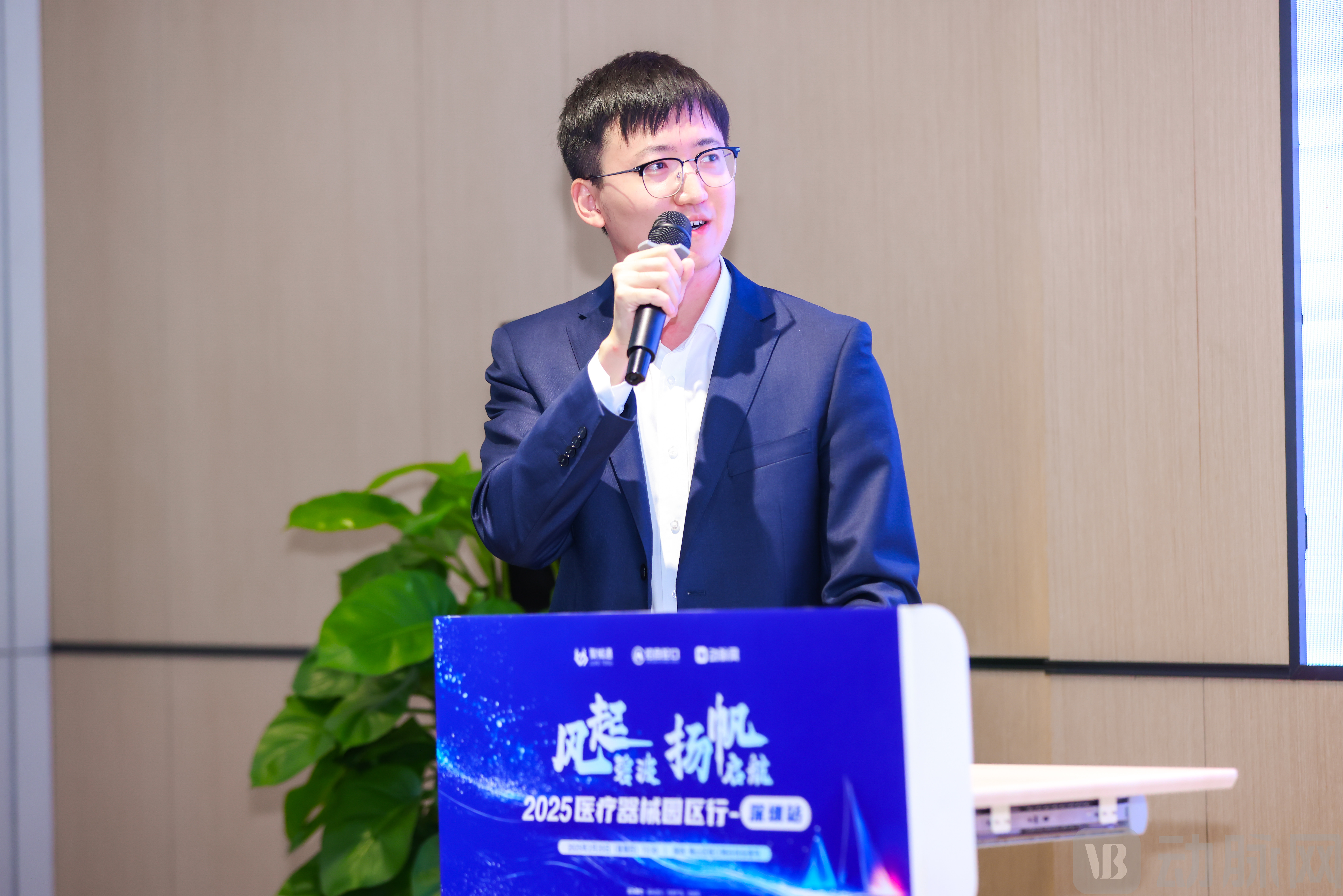
Zhao Qinghao, Industrial Development Department, China Merchants Industrial Park
Sun Peng, Co-founder and CEO of KeraChi Medical, delivered a keynote presentation titled “The Future Healthcare Supply Chain: How Digital Intelligence Technologies Are Reshaping the Industry Ecosystem.” He pointed out that digital intelligence platforms establish a closed loop from clinical needs to commercialization, enabling rapid fulfillment of clinical demands. Meanwhile, AI will help shorten the R&D validation process and accelerate product registration. Sun emphasized that innovation-driven and operation-driven strategies are equally important for enterprises and constitute the core of the industry ecosystem. He stressed the need to provide comprehensive product solutions and forward-looking innovative technologies, break down “information silos,” integrate early-stage R&D with later-stage production, and leverage digital intelligence transformation to enhance mastery of key technologies and cost control.
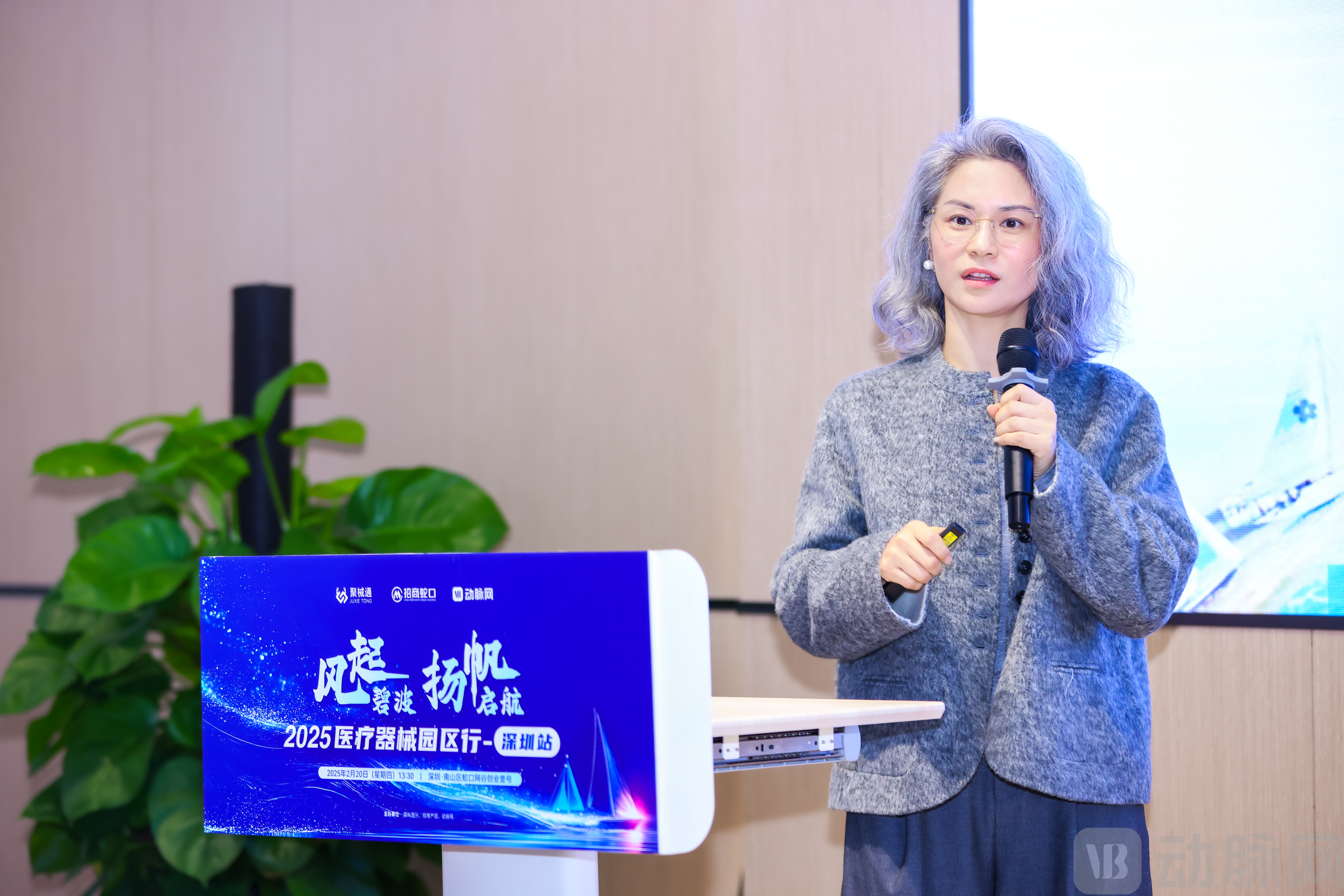
Sun Peng, Co-founder and CEO of Keruichi Medical
Luo Hua, Deputy General Manager and Chief Information Officer (CIO) of Sinotech Hengtai and General Manager of Sinotech Hengxing, delivered a keynote speech titled “Leveraging Digitalization to Help High-Value Medical Device Enterprises Reduce Costs and Improve Efficiency.” He pointed out that Sinotech Hengxing has built a digital solution covering the entire chain of “channel operations—supply chain circulation—terminal services,” leveraging its parent company Sinotech Hengtai’s years of in-depth experience in the medical device supply chain sector, thereby helping enterprises address core industry pain points. On the channel operations front, an intelligent qualification review system interfaces with the National Medical Products Administration database to achieve dynamic verification of distributor qualifications and risk early warning, complemented by electronic signing, tiered authorization, and closed-loop management of commercial policies. In terms of supply chain management, pain points related to returns and exchanges, surgical instrument management, and financial settlement are addressed through measures such as referencing contract clauses, system matching, and digital management, thus facilitating transactions between manufacturers and distributors. In terminal service scenarios, the innovative integration of mobile-based surgical scheduling systems with UDI (Unique Device Identification) verification technology ensures that data for high-value consumables is authentic and traceable from factory exit to final implantation at the point of care.
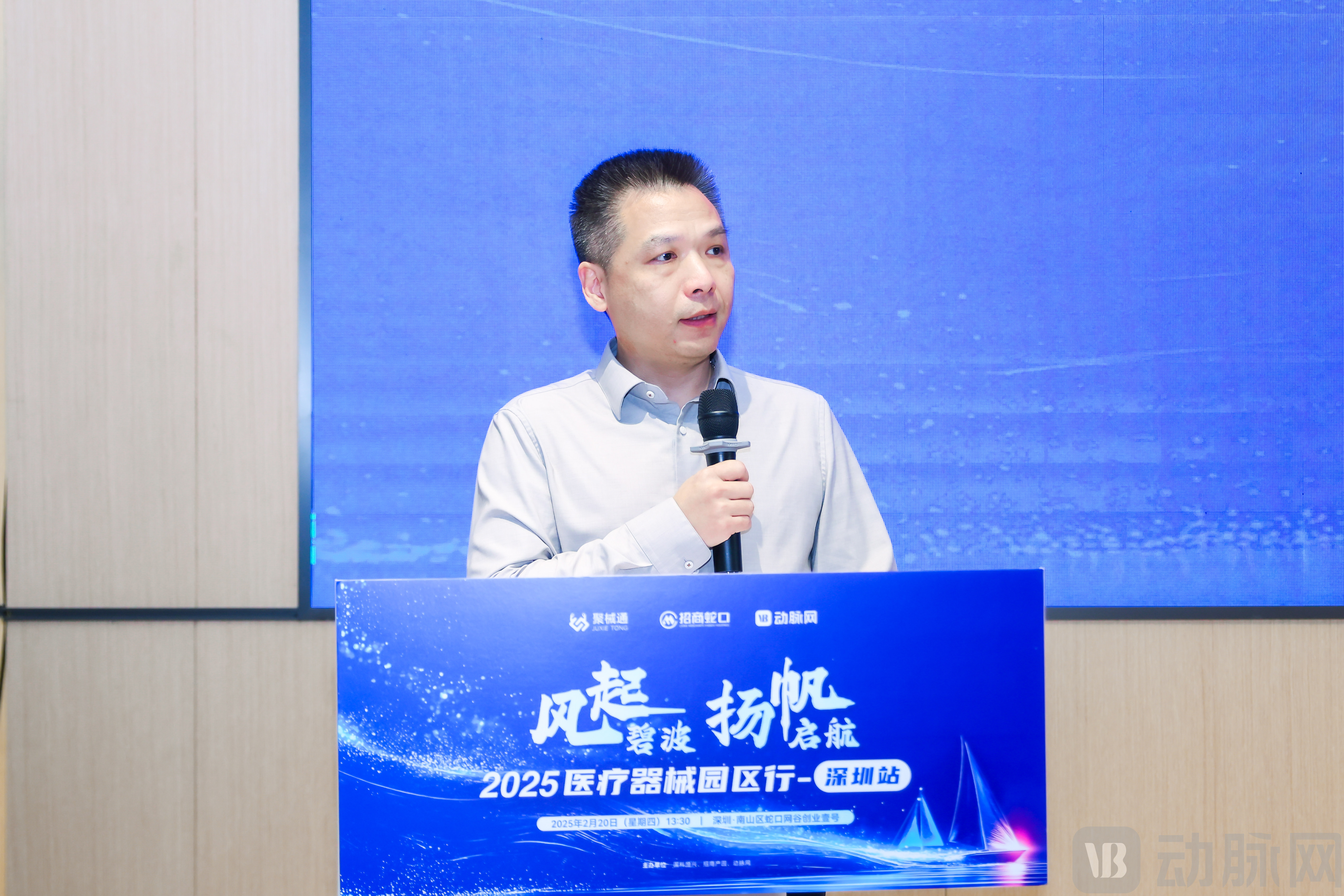
Luo Hua, Deputy General Manager & Chief Information Officer (CIO) of Guoke Hengtai and General Manager of Guoke Hengxing
Overall, Guoke Hengxing boasts three major advantages: First, it possesses deep industry expertise, with extensive frontline experience and a thorough understanding of the needs of various stakeholders—including policymakers, regulators, distributors, and hospitals—along with specialized know-how. Second, it demonstrates industry leadership by serving a wide range of domestic and international enterprises, distilling advanced management practices into digital tools that enhance management quality and help businesses save time and effort. Third, it adopts a cloud-based model to deliver tailored best management practices to over 90% of small and medium-sized enterprises (SMEs) in a flexible and cost-effective manner. Luo Hua stated that the company aims to share its accumulated experience in channel management to help enterprises strengthen their capabilities, gain precise insights into policies, and mitigate operational risks.
2China’s Innovation Surge and Accelerated Domestic Substitution: Emerging Players in High-Value Medical Consumables Deliver Impressive Results
During the project pitch session, six emerging companies shared their insights.
Zeng Lijiang, CEO of Shenzhen Hechuan Medical Technology Co., Ltd., stated that the company is headquartered in Longhua, Shenzhen, with its core business focused on microfluidic biochips. Eighty percent of the company’s revenue comes from overseas operations. Having initiated its global expansion strategy in 2021, Hechuan Medical has established subsidiaries in Singapore and the United States and set up a manufacturing facility in Malaysia. Over the past decade-plus, the company has served hundreds to thousands of projects, focusing on enhancing team capabilities and refining technologies while meeting market and customer demands. It has also fine-tuned its customer selection strategy, placing greater emphasis on large-scale clients and major projects.
Li Chen, Deputy General Manager of iCellon, introduced that the company specializes in providing comprehensive solutions for repair, reconstruction, and regeneration. By leveraging innovative 3D printing technology combined with trillions of real-world human bone samples, morphological data, and microstructural elements accumulated over three to five years, the company has developed products that fully address patients’ individualized needs. In terms of regeneration, the company ensures that regenerative proteins function in a long-lasting, stable, and safe manner, while avoiding side effects caused by overuse. As one of the earliest enterprises in China to initiate research on 3D-printed personalized implants, its products have completed clinical trials and are poised to obtain regulatory approval for commercial sales.
Li Xinxin, Marketing Director at Zhongtian Medical, introduced that the company is committed to providing one-stop innovative solutions for pan-vascular interventions and has currently obtained a total of 20 product registration certificates. Zhongtian Medical achieved break-even in 2024, with commercialization revenue approaching RMB 200 million, and completed a Series C financing round of over RMB 100 million in the fourth quarter of last year, demonstrating strong growth momentum. The company adheres to the development strategy of “intervention before implantation, acute conditions before chronic ones, and neurovascular before peripheral.” Its core product, the peripheral embolization coil, is the first fully controllable, mechanically detachable coil in China. Meanwhile, the company is actively expanding into the carotid artery stent market. Zhongtian Medical has established eight major technology platforms, which basically meet the R&D and innovative iteration needs for all pan-vascular interventional devices.
Zhang Yaowen, Assistant to the General Manager of Shenping Medical, introduced that the company settled in the Zhuhai High-Tech Industrial Development Zone through investment attraction in 2016 and currently operates a manufacturing facility spanning 2,800–3,000 square meters. The company focuses on the research and development, production, and sales of high-value interventional consumables. It first entered overseas markets in 2021, and several of its products have already obtained CE, FDA, and MDSAP certifications. The core team members come from the implantable and interventional medical fields, with each member possessing over 17 years of industry experience in R&D technology, product registration, and marketing. Currently, the company has launched eight products covering hemostasis, ischemia, and vascular access solutions. Additionally, it is developing other product lines, including embolic microspheres, peripheral coils, and guidewires.
Hao Zhaoning, Director of the General Office at Saihe Medical, introduced that Saihe Medical is a provider and pioneer of active interventional diagnosis and treatment solutions for pan-vascular diseases in China. The company completed four rounds of financing totaling over RMB 500 million within more than four years. Currently, the company has obtained registration certificates for three products. Its first certified product, the Coronary Intravascular Lithotripsy (IVL) System, has been adopted by more than 3,000 hospitals across China, generating revenue exceeding RMB 60 million in 2024. Additionally, it has secured four overseas product registration certificates and launched commercial operations in Latin America, the Middle East, North Africa, Southeast Asia, and other regions. Since its inception, the company has strategically positioned itself with a platform-based product portfolio centered on diagnosis and treatment. Products such as coronary dual-guidewire systems and drug-coated balloons are scheduled to enter the commercialization phase in 2025 and 2026, respectively.
He Siqi, Head of Investment and Financing at Yuanxin Technology, introduced that the company currently has three to five products in human clinical trials, leveraging its platform for iron-based bioresorbable vascular scaffolds. Yuanxin Technology is the only enterprise globally with a technological pathway for iron-based bioresorbable vascular scaffolds, and aims to redefine the market size of coronary stents in China. The company’s vascular scaffolds are characterized by their thin profile and strong radial support. Since 2006, Yuanxin Technology has focused on research in the iron-based domain, with its core technical barrier lying in the nitrided iron process—the only bioresorbable technological route that does not compromise scaffold performance. Its pediatric pulmonary artery stent received approval in Europe in 2023 for indications related to rare pediatric diseases, while clinical trials for its below-the-knee peripheral stent are being conducted simultaneously in Europe and China. The coronary stent is expected to obtain the Class III medical device registration certificate in China by the end of this year.
3Driving Upstream and Downstream Collaboration and Development in the Medical Device Industry Amid Digitalization Trends
During the roundtable discussion, Liu Shaohua, Head of Marketing at Guoke Hengxing, served as the moderator. The panelists included Sun Peng, Co-founder and CEO of Kerecis Medical; An Guoqing, Co-founder of Gulf Biologics; Liu Yuwu, Assistant to the General Manager of Guoke Hengxing; and Zhang Xiao, Director of Industrial Investment at China Merchants Industrial Park. The guests shared insights and engaged in discussions centered on the theme “Innovation-Driven Transformation and Strengthened Linkages: Collaboration and Development Across the Upstream and Downstream Medical Device Industries in the Era of Digitalization.”
In recent years, driven by policy guidance, the medical device industry has been increasingly moving toward digitalization. Data-driven operations, visualization, collaboration, and compliance have become essential requirements for corporate development. Enterprises need to adapt to the times and align with prevailing trends, making sustained efforts in channel management, digital transformation, industrial digital collaboration, and supply chain restructuring.
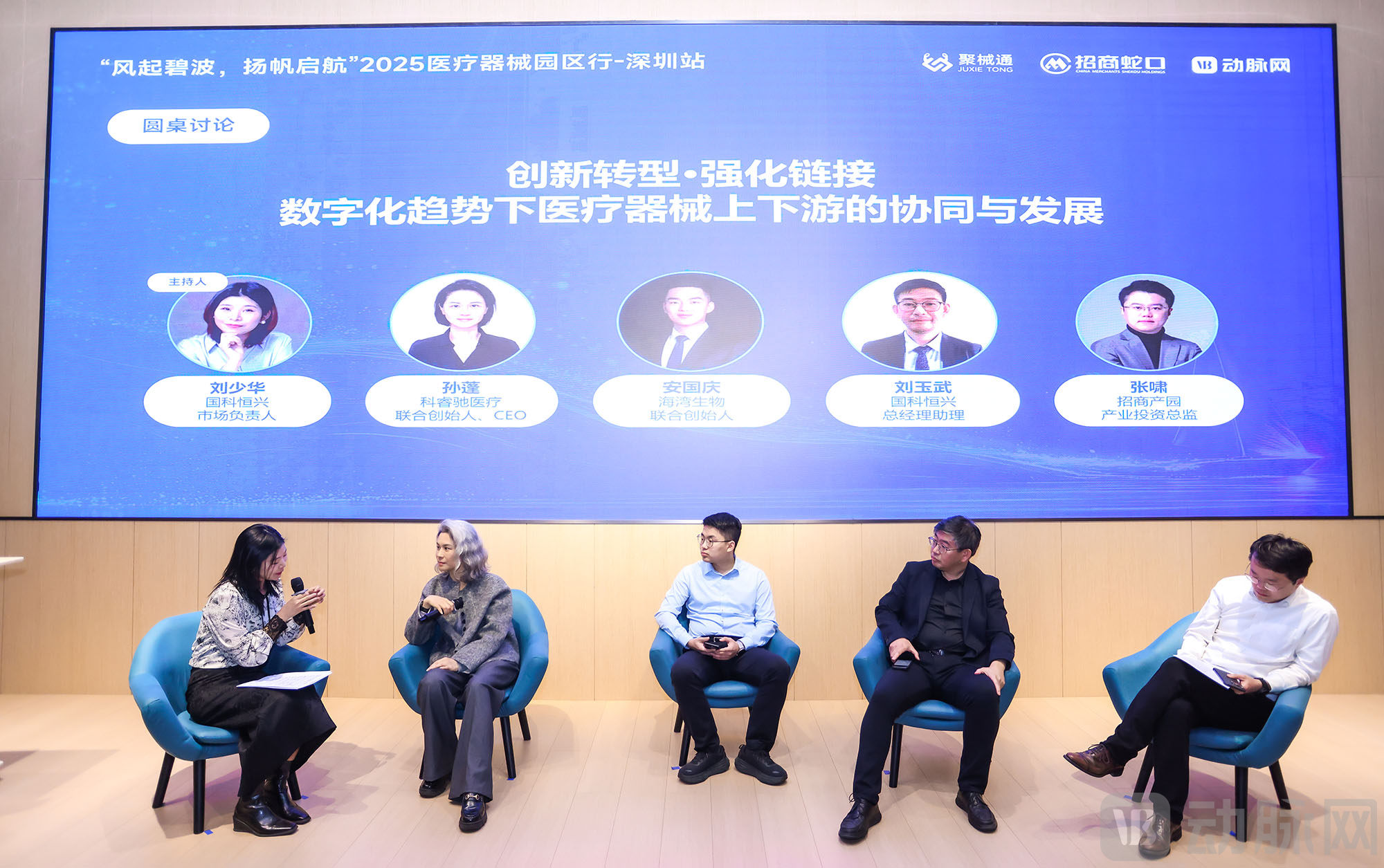
From left to right: Liu Shaohua, Head of Marketing at Guoke Hengxing; Sun Peng, Co-founder and CEO of Keruichi Medical; An Guoqing, Co-founder of Gulf Biologics; Liu Yuwu, Assistant to the General Manager of Guoke Hengxing; Zhang Xiao, Director of Industrial Investment at China Merchants Industrial Park.
Sun Peng, Co-founder and CEO of Keraichi Medical, stated that in response to healthcare reform policies shifting toward digital intelligence, the company had early on laid out its digital and intelligent manufacturing strategy. Meanwhile, it has embraced centralized procurement, implemented strict cost controls, and managed costs by expanding overseas to release production capacity. In terms of channel management, the company employs a Distributor Management System (DMS) to achieve refined management of distributor authorization, product implantation, and ordering, thereby saving time and reducing costs. Regarding the joint development of digital collaboration platforms with upstream and downstream partners, cooperation with downstream distributors is already underway; collaboration with hospitals depends on the hospitals’ initiatives; and engagement with upstream suppliers is currently less necessary due to the broad scope involved.
An Guoqing, co-founder of Gulf Biologics, introduced that the company is engaged in the development of marine biomaterials. Driven by policy incentives, it leverages its integrated raw material advantages to offer distributors greater profit margins amid centralized procurement; meanwhile, it relies on advanced physical cross-linking technology to collaborate with professional teams in developing high-value-added products, while partnering with channel holders for sales. Looking ahead, in terms of digital transformation, the company plans to establish a resource system for biomedical polymer materials, accumulate production process data, and explore AI applications in the development phase.
Liu Yuwu, Assistant to the General Manager of Guoke Hengxing, stated that the company provides end-to-end digital services for medical devices. Against the backdrop of centralized procurement, it helps enterprises reduce costs, improve efficiency, and innovate their business models through digitalization—for instance, by leveraging data capabilities to help companies quickly identify suitable distributors and facilitate hospital market access. From the perspective of industrial synergy, the “Juxietong” platform leverages its own capabilities and experience to assist medical device enterprises in achieving digital synergy across upstream and downstream sectors. Such industrial synergy is of great significance to the healthy development of the industry.
Zhang Xiao, Investment Director of Industrial Parks at China Merchants Group, noted that the digitalization of the medical device industry is a long-term endeavor, and enterprises should advance it in accordance with their respective stages of development. Companies equipped with digital capabilities—such as data-driven decision-making, automated and intelligent R&D and production, and regulatory compliance—are more competitive. From the perspective of industrial park operators, there is hope that the government will introduce supportive policies, such as subsidies, to promote digitalization in the medical device sector. Meanwhile, industrial park operators themselves must build connectivity capabilities and collaborate with technology solution providers to establish platforms.
Amid the wave of digitalization and intelligence, the high-value medical consumables industry stands at a crossroads of transformation. Companies have increasingly recognized that embracing digital and intelligent technologies and promoting coordinated development across the upstream and downstream supply chains are essential pathways to overcoming challenges and achieving significant advancement. In this process, Chinese enterprises will accelerate industrial upgrading amidst the digital and intelligent revolution, build a more competitive industrial ecosystem, and jointly propel the high-value medical consumables industry to new heights.
Note 1. The full name of Guoke Hengtai is: Guoke Hengtai (Beijing) Medical Technology Co., Ltd., stock code: 301370;
Note 2. The full name of Guoke Hengxing is Guoke Hengxing (Beijing) Medical Technology Co., Ltd.