

Hangzhou Again! Executive Training Program Accelerates Full-Scale AI Integration into the Pharmaceutical Industry
In the current era, where the wave of digitalization is sweeping across the globe, artificial intelligence technology is penetrating into various fields at an unprecedented pace.
In 2025, DeepSeek emerged onto the scene and quickly became a global focal point. Its influence rapidly extended into the biopharmaceutical sector, injecting new vitality into the global industry while quietly ushering in a technological revolution.
Multiple Leading Pharmaceutical Companies Announce Full Adoption of DeepSeek; the “Biological Version of DeepSeek” Has Emerged
The emergence of DeepSeek has rapidly drawn significant attention from leading pharmaceutical companies, prompting them to actively seek deep integration with emerging technologies in order to gain a competitive edge in future market competition.
Several leading domestic pharmaceutical companies, such as Hengrui Medicine and Innovent Biologics, have successively announced full integration with DeepSeek, aiming to optimize business processes, enhance efficiency, and reduce costs through AI technology. Fosun Pharma has also recently partnered with Shuimu Molecular to develop the PharmAID Decision Intelligence Agent Platform, establishing a lifecycle-wide intelligent decision-making network that covers innovative R&D scenarios, thereby effectively improving drug development efficiency and decision-making accuracy.
Shortly after DeepSeek’s emergence, “biological versions of DeepSeek” rapidly emerged both in China and abroad, igniting a frenzy in academia and industry.
On February 20, U.S. AI giant NVIDIA announced a joint initiative with researchers from the Arc Institute, Stanford University, the University of California, Berkeley, and the University of California, San Francisco, to launchOpen-Source Biological AI Large Model Evo2, its full version boasts up to 40 billion parameters and encompasses 9.3 trillion nucleotides from 128,000 species, making it the largest open-source AI biology model in history. This model is proficient in the fundamental languages of biology—DNA, RNA, and proteins—and can analyze sequences up to one million nucleotides in length. As a genomic foundation model, it possesses the capabilities to generate entire genomes, predict mutations, and interpret non-coding DNA, enabling broad applications in biomolecular research, precision medicine, drug development, synthetic biology, and other fields.
And just asOn the same day, the Institute for AI Industry Research (AIR) at Tsinghua University and Beijing Shuimu Molecular jointly released BioMedGPT-R1, an upgraded open-source multimodal foundation large model for biomedicine.This model updates the text foundation model within the open-source BioMedGPT, which features tens of billions of parameters, using a distilled version of DeepSeek R1. It achieved an accuracy rate of 67.1% on the USMLE (United States Medical Licensing Examination), approaching the performance level of human experts. Also launched concurrently is the DeepSeek-based ChatDD-R1 model foundation, built upon Shuimu Molecular’s self-developed ChatDDFM®, a multimodal large biomedical model with hundreds of billions of parameters released in 2023, and ChatDD, a new generation of AI-driven drug discovery tools.
Dr. Zaiqing Nie, Chief Scientist at Shuimu Molecular, pointed out that ChatDD (Human-Machine Collaborative Conversational Drug Discovery) is leading the fourth-generation paradigm of drug development.“Previously, the primary approach to new drug development in the biopharmaceutical industry relied on experiments conducted by ‘seasoned experts,’ falling within the realm of Traditional Molecular Drug Design (TMDD), where expert experience and intuition were paramount. This later evolved into Computer-Aided Drug Design (CADD), in which these ‘seasoned experts’ still played a dominant role. In the current stage of AI-Aided Drug Design (AIDD), although some AIDD companies claim that innovative drugs can be independently developed by AI, this remains extremely challenging, particularly due to the difficulty in effectively integrating wet-lab and dry-lab data.”The optimal approach to new drug development is the close integration and interaction between seasoned experts and AI.”
Dr. Nie Zaiqing introduced that Shuimu Molecular aims to integrate the experience and intuition of experts with the current understanding of biology by large models: on one hand, conveying expert experience and intuition to the large model through dialogue to assist its reasoning; on the other hand, explaining the design results generated by the large model to experts in natural language. This approach not only enables seasoned experts to better understand biological data but also enhances the interpretability of both the biological data and the algorithmic recommendations provided by the large model. The effective integration of human expertise and large models can compensate for the current limitation that biological modalities have not yet fully achieved emergent intelligence.
The Deep Integration of AI Technology and Biopharmaceuticals Requires Time, Facing the Challenge of a Shortage of High-End Interdisciplinary Talent
Despite the broad prospects for AI technology in the biopharmaceutical sector, its integration with the traditional biopharmaceutical industry will undoubtedly take time, particularly as it relies on the drive of highly specialized, interdisciplinary talent.
The specialized and complex nature of the biopharmaceutical industry requires practitioners not only to possess profound knowledge in medicine and biology but also to master advanced information technology and data analytics capabilities. However, currentlyProfessionals with dual expertise in both medicine and AI technology are extremely scarce within the industry, which significantly limits the widespread application and in-depth development of AI technologies in the biopharmaceutical sector. Accelerating the cultivation of such interdisciplinary talent has become a top priority for current industry development.
To address this challenge, relevant national authorities and enterprises have taken action to cultivate interdisciplinary talent through various approaches.
At the level of universities and enterprises,On one hand, universities and research institutions are strengthening the cultivation of talent in interdisciplinary fields such as bioinformatics and computational biology by offering relevant professional courses and research directions, thereby supplying the industry with more professionals possessing cross-disciplinary backgrounds. For instance, Zhejiang University has launched a key project for teaching reform titled “AI for Education,” systematically developing an “AI+X” interdisciplinary talent cultivation program along with a cluster of courses and textbooks, to create a new educational ecosystem empowered by artificial intelligence. Dr. Zaiqing Nie, Chief Scientist at Shuimu Molecular, is also a Changjiang Scholar Professor at Tsinghua University and a Chief Researcher at the Institute for Artificial Intelligence (AIR). The team he leads at the university is likewise driving innovation and breakthroughs in cutting-edge technologies related to large biomedical models and intelligent agents.
On the other hand, companies operating at the intersection of AI and new drug development are also actively participating in talent cultivation within the industry. By collaborating with universities, organizing training programs, and launching practical projects, they provide employees with opportunities for learning and professional advancement, helping them master the application of AI technologies in the biopharmaceutical field.
Dr. Li Xiuyan, Co-Chief Scientist at Shuimu Molecular, stated that AI-driven drug discovery spans two major domains and intersects multiple disciplines. With the rapid iteration of AI technologies and the profound, extensive nature of biomedical sciences, professionals in these fields exhibit markedly different mindsets and working methods. Coupled with the high professional barriers in both areas, initial collaboration between the two teams was akin to talking past each other. To foster the integration of expertise from both sides and rapidly spark the development of new products, there is a critical need for systematic recruitment, training, and management of interdisciplinary talent. In addition to facilitating in-depth learning and interaction between the AI technology team and the pharmaceutical R&D expert team on shared projects or themes, the company maintains close collaborations with ecosystem partners in academia and industry to jointly seek more diverse solutions for cultivating composite talent.
Leverage the role of national platforms for cultivating major talent to accelerate the resolution of bottlenecks in high-level, specialized, and scarce interdisciplinary talent.
To strengthen talent support in areas such as the digital transformation of manufacturing, breakthroughs in major technical equipment, and AI-empowered new industrialization,At the national level, the Ministry of Industry and Information Technology, in collaboration with Zhejiang Province, is piloting the establishment of a National Center of Excellence for Engineer Practice.(Digital Technology Sector) (hereinafter referred to as: Practice Base)Launched and operational in Hangzhou.
From February 21 to 23, focusing on the strategic talent needs for the digital and intelligent transformation of the pharmaceutical industry, the Practice Base heldThe inaugural training program of the “Pharmaceutical Industry Digital and Intelligent Transformation Excellence Strategic Talent Program” aims to provide intensive training for a cohort of strategic leaders in digital and intelligent transformation,By enhancing strategic awareness, trend insights, and technical capabilities in the industry’s digital and intelligent transformation, we aim to accelerate the overall pace of industrial transition and support the high-quality development of the pharmaceutical manufacturing sector. The on-site atmosphere was highly energetic, with participants widely reporting substantial gains from the experience.
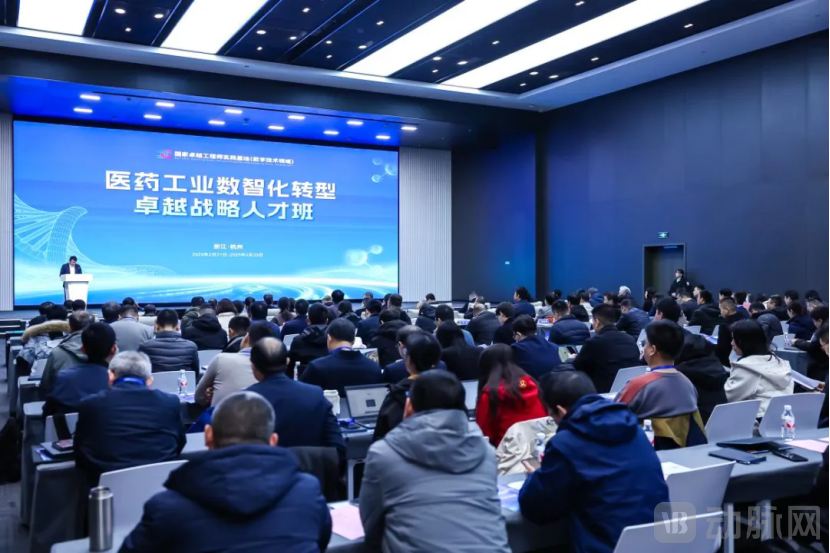
Specifically, the training program for the “Pharmaceutical Industry Digital and Intelligent Transformation Excellence Strategic Talent Class” aims to accelerate the practical cultivation of high-level, specialized, and scarce engineering and technical talents. It features innovative approaches in guest speaker selection, curriculum content, and instructional design to maximize learning outcomes for participants.
Regarding the training curriculum, Academician Zhang Boli provided a high-level perspective on how digital and intelligent technologies empower the high-quality development of the pharmaceutical industry. Experts from the Ministry of Industry and Information Technology and the National Medical Products Administration also shared insights with participants on digital transformation planning in pharmaceutical manufacturing and emerging trends in smart regulation of the pharmaceutical sector. Representatives from top universities and research institutes, such as Zhejiang University and the China Academy of Information and Communications Technology (CAICT), as well as leading enterprises excelling in intelligent manufacturing transformation, including Sinopharm Engineering and Hong Kong Austar Group, joined renowned companies in the AI-driven biopharmaceutical R&D field, such as XtalPi, DTI Tech, and Shuimu Molecular. Each contributed their unique perspectives on the detailed applications of digital and intelligent technologies across the entire pharmaceutical lifecycle and discussed future development trends.
Overall, the training program is grounded in a global perspective and China’s local context. By integrating the evolving trends of next-generation biotechnology and digital technologies, it emphasizes the digital empowerment of key segments and critical technologies across the industrial chain.
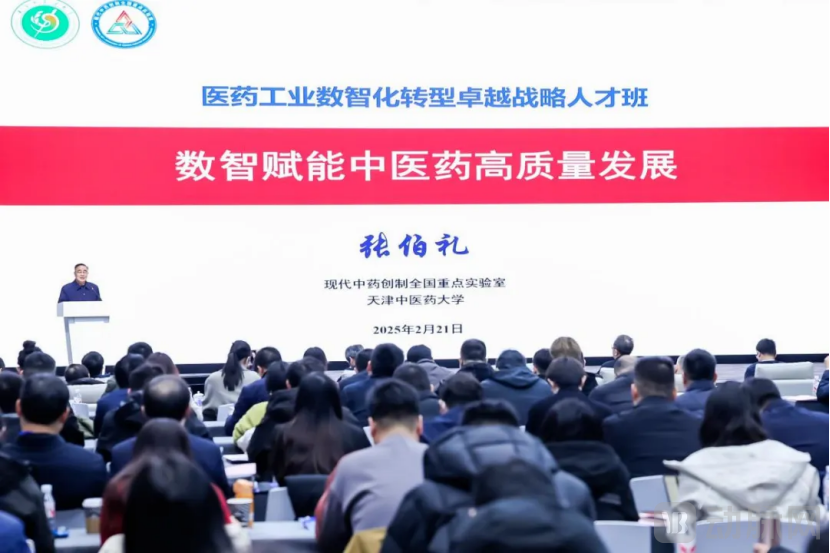
In terms of course format, the Talent Program has establishedTheoretical Lectures, Case Studies,("Digital Intelligence Strategy," "Artificial Intelligence," "Intelligent Manufacturing," "Regulatory Collaboration," etc.)Thematic Seminars, Field Research(College of Pharmaceutical Sciences, Zhejiang University; Zhejiang Supcon Technology Co., Ltd., etc.)and technical practiceand other course formats to enhance interactivity and user experience, thereby building a training system that integrates theory with practice.
The outstanding success of the inaugural training program for elite strategic talents in the digital and intelligent transformation of the pharmaceutical industry was made possible by the guidance of a diverse panel of experts.
Wang Yi, Deputy Dean of the College of Pharmaceutical Sciences at Zhejiang University, told VCBeat that to ensure the training quality and effectiveness of the talent program, the base has established an expert advisory group for cultivating outstanding engineers in digital and intelligent technologies for the pharmaceutical industry. ThisThe steering group consists ofComposed of experts from universities, drug regulatory authorities, industry and information technology departments, and leading enterprises in the industry,Covers professional talents across multiple fields.The expert advisory group played a significant role in guiding and supporting talent development—by not only participating in the design and optimization of the curriculum system, but also providing professional guidance and recommendations to help participants better understand and master the knowledge and technologies related to digital and intelligent transformation.
Furthermore, the Talent Class TrainingPharmaceutical companies engaged in advanced intelligent manufacturing in the Yangtze River Delta region were included as practice bases,This ensures that relevant training programs are equipped not only with high-quality facilities for scientific research and teaching but also with simulated practical bases. By leveraging digital scenarios to simulate the production processes of various drug categories—including chemical drugs, traditional Chinese medicines (TCM), and biologics—trainees can intuitively understand how digital and intelligent technologies play a role in the development and manufacturing of different pharmaceuticals. Through this long-term training model, which integrates diverse theoretical instruction with hands-on practice, trainees can truly meet the assessment criteria for outstanding engineers. These professionals will become the core force driving the digital and intelligent transformation of pharmaceutical enterprises.
VCBeat has found that the training program precisely targets key managerial and technical leaders from major pharmaceutical and medical device manufacturing enterprises across China, including executives such as chairmen and presidents, as well as research and quality heads involved in digital and intelligent initiatives. These participants hold significant decision-making authority and influence in their respective organizations’ digital and intelligent transformation. By engaging in the program, they not only enhance their own understanding and technical capabilities in this domain but also apply the acquired knowledge and experience within their companies, thereby effectively driving the formulation and implementation of corporate strategies for digital and intelligent transformation.
As Chinese pharmaceutical companies use AI to rewrite the “double ten law” and smart manufacturing workshops redefine “Made in China,” AI technology is bringing about a profound transformation in the biopharmaceutical industry—a co-evolution of talent, technology, and systems. Training programs such as the Excellence Strategic Talent Program for Digital and Intelligent Transformation of the Pharmaceutical Industry will provide strong talent support for the high-quality development of China’s pharmaceutical industry. In the future, with the launch and advancement of more such talent development initiatives, China’s pharmaceutical industry will surely take more solid steps on the path of digital and intelligent transformation, contributing greater wisdom and strength to the global development of the biopharmaceutical sector.