

Zheng Lixin, Founding Partner of Demeter Capital: Deep Focus on Niche Segments Is the Key to Achieving Over 10x Investment Returns
In October 2023, U.S. biotechnology company United Therapeutics announced the completion of its acquisition of Iviva Medical for an initial cash payment of $50 million, along with potential earn-out provisions consisting of a 2% royalty on net sales of Iviva’s kidney products.
Iviva Medical is a biotechnology company spun out of Harvard University’s Organ Laboratory, dedicated to developing bioartificial kidneys for transplantation to address the shortage of donor organs. The company’s product, the Iviva Kidney, is an implantable bioartificial kidney fabricated using the patient’s own cells. It mimics the filtration and reabsorption functions of natural kidneys, thereby providing a solution for patients with end-stage renal disease who are in need of kidney transplants.
Shortly after this acquisition, United Therapeutics announced the acquisition of Miromatrix, a publicly listed company specializing in xenogeneic organ scaffolds, for a total consideration of approximately $91 million, thereby acquiring its bioengineered kidney product, Mirokidney™, which is currently under development.
Behind both acquisitions lies the presence of an industrial investment fund—DM Capital. Public records show that prior to the acquisition of the two kidney industry companies, DM Capital had led two funding rounds for Iviva, and its overseas healthcare securities fund, Harmony Fund, had also invested in Miromatrix. According to Zheng Lixin, founding partner of DM Capital,The successful completion of United Therapeutics’ acquisition of Iviva Medical marked DM Capital’s first successful exit with over a 10x return on its investment in the regenerative medicine sector, while its second acquisition secured a consecutive win in renal regenerative medicine, underscoring DM Capital’s profound expertise in investing in the kidney industry.
Since initiating investments in nephrology in 2017, DM Capital has sequentially invested in 12 renal healthcare companies, covering major global regenerative medicine research centers from Toronto to San Francisco, and from the United Arab Emirates to Japan. In the field of renal regenerative medicine, it has established a project database comprising over 500 companies and has successfully exited three investment projects. In 2025, leveraging its extensive investment experience, expert network, and project resources in the nephrology sector, DM Capital plans to launch the world’s first series of funds dedicated to professional investment in the kidney industry.
This February, nephrology witnessed another major breakthrough. United Therapeutics announced that it had received FDA approval to fully launch large-scale clinical trials for pig kidney transplantation, ushering in the next chapter of renal regenerative medicine. At this time of rapid advancement in the discipline and industry,VCBeat had the privilege of speaking with Zheng Lixin, Founding Partner and Chairman of DM Capital, China’s first industrial investment fund focused on nephrology, to uncover the secrets behind its exceptional investment returns in the kidney science sector.
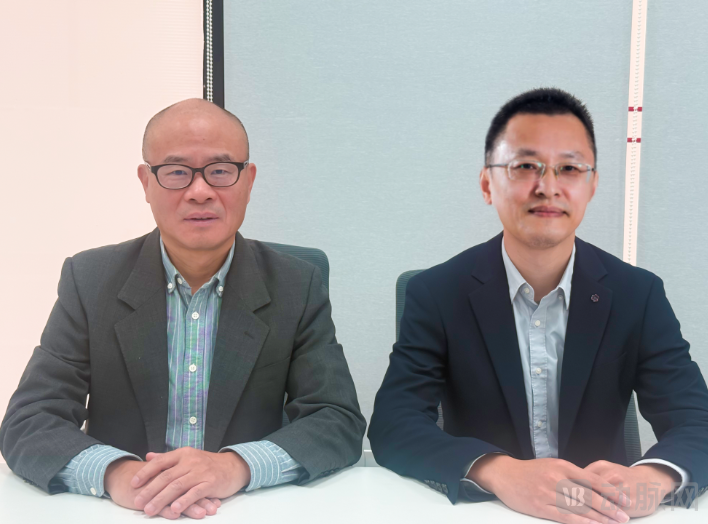
Left: Zheng Lixin, Founding Partner and Chairman of DM Capital; Right: Li Zhenghai, Partner of DM Capital’s Nephrology Discipline and Industry Fund
Photo courtesy of DM Capital
15:0 for Dental Industry Investments and 3:2 for Early-Stage AI Healthcare Investments
In ancient Greek mythology, the goddess Demeter, often depicted holding a sheaf of grain, is commonly regarded as a symbol of wisdom, insight, and foresight.
Thousands of years later, in the year 2000—a time brimming with opportunities and dreams—DM Capital was established in response to the needs of the era. It began to cultivate niche segments within the healthcare industry with precision, committing itself to sowing seeds of hope for the cause of human health through industrial chain investments, thereby harvesting future fruits.
In 2006, the dental industry witnessed unprecedented development opportunities on a global scale. In China, driven by rising household incomes and growing awareness of oral health, demand for dental medical services surged rapidly, with high-end services such as dental implants and orthodontics emerging as key market growth drivers. The wave of consumption upgrading fueled demand for premium dental products and services, while the widespread adoption of digital technologies further enhanced the quality and efficiency of dental care. In European and American markets, an aging population led to steadily increasing demand for dental services, where technological innovations—such as advanced implant materials and digital surgical planning tools—propelled improvements in service quality. Investment opportunities within the global dental industry gradually came into focus, with the chain-based operation of oral healthcare services becoming a significant trend. Demand for high-end dental products and services continued to rise, and the application of emerging technologies brought new growth points to the industry.
Opportunity Knocks But Once. In that year, DM Capital keenly set its sights on the dental industry and invested in Angelalign, the leading clear aligner company that would later list on the Hong Kong Stock Exchange, in early 2007. “In 2006, Angelalign’s first product—the Angelalign Standard Edition—received approval from the China National Medical Products Administration (NMPA) for market launch, becoming China’s first patented clear aligner product. However, although this technology had already demonstrated a certain level of maturity and application prospects internationally, the clear aligner market in China was still in its infancy. Many orthodontists accustomed to traditional wire braces generally believed it was ‘too early’ and that the technology was ‘immature,’ adopting a wait-and-see attitude toward clear aligners,” said Zheng Lixin.
Since then, DM Capital has focused its investments on the dental sector with a precise and in-depth approach. To this end, everyone at DM Capital, from founders to fund managers, “has spent many years working and gaining hands-on experience at core portfolio companies, and has participated in all major domestic and international dental exhibitions and forums.” Zheng Lixin himself has traveled globally to visit nearly all leading dental enterprises and studied dentistry-related knowledge at specialized dental schools in Germany. After years of dedicated cultivation, DM Capital has built an industry database covering eight key dental subsectors—including dental medical services and dental implants—with 500 projects.
In 2014, to further promote the development of China’s dental industry and cover both upstream and downstream segments of the dental supply chain, DM Capital partnered with the direct investment division of Essence Securities to establish the Essence-DM Dental Industry Fund, backed by international dental giants. As the first equity investment fund in China dedicated to the specialized dental sector, it pioneered the “industry-specific fund” model.
From its first investment in dentistry to 2015, DM Capital virtually created an “invincible myth”—with a total of 15 investments in the dental industry, “none of the 15 investments failed.” These portfolio companies include not only Angelalign, the leading enterprise in clear aligner therapy, but also Ruitong Biology, a dominant player in lingual orthodontics, and Modern Dental, a provider of dental restorative and orthodontic solutions.
Compared with its precise and in-depth investments in the dental industry, DM Capital’s early-stage AI healthcare investments initiated in 2015 saw a sharp decline in success rate to 60%—“two out of the five invested projects failed, resulting in significant losses.” In Zheng Lixin’s view, the primary reason for these failures was an insufficient understanding of technological advancements, market demands, and business models when entering the AI healthcare sector. Consequently, the firm failed to adequately assess technical feasibility and market acceptance when selecting investment targets.
Over the past decade, investment attempts by DM Capital and other venture capital firms have been proving an investment “secret”—“Only by deeply immersing in a specific sector or discipline, transforming the investment team into industry experts, and exhaustively mapping out the knowledge, information, networks, and projects within that field, can one build an outstanding fund in the investment arena.”
Three Essential Steps Before Investing
“In the investment world, a widely held view is that one cannot earn wealth beyond the scope of one’s own cognition. Learning from Warren Buffett’s investment philosophy—seeking businesses with ‘long slopes and thick snow’ (i.e., long-term growth potential and durable competitive advantages), building formidable economic moats, and investing strictly within one’s core circle of competence to reduce the likelihood of errors and achieve stable long-term returns—has become a broad consensus among participants in China’s primary and secondary capital markets. However, how to effectively expand cognitive boundaries and attain precise and profound insights remains a complex and subjective issue within the investment community,” said Zheng Lixin.
From dentistry to AI-driven healthcare, DM Capital has developed a methodology for investment. First,Map out specialized industry segments and establish project, company, and expert databases for the industrial chain.—Without a robust database, it is difficult to gain in-depth insights into the sector, comprehensively cover the segmented industry chain, and guide investment decisions. Currently, in the field of nephrology, DM Capital has accumulated expertise, projects, and networks in the tracks of cell and gene therapy (CGT) and organ regenerative medicine, covering major global regenerative medicine research centers from Toronto to San Francisco, and from the United Arab Emirates to Japan, thereby establishing a project company repository comprising over 500 entities.
Secondly,Study successful and failed cases in the industry to identify its underlying logic.“Only by dissecting the most successful or failed investment cases can one truly uncover the underlying logic of investing. This logic not only helps investors seize opportunities in a complex and volatile market but also enables them to stand out in highly competitive industry sectors,” said Zheng Lixin.
Take Danlu Capital as an example. Before founding Danlu Capital, its founding partner successfully invested in Jafron Biomedical at Sequoia Capital, achieving the highest return rate in the firm’s history and propelling the partner, who specialized in nephrology, to prominence. Subsequently, this partner left Sequoia Capital to establish Danlu Capital, continuing to deepen his expertise in the field of nephrology.
“Jafron Biomedical’s success stands as one of the most remarkable cases in the field of nephrology, highlighting the immense potential within kidney disease treatment. This is a therapeutic area that is notoriously difficult to penetrate; however, once a company establishes a foothold, it can reap substantial rewards,” pointed out Zheng Lixin. The dialysis industry has long been a vast market spanning several decades, dominated by giants such as Fresenius, with virtually no new entrants able to disrupt their position. The underlying reason lies in the sector’s highly stable foundational logic: once competitive advantages are established, they become exceedingly difficult to dislodge.
He further explained that this robust industrial logic has attracted investment masters like Warren Buffett. Buffett’s long-term holding of shares in DaVita, one of the top three kidney dialysis service providers in the United States, demonstrates the solidity of the sector’s underlying fundamental and investment logic. When exploring new investment opportunities, DM Capital also focuses on analyzing the underlying logic of industries to ensure that its investment decisions can withstand market tests.
“We have found that in the field of kidney disease treatment, failures are few and successes abound,” summarized Zheng Lixin. “This demonstrates that investors can achieve success in this sector by accurately grasping its underlying industrial logic.”
Third point,Build a global intelligent industry network and leverage systematic industry analysis models to help investment firms accurately grasp industry trends and secure a strategic advantage in investment decision-making.
Zheng Lixin pointed out that DM Capital has actively visited top laboratories and experts in the field of kidney research worldwide, establishing collaborative relationships with nephrology experts from institutions such as Harvard, Kyoto University, and the University of California, San Francisco through capital ties. This strategic layout has not only enabled DM Capital to gain access to cutting-edge industry insights and networking resources globally but also provided solid academic support for its investment decisions. “If you can establish connections with, or even become partners with, top experts in the global nephrology field, you essentially have control over the industry’s wisdom and network,” Zheng added. “It is akin to befriending Professor Geoffrey Hinton or Professor Fei-Fei Li in the AI sector; with such resources, the likelihood of investment failure is minimal.”
In terms of systematic industry analysis models, DM Capital has drawn on McKinsey’s SCP (Structure-Conduct-Performance) model and integrated it with Porter’s Five Forces framework to construct a comprehensive industry analysis framework. “We have applied the SCP model to nearly all of our investment analyses, conducting in-depth assessments ranging from industry structure and upstream-downstream bargaining power to technological disruptions and consumer trends, as well as the future evolution of the industry,” explained Zheng Lixin. In the field of kidney disease treatment, DM Capital has conducted extensive simulations of each parameter within the SCP model over the past seven to eight years, covering aspects such as the upstream supply system, downstream patients and clinicians, and national regulatory policies.
Major Organs, Major Market Segment
Market trends are always born in despair, grow amidst skepticism, and mature in anticipation. As time passed, Zheng Lixin gradually realized the limitations of chemical drugs as a clinical treatment modality: new drug discoveries were becoming increasingly rare, and the return on investment was no longer proportional to the R&D expenditure. Zheng Lixin likened this to the adage that when one door closes, another opens; as the development of chemical drugs and medical devices approached its limits, new technological breakthroughs emerged accordingly.
“In 2015, we believed that artificial intelligence would be the window to a revolution in medical technology, which is why we established our AI fund,” said Zheng Lixin. However, after two years of exploration, he realized that AI might not be the sole breakthrough point. Ultimately, DM Capital shifted its focus to the field of cell and gene therapy (CGT). This technology revealed to Zheng Lixin the possibility of comprehensive coverage ranging from microscopic gene editing to macroscopic organ replacement—enabling interventions not only at the embryonic stage but also organ replacement in the late stages of disease, thereby spanning the entire lifecycle from birth to the end of life. Zheng Lixin believes thatCGT technology, AI, synthetic biology, and other innovations constitute an unprecedented revolution in life sciences, comparable to the chemical industry and macromolecular biologics of previous decades. These advancements are poised to significantly extend human lifespan over the coming decades and may even become the dominant force in future medical technologies.
“We engaged in extensive discussions with our colleagues in Boston and at Harvard, ultimately deciding to focus our investment and entrepreneurial efforts on the kidney,” explained Zheng Lixin. “Addressing kidney disease still relies on gene technology, as genetic modification can enhance cellular functionality, and cells are the active components used to construct artificial kidneys.” In 2017, DM Capital began adjusting its investment strategy to focus on the field of major organs. Zheng Lixin pointed out that given the substantial capital and specialized talent required for foundational research in gene technology, the team preferred areas closer to clinical applications. Therefore, DM Capital selected human organs as its key investment focus, particularly vital organs such as the kidneys, liver, and heart. “When we technically ranked the major human organs, several distinctive features of the kidney science sector caught our attention,” said Zheng Lixin.
First, the incidence of kidney disease is as high as 10%, comparable to the number of patients with diabetes and certain severe liver diseases. However, kidney disease is irreversible, with progressive worsening of the condition, and there is currently a lack of specific effective treatments. The complexity of the kidney lies in its diverse cell types, numbering up to 20–30, which poses significant challenges for basic research and clinical therapy. Globally, until 2015, the number of scientific papers and clinical studies related to kidney disease remained nearly stagnant, indicating that many unresolved “black boxes” existed in this field.
Kidney disease not only inflicts immense suffering on patients but can also progress to end-stage renal failure, known as uremia. Patients face either death or a regimen of hemodialysis three times a week, with each session lasting four hours—a process that constitutes not only physical torment but also a substantial financial burden. The scarcity of donor kidneys further exacerbates this issue. From the perspectives of clinicians and healthcare investors, kidney disease represents a significant unmet need, yet viable solutions remain exceedingly scarce.
“From an investor’s perspective, this is a highly worthwhile area for investment. Kidney disease presents significant unmet needs that existing technologies have failed to address. However, with the advancement of cell and gene therapy (CGT), there is hope for a complete disruption of this field,” pointed out Zheng Lixin.This is virtually every investor’s dream sector—where significant societal pain points converge with the potential for technological breakthroughs.”
Regarding investment strategies in the nephrology sector, Zheng Lixin stated, “We first assess whether a project can disrupt existing conventional technologies by offering an entirely new solution. If a technology is fundamentally different from current standard practices and provides effective solutions across various stages of kidney disease—from CKD Stage 1 to Stage 5—then it warrants our in-depth evaluation.”
Beyond technological breakthroughs, DM Capital also evaluates whether a company’s valuation is reasonable. If certain projects are significantly undervalued due to the market’s insufficient understanding of their sector, this presents a major investment opportunity. “If the market has cognitive barriers regarding a project, but we can comprehend its value, then after revaluation, we will discover its potential for investment returns,” explained Zheng Lixin.
The final perspective involves evaluating a project’s value from the standpoint of the industrial chain. It was pointed out: “We examine a project’s role within the entire industrial chain—whether it constitutes foundational technology, occupies a commanding position in the chain, or represents a critical revenue-generating link. If a project holds advantages in these areas, we will consider investing in it, even if its technological sophistication is relatively modest.”
Guided by this investment thesis, in 2017, DM Capital conducted global research on the nephrology discipline and industry, ultimately making its first investment in the Ott Laboratory at Massachusetts General Hospital (MGH) and Harvard Medical School. The laboratory is led by Professor Harald Ott, a global pioneer in organ reconstruction using decellularized scaffolds, and has received strong support from Brock Reeve, Executive Director of the Harvard Stem Cell Institute. Subsequently, based on its high recognition of this cutting-edge technology, DM Capital led the investment round in Iviva Medical, an artificial kidney company, attracting follow-on investments from prominent institutions such as the renowned Silicon Valley Longevity Fund and Bold Capital, founded by Peter Diamandis, co-founder of Singularity University.
Currently, DM Capital has invested in 12 projects in the field of nephrology, achieving full industrial chain coverage from the micro to the macro level. Through one of its portfolio companies, Shenzhen Huayuan Regenerative Medicine—a leading Asian company specializing in renal cell therapy, drug development, and bioartificial kidney research—DM Capital jointly established the “Sun Yat-sen University–Huayuan Laboratory for Renal Regeneration and Reconstructive Medicine” with Sun Yat-sen University, the only laboratory of its kind in China. Meanwhile, through another portfolio company, Huajin Nephrology Research Company, DM Capital has established collaborative partnerships with more than 50 professor teams specializing in nephrology across China for kidney disease research and development and drug screening. “At present, we are likely the global professional research infrastructure platform in nephrology that supports the largest number of principal investigators (PIs),” said Zheng Lixin.
Closing Remarks: CGT, Organ Synthesis, and Clinical CROs
Zheng Lixin pointed out that the current pace of iteration in medical technology is extremely rapid, particularly in the field of gene editing, where new technologies are constantly emerging. This rapid technological evolution means that investors risk being disrupted by emerging technologies if they are not sufficiently cautious. Whether it is breakthroughs in synthetic biology or the integration of AI with proteomics, any new technology has the potential to fundamentally reshape the industry landscape.
“In such circumstances, investment firms must maintain a reserve of multi-generational technologies to cope with the rapidly evolving technological landscape,” emphasized Zheng Lixin. “They cannot rely solely on a single technology. If that technology stagnates, the company may face extinction.”
Therefore, in the field of nephrology, organ synthesis technology is another area favored by DM Capital, in addition to cell and gene therapy (CGT) technologies. Zheng Lixin believes that this field may achieve significant breakthroughs within the next five to ten years, creating a market opportunity worth hundreds of billions of US dollars. Organ synthesis technology combines cell editing techniques with materials science, offering new hope for patients with organ failure. “Organ synthesis technology represents the premier model for future clinical treatment,” Zheng Lixin pointed out. “In the future, patients with organ failure may regain health directly through organ replacement, without relying on pharmacological treatments.”
Furthermore, DM Capital is paying particular attention to the growth in the field of kidney disease research. Over the past few years, research activities and the number of academic publications on kidney diseases have grown by 40% annually, indicating that this field is on the verge of an explosion. Zheng Lixin believes that companies providing foundational solutions for kidney disease research, such as drug development and clinical trial service providers, will become the “water sellers” in this sector and reap substantial profits in the future.
Amid the backdrop of US-China decoupling, competition in the global kidney care sector has become exceptionally fierce. In 2019, the United States established the Rebuilding the Kidney (RBK) Alliance, excluding scientists from East Asia, which dealt a significant blow to scientific collaboration due to geopolitical factors. Since then, DM Capital has been deeply cultivating the Asian nephrology science ecosystem, actively establishing partnerships with four top universities in Japan as well as research institutions in Europe, Singapore, Abu Dhabi, and other regions, thereby forming the Asian Nephrology Regenerative Medicine Alliance. Zheng Lixin stated, “Over the next 5 to 10 years, the academic, industrial, and capital sectors in nephrology will inevitably be influenced by geopolitical factors. Through cross-regional collaborations such as the Asian Nephrology Regenerative Medicine Alliance, we hope to better address global competition and advance the development and application of regenerative medicine technologies for kidney diseases.”