

Oral Small-Molecule GLP-1R Agonist ASC30 Fuels 750%+ Stock Surge and $2B Licensing Deal: Ascletis Files IPO Prospectus

Ascletis
Biopharmaceutical company specializing in the R&D, production, and sales of treatments for hepatitis and AIDS
Imagination is the most valuable asset in the business world.
On February 20, Ascletis Pharma Inc. saw its stock price surge by 35% in a single day, driven by favorable clinical data for its oral small-molecule GLP-1R agonist, ASC30. In less than two months into 2025, the stock price has already doubled; since August 2024, it has risen by 750%.
Although the GLP-1 sector boasts a high ceiling, it is dominated by industry giants, forcing followers to carve out alternative paths to break through. Among various differentiation strategies, oral administration, multi-target approaches, small molecules, and long-acting formulations have emerged as mainstream choices. The combination of distinct development pathways and differing indications creates greater potential. Recent transactions suggest that oral small-molecule GLP-1 agonists may become a significant area of future promise, with Merck & Co. even spending $2 billion on a preclinical pipeline asset.

Recent GLP-1 Transactions, Compiled from Public Information
In 2024, the sales of both semaglutide and Keytruda approached $30 billion. Had it not been for production capacity constraints, semaglutide would likely have surpassed Keytruda in 2024. Undoubtedly, this is an era dominated by blockbuster drugs, with GLP-1 receptor agonists undoubtedly serving as the most prominent protagonists. To capture a share of this market, oral small-molecule GLP-1 drugs are undoubtedly the key tool capable of securing a significant portion of the pie.
Ascletis Pharma Inc. Unlocks Market Potential with Clinical Data.
Ascletis Pharma’s independently developed small-molecule GLP-1R agonist, ASC30, is suitable for both subcutaneous injection and oral tablet administration, each with distinct advantages. The subcutaneous formulation enables once-monthly dosing, with a half-life comparable to that of antibody-based drugs. However, it is the small-molecule oral formulation that has truly captured market attention.
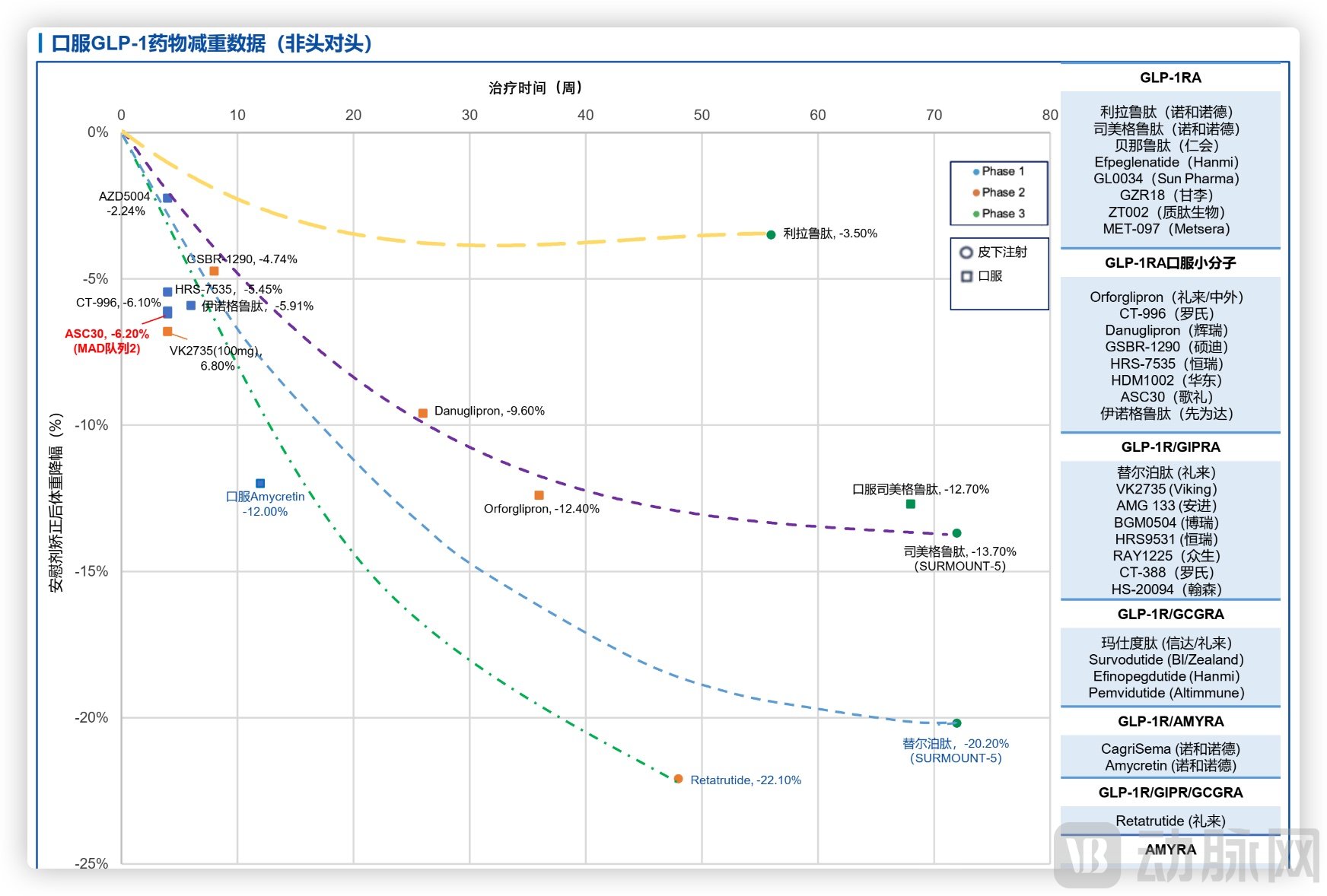
Weight Loss Data for Selected Oral GLP-1 Drugs (Non-Head-to-Head), Image Source: Huachuang Innovative Drugs WeChat Official Account
Among the clinical data released this time, ASC30 demonstrated the most pronounced efficacy among currently available oral small-molecule GLP-1 receptor agonists over a 4-week treatment period, even surpassing Roche’s CT-996, which had previously held the lead. Furthermore, CT-996 raises certain safety concerns, with approximately 85% of participants experiencing nausea and gastroesophageal reflux; other adverse events such as vomiting, constipation, diarrhea, and abdominal bloating were also relatively common.
Data released for ASC30 indicate no significant safety concerns. According to an announcement by Ascletis Pharma Inc., ASC30 demonstrated favorable overall tolerability and safety profiles, with no serious adverse events (SAEs) reported. All gastrointestinal (GI)-related adverse events (AEs) were mild (Grade 1) or moderate (Grade 2) in severity.
Even compared with Eli Lilly’s orforglipron, which has the fastest global R&D progress, ASC30 demonstrates certain advantages within a 4-week treatment period. Currently, it is only slightly inferior to Viking Therapeutics’ VK-2735 (100 mg dose group). Notably, the data disclosed for ASC30 this time are limited to Cohort 1 (2 mg, 5 mg, 10 mg, and 20 mg) and Cohort 2 (2 mg, 10 mg, 20 mg, and 40 mg). The data for Cohort 3 (5 mg, 15 mg, 30 mg, and 60 mg) will be released in late March. Favorable results at that time would further boost market sentiment and expand growth expectations.
The market has long anticipated that GLP-1 therapies would continue to achieve breakthroughs in the field of mass-market weight loss. However, this progress has been hindered by the injectable route of administration. Although semaglutide is available in an oral formulation, it must be taken on an empty stomach or at least 30 minutes before other medications, with no more than 120 mL of water. Additionally, peptide-based drugs suffer from low bioavailability.
Therefore, oral small-molecule drugs that are resistant to enzymatic degradation and exhibit greater stability in vivo are highly anticipated.
For pharmaceutical companies, the advantages of small-molecule drugs in large-scale manufacturing continue to attract sustained investment. The data recently released by Ascletis Pharma has undoubtedly added further fuel to the already heated GLP-1 race, although capturing a share of this market is far from simple.
Differentiation is a key strategy for future competition in the GLP-1 market.
Existing GLP-1 peptide therapeutics have demonstrated substantial value and unprecedented commercial prospects, benefiting hundreds of millions of patients with obesity and related complications. Meanwhile, there is a genuine and strong clinical demand from both physicians and patients for oral formulations.
The ceiling of the GLP-1 market is often constrained by production capacity. In this context, Eli Lilly, as one of the two giants in the GLP-1 sector, has developed Orforglipron, an oral small-molecule GLP-1 drug. Currently, multiple Phase 3 clinical trials for Orforglipron have been initiated, and it is poised to become the first commercialized oral small-molecule GLP-1 drug for weight loss.
Of course, the development of oral small-molecule GLP-1 drugs is not easy; some companies have stumbled.
In 2024, Pfizer decided to terminate the development program for its small-molecule GLP-1 candidate, lotiglipron. This decision was primarily driven by abnormal fluctuations in key liver safety indicators observed during Phase II clinical trials. By the end of 2024, the results of the Phase 2b clinical trial for danuglipron, another small-molecule GLP-1 drug under Pfizer’s portfolio, were made public. Although the drug met its primary efficacy endpoint for weight loss, emerging safety concerns compelled Pfizer to reassess its R&D strategy. Subsequently, Pfizer announced plans to develop a third oral anti-obesity medication targeting novel pathways closely associated with metabolic regulation and lipolysis.
In the face of safety dilemmas associated with small-molecule GLP-1 drugs, the industry is also seeking ways to break through.
For example, designing multi-target drugs centered on GLP-1, in combination with targets such as the gastric inhibitory polypeptide receptor (GIPR), glucagon receptor (GCGR), amylin, and fibroblast growth factor 21 receptor (FGF21R). Compared to single-target GLP-1 drugs, multi-target drugs can achieve higher therapeutic potential, with more significant effects in blood sugar control and weight loss.
CT-996, mentioned earlier, was acquired by Roche through its purchase of Carmot Therapeutics for over $3 billion. This acquisition not only secured the small-molecule candidate CT-996 but also brought in dual-target agonists such as CT-388 and CT-868. Moving forward, both Roche and Pfizer are poised to become key players driving differentiated competition in the GLP-1 therapeutic landscape.
Premised on ensuring efficacy and safety, small-molecule GLP-1 drugs exhibit distinct differentiated advantages over peptide-based GLP-1 drugs. Consequently, players ranging from multinational corporations (MNCs) to biotech firms are actively engaging in this space, demonstrating a clear intent to break the monopoly held by peptide-based GLP-1 therapies. Domestically produced oral small-molecule GLP-1 agents are poised to become a central driving force in this shift.
Domestic pipelines have become the global “arsenal” of oral small-molecule GLP-1 therapies.
Currently, the oral small-molecule GLP-1 pipeline with the most advanced global development progress is Eli Lilly’s Orforglipron, and its clinical data have become a benchmark for assessing the potential of subsequent candidates.
According to previously disclosed study data, at the primary endpoint assessment at Week 26, the Orforglipron group demonstrated statistically significant, dose-dependent weight loss across all doses, with a weight reduction ranging from 8.6% to 12.6%, compared to only 2.0% in the placebo group. Across different dose groups, up to 92% of subjects achieved at least 5% weight loss, and up to 75% achieved at least 10% weight loss.
Oral formulations can achieve weight loss of nearly 15%, a highly significant effect. Meanwhile, Orforglipron demonstrates a high rate of achieving weight-loss targets, reaching up to 92%, meaning that nearly all individuals with overweight or obesity can achieve at least a 5% reduction in body weight. Furthermore, Orforglipron has shown excellent efficacy in glycemic control.
Lilly expects to complete Phase 3 clinical trials for Orforglipron in 2025 and obtain U.S. regulatory approval in 2026.
Under these circumstances, domestic biotech companies are accelerating their strategic deployments. According to incomplete statistics, more than 20 companies in China have laid out pipelines for small-molecule GLP-1 products. Whether they can benchmark against Eli Lilly’s Orforglipron serves as a key basis for the market to assess their prospects.
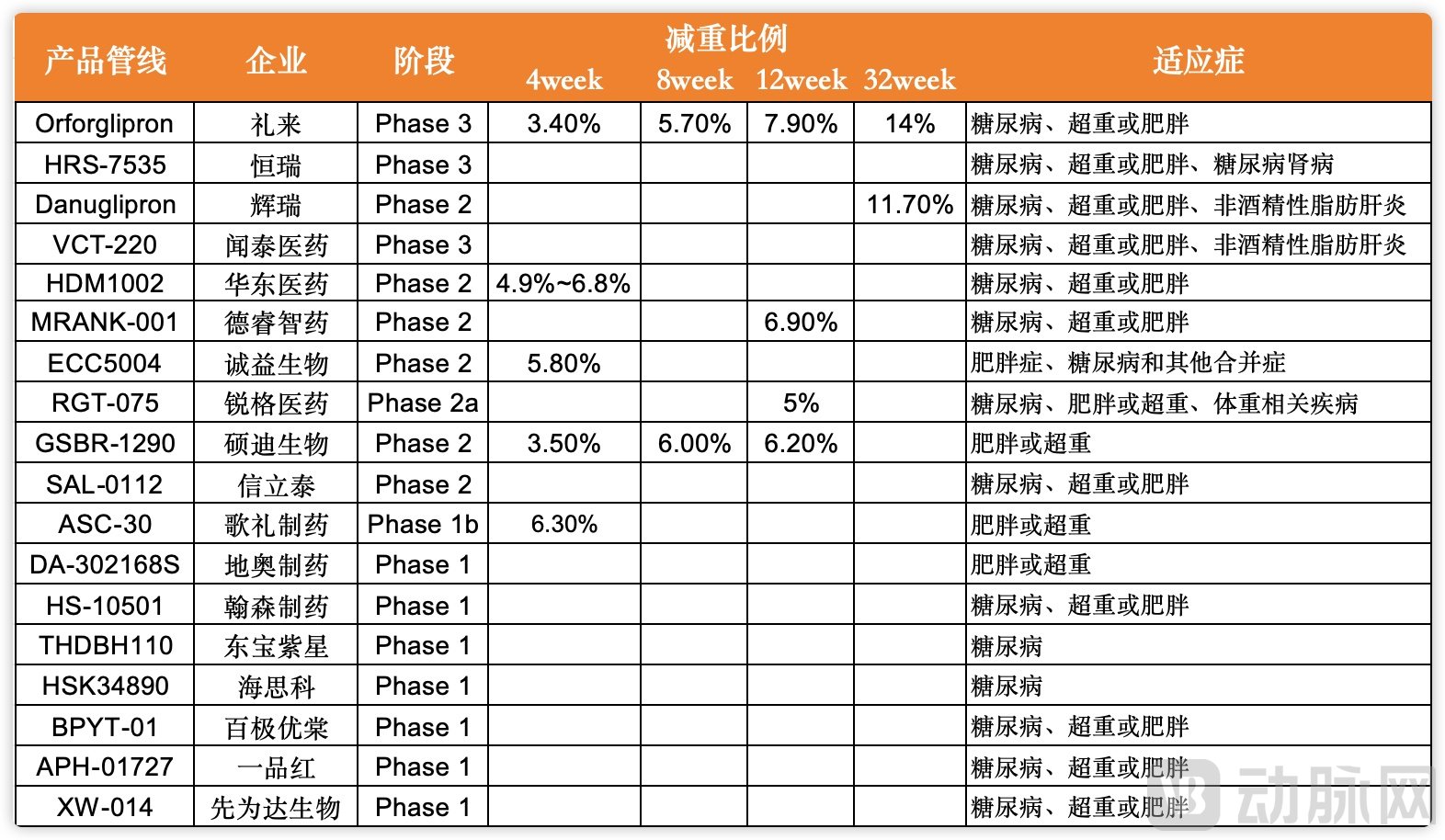
Clinical Data and Development Progress of Select Small-Molecule GLP-1 Pipelines, Compiled from Publicly Available Information
It is evident that the domestic small-molecule GLP-1 drug development sector demonstrates significant potential. Hengrui Medicine’s HRS-7535, as the first oral small-molecule GLP-1 formulation in China to enter Phase III clinical trials, has garnered considerable attention. According to previously released clinical trial results, subjects treated with HRS-7535 achieved an average weight loss ranging from 4.3 kg to 7.7 kg by the fourth week of treatment. On day 36, subjects in the 5.4 mg dosage group exhibited the most pronounced weight loss effect, with an average reduction of 8.0 kg.
Huadong Medicine, another player deeply entrenched in the GLP-1 sector, has also made strategic moves. Its oral small-molecule GLP-1 drug, HDM1002, has achieved positive clinical results, with subjects in the target dose groups experiencing an average weight reduction of 4.9%–6.8% from baseline by Day 28 (4 weeks).
In addition to Ascletis Pharma Inc. mentioned earlier, there are several other Chinese biotech companies worth watching, as their clinical data in the weight loss pipeline is nearly on par with that of Eli Lilly.
For instance, in the Phase I clinical trial of Chengyi Biopharma’s ECC5004, patients experienced an average weight loss of 5.8% (compared with 3.4% for Eli Lilly’s drug) during a four-week treatment period. Phase IIa clinical trial data for Rigor Therapeutics’ RGT-075 showed a placebo-adjusted weight loss of 5% (compared with 7.9% for Eli Lilly’s drug) after 12 weeks of treatment.
Additionally, Shuodi Bio’s GSBR-1290 demonstrated a placebo-adjusted mean weight loss of 6% at 8 weeks in its Phase 2a clinical trial (compared with 5.7% for Eli Lilly’s product). Participants experienced an average weight reduction of 6.2%, a result that was highly statistically significant (p<0.0001). Notably, by Week 12, 67% of participants in the GSBR-1290 treatment group achieved ≥6% weight loss, and 33% achieved ≥10% weight loss, compared with 0% in the placebo group.
Medicience’s MDR-001 demonstrated in its Phase 1b/2a clinical trial that subjects experienced an average placebo-adjusted weight loss of 6.9% after 12 weeks of treatment (compared to 7.9% for Eli Lilly). Furthermore, although Wentai Pharma has not disclosed data for VCT-220, it initiated Phase 3 clinical trials for weight loss by the end of 2024.
According to incomplete statistics, more than half of the oral small-molecule GLP-1 pipelines currently in clinical stages globally are developed by Chinese companies. For multinational corporations (MNCs) seeking a share of the GLP-1 market, business development (BD) transactions undoubtedly offer a convenient and efficient pathway. The BD market is likely to see an increased presence of Chinese-developed oral small-molecule pipelines in the future.
MSD’s Endorsement Highlights the Value of Domestically Produced Oral Small Molecules.
It is evident that over the past two months, global developments in GLP-1 therapies have clearly shifted toward multi-target, oral, small-molecule agents. On the other hand, the progress of domestic small-molecule GLP-1 product pipelines in China has not lagged significantly behind that of the industry leader, Eli Lilly.
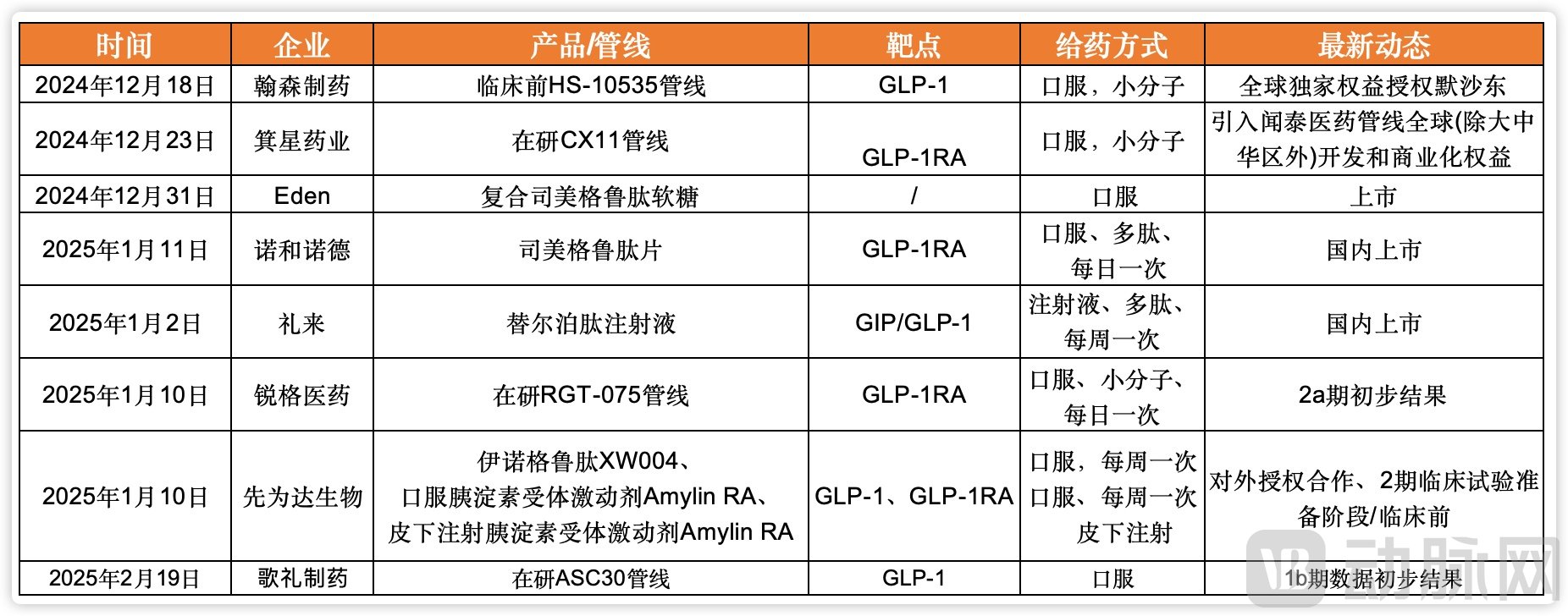
Recent Developments in the GLP-1 Product Pipeline, Compiled from Public Sources
For Chinese biotech companies, out-licensing their pipelines through business development (BD) represents a critical growth strategy. On one hand, the substantial revenue surge experienced by Novo Nordisk and Eli Lilly driven by GLP-1 therapies has intensified competition among other multinational corporations (MNCs) eager to capture market share in this sector. On the other hand, for domestic biotech firms, expanding their pipeline BD efforts overseas offers a vital pathway to address their current challenges.
The perfect alignment between demand and supply naturally necessitates transactions. In the past two years, multiple multinational corporations (MNCs) have entered into collaborations with domestic biotech companies, indicating that the value of their pipelines has been widely recognized by the industry.
In December 2021, Rigor Pharmaceuticals entered into a collaboration with Eli Lilly and Company to jointly develop innovative therapies for metabolic diseases over the coming years. A key focus of this partnership is RGT-075, Rigor’s small-molecule GLP-1 pipeline candidate. Under the agreement, Rigor received an upfront payment totaling $50 million, which included partial equity investment, and is eligible to receive up to $1.5 billion in milestone payments.
In November 2023, Chengyi Biopharma and AstraZeneca entered into a licensing collaboration agreement for Chengyi’s oral small-molecule GLP-1 candidate, ECC5004/AZD5004. Under the terms of the deal, AstraZeneca paid an upfront fee of $185 million, with potential milestone payments totaling $1.825 billion, plus tiered sales royalties.
In December 2024, Merck & Co. announced the in-licensing of Hansoh Pharmaceutical’s oral small-molecule GLP-1 receptor agonist HS-10535 for an upfront payment of $112 million, with potential milestone payments totaling up to $1.9 billion. Notably, it is rare even on a global scale for a candidate still in the preclinical stage, such as HS-10535, to be acquired at such a high valuation. Furthermore, Hansoh Pharmaceutical has built a robust GLP-1 pipeline that includes pegylated loxenatide injection (a weekly GLP-1 formulation), HS-20094 (a dual GIP/GLP-1R weekly formulation), and HS-10501 (an oral GLP-1R agonist).
Overall, apart from established domestic pharmaceutical giants such as Hengrui Medicine and Huadong Medicine, several biotech firms—including WenTai Pharmaceuticals, Shuodi Biologics, Chengyi Biopharma, DeruiZhiYao, and Rigor Pharma—are close behind. As for other domestically developed pipelines still in early stages, acceleration is imperative. With the core patents for semaglutide set to expire sequentially in 2026, seizing market share during this window will be the dominant theme for the sector’s future.
The GLP-1 sector is repeating the hypercompetitive trajectory once seen with PD-1.
From glucose lowering to weight reduction, from dosing frequency to multi-target engagement, from peptides to small molecules, and from injection to oral administration, indications are also expanding to metabolic diseases such as nephropathy and hepatitis. Future GLP-1 development will follow two pathways: one is mass-market medication for weight loss; the other is comprehensive management of metabolic diseases and their related complications.
Taking Eli Lilly as an example, in its efforts to catch up with Novo Nordisk, the company has expanded the indication research for tirzepatide to include heart failure, metabolic dysfunction-associated steatohepatitis (MASH), cardiovascular risk, chronic kidney disease, and plaque psoriasis. In late 2024, it received FDA approval for use in adult patients with moderate-to-severe obstructive sleep apnea (OSA) and obesity.
Once small-molecule oral GLP-1 drugs have addressed safety concerns such as hepatotoxicity, off-target effects, and side effects, they are also poised to continue making significant impacts in these niche areas.
Existing GLP-1 peptide therapeutics have already demonstrated substantial commercial value and promise, yet market demand for oral formulations remains exceptionally strong. Due to inherent limitations, the large-scale manufacturing of oral peptide drugs is significantly more challenging than that of small-molecule oral agents. Consequently, small-molecule oral drugs are poised to serve as a key differentiator for late entrants in the GLP-1 therapeutic landscape. VCBeat will continue to monitor future developments in this field.