From Shanghai in late December to San Francisco in early January, VCBeat New Medicine had been trying for a long time to schedule a meeting with Alvin. Finally, after the Lantern Festival, we met Alvin Luk, Co-founder and CEO of Hui-Gene Therapeutics, at their Shanghai office. In VCBeat New Medicine’s impression, as a star gene therapy company, Hui-Gene Therapeutics should have been quite luxurious. However, upon entering Alvin’s simple and clean office, we saw that almost the entire space was occupied by just one desk and three chairs, with only some office supplies and documents in the cabinet behind him. This simplicity stood in stark contrast to the previous impression “Hui-Gene” had given VCBeat New Medicine. Alvin handed us a can of sugar-free cola, and thus began our conversation.
VB New Medicine:Let’s start with an icebreaker question. How do you view the impact of policy changes across different countries on innovative drugs, particularly in the field of gene therapy? We have specifically noted that some countries have proposed “home-country priority” strategies, requiring manufacturing to reshore. What implications might this have for the industry?
Alvin:(Surprised) Is this an icebreaker question? (Takes a sip of sugar-free cola and thinks for a moment). First, I’d like to clarify one point: the “reshoring of manufacturing” you mentioned is essentially an employment issue, not a scientific confrontation.
The current market environment is undoubtedly complex, with potential policy shifts in some countries that could impact biotechnology collaboration and market access. Nevertheless, I believe that science and innovation can transcend borders. The potential of gene therapy and gene editing to revolutionize healthcare is globally recognized, and both China and the United States are at the forefront of this transformation.
For Hui-Gene Therapeutics, our strategy has always focused on scientific research, building strong partnerships, and continuing to execute our global vision. Although global tensions may impact market dynamics, we firmly believe that innovative companies—especially in the biotechnology sector—can address these challenges by prioritizing collaborative efforts, clinical success, and the needs of patients worldwide. Meanwhile, we are committed to working closely with regulatory authorities in both China and the United States to ensure that our therapies meet the highest global standards for safety and efficacy, enabling us to move forward regardless of the political environment. By maintaining a strong global perspective and continuing to develop high-impact gene therapies, we believe Hui-Gene Therapeutics can make significant contributions to addressing unmet medical needs globally while adapting to the evolving geopolitical landscape. As demand in the global market diversifies, our goal is to leverage our innovative gene-editing platform to help more patients access effective treatments, rather than merely responding to current policy changes. Whether in the United States, Europe, or China, we are dedicated to rapidly adjusting to regional needs and regulatory environments to ensure the smooth market launch of disruptive therapies, ultimately benefiting patients worldwide.
Breakthroughs in gene editing technology have made it a focal point of shared interest between China and the United States. In this field, we adhere to a data-first approach, letting facts speak for themselves—whether in clinical outcomes, manufacturing processes, or the continuous improvement of technical standards, all aspects must strictly comply with the highest standards set by global regulatory agencies such as the FDA and the EMA (European Medicines Agency). When the scientific foundation is sufficiently robust, political interference naturally takes a back seat, as true innovation is a globally shared asset. Gene editing therapies not only offer effective solutions for complex diseases but also promise lasting transformation in global healthcare. This will drive the development of the global biotechnology industry and foster a more collaborative, rather than confrontational, global environment.
VCBeat New Medicine:Speaking of internationalization, our last encounter was actually just a month ago during the J.P. Morgan Healthcare Conference in San Francisco. I recall that every time we met, it was always in a rush. I happened to notice that your schedule was packed from 6:00 AM to 10:00 PM, with appointments scheduled roughly every half hour. Could you please share your perspective on the J.P. Morgan conference? What did your agenda look like during the event?
Alvin:Before addressing this question, I would like to clarify my understanding of “internationalization.” Hui-Gene Therapeutics is a global company, and our philosophy is “In Global for Global.” Internationalization is not merely about “selling drugs abroad.” I believe it encompasses several dimensions, including team internationalization, global IP protection, data internationalization—i.e., whether data is recognized by international partners—and, crucially, the internationalization of business models and mindsets. The first three are straightforward to understand. The fourth entails that, to engage in cross-border collaborations, we must gain a deep understanding of our partners’ needs and the underlying logic behind them. This underlying logic often differs from that of China’s innovative drug ecosystem; therefore, comprehending their needs and the root causes behind them is vital. I have summarized this into a formula: internationalization is not simply the product of IP protection, internationalized data, and an internationalized team, with internationalized thinking as the exponent—a factor that elevates the entire framework to a higher dimension.
Internationalization = (International IP Protection × Internationalized Data × International Team)Global Mindset
Next, to address your second question: The J.P. Morgan Healthcare Conference (JPM) is the most influential event in the global biotechnology industry. It serves not only as a venue for deal-making but also as a key platform for gaining insights into industry trends and capturing strategic opportunities. JPM brings together top global investors, multinational pharmaceutical companies, biotech firms, and industry leaders. Its intensive schedule and diverse networking settings provide participants with opportunities for deep engagement with regulatory agencies, potential partners, and investors. One of the primary reasons we attend JPM every year and arrange a packed schedule in advance is to leverage this platform to understand the needs of international potential partners and the underlying logic behind those needs. Only by understanding both our own capabilities and what our partners seek can we facilitate successful collaborations. Furthermore, JPM is an important window for spotting industry trends, such as AI-driven drug discovery and the rise of Chinese biotechnology, offering companies like Hui-Gene Therapeutics an excellent opportunity to showcase technological differentiation, advance international cooperation, and accelerate the global development of their pipelines.
We first clarified the purpose of our participation—addressing the “Why” in the Why-What-How framework—before determining the discussion topics (“What”) and logistical arrangements (“How”). Our communications centered on three strategic pillars: global clinical and regulatory strategy, expansion of strategic partnerships, and strengthening investor relations. The company advanced multi-regional development of its key pipeline assets by engaging with global regulatory authorities on orphan drug designation strategies. These assets include HG004, a gene therapy for RPE65 mutation-associated inherited retinal diseases; HG202, an RNA editing therapy for wet age-related macular degeneration; HG204, an RNA editing therapy for MECP2 duplication syndrome; and HG302, a DNA editing therapy for Duchenne muscular dystrophy. Meanwhile, Hui-Gene Therapeutics explored licensing opportunities for gene-editing technologies and collaborations on delivery platforms with multinational pharmaceutical companies, while deepening its computational biology partnership with AI firms. Additionally, Hui-Gene Therapeutics kept top-tier global funds updated on clinical milestones and market expansion plans to strengthen investor relations.
In terms of scheduling and conference management, Hui-Gene Therapeutics prepares months in advance to secure key conferences and ensure opportunities for high-level dialogues with target institutions. Each meeting is assigned clear objectives, with “buffer slots” reserved to capitalize on unexpected opportunities. Tailoring its messaging to different audiences, the company emphasizes the technical advantages of its AI-driven HG-PRECISE® gene editing platform, the First-in-Class potential of its clinical assets, and the cost advantages in the Chinese market.
At this year’s JP Morgan Healthcare Conference, we identified three major industry trends through keynote speeches at the main venue, closed-door forums, and informal networking: a resurgence in mergers and acquisitions, the convergence of AI-driven drug discovery with gene editing, and the globalization of Chinese innovation. These insights helped the company strengthen existing partnerships and establish global leadership in key areas such as AI-enabled drug discovery combined with gene editing, as well as rare disease therapies. Of course, amid the high-intensity pace of JPM, serendipitous opportunities often prove most valuable. For instance, an impromptu discussion during a breakfast meeting facilitated a collaboration on AAV delivery with a European pharmaceutical company, while a brief conversation in an elevator advanced financing negotiations with a Singaporean sovereign wealth fund. These experiences underscore the principle that “the better prepared you are, the more luck favors you.”
VB New Medicine:What advice would you offer to Chinese innovative drug companies that have never attended the J.P. Morgan Healthcare Conference, or have done so only infrequently?
Alvin:I recall that many years ago, when I first attended the J.P. Morgan Healthcare Conference, I was filled with a mix of excitement and apprehension. At that time, I constantly shuttled between the main venue and various breakout sessions, mostly listening and observing, while rarely speaking, as I was unsure whom to approach and what to discuss. Of course, this was already over a decade ago. Reflecting on the detours I took and the experience I gained at the J.P. Morgan Healthcare Conference over these past ten-plus years, I would like to offer a few modest suggestions.
First, clarify your objectives for attending the JP Morgan conference. For instance, you may aim to gain insights into industry trends, determine with whom and on what topics you will communicate during the meeting (along with the purpose of such communications, such as discussing collaboration pipelines or seeking investment), or simply reunite with old acquaintances. If your goal is information gathering, you should prepare in advance by reviewing the main conference agenda and breakout session schedules to familiarize yourself with the arrangements. If you hope to identify and engage potential partners, it is essential to schedule meetings with these contacts well in advance—even securing their time several months ahead. During these intervening months, we recommend researching the backgrounds of your intended counterparts: who they are, what their institutions do, and what information or value they hope to gain from interacting with us. Based on this understanding, and considering our available time and resources, we should then develop targeted communication strategies.
Tactically, it still comes down to the questions of Why-What and How. Taking Hui-Gene Therapeutics as an example, we typically ask three questions before attending meetings:
1. Why: Why meet with this MNC (multinational pharmaceutical company)? Is it to bolster clinical capabilities or to expand the commercialization network?
2. What: What does the counterparty need? For instance, a multinational corporate giant faces bottlenecks in AAV delivery technology, while Hui-Gene Therapeutics is well-positioned to provide solutions.
3. How: How to persuade the other party in 20 minutes? The answer is always data—demonstrate our editing efficiency, off-target rate, as well as the Orphan Drug Designation and Rare Pediatric Disease Designation granted by the U.S. FDA and EMA.
This “sniper-style” precise communication helped us secure three strategic cooperation intentions at JPMorgan.
Of course, many old friends attended the conference, providing opportunities for chance encounters over a cup of coffee or cola, which may well lead to unexpected gains. As an old Chinese saying goes, “Know yourself and know your enemy, and you will prevail in every battle,” fully embodying the wisdom of our ancestors.
VCBeat New Medicine:You just mentioned that a key objective of attending the JP Morgan conference is to seek collaborations. Drawing from your past experiences, could you share how biotech companies like Hui-Gene Therapeutics engage with multinational corporations (MNCs) and other biotech firms, both domestic and international, during the conference?
Alvin:Your questions are becoming increasingly detailed and may touch on some sensitive topics, but I am still willing to share more insights in the hope of providing reference and inspiration to everyone.
“I travel extensively around the world throughout the year, which has helped me cultivate the good habit of going to bed early and waking up early. I get up at 4 or 5 a.m. every day; besides exercising, I use this uninterrupted time for extensive reading.” (As he spoke, Alvin showed me his computer screen, displaying the freshly released 2024 annual financial report of a large multinational corporation.) “Therefore, my first piece of advice is to understand what the other party needs. Information can be obtained from many channels, such as earnings calls or financial statements of publicly listed companies, as well as reports and interviews shared by corporate management teams, especially CEOs and CFOs, from which we can gather highly valuable insights. Of course, one should not miss the presentations delivered by various companies at the J.P. Morgan Healthcare Conference, because written text lacks emotional nuance. By observing the presenter’s facial expressions, listening to their tone, and noting their body language, you can obtain more authentic and effective information than what is conveyed in the written report alone.”
My second recommendation is to identify our core value, preferably a differentiated one. How do we define differentiated core value? It is not merely about our self-perception of excellence; rather, it requires substantial evidence to demonstrate that the recipients of our message recognize our unique value—a value that is not offered by other companies.
My third recommendation is to adopt a “customer mindset.” During your tenure at Danaher, you may have embraced the principle of “Customer Talk, We Listen,” which exemplifies this critical customer-centric approach. If our strengths and unique features fail to address customers’ problems, they will simply not care about us. Therefore, we must directly address their pain points, consider how we can assist them, treat all partners and interlocutors as customers, and center our communication on creating value for them.
Our final recommendation is to maintain an accurate self-awareness, recognizing our strengths and weaknesses. We should excel in our areas of expertise while delegating tasks outside our core competencies to those who are better suited for them. This embodies the philosophy of “subtraction” in life wisdom. In line with our strategy, Hui-Gene Therapeutics will not aim to become a large, all-encompassing corporation. Instead, we leverage our strength in innovation by focusing on two key areas: the development of AI-driven gene editing tools, and the global advancement of our pipelines in neurological disorders and rare diseases. Consequently, at academic conferences such as ASGCT and ESGCT, Hui-Gene Therapeutics will present dozens of oral and poster presentations. For our areas of expertise, we communicate and showcase our work through data-driven, fact-based evidence. For areas outside our core competencies, we seek out the most suitable partners to achieve win-win collaboration.
Of course, our team possesses another valuable trait: a “service-provider mindset.” We aim to be one piece of the puzzle in our partners’ success, not the entire picture.
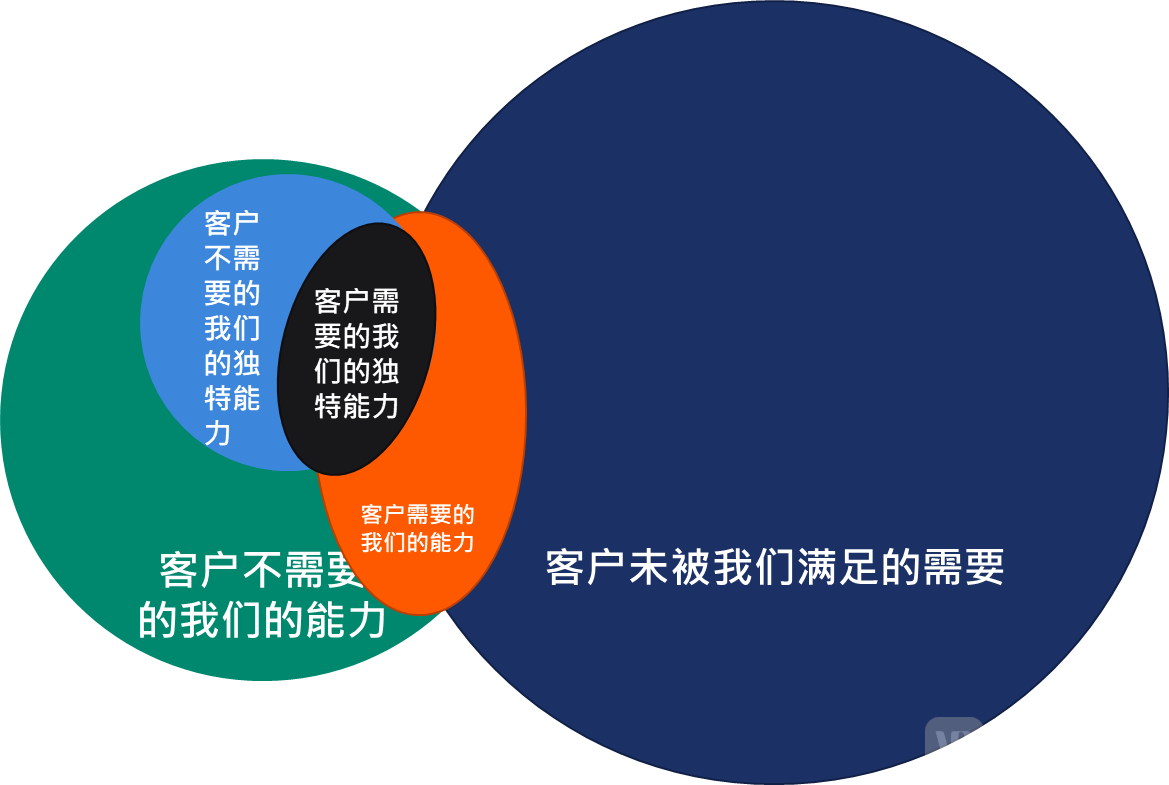
(Alvin’s response reminded VCBeat of a diagram in the newly published book *Igniting Marketing and Growth*: identify what the other party needs, assess what we have to offer, and find the intersection. This intersection represents the capabilities we provide that our partners seek. If these capabilities are unique and irreplaceable, it becomes easier to reach consensus with partners and facilitate collaboration.)
VCBeat New Medicine:We understand that you have been deeply rooted in the industry for many years, accumulating extensive experience in Biologics License Application (BLA) and commercialization processes, involving 22 approved products across various fields including small-molecule and large-molecule drugs. Why did you join Hui-Gene Therapeutics, a startup company, as Co-Founder and CEO?
Alvin:I have been asked this question many times, but my answer remains consistent: it is the allure of disruptive innovation. Over the past three decades, I have witnessed the golden age of small-molecule drugs and antibody therapeutics firsthand, yet gene therapy represents the true “next-generation therapy.” The vision of Hui-Gene Therapeutics aligns closely with my own: leveraging an AI-driven gene-editing platform to tackle medical challenges such as monogenic diseases, polygenic diseases, and neurodegenerative disorders.
In many large corporations, innovation is often constrained by bureaucratic processes and risk aversion; in contrast, scientific decision-making at startups is more flexible and rapid—a pace that traditional systems struggle to match. More importantly, the team at Hui-Gene Therapeutics comprises world-class scientists and a results-oriented management team with efficient communication. Working with them has been a purely focused experience, filled with a strong drive for exploration and innovation.
VBNewMed:One final question: How do you view your own role? An entrepreneur? A strategist? Or a scientist?
Alvin:“I am certainly not a scientist. As for what kind of ‘expert’ I am, I’d say I’m more of a ‘non-homer’ (both laugh). I have never considered my title to be particularly important; what matters is the value I can bring to others. If I must define my role, I would prefer to be seen as a ‘bridge designer’—one who builds bridges connecting cutting-edge science with patient needs, and linking Chinese innovation with global markets. I enjoy swimming, relishing the ‘quiet sense of control’ it offers in the water. This constantly reminds me that strategy, like swimming, requires not only precise exertion of force but also going with the flow. The mission of Hui-Gene Therapeutics is to swim alongside everyone toward the farthest shore in this wave of gene therapy.”
The interview lasted a full two and a half hours. Had it not been for Alvin’s tightly packed schedule and VCBeat’s urgent need to head to the next city, we could have easily chatted for five or six hours. As I left Alvin’s office, VCBeat took another glance at his minimalist desk and tidy surface, bringing to mind the title of a classic book: *Demystifying Business*.
Columnist: Xiao Bo
A veteran who has weathered the ups and downs of large multinational corporations for over two decades;
A tasteful, interesting, and pharmaceutical-savvy enthusiast;
A polymath with a background in chemistry, biology, finance, and psychology, as well as expertise in strategy and an MBA degree;
A media professional who advocates “No rat race, go further” and looks forward to the long-term sustainable development of the innovative drug industry;
My primary role is Head of Business Development at a PDMO company.
"We hope to uncover the essence from a different perspective and use humor to create distance from difficulties."

