

Levee Medical Submits IPO Prospectus for Voro® Bioabsorbable Urethral Scaffold to Address Post-Prostatectomy Incontinence

Levee Medical
Postoperative Solution Medical Device Provider
The American Cancer Society states that approximately 1 in 8 men will be diagnosed with prostate cancer. Older men are at greater risk, with about 60% of prostate cancer patients being aged 65 or older. An estimated 313,780 new cases of prostate cancer are expected in the United States in 2025.
Surgery is the standard treatment for prostate cancer. In most cases, it can immediately and completely remove the cancerous tumor; however, postoperative urinary incontinence remains one of the most concerning complications, leading to a decline in patients’ quality of life and exerting negative effects on their physical and mental health.
To address this challenge, Levee Medical has developed an innovative urological device to improve recovery outcomes for patients following radical prostatectomy.
This is a company based in Durham, North Carolina, USA, founded in 2018. Its core product, Voro®The Urinary Stent is an absorbable implantable medical device specifically designed for prostatectomy, aiming to reduce the incidence of post-prostatectomy incontinence. This stent alleviates the burden on the urethral sphincter by extending the functional urethra after robot-assisted radical prostatectomy (RARP). The stent is placed at the anastomotic site, covering the bladder neck and the residual urethral stump following prostate resection.
1Addressing Urinary Incontinence After Radical Prostatectomy for Prostate Cancer
Stress urinary incontinence (SUI) is a common and well-known complication following robot-assisted radical prostatectomy (RARP). Resection of the prostatic urethra results in a wider bladder neck and anastomosis at a site closer to the urethral sphincter. This anatomical change is a key factor contributing to the development of postoperative stress urinary incontinence (SUI).
Relevant reports indicate that 66% to 80% of men experience persistent urinary incontinence within three months following radical prostatectomy (RP), with 5% to 20% progressing to chronic urinary incontinence. Patients with urinary incontinence suffer from a decline in quality of life (QoL) and encounter emotional, social, occupational, and hygiene issues associated with stress urinary incontinence (SUI), leading even to increased regret over undergoing surgery. For some patients, stress urinary incontinence (SUI) is a primary deterrent to choosing robot-assisted radical prostatectomy (RARP).
In their study titled “Changes in Urinary and Sexual Function After Radical Prostatectomy,” scholars Janet L. Stanford, Ziding Feng, and colleagues pointed out that, overall, 40.2% of patients reported occasional urinary leakage, 6.8% reported frequent urinary leakage, and 1.6% reported no urinary continence at 24 months after diagnosis (≥18 months post-surgery). At the 24-month follow-up, 11.9% of patients experienced incontinence more than twice daily, and 3.3% required three or more pads per day. Based on composite scores, overall urinary function declined from a baseline of 91.2 to 75.1 at 24 months (P<.001). Over time, the level of distress improved, with 8.7% of patients reporting incontinence as a moderate to severe problem at 24 months.
Furthermore, age is correlated with urinary control levels and the frequency of incontinence. Compared with younger men, older men, particularly the elderly, have a higher probability of experiencing urinary incontinence. Meanwhile, the prevalence of prostate cancer also shows an upward trend with advancing age. The American Cancer Society notes that the average age at initial diagnosis for men is approximately 67 years. This undoubtedly further increases the likelihood of urinary incontinence among elderly male patients.
The survey also inquired about treatments for urinary incontinence. Over the 24-month follow-up period, 15.8% of the cohort overall reported using pharmacological therapy for incontinence.
However, pharmacological therapy has notable limitations. It primarily alleviates symptoms by modulating neurotransmitters and improving bladder muscle function. Nevertheless, for incontinence caused by anatomical alterations—such as impaired urethral sphincter function following prostatectomy or changes in urethral length—medications are unable to address the underlying cause.
Moreover, many medications for treating incontinence require long-term administration, which can lead to a range of side effects. For instance, anticholinergic drugs, commonly used to treat urge urinary incontinence, control symptoms by inhibiting involuntary contractions of the bladder detrusor muscle; however, they may cause adverse reactions such as dry mouth, constipation, blurred vision, and cognitive impairment (particularly in elderly patients). Alpha-adrenergic agonists can be used to treat stress urinary incontinence, but long-term use may result in cardiovascular and neurological side effects, including hypertension, palpitations, and insomnia.
Furthermore, long-term pharmacotherapy poses significant challenges related to patient adherence. This treatment modality requires patients to take medications regularly and at prescribed dosages over an extended period, which can be particularly difficult for certain populations, especially the elderly. Age-related memory decline may lead to missed doses, while adverse drug reactions may prompt patients to discontinue medication without medical consultation, thereby compromising therapeutic efficacy.
Recognizing these clinical pain points, Levee Medical entered the market and developed the Voro® Urological Stent.
2The First Bioabsorbable Stent for Post-Prostatectomy Urinary Incontinence
Prostatectomy results in shortening of the urethra, widening of the bladder neck, and reduced urethral support. This increases the demand on the urethral sphincter to maintain urinary continence. Levee Medical’s Voro®Urinary stents are designed to provide mechanical support and facilitate the rapid recovery of urinary continence after prostatectomy by positioning the bladder neck.
Voro®The stent is placed during the prostatectomy procedure. This represents a significant advantage of this product over pharmacological therapy. For patients undergoing prostatectomy, drug therapy primarily aims to alleviate incontinence symptoms that have already manifested postoperatively; it cannot protect the urethra and bladder neck structures or prevent injury during the surgical procedure.Voro®Urinary stents can be implanted during prostatectomy, providing structural support and protection to the urethra intraoperatively, which helps reduce the risk of postoperative urinary incontinence and offers significant preventive advantages.
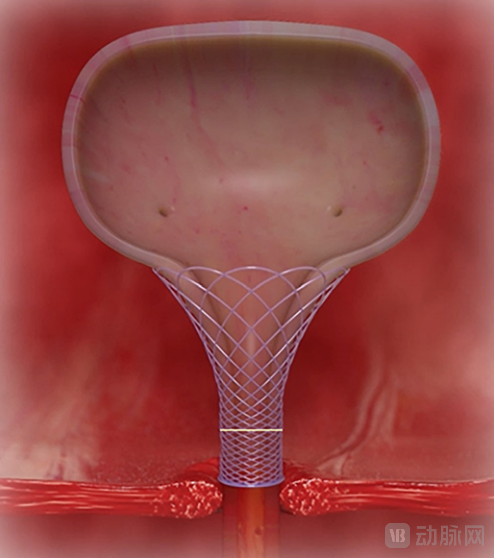
The stent is placed at the anastomosis between the bladder neck and the urethral stump. The yellow line indicates the anastomotic site between the urethra and the bladder neck.
During the surgical procedure, once the prostate is removed, Voro®The stent is then placed in a compressed state on the urethral stump at the pelvic floor, followed by anastomosis of the urethral stump to the bladder neck. Subsequently, Voro®The stent is deployed and positioned at the anastomotic site, with its distal end secured by sutures, and the device size is determined by aligning and suturing the midline of the device to the urethra. Finally, the proximal end of the device is sutured to the bladder during anastomotic healing.
Voro®The urinary stent is made of polydioxanone, a material commonly used in medical devices, and is fully absorbed within 180 to 210 days after implantation. The device is placed at the anastomotic site between the bladder neck and the urethral stump. Before the stent is completely absorbed, durable connective tissue forms during the healing process. This allows for early restoration of the bladder neck structure, facilitating normal voiding function.
According to Levee Medical's official website,Voro®The urinary stent is currently the first and only bioabsorbable stent designed to treat urinary incontinence following prostatectomy. It reduces pressure on the urethral sphincter, promotes recovery, and works by controlling the geometry of the bladder neck and maintaining urethral length.
Compared with pharmacological therapy, Voro®Urinary stents offer numerous advantages:
In terms of efficacy, Voro®Urinary stents can directly target the anatomical sites of the urethra and bladder neck. By supporting and maintaining urethral structure and optimizing bladder neck geometry, they create favorable conditions for the recovery of the urethral sphincter, thereby improving urinary incontinence at a structural level. This approach addresses the limitations of pharmacological therapies, which cannot directly intervene in or repair the anatomical structures of the urethra and bladder neck.
In terms of side effects, Voro®Urological stents are absorbable implantable medical devices that are gradually absorbed by the body after fulfilling their mission of providing support and aiding recovery, thereby eliminating the risk of side effects associated with long-term use;
From the perspective of compliance, Voro®Ureteral stents are implanted surgically; once successfully placed, patients do not need to monitor daily medication intake as required with pharmacological therapy, thereby reducing the burden and management complexity during treatment and resulting in relatively higher adherence.
3Completes Over RMB 100 Million in Series B Financing
From September 2023 to December 2023, two male patients with prostate cancer underwent robot-assisted radical prostatectomy (RARP) with simultaneous placement of Voro at the National Hospital in Panama City, Panama.®Urinary Stent.
The patient underwent standard robot-assisted radical prostatectomy (RARP) using the da Vinci Xi system under general anesthesia. The urinary stent was compressed and introduced into the pelvic cavity through a trocar using Maryland forceps. The atraumatic end (the end with the smaller diameter) was positioned toward the urethral stump. The stent, in its compressed state, was placed on the urethral stump at the pelvic floor, and perineal pressure was applied to facilitate manipulation of the urethral stump. After correct positioning, urethrovesical anastomosis was performed through the center of the stent using barbed sutures.
After confirming the absence of anastomotic leakage, the stent is deployed. The base is secured to the urethra using two absorbable sutures placed on opposite sides. The stent is then expanded toward the bladder neck, with gentle compression applied along both sides of the device. Once fully expanded and urethral support is ensured, two sutures are placed at the mid-portion of the device to prevent distal migration during bladder filling. The widest part of the stent is anchored to the bladder neck with two sutures, ensuring they pass through the muscular tissue for proper fixation. Finally, a pressure test is performed by filling the bladder with sterile saline to verify that the desired bladder neck geometry is achieved.
The trial results showed that both patients successfully underwent urethrectomy and urinary system stent implantation, with no perioperative complications reported. Based on pad weight and usage at 1 month and 3 months postoperatively, neither patient experienced early stress urinary incontinence (SUI) after robot-assisted radical prostatectomy (RARP).
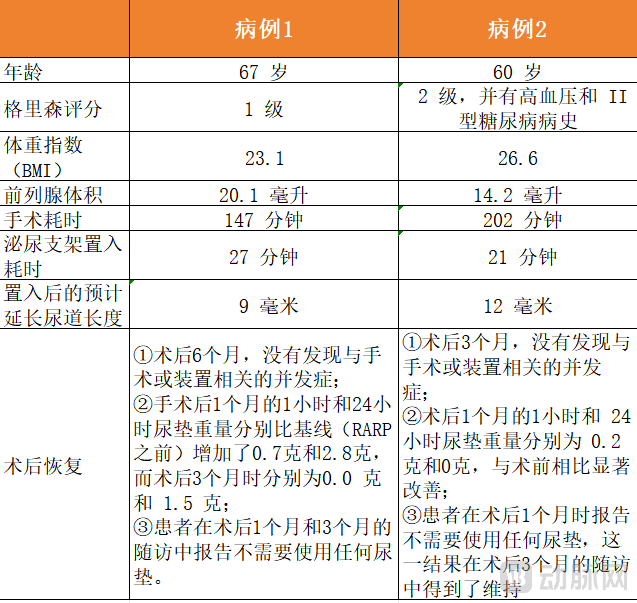
Voro®Early experience with absorbable urologic stents indicates that they can safely and effectively prevent stress urinary incontinence (SUI) after robot-assisted radical prostatectomy (RARP). Furthermore, the device is easy to insert and deploy during surgery, with no perioperative complications. Ongoing prospective studies yielding early and long-term outcomes will better define its potential role in preventing SUI.
February 11, 2025Levee Medical Announces Successful Completion of Series B Financing, Totaling Over $14 Million (Approximately RMB 102 Million), including bill conversion.
The funds raised will accelerate Voro®Development of the urological stent, supporting ongoing clinical studies, including the pivotal trial to be conducted in the United States and the current ARID study. The ARID study has achieved a significant milestone. Dr. Gustavo Espino, Principal Investigator of the ARID study at Hospital Nacional in Panama City, has successfully enrolled 28 patients. The study is evaluating Voro®Safety and Performance of Urinary Stents in Reducing Postoperative Stress Urinary Incontinence.
Currently, Voro®As an investigational device, the Voro® urinary stent has not yet received FDA approval, remains in the research and development phase, and is not commercially available in any country. It remains to be seen whether Levee Medical can successfully commercialize the Voro® urinary stent and thereby emerge as a leader in the urinary incontinence treatment industry.
References:
Stanford JL, Feng Z, Hamilton AS, Gilliland FD, Stephenson RA, Eley JW, et al. Urinary and sexual function after radical prostatectomy for clinically localized prostate cancer: the Prostate Cancer Outcomes Study. JAMA. 2000;283(3): 354–60. https://doi.org/10.1001/jama.283.3.354