

Daoji Genetics to Launch Proprietary Large-Cargo AAV Delivery Platform, Breaking Through Gene Therapy Limitations
On November 21, Novartis announced the acquisition of Kate Therapeutics for up to $1.1 billion. As a company specializing in innovative gene delivery therapies, Kate Therapeutics has pioneered a novel technology platform that combines diverse capsid library generation with rigorous transcription-based in vivo selection and machine learning to develop functional capsid variants. Its novel capsids exhibit enhanced muscle and cardiac transduction capabilities along with liver detargeting, holding the potential to address challenges in tissue-specific delivery and gene regulation in gene therapy.Behind the $1.1 billion blockbuster acquisition lies MNCs’ bet on next-generation gene therapies, underscoring that delivery system optimization and the “gene packaging limit” have become the most pressing challenges to address in gene therapy today.
In 2023, Daoji Gene was founded in Suzhou. This biotech company, established just two years ago, focuses on the innovative R&D and commercialization of next-generation gene therapies. Leveraging its globally leading large-fragment AAV vector technology driven by clinical needs, it is breaking through the “gene packaging limit” that has plagued the industry for two decades.
Currently, Daoji Genetics has establishedA globally leading foundational technology platform for gene therapy, featuring a mutation library valued at hundreds of billions and high-throughput screening systems, dedicated to developing next-generation gene therapy delivery systems targeting neuromuscular and chronic kidney diseases, as well as gene therapies for malignant tumors.VCBeat Talks with Dr. Zhao Piming, a Ph.D. from the Chinese Academy of Sciences and Gene Therapy Expert at UCSF, Decoding the Vector Revolution That Holds Hope for Hundreds of Millions of Patients in China and Around the World.
1UCSF Gene Therapy Scientists Lead the Way with Upcoming Breakthrough in Large-Fragment AAV Delivery Vectors
Gene therapy involves the direct or indirect delivery of target genes into target cells via vectors, modifying individual gene expression through strategies such as gene replacement, gene addition, or gene intervention. This approach aims to correct or compensate for diseases caused by defective or abnormal genes, thereby fundamentally curing or ameliorating refractory and genetic disorders.
Over the past few decades, a phased understanding of gene therapy has been achieved: it can provide long-term relief from disease-related symptoms and directly address the underlying genetic mutations causing the disease. More than 40 gene therapy drugs have been approved for marketing worldwide, generating substantial clinical data for reference. Meanwhile, limitations of gene therapy have also been recognized, including constraints in disease coverage, variable efficacy across different diseases, and safety concerns related to delivery vectors.
One of the key steps in gene therapy is the efficient delivery of the target gene into specific tissues or cells via delivery vectors. Therefore, safe and effective gene delivery vectors are critical, as they not only determine the safety and efficacy of the therapeutic agent but also constrain the organs and targets accessible for drug delivery, as well as the feasibility of repeated dosing.
Currently, there are eight AAV gene therapy drugs approved for marketing worldwide, including Novartis’s Zolgensma and Pfizer’s Durveqtix, covering diseases such as inherited retinal dystrophies, spinal muscular atrophy, hemophilia, and Duchenne muscular dystrophy. In terms of indications, currently approved and investigational gene therapy drugs are primarily for genetic disorders, many of which are rare diseases. On one hand, due to limited market demand and high drug pricing (for example, Hemgenix, the gene therapy for hemophilia developed by uniQure in collaboration with CSL Behring, costs an average of $3.5 million per one-time treatment), patient accessibility and commercialization of gene therapies have long faced significant challenges.The field of gene therapy urgently needs affordable, next-generation breakthroughs for patients.
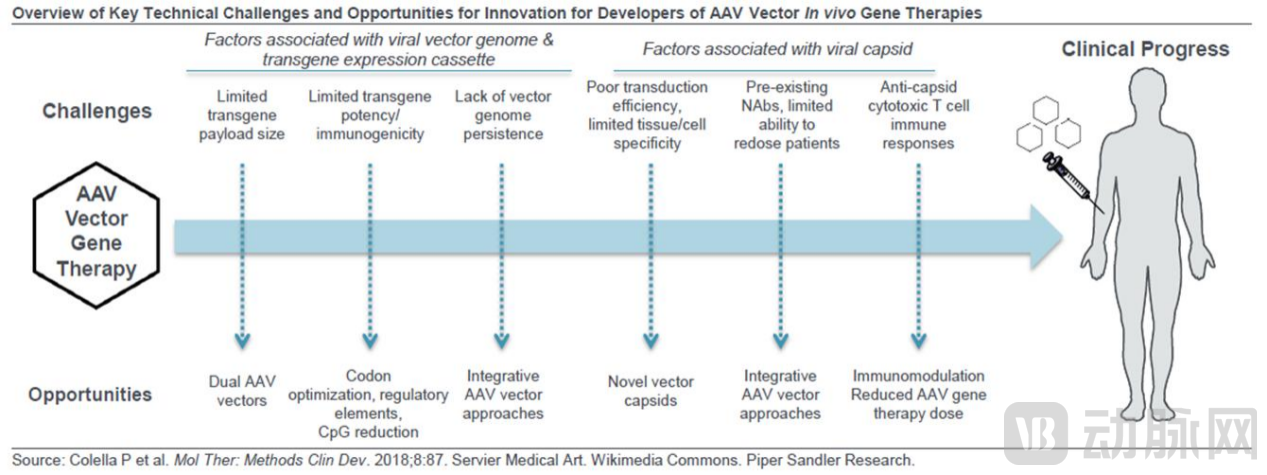
Constrained by the development of delivery vectors and other factors, gene therapy-related drug R&D has yet to achieve revolutionary breakthroughs, and the range of treatable diseases (such as neurological disorders, cardiovascular diseases, and cancer) remains limited.Taking adeno-associated virus (AAV) as an example, despite its advantages such as long-term expression, low immunogenicity, and high safety profile (replication-defective), which have made it a star vector in the field of gene therapy, traditional AAV vectors still face challenges including limited cargo capacity, insufficient targeting specificity (e.g., difficulty in crossing the blood-brain barrier to reach organs such as the heart), difficulties in large-scale production and purification (e.g., achieving high-efficiency packaging and removing empty capsids), as well as regulatory and ethical challenges. Therefore, “next-generation” innovative gene therapies have emerged, with one of their core challenges lying in the engineering and optimization of delivery vectors.
The primary challenge is that the packaging capacity of adeno-associated virus (AAV) vectors is severely limited, thereby restricting the clinical applicability and market potential of gene therapy and gene editing.Currently, the genome size of adeno-associated virus (AAV) vectors is approximately 4.7 kb. Packaging oversized genomes can lead to genome fragmentation, low viral titers, and even a several-order-of-magnitude reduction in potency, necessitating the production of larger quantities of virus to meet clinical treatment demands, which further hinders the accessibility of gene therapy drugs. In current gene therapies, particularly those involving systemic administration, high viral doses are required to achieve therapeutic efficacy. However, experimental data indicate that high-dose AAV administration is associated with significant hepatotoxicity and other adverse effects, including elevated transaminases, dorsal root ganglion degeneration, genetic defects, and ataxia.
Therefore, Daoji Gene has pioneered innovations in its foundational technology platform for AAV vectors, successfully achieving the packaging of large genes ranging from 5 to 6 kb. Leveraging these proprietary technological breakthroughs, the company has multiplied the yield of large-fragment AAV packaging, significantly reduced the rate of empty viral capsids, and thereby lowered production costs. These advancements will substantially expand the indications and application scope of AAV-based gene therapies.
The key to successfully screening large-fragment or specific AAV vectors lies in establishing a genuine and highly effective ultra-large AAV mutant library. Over decades of dedicated effort, our team has performed multiple iterative upgrades and, by integrating efficient high-throughput screening systems, has isolated rare, highly efficient mutants from libraries comprising tens to hundreds of billions of variants.Dr. Zhao Piming remarked, “If we use my favorite sport, marathons, as an example: among 100 randomly selected individuals from the general public, there might be only one or two runners; but if we select 1,000 people, there could be more than ten runners. When the pool expands to 10,000 people or even larger, we are likely to find a marathon champion. Therefore, an AAV library at the scale of hundreds of billions implies a broader screening scope and a wider range of treatable diseases.”
Specifically, Daoji Gene utilizes an AAV and target protein structure computational design platform to employ AI for predicting AAV serotypes and designing AAV vectors with enhanced tissue tropism. By integrating self-upgrading and iterative transfection methods to improve library packaging efficiency, and by developing a proprietary method for packaging AAV mutant libraries, the company achieves viral titers more than twice as high as those of imported and domestic brands. Its proprietary high-throughput screening 3.0 technology platform, based on human organoids, enables the efficient identification of functional AAV vectors characterized by low hepatotoxicity, high expression activity, and the capacity for complete packaging of large gene fragments.
2Partnering with leading hospitals worldwide to expand into clinical gaps yet to be addressed by gene therapy
Leveraging breakthroughs in large-fragment AAV technology and a high-throughput functional screening platform, Daoji Gene can screen forHighly active AAV delivery vectors that are easy to scale up for production and achieve exponential cost reduction, with specificity for multiple tissues and organs, such as neuron-specific, muscle-specific, and cancer tissue-specific AAV vectors.Furthermore, the team has independently developed an AAV precision regulation technology platform by integrating AI technologies. These breakthroughs will further expand the range of disease indications for drugs based on AAV delivery vectors.
Dr. Zhao Piming earned his Ph.D. from the Institute of Microbiology, Chinese Academy of Sciences. During his doctoral studies, he and his team established the world’s first local protein database at a time when relevant genomes had not yet been fully sequenced. This achievement placed them three years ahead of their domestic and international peers and enabled the successful identification of previously unidentifiable proteomic proteins. Subsequently, Dr. Zhao served as a Research Assistant, Postdoctoral Fellow, and Principal Scientist in Gene Therapy at Loyola University Medical Center in Chicago and the University of California, San Francisco (UCSF) and its affiliated Children’s Hospital. While working in the United States, Dr. Zhao’s team pioneered research in AAV gene therapy and gene editing—Notably, during my tenure at the University of California, San Francisco (UCSF) in Professor Julie Saba’s laboratory, I led a team in collaboration with globally renowned chronic kidney disease (CKD) expert Professor Hildebrandt to pioneer the world’s first AAV gene therapy study for human chronic kidney disease and filed an international patent application.
With over two decades of deep expertise in gene therapy and protein therapeutics, Dr. Zhao Piming has amassed extensive global R&D and clinical resources. He is currently focused on the global frontier of AAV gene therapy, driving early-stage drug discovery and translating clinical needs into therapeutic solutions.During the preliminary validation phase, Daoji Gene has collaborated with multiple renowned hospitals and research institutions both domestically and internationally. By conducting targeted AAV serotype screening aligned with actual clinical needs, the company is expanding its indications from rare diseases to common conditions. Its pipeline projects include neuromuscular disorders, chronic kidney disease, and brain tumors.
Currently, Daoji Gene is advancing research on novel delivery vectors for next-generation gene therapies, having successfully achieved functional validation in patient-derived disease organoids, patient cell models, and large animal in vivo models. By employing a dual-track strategy that integrates delivery vector screening with clinical pipeline development, Daoji Gene has established multiple novel delivery vector pipelines and is actively exploring licensing and collaboration opportunities with pharmaceutical companies both domestically and internationally.
Meanwhile, Daoji Gene has continued to explore commercialization opportunities amid the capital winter, achieving self-sustaining revenue through its proprietary technical service products. For instance, it has applied large-fragment AAV packaging technology to the development of gene-knockout animal models; collaborated with external companies on specific disease indications to jointly develop clinical pipelines; and worked with commercial partners to build relevant technology platforms and co-develop marketable products for revenue generation.
According to BCC Research, the global cell and gene therapy (CGT) market is projected to grow from $7.2 billion in 2023 to $23.3 billion by the end of 2028, representing a compound annual growth rate (CAGR) of 26.4% during the forecast period from 2023 to 2028. Nevertheless, it cannot be overlooked that, due to the relatively short duration of CGT products’ widespread clinical use, data accumulation and adverse event collection remain limited, and risks associated with emerging products are coming to light—for example, six marketed CAR-T therapies have received FDA “black box warnings.”Risks and opportunities go hand in hand, with high risks coexisting alongside high returns—this is the inherent logic governing the R&D and market dynamics of innovative drugs. It is precisely for this reason that biotech companies represented by Daoji Gene are focusing on foundational technological innovations and the development of next-generation therapies. With an eye toward the future, they are poised to expand the scope of cell and gene therapy (CGT) indications and achieve exponential market growth.
At the conclusion of the interview, Dr. Zhao Piming stated, “The name ‘Daoji Genomics’ was chosen to reflect our commitment to adhering to the fundamental principles of life as we explore and develop next-generation gene therapies. Our ultimate goal is to translate these advancements into clinical benefits for patients, providing affordable, cutting-edge treatments for those with currently untreatable conditions. Returning to the essence of entrepreneurship, our true mission is to grasp the core, foundational elements and pursue world-class innovations.”