

Ronovo Surgical's HaiShan One® Receives China's First NMPA Approval for Modular Laparoscopic Surgical Robot with Full Indications Across Four Major Specialties
Domestic Surgical Robots Set Another Milestone!
On March 6, 2025, Ronovo Surgical’s Haishan-1, which possesses fully independent intellectual property rights,®Laparoscopic Surgical Robot (hereinafter referred to as “Haishan I®”) officially obtained the Class III Medical Device Registration Certificate from the National Medical Products Administration (NMPA) (Registration No. Guo Xie Zhu Zhun 20253010500).
Hai Shan Yi, the first modular surgical robot in China®Achieved a dual breakthrough of “modular architecture + full specialty compatibility”: It is not only the first domestically produced robot to receive approval for all indications across four major specialties—general surgery, urology, gynecology, and thoracic surgery—upon market launch, but also revolutionized the form factor of traditional surgical robots through its “split, modular, and dexterous” design. By separating the surgical arms, the lightweight modular cart allows flexible positioning according to surgical procedures and convenient movement between different operating rooms, thereby overcoming space limitations and lowering the threshold for clinical adoption.
In addition, Haishan One®Its modular innovation has further restructured the model of medical resource allocation, pioneering an “on-demand configuration” approach in the field of surgical robotics. Hospitals can flexibly select the quantity and models of cart units according to their actual needs, enabling rapid deployment without site modification. Leveraging its capability to cover all indications and its intelligent design, it is driving the transition of robotic minimally invasive surgery from “high-end equipment concentrated in a few hospitals” to “widespread adoption across hospitals at all levels,” truly realizing the equitable accessibility of advanced technologies.
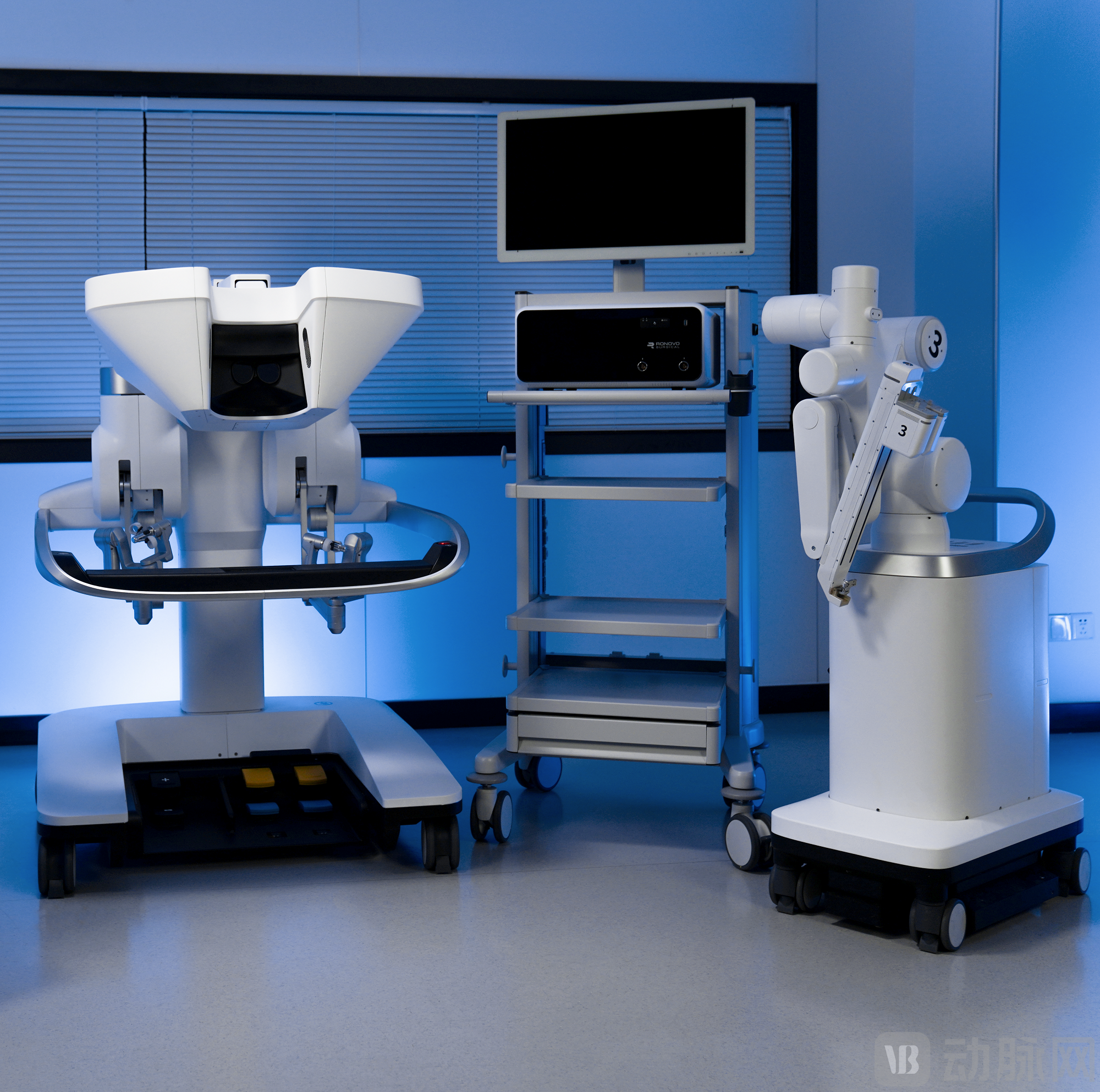
Hai Shan Yi®Laparoscopic Surgical Robot
The Chinese surgical robot market is undergoing structural transformation, with the rise of domestic innovation accelerating the break of foreign technological monopolies. Currently, mainstream laparoscopic surgical robots mostly adopt an integrated design, facing two major issues: first, disruptive operational habits—integrated surgical robots use entirely new port placement methods and wristed instruments, altering traditional laparoscopic surgery practices, making it difficult to leverage surgeons' existing experience and resulting in a steep learning curve; second, spatial efficiency constraints—the fixed, bulky body requires exclusive occupancy of an entire operating room, leading to insufficient annual utilization rates for individual rooms. Moreover, high costs associated with operating room renovations, coupled with the inevitable disruption to normal operations during construction, contradict hospitals’ objectives of cost control and efficiency improvement.
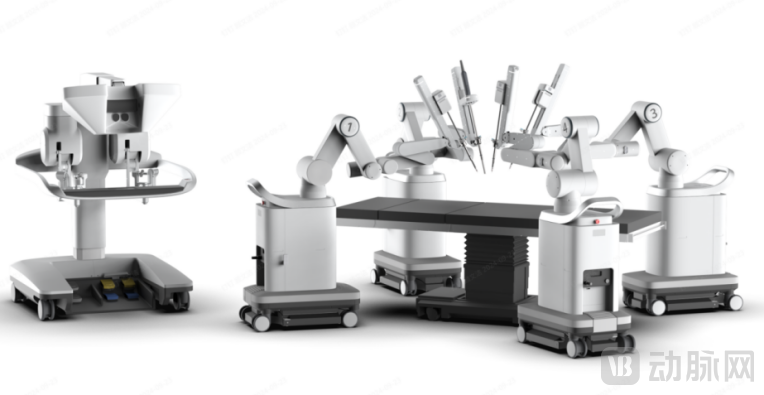
Based on the tens of millions of minimally invasive surgical procedures required in China and the clinical pain points experienced by tens of thousands of laparoscopic surgeons, Haishan Yi®Reconstructing the Surgical Ecosystem with a Modular, Split-Body Architecture. The system is deconstructed into compact, independently mobile cart units. Its slender robotic arms provide extended reach to cover a wider surgical field, ensuring smooth and precise manipulation. With its small and compact footprint, the device can be easily deployed even in small to medium-sized operating rooms.
The split-cart design not only allows for flexible deployment beside the operating table, freeing up space above the patient to provide surgeons with ample operational room, but also easily adapts to diverse port placement requirements. It accommodates the surgical preferences of both robotically experienced and laparoscopically experienced surgeons, thereby reducing the learning curve. Furthermore, cart configurations can be added or removed as needed to meet specific procedural requirements. The system can also be flexibly scheduled according to surgical progress, enabling rapid turnover to the next case, improving efficiency in consecutive surgeries, and facilitating sharing across multiple departments and operating rooms, thus enhancing equipment utilization.
Compared with the complex installation and debugging process of integrated robotic arms, split-type cart operation is simpler, with preparation and withdrawal taking only a few minutes.This “deconstruction without efficacy loss” design truly achieves the localized innovation goal of “adapting to existing operating rooms without requiring spatial expansion.”
Compared with traditional laparoscopic robots, Haishan One®The modular split architecture achieves a dual breakthrough in optimizing usage efficiency and expanding the range of covered surgical procedures. Surgeons can flexibly configure the position of the cart based on surgical requirements, while hospitals can procure the number of carts according to their budget tiers. The immersive surgeon console design, featuring a highly integrated 3D vision system, provides surgeons with a deeply immersive surgical field of view, effectively eliminating external distractions and enabling the lead surgeon to focus more intently on the operative area. This is particularly beneficial for surgeons already familiar with traditional laparoscopic surgery, allowing them to quickly adapt to robotic operation.
Haishan I®Driven by clinical needs and eschewing the path of merely replicating imported equipment, this surgical robot leverages core advantages such as modular design and comprehensive indication coverage to overcome the limitations traditional imported products face in multi-departmental expansion. It has successfully completed multicenter clinical trials in four major specialties—general surgery, thoracic surgery, gynecology, and urology—achieving a 100% success rate, thereby becoming the first domestically developed surgical robot to simultaneously receive full-indication certification across these four specialties.
Especially in a series of complex surgeries such as low anterior resection of the rectum, iliac vessel lymph node dissection, and lobectomy, Haishan One®Fully demonstrates its unique advantages, enhances the capability to cover complex surgical procedures and clinical value, and has gained widespread recognition from experts both domestically and internationally.
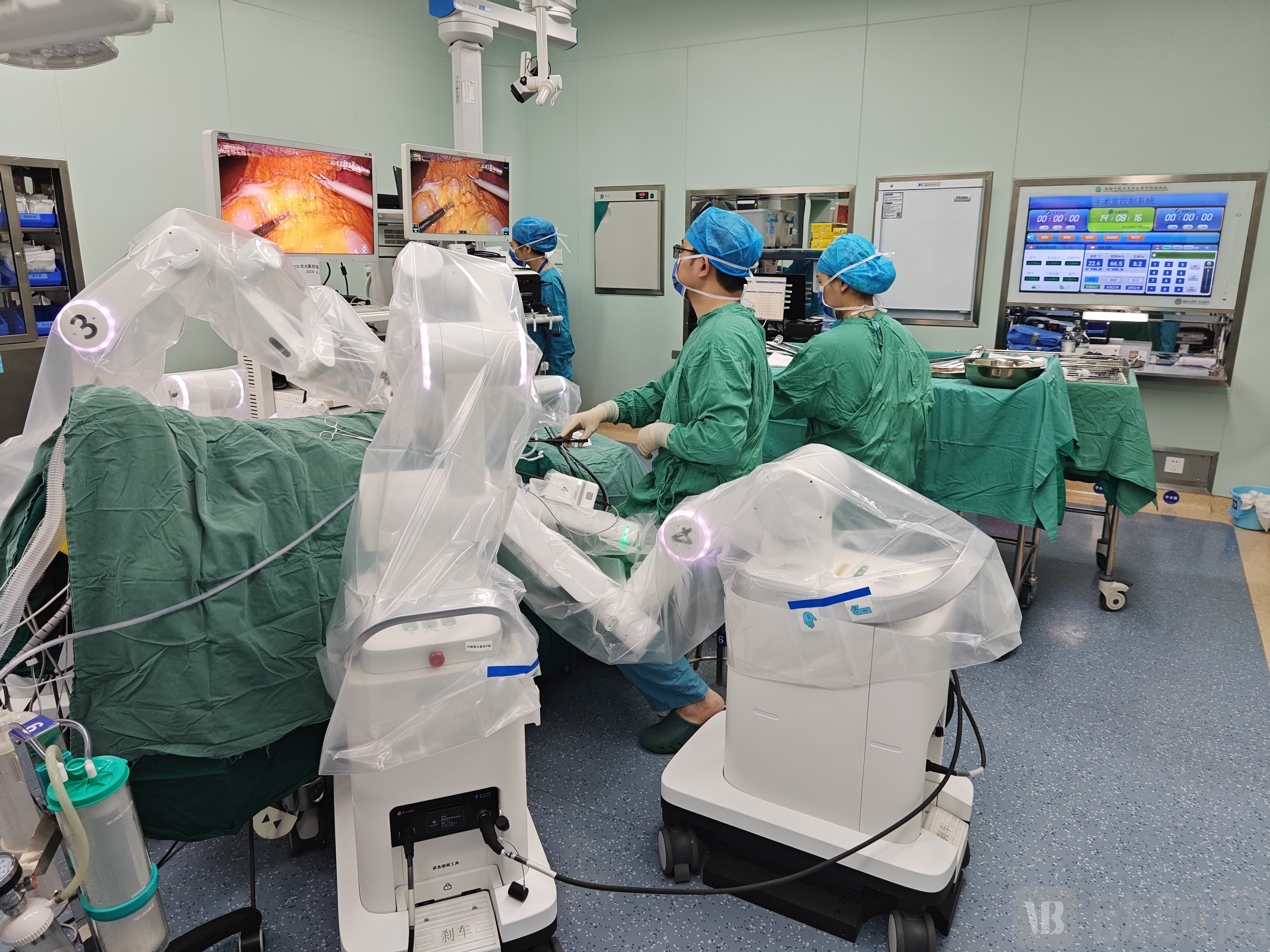
The Department of General Surgery team led by Li Taiyuan at the First Affiliated Hospital of Nanchang University uses Haishan Yi®Successful Completion of Surgery
Dr. Mao Ying, co-founder of Ruilong Surgical, explained that traditional single-column surgical robots have a limited range of motion because all surgical arms are concentrated on a single column, making it difficult to meet the needs of extensive surgeries. In contrast, modular robots distribute the surgical arms around the operating table, breaking through the spatial limitations of single-column designs and expanding the operational range of the robotic arms. This design is particularly suitable for specialties such as general surgery and gynecology, which require ample working space.
Professor Ji Mei from the Gynecological Minimally Invasive Center of the First Affiliated Hospital of Zhengzhou University, using Haishan Yi®After completing three consecutive high-difficulty gynecological surgeries, he commented, “These complex procedures represent the optimal indications for surgical robots. Cases such as challenging malignant tumor resections, minimally invasive surgeries for benign tumors in anatomically difficult locations, and patients with severe obesity are all highly suitable for robotic surgery.” Haishan Yi®“Clear vision and precise control make difficult surgeries easier to perform.”[1]
Professor Gustavo Soares, a leading authority from the Brazilian Hernia Society, is also using Haishan Yi®"Haishan Yi" marveled after undergoing bilateral inguinal hernia repair and upper abdominal ventral hernia repair: “Haishan Yi®“It has the potential to simultaneously complete bilateral inguinal hernia repair and upper abdominal ventral hernia repair in a single docking session, without the need to change port sites or reposition the patient cart.”[2]
Meanwhile, based on an entirely new modular design, Ruilong Surgical is also actively exploring the Haishan I®Greater Potential in Clinical Applications.
Notably, the launch of the “Expert Consensus on the Clinical Application of Modular Endoscopic Surgical Robots in Thoracic Surgery” in December 2024 marks Haishan Yi®clinical value has gained authoritative recognition. This consensus, based on the Haishan I®Based on clinical practice, this work systematically reviews the indications, operational standards, and technical advantages of modular robots in thoracic surgery, providing a reusable reference for clinical pathways within the industry and laying the foundation for the standardized promotion of domestically produced modular laparoscopic surgical robots.
At this stage, the commercialization of domestically produced surgical robots urgently needs to overcome three core challenges: first, insufficient adaptability across multiple departments hinders large-scale application; second, high equipment and maintenance costs impose a heavy out-of-pocket burden on patients; third, limited insurance coverage further exacerbates payment pressures. These three barriers collectively constrain the market penetration of surgical robots, making it difficult for minimally invasive surgical technologies to benefit primary healthcare institutions broadly.
“We aim to deploy surgical robots in secondary hospitals, county-level public hospitals, and private medical institutions, breaking the status quo where high-end equipment serves only a small fraction of patients,” said Dr. Ma Changzheng, founder of Ruilong Surgery. Primary-care hospitals typically perform low-to-moderate complexity procedures, such as general surgery and gynecological operations, rather than pursuing complex surgical techniques. Their demand for surgical robots centers on high utilization rates and low-cost operations.
Hai Shan Yi®Leveraging the advantages of “flexibility + multi-procedure capability,” it is poised to overcome the challenges hindering the deployment of surgical robots in lower-tier markets and their commercialization. First, at the conceptual level, Ruilong Surgery adheres to the philosophy that “innovation need not begin with imitation.” By centering on clinical needs to drive scaled, multi-specialty adoption, and through its full-indication coverage across four major fields—general surgery, thoracic surgery, gynecology, and urology—it has enhanced product cost-effectiveness and reduced the learning curve for physicians, thereby effectively lowering the procurement and usage barriers for primary healthcare institutions.
Secondly, at the product level, Haishan One®The split architecture enables hospitals to flexibly procure carts and accessories on demand. Its lightweight design (<200 kg) is compatible with older operating rooms without requiring site modifications. The modular cart can be flexibly moved between departments according to surgical needs, supporting consecutive procedures and significantly improving equipment utilization. In addition, Haishan Yi®It is also compatible with traditional laparoscopic instruments, reducing reliance on proprietary consumables and enabling primary healthcare institutions to adopt advanced technologies at a lower cost—making them not only “affordable” but also “practical to use.”
By leveraging the combined strategy of “flexibility + multi-procedure capabilities,” Ruilong Surgery has not only broken the “impossible triangle” of clinical capability, accessibility, and affordability, achieving inclusive coverage of minimally invasive surgery from top-tier tertiary hospitals to county-level grassroots institutions, but also provided innovative insights for the large-scale adoption of domestically produced surgical robots.
In terms of the international market, Ruilong Surgery is developing Haishan One®From the outset, the company adopted a global perspective, systematically investigating overseas disease spectra, surgical demands, payment mechanisms, and the infrastructure for minimally invasive surgery. By integrating clinical feedback from domestic and international experts, it optimized product design to ensure suitability for diverse clinical scenarios worldwide. Although it initially received certification from China’s National Medical Products Administration (NMPA), its modular architecture and comprehensive indication coverage have already established international competitiveness. Reportedly, Ruilong Surgery has initiated market access processes in overseas markets, while simultaneously advancing clinical collaborations and commercial pilots, gradually building a global promotion network that covers both emerging markets and developed countries.
For a long time, the high-end medical device market in China has been dominated by foreign brands. From its inception, Ruilong Surgical recognized that “domestic substitution ≠ simple replication.” Although imitation may be technically easier to achieve, it would encounter numerous challenges in future commercialization and clinical adoption. Adhering to the philosophy that “innovation need not begin with imitation,” Ruilong Surgical has persisted in pursuing an original path focused on addressing real clinical needs. The company is committed to advancing digital and intelligent minimally invasive surgical technologies, empowering surgeons with streamlined precision and delivering superior therapeutic outcomes to benefit patients widely.
Ruilong Surgical completed Haishan One in four years®From conceptual design to multi-center, multidisciplinary clinical trials, Haishan One has now been established.®Endoscopic Surgical Robotic System, Haishan One®Endoscopic Imaging System, Haishan I®Surgical instruments and other product lines, with more than 150 domestic and international patent applications.
Professor Ye Dingwei, Vice President of Fudan University Shanghai Cancer Center, mentioned “Haishan Yi®"It is a surgical robot with independent intellectual property rights, and I believe it will certainly attract the attention of the international market in the future, gaining global awareness, recognition, and acceptance."
Haishan Yi Approved This Time®The laparoscopic surgical robot not only marks the birth of China’s first modular laparoscopic surgical robot, but also demonstrates significant breakthroughs in technological accumulation and innovation by domestic enterprises. Perhaps when looking back at the history of China’s high-end medical equipment in the future, Haishan Yi®Its approval is not merely a date on a registration certificate; it marks a cognitive leap in China’s medical innovation, transitioning from “following others to solve problems” to “defining its own agenda.” As more companies begin to anchor their innovations in clinical pain points, the technological constraints that once bound Chinese physicians will ultimately be transformed into Chinese solutions dedicated to safeguarding lives.
At that moment, in the operating room, Haishan Yi®Every arc traced by the surgical arm is rewriting history: here, there is no slavish imitation in “import substitution,” only the trajectory of China’s intelligent manufacturing breaking free from its cocoon; here, the goal is not the simple surpassing of specifications, but the redefinition of value standards through clinical effectiveness—after all, on the operating table where lives are at stake, true innovation always takes the patient as its ultimate end.
References:
[1] Early Success in Medical-Engineering Collaboration: Haishan Yi® Completes Three Consecutive Complex Gynecological Surgeries Upon Enrollment
[2] “Acclaimed by Global Experts! Ruilong Surgical’s Haishan-Yi® Laparoscopic Surgical Robot Facilitates Complex Hernia Repair with Unmatched Precision!”