Yongtai Bio Announces Conditional NDA Acceptance for EAL®, China's First Indigenous CIK Cell Therapy for Solid Tumors

Immunotech Biopharm
Developer of Cellular Immunotherapy Products
On February 28, Yatai Bio-Pharmaceutical Co., Ltd. (stock code: 06978.HK, abbreviated as “Yatai Bio”) announced that the Center for Drug Evaluation (CDE) of China’s National Medical Products Administration (NMPA) had approved its core product candidate drug, EAL®Submit an application for conditional approval.
The announcement mentioned that Immunotech Applied Science Limited plans to submit the EAL in the near future.®'s new drug marketing application is expected to becomeChina’s First Approved CIK (Cytokine-Induced Killer Cell) Therapy。
EAL®As a broad-spectrum cellular immunotherapy product, it has previously becomeChina’s First Immune Cell Therapy Candidate Approved for Phase II Clinical Trials in Solid Tumors. In September 2023, EAL®Successfully included in the CDE’s Breakthrough Therapy Designation list, with the indication being the prevention of recurrence after curative resection for primary hepatocellular carcinoma.
Once approved for market launch, EAL®will change the current situation where there are no effective therapeutic drugs for postoperative recurrence of liver cancer, and will also becomeChina’s First Approved Solid Tumor Cell Therapy Product, rapidly unlocking the vast market for cellular immunotherapy of solid tumors.
1First Solid Tumor Cell Therapy Product: Conditional Approval Opens Key Liver Cancer Market
EAL®Expanded Activated Lymphocytes (EAL) is a broad-spectrum, multi-target cellular immunotherapy product. It is a preparation derived from the patient’s own peripheral blood T cells, which are activated and expanded using a patented method. The primary active component consists of CD8+ cytotoxic T cells (surface marker: CD3 molecule).
From the perspective of its mechanism of action, EAL®by activating and expanding in vitroDerived from the patient’s own T cells with anti-tumor activity, these cells are infused back into the patient to prevent tumor recurrence.EAL®The target population for the product is patients with hepatocellular carcinoma (HCC) who are eligible for hepatectomy. These patients, classified as stage I/II/III, account for 70.2% of all HCC cases. Therefore, EAL®Treatable HCC patients are considered to account for 70.2% of all HCC patients in the Chinese market.
According to data from the International Agency for Research on Cancer (IARC) of the World Health Organization, liver cancer ranked fourth in terms of new cases among all cancers in China in 2022, with its mortality rate ranking second among all cancers, accounting for approximately 370,000 deaths. Liver cancer is classified into primary liver cancer and secondary liver metastasis caused by metastasis from other lesions. Primary liver cancer originates in the liver tissue, with hepatocellular carcinoma (HCC) being the most common type, accounting for about 90% of all primary liver cancer cases.
Inclusion in the Breakthrough Therapy Designation list and approval to submit a conditional marketing application: the key to these consecutive major regulatory milestones lies in EAL®Highlighting efficacy data and ample human trial cases corresponds to the two most attention-grabbing topics in cell therapy—efficacy and safety.
First, it is necessary to understand EAL.®The Essence of the Mechanism of Action—CIK Cells. As a type of specific immune cells, CIK cells require cytokine activation and possess strong recognition capabilities against tumor cells. They precisely kill tumor cells through direct and indirect mechanisms without causing damage to normal cells. Furthermore, studies have shown that CIK cells are characterized by rapid proliferation, potent anti-tumor activity, and broad-spectrum antiviral properties.
As of 2022, the U.S. Clinical Trials Database listed 108 clinical studies related to CIK/DC-CIK cell therapy. The diseases involved mainly included pancreatic cancer, gastric cancer, esophageal cancer, bladder cancer, refractory non-Hodgkin lymphoma, colorectal cancer, lung cancer, liver cancer, renal cancer, triple-negative breast cancer, acute leukemia, B-cell lymphoma, solid tumors, and hematologic malignancies.
In terms of safety, the prospectus of Immunotech Applied Science Limited shows that from November 2006 to April 2016, EAL®This Class III medical technology has been clinically applied in dozens of hospitals, treating over 4,000 cancer patients with more than 20,000 cumulative infusions. Its primary indications include lung cancer, liver cancer, colorectal cancer, gastric cancer, leukemia, breast cancer, ovarian cancer, uterine cancer, renal-related cancers, esophageal cancer, lymphoma, and melanoma, the majority of which are solid tumors.
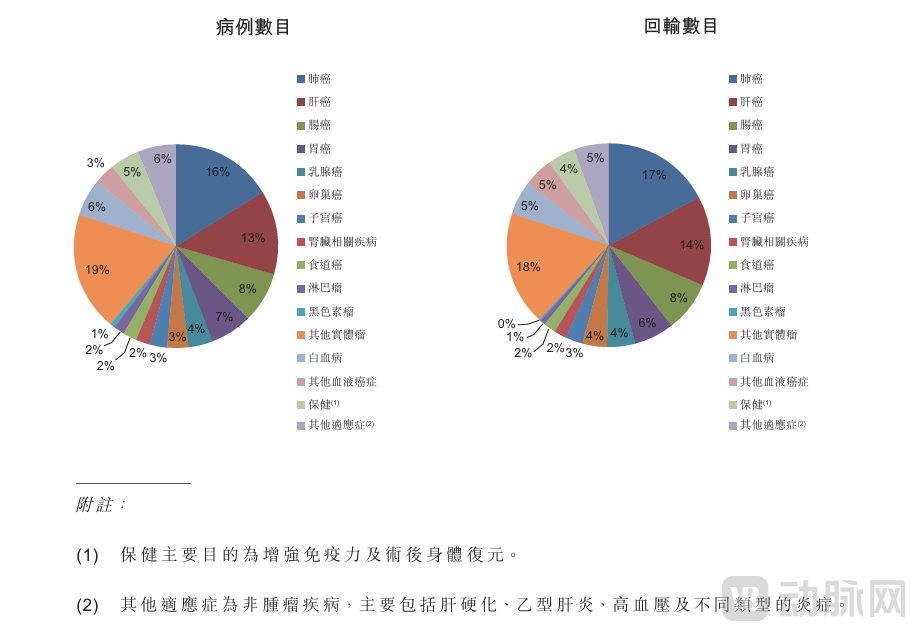
Number of Cases and Infusions for EAL® Already Applied Clinically and Commercialized Across Various Tumor Indications Prior to and During the Implementation of the Dual-Track System
Currently, EAL®Publicly available clinical data are limited, with the majority derived from SCI journal articles published by early-stage clinical researchers:
A clinical study conducted by Peking Union Medical College Hospital, Chinese Academy of Medical Sciences, reported that a total of 19 patients with advanced malignant tumors who had developed metastases received EAL.®Injection. During EAL injection®Two to four weeks after cell administration, the proportions of CD3+CD8+ (CD8+ cytotoxic T cells) and CD3-CD56+ (natural killer cells) subsets in patients' peripheral blood were both increased. Furthermore, according to the report, the number of IFN-γ-secreting cells increased significantly after EAL® injection, with p-values of 0.006 and 0.015 for CD3+IFN-γ+ cells and their lymphocyte subset, respectively. Further results indicated that the proportion of IFN-γ-secreting cells within the CD3+CD8+ and CD3– cell subsets was substantially elevated following EAL® injection, suggesting that EAL®Possesses the ability to increase the number of anti-tumor cytotoxic lymphocytes in peripheral blood and enhances anti-tumor immune responses.
Meanwhile, no severe toxic reactions of Grade II or higher occurred during the injection process. Among all 19 patients (including six whose cell phenotype changes were not analyzed), seven experienced Grade I toxic reactions. These adverse events were self-limiting: fever and dizziness lasted no longer than 48 hours, diarrhea no longer than 12 hours, and chills no longer than three hours. No special treatment was required for any case during or after the injection, and no serious adverse reactions were observed.
Clinical application data collected by Professor Zhang Guoqing and colleagues from the Chinese PLA General Hospital showed that among 84 patients with stage IIIc to IV gastric cancer, 42 patients received more than six cycles of EAL.®Injection and 42 patients underwent concurrent control, EAL®The overall survival (OS) in the treatment group was 27.0 months, compared with 13.9 months in the control group. EAL® immunotherapy reduced the risk of death by 42.7%.
Another study on the application of EAL®Studies on the treatment of small cell lung cancer have shown that, based on data collected from 32 patients (16 in the treatment group and 16 in the control group), all patients in the EAL® treatment group received more than six sessions of EAL.®Injection therapy was associated with a numerically longer OS compared to the control group, although the difference did not reach statistical significance (p=0.060, HR=0.487, 95% CI 0.228–1.037). EAL®The 1- to 3-year survival rates in the treatment group were numerically higher than those in the control group, but the difference was not statistically significant (p > 0.05).
2Hitting the Right Milestones in Cell Therapy Development: Can Companies Ride the “Exclusive” Tailwind of Conditional Marketing Approval?
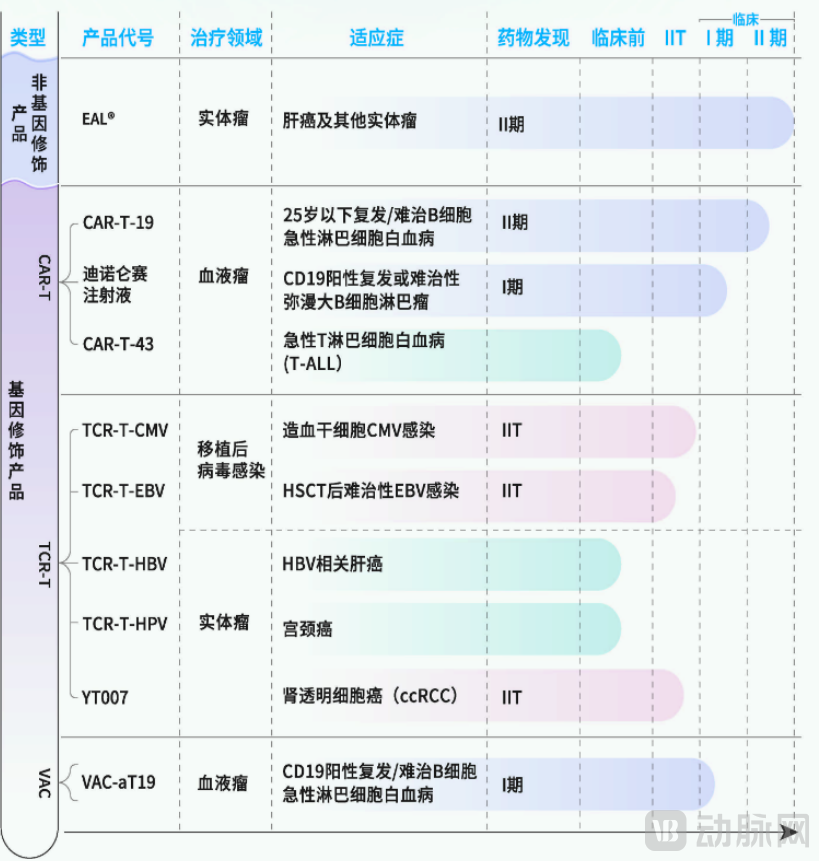
Founded in 2006, Immunotech Applied Science Limited has been dedicated to the research, development, and commercialization of curative immune cell therapies for cancer. Its product pipeline encompasses major categories of cellular immunotherapy products, including both genetically modified and non-genetically modified therapies, as well as multi-target and single-target agents.
In 2015, the National Health Commission issued the "Notice on Canceling the Approval for Clinical Application Access of Class III Medical Technologies," thereby abolishing the approval requirement for the clinical application access of Class III medical technologies. In the same year, Yongkang Biology submitted an Investigational New Drug (IND) application for EAL®, which was accepted by the Center for Drug Evaluation.
In 2017, the revised drafts of the Administrative Measures for Drug Registration and the Classification and Submission Requirements for Biological Products were released, incorporating cell therapy products into the drug regulatory approval framework. In October of the same year, EAL®Obtained IND approval. In 2018, a Phase II clinical study was initiated to prevent recurrence after curative resection for primary hepatocellular carcinoma, enrolling 430 subjects, with the first patient enrolled in September.
In 2020, Immunotech Applied Science Limited became the first immune cell therapy company in China to be listed on the Hong Kong Stock Exchange.Whether driven by market trends or luck, technical strength and product stability are key to Immunotech Applied Science Limited seizing every critical milestone. Rather than simply hitting the right development nodes, the company serves as a microcosm of the growth of domestic cell therapy enterprises in China. Therefore, at this pivotal moment of regulatory approval and commercialization, it is crucial for Immunotech Applied Science Limited to successfully navigate the accelerated pathway of “conditional marketing authorization.”
One visible benefit is that, according to the 2023 “Procedures for Review and Approval of Conditional Marketing Authorization Applications for Drugs (Trial) (Revised Draft for Comment),” once a drug receives conditional marketing authorization, applications for similar clinical trials aimed at conditional approval will generally no longer be accepted for other drugs with the same mechanism, target, and indication. Meanwhile, it is clearly stipulated that confirmatory studies must be initiated prior to conditional approval and completed within four years.
For frontrunners like Immunotech Applied Science Limited, which are poised to reach the finish line earliest, first-mover advantages will be further strengthened, creating a dual advantage of policy support and market exclusivity. Meanwhile, robust early-stage clinical data on efficacy and safety will build intangible advantages such as market recognition and facilitate clinical adoption, thereby accelerating the processes of market launch, clinical application, and confirmatory studies.
As widely anticipated within the industry for cell therapy, EAL®The vast world extends far beyond this.
If EAL successfully secures approval for its initial indication in liver cancer, becoming the first domestically approved and marketed cell therapy product for solid tumors,®Possesses a broad potential market for broad-spectrum anticancer therapies. Multiple early-phase clinical trials in humans have shown that EAL®It is effective against various tumors other than liver cancer. Immunotech Applied Science Limited is also accelerating research to expand its indications, including diseases such as gastric cancer, lung cancer, colorectal cancer, and glioma.