

Head-to-Head Victory: Chinese Biotech Tongyuan Kang's TY-9591 Outperforms Osimertinib in EGFR-Mutant NSCLC with Brain Metastases

TYK medicines
Innovative Drug Developer for Tumors and Immuno-Oncology
On March 9, 2025, TYK Medicines-B (Stock Code: 02410) issued a significant announcement, revealing that its independently developed third-generation EGFR inhibitor, TY-9591 (brand name: Kadasha®), demonstrated statistically significant and substantial clinical benefits compared with osimertinib (brand name: Tagrisso®) as first-line treatment for EGFR-mutant lung cancer with brain metastases in a pivotal Phase II clinical trial. According to investigator-reported data, the primary endpoint of intracranial objective response rate (iORR) met its prespecified objectives. TY-9591 showed statistically significant and clinically meaningful improvements over osimertinib, with pronounced statistical differences observed both in the overall population and across various subgroups (including genomic profiles, number of intracranial lesions, and ECOG performance status).
TYK Medicines listed key data and conclusions based on the trial results.
First, the primary endpoint of intracranial objective response rate (ORR) met expectations, with TY-9591 demonstrating statistically significant and clinically meaningful improvements compared to osimertinib. For the indication of EGFR-mutant non-small cell lung cancer (NSCLC) with brain metastases, TY-9591 is the first and only monotherapy worldwide to have demonstrated significant superiority over osimertinib in a head-to-head clinical study.
Furthermore, in patients with EGFR-mutant (exon 19 deletion and exon 21 L858R mutation) non-small cell lung cancer and brain metastases, the TY-9591 group demonstrated significantly superior outcomes compared to the osimertinib group based on intracranial objective response rate (iORR) data. Efficacy analyses across various subgroups, including those stratified by the number of intracranial lesions and ECOG performance status, consistently showed robustly positive results for the TY-9591 group.
A total of 224 subjects were enrolled in this trial, with exon 19 deletions and exon 21 L858R mutations accounting for 53.1% and 46.9%, respectively, consistent with the distribution of gene mutation profiles observed in real-world patients. The TY-9591 group demonstrated a favorable overall safety profile, with no new safety signals of concern identified.
Detailed data from this clinical study will be presented at upcoming international or domestic clinical academic conferences. The Company plans to submit a New Drug Application (NDA) for marketing approval to the Center for Drug Evaluation (CDE) of the National Medical Products Administration in the near future.
Affected by this news, TYK medicines surged more than 40% in early trading.
"Upgraded Osimertinib," written as monotherapy TY-9591
TY-9591 is a next-generation/third-generation EGFR-TKI developed for patients with EGFR-mutant lung cancer and brain metastases. It is a Class 1 innovative drug independently developed by TYK Medicines with full intellectual property rights, demonstrating significant efficacy in patients with EGFR-mutant lung cancer and brain metastases. TY-9591 can effectively cross the blood-brain barrier and irreversibly bind to EGFR mutants (including exon 19 deletions, exon 21 L858R mutations, exon 19 deletion/T790M mutations, and L858R/T790M mutations), thereby inhibiting downstream signaling cascades (such as the Ras/Raf/MEK/ERK or PI3K/AKT pathways) and ultimately suppressing the proliferation and metastasis of cancer cells.
Since obtaining IND approval in October 2019, TYK Medicines has sequentially completed Phase I dose-escalation and expansion studies assessing safety, tolerability, pharmacokinetics, and pharmacodynamics; Phase II clinical studies in lung cancer patients with brain metastases; and comparative pharmacokinetic and food-effect studies against osimertinib. TY-9591 has demonstrated highly competitive clinical efficacy and a favorable safety profile in the treatment of non-small cell lung cancer (NSCLC) with brain metastases.
A total of 127 patients were enrolled in the Phase I/II clinical study, demonstrating a favorable overall safety profile. Among them, 29 patients had measurable brain metastases from EGFR-mutated lung cancer; 25 achieved an intracranial partial response (PR) and 4 achieved an intracranial complete response (CR), resulting in an intracranial objective response rate (iORR) of 100%. Based on these encouraging Phase I/II clinical data, the Center for Drug Evaluation (CDE) of the National Medical Products Administration has approved the Company to conduct a pivotal Phase II clinical trial of TY-9591 monotherapy as first-line treatment for EGFR-mutated lung cancer with brain metastases.
Notably, TY-9591, the core candidate in TYK Medicines’ pipeline, directly challenged the “king of lung cancer drugs,” osimertinib, upon entering clinical trials.
Osimertinib is a small-molecule targeted anticancer drug used to treat non-small cell lung cancer (NSCLC). As a third-generation EGFR-TKI, it was approved by the U.S. Food and Drug Administration (FDA) and the European Union in 2017 for the treatment of NSCLC, and by the China Food and Drug Administration (CFDA) in 2018 for the treatment of advanced or metastatic NSCLC.
Osimertinib’s development began in 2009, and the target compound was obtained in 2012. This project employed a structure-based drug design approach targeting specific molecular sites, aiming to identify a third-generation EGFR inhibitor capable of selectively targeting T790M mutation-positive non-small cell lung cancer.
Osimertinib was designated by the FDA for inclusion in the Breakthrough Therapy program in April 2014, following the publication of Phase I study results, and received accelerated approval and priority review from the FDA in November 2015. In February 2016, the EMA granted osimertinib conditional marketing authorization under its accelerated assessment procedure, making it the first medicine to undergo this procedure since its inception.
As the benchmark third-generation EGFR-TKI, osimertinib achieved global sales of $5.799 billion in 2023, with an 83.1% market share in China, firmly securing its position as the “king of lung cancer drugs.” Moreover, osimertinib maintained strong sales momentum in the first half of 2024 (H1 2024), with global sales reaching $3.2 billion, ranking fifth among all antineoplastic agents.
However, even osimertinib faces challenges.
EGFR gene mutations are highly prevalent in non-small cell lung cancer (NSCLC). In particular, the common EGFR mutations, exon 19 deletion (19del) and L858R, account for 90% of all EGFR mutations. A variety of targeted therapies are available for these two common mutation types, including first-, second-, and third-generation tyrosine kinase inhibitors (TKIs). First-generation TKIs, such as erlotinib and gefitinib, are associated with a relatively short median progression-free survival (PFS) and frequently cause adverse events such as rash and diarrhea. Resistance to first-generation TKIs is often mediated by the T790M mutation in the EGFR gene.
Osimertinib was specifically developed to target this mutation. Based on the clinical results of the FLAURA trial, osimertinib has gradually become a first-line treatment option, extending the median progression-free survival (PFS) from approximately 10 months to 18.9 months. However, 13% of patients still discontinued osimertinib due to adverse reactions. Recent findings from the FLAURA2 study indicate that in lung cancer patients with the L858R mutation treated with osimertinib monotherapy, the median PFS is only 13.9 months; if central nervous system metastases are present, the median PFS further decreases to 13.8 months. Therefore, there is an urgent need to develop new targeted therapies to address this issue.
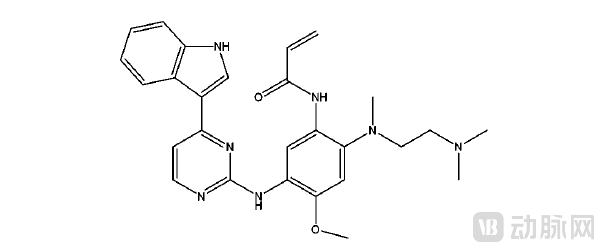
TY-9591 is a deuterium-modified version of osimertinib, designed to enhance its safety profile and allow for higher dosing, thereby potentially improving efficacy. This modification alters the metabolic pathway of osimertinib, reducing the formation of the metabolite TY-9591-D1 (AZ5104). Preclinical studies have shown that TY-9591-D1 (AZ5104) exhibits higher affinity for EGFR in normal, non-mutated cells, making it the primary cause of adverse events associated with both TY-9591 and osimertinib.
By reducing the formation of TY-9591-D1, TY-9591 is expected to have a better safety profile than osimertinib and can be administered at higher doses, thereby enhancing antitumor efficacy and blood-brain barrier penetration. Preclinical studies have confirmed that TY-9591-D1 shares the same chemical formula, structure, and systemic distribution as AZ5104.
In brief, TY-9591 can be regarded as an upgraded version of osimertinib. This enhanced formulation improves stability and slows drug degradation, thereby increasing drug exposure and prolonging its retention time in patients. TY-9591 is designed to maintain the efficacy of osimertinib while reducing the production of the active metabolite AZ5104, thus potentially enhancing the therapeutic effect of this targeted therapy without causing severe adverse reactions.
The Competitive Landscape Is About to Undergo a Paradigm Shift
In addition to demonstrating superior head-to-head data, the breakthrough nature of TY-9591 is further evidenced by its ability to address the unmet need in the treatment of brain metastases, specifically through significantly enhanced intracranial efficacy. TY-9591 showed statistically and clinically significant improvements in intracranial objective response rate (iORR) compared with osimertinib, both in the overall population and across various subgroups (including genomic profiling, number of intracranial lesions, and ECOG performance status). This indicates that TY-9591 can more effectively control intracranial lesions and alleviate symptoms associated with brain metastases in patients with EGFR-mutant lung cancer, whereas traditional EGFR-TKIs have limited penetration into the central nervous system.
Furthermore, if TY-9591 is approved, it is poised to become the preferred first-line treatment for patients with brain metastases, thereby avoiding intense competition with osimertinib in conventional indications.
In fact, although the patent for osimertinib does not expire until after 2032, the greatest challenge comes not from “me-too” or even “me-better” drugs in the same class, but from more advanced competitors.
Recognizing this blue ocean opportunity, pharmaceutical companies worldwide are showcasing their prowess, with emerging therapies such as next-generation EGFR-TKIs, Antibody-Drug Conjugates (ADCs), Bispecific Antibodies (BsAbs), and optimized osimertinib derivatives flourishing in a bid to conquer the unmet need of brain metastases in lung cancer.
In 2024, Johnson & Johnson’s EGFR-MET bispecific antibody amivantamab successfully defeated osimertinib in a head-to-head comparison in the latest Phase III clinical trial, which may signal the imminent rise of a new generation of drugs led by EGFR bispecific antibodies.
Market investors have long pondered the opportunities emerging after osimertinib resistance. Now, even the market for osimertinib, an EGFR-TKI, faces potential disruption from next-generation therapies. Beyond amivantamab, a growing array of novel antibody-drug conjugate (ADC) therapies is also challenging this market, signaling an imminent paradigm shift in the lung cancer landscape.
In a Phase I dose-escalation/expansion trial of Daiichi Sankyo’s ADC product U3-1402 in patients with locally advanced/metastatic EGFR-mutated NSCLC who had experienced disease progression after prior EGFR-TKI therapy, an analysis of antitumor activity by brain metastasis status showed that 8 of the 25 patients with brain metastases treated with U3-1402 achieved an objective response, while 12 other patients had stable disease, resulting in a disease control rate (DCR) of 80% and a median progression-free survival (PFS) of 8.2 months.
In the field of fourth-generation EGFR-TKIs, companies have also disclosed data related to brain metastases from their pipelines. For example, Hongyun Bio’s fourth-generation EGFR-TKI candidate, H002, has been shown to cross the blood-brain barrier following intragastric administration in rats, suggesting potential therapeutic benefits for brain metastases in EGFR-mutated NSCLC.
Next Step: Going to Market
On September 9, 2024, at the “2024 World Conference on Lung Cancer,” Akeso, Inc. announced head-to-head Phase III clinical data comparing its independently developed, first-in-class PD-1/VEGF bispecific antibody, ivonescimab, as monotherapy against pembrolizumab monotherapy (commonly known as “Keytruda” or “K drug”). Ivonescimab demonstrated significant superiority in median progression-free survival (mPFS), hazard ratio (HR), objective response rate (ORR), and disease control rate (DCR). Notably, Keytruda is recognized as one of the most effective anticancer drugs in history and currently ranks as the world’s highest-selling pharmaceutical product. Therefore, ivonescimab’s success in this direct comparison holds substantial significance.
The head-to-head performance of TY-9591 has undoubtedly secured a strong entry ticket for domestically developed innovative drugs into the global innovative drug market.
Industry insiders estimate that, if all goes well, TY-9591 is expected to receive approval in 2025 and commence commercial-scale production by the end of 2025, while also poised to rapidly capture market share in the brain metastases segment. The market size for EGFR-TKIs in China is projected to exceed RMB 200 billion by 2033.
Looking ahead, the domestic third-generation EGFR-TKI landscape includes almonertinib from Hansoh Pharma and furmonertinib from Allist. Furthermore, companies such as Beta Pharma and Bcella are laying out their pipelines for fourth-generation TKIs. Johnson & Johnson’s bispecific antibody combination regimen has already received FDA approval, while Phase III data for TY-9591 have yet to be released. Whether it can stand out in this fiercely competitive “red ocean” and fulfill market expectations remains to be seen over time.