

Domestic Weight-Loss Drugs in China Enter a New Era of Growth Amid National Health Initiatives
Has the Spring of Domestic Weight-Loss Drugs Arrived?
On March 9, at the press conference of the Third Session of the 14th National People's Congress, Lei Haichao, Director of the National Health Commission, stated that the Weight Management Year campaign will continue to be advanced.Data show that approximately 48.9% of adults in China are overweight or obese. Obesity has become a major public health issue in China and ranks as the sixth leading risk factor for mortality and disability.
All of a sudden, “the state calls for weight loss” and “weight reduction has become a national priority” have become hot topics of nationwide discussion.In fact, in June 2024, the National Health Commission, together with 15 other departments, jointly formulated and issued the Implementation Plan for the “Weight Management Year” Campaign. The plan states that, starting from 2024, efforts will be made over approximately three years to widely establish supportive environments for weight management, significantly enhance public awareness and skills in weight management, further promote healthy lifestyles, gradually foster a favorable landscape characterized by broad public participation and universal benefits, and improve abnormal weight conditions among certain population groups.
In October, the National Health Commission released the Guidelines for the Diagnosis and Treatment of Obesity (2024 Edition), which standardized various aspects including the diagnosis, classification, and treatment of obesity. It mentioned that,when overweight and accompanied by at least one weight-related comorbidity(such as hyperglycemia, hypertension, dyslipidemia, fatty liver disease, obstructive sleep apnea syndrome, cardiovascular disease, etc.)When weight loss goals cannot be achieved through lifestyle interventions alone, pharmacological weight-loss therapy may be added to lifestyle interventions. For patients with obesity who fail to achieve weight loss targets through lifestyle modifications, combination therapy with weight-loss medications can be implemented alongside continued lifestyle interventions.
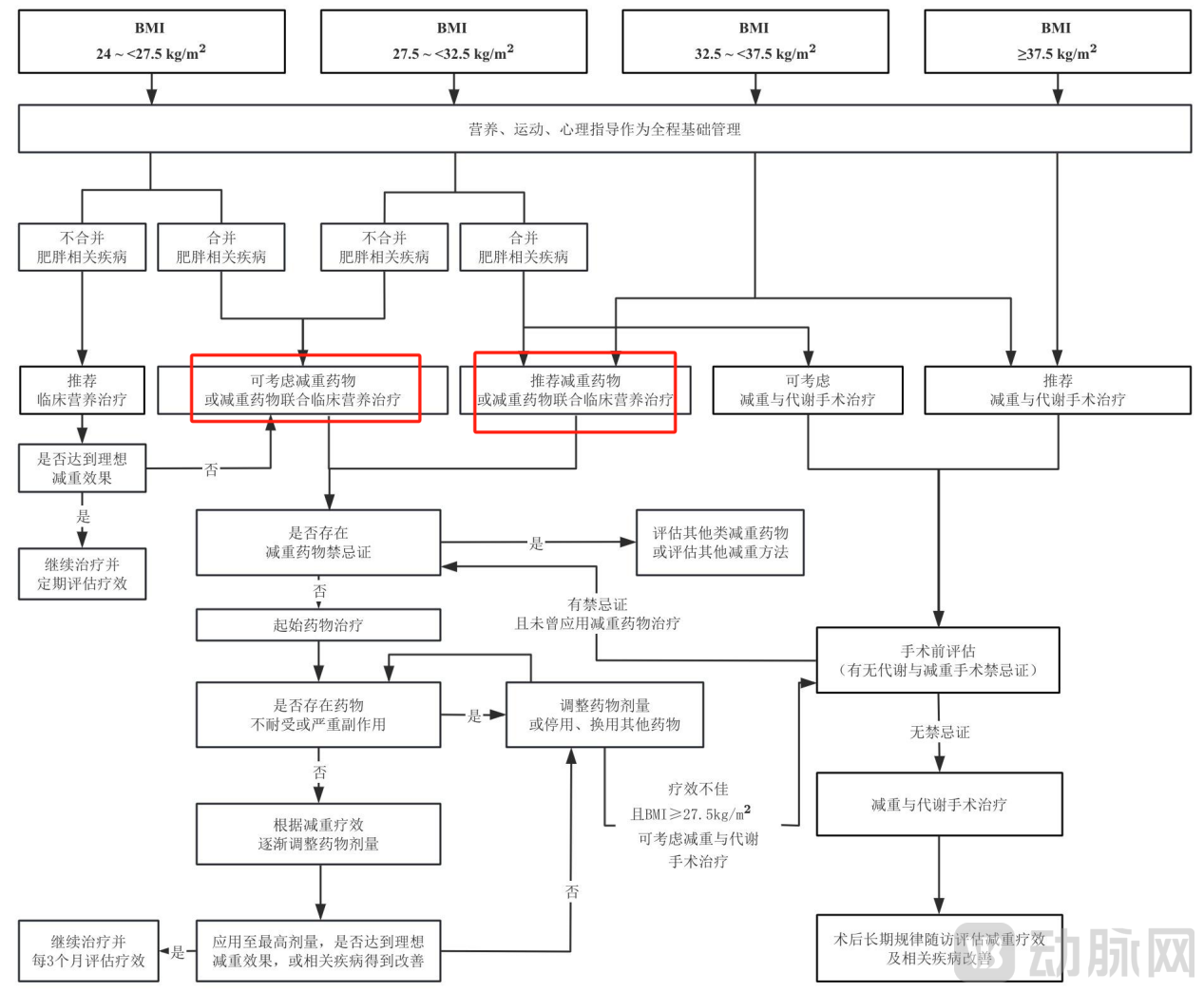
Guidelines for the Diagnosis and Treatment of Obesity (2024 Edition): Clinical Pathways for Overweight and Obesity
As can be seen from the clinical pathway, weight-loss medications have grown into an important therapeutic approach in the field of obesity, and are currentlyGradual Expansion to Long-Term Weight Management for Individuals with Overweight and Related ComorbiditiesCurrently, five drugs have been approved in China for weight loss treatment in adult patients with primary obesity: orlistat, liraglutide, benaglutide, semaglutide, and tirzepatide.It is evident that although weight-loss medications are considered a downstream intervention in clinical practice, long-term weight management for individuals with overweight and obesity has become an essential necessity.
Can Domestic Weight-Loss Drugs Seize This Opportunity and Take Off Against the Trend?
1GLP-1 Drugs: Over 56 Pipelines in Development for Weight Loss Indications, Two Domestic Drug Marketing Applications Accepted
Within China, the core patent for Novo Nordisk’s semaglutide is set to expire in 2026. Numerous domestic generic drug manufacturers have already entered this therapeutic area and are poised to commence commercial competition. Currently, four GLP-1R or GLP-1R/GIPR dual agonist products have been approved in China, originating from Huadong Medicine, Renhui Biopharma, Novo Nordisk, and Eli Lilly, respectively.
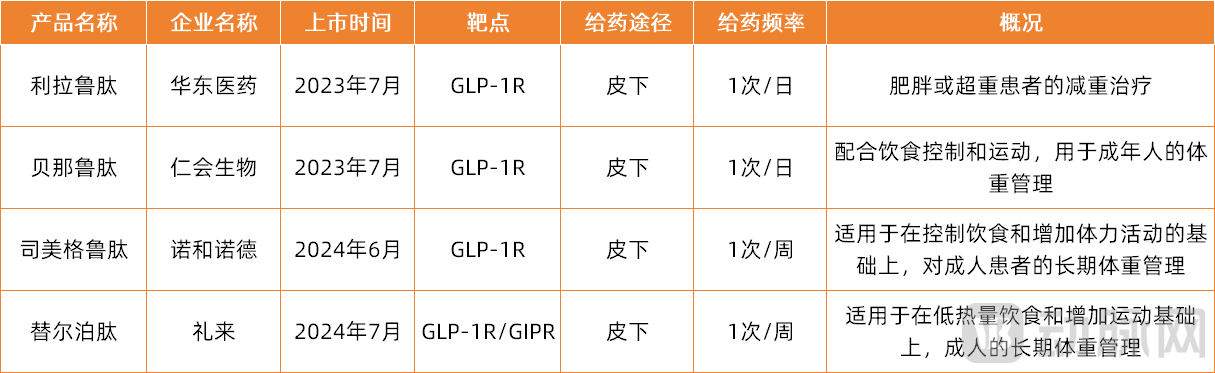
Currently Approved GLP-1 Products in the Weight Loss Field
Apart from products that have already been approved for market launch, the one with the most advanced progress currently isInnovent Biologics' Mazdutide, which had its marketing application for the weight-loss indication accepted by the NMPA in February 2024, isThe World's First GLP-1R/GCGR Dual Agonist Submitted for Marketing Approval, poised to becomeThe First Domestically Produced Dual-Target Weight-Loss Drug。
Secondly, at the end of 2024,InnoGluc® Injection, Independently Developed by Xianweida BiopharmaThe Marketing Authorization Application has been accepted by the NMPA, with separate submissions for the indications of glycemic control in adults with type 2 diabetes and long-term weight management in adults, forThe World's First Biased GLP-1RA Novel Drug, the First Domestically Produced Oral Long-Acting Peptide GLP-1。
In the clinical stage, there are more domestic GLP-1 weight loss products.According to VBInsight’s “2024 White Paper on Innovative Drugs and Supply Chain,” more than 56 GLP-1 products in China are currently being studied for weight-loss indications, with 55% of these products having advanced to Phase II or III clinical trials, marketing application submission, or market approval stages. This also means that competition among domestic GLP-1 products in the weight-loss sector will intensify further over the next two to three years.
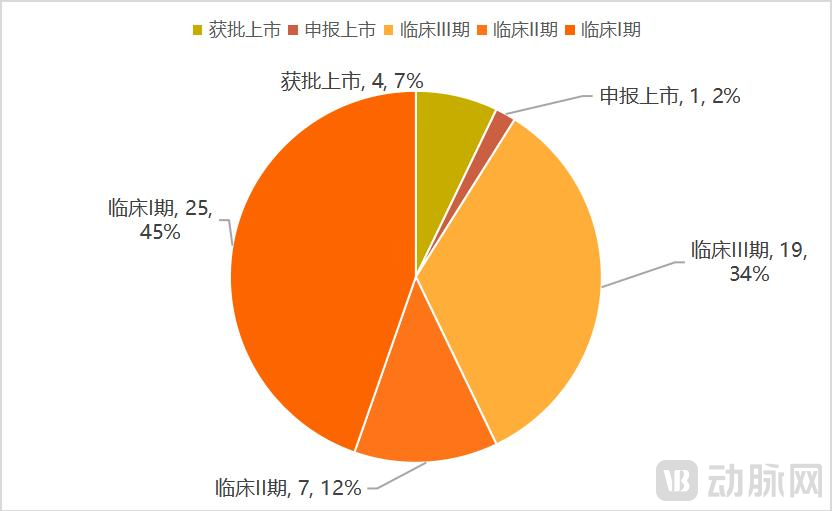
Progress of GLP-1 Products in the Weight Loss Indication Pipeline
In the Phase III clinical pipeline, there are 15 GLP-1R mono-agonists, including 12 subcutaneous injection products and 3 oral products:Among the 12 subcutaneous injection products, there are7 Semaglutide Biosimilars(Chengdu Better, CSPC, Livzon Group, Lianbang Biopharma, Shenzhen Hybio, Huisheng Pharmaceutical, Jiuyuan Gene),Two Liraglutide Biosimilars(Wanbang Medicine, Jiuyuan Gene), one GLP-1R/GCGR dual agonist (BI 456906 from BI/Zealand), one GLP-1R/GIPR dual agonist (HS-20094 from Hansoh Pharma), and one GLP-1R/AMYR dual agonist (CagriSema from Novo Nordisk).
Among the products in Phase II clinical trials, there areFour GLP-1R Single-Target Agonists(from Gan & Lee Pharmaceuticals, Hongyun Huaning, ZhiTai Biologics, and DeruiZhiYao),3 GLP-1R/GIPR Dual Agonists(Hengrui Medicine, Borui Medicine, Zhongsheng Pharmaceutical),1 GLP-1R/FGF21 Receptor Dual-Target Agonist(Shenzhen HEC); in addition, 25 GLP-1R single-, dual-, or multi-target agonists are in Phase I clinical trials, most of which are innovative drugs.
In the realm of oral formulations, Novo Nordisk’s oral semaglutide for the treatment of type 2 diabetes was approved for marketing in China in January 2024, while its Phase III trials for weight loss indications are ongoing; Eli Lilly’s oral non-peptide GLP-1R agonist LY3502970 is currently in Phase III clinical trials for weight loss indications; and Wentai Pharmaceutical has initiated the first Phase III clinical trial of its small-molecule GLP-1R agonist VCT220 tablets for weight loss indications.
In the face of an increasingly fierce weight-loss drug market, the first hurdle for domestically produced GLP-1 drugs is the outstanding clinical data of semaglutide and tirzepatide.As emerging contenders, competitors must demonstrate advantages in efficacy, safety, or convenience to possess the strength to compete with Novo Nordisk and Eli Lilly.
Taking mazdutide, the first drug whose marketing application has been accepted, as an example, a research report by Guojin Securities previously compared publicly available clinical data for mazdutide with those for tirzepatide and semaglutide (not in head-to-head trials), showing that mazdutide required a shorter treatment duration to achieve comparable weight loss. More compelling evidence requires head-to-head clinical trials: Innovent Biologics initiated a Phase III head-to-head clinical trial of mazdutide versus semaglutide as early as December 2023, which is currently listed as “active/recruiting completed.”
In addition, innovations in drug specifications, administration routes, and other aspects will also create differentiated competitive advantages for products.In terms of specifications, mazdutide is being developed in two strengths, 6 mg and 9 mg, for different indications, making it the first drug globally to offer personalized dosing regimens based on the severity of obesity. Innovent Biologics stated that the 6 mg dose meets the needs of a broader population with lower entry thresholds, including individuals with general obesity or specific overweight conditions (a population of approximately 150 million); the 9 mg dose is expected to become a more ideal treatment option for patients with moderate-to-severe obesity (a population exceeding 10 million).
In terms of mechanisms, the three major directions—small molecules (oral), multi-target, and long-acting—serve as the breakthrough points chosen by domestic innovative pharmaceutical companies.In addition to the already filed oral long-acting peptide, enoglutide injection, the ongoing oral pipeline primarily consists of small-molecule GLP-1 receptor (GLP-1R) agonists. Small molecules not only overcome the barriers associated with peptides—such as large molecular weight, susceptibility to enzymatic degradation, and slow absorption—but also offer advantages in simplified process development and cost-effective manufacturing. Candidates with relatively advanced clinical progress include Wentai Pharmaceutical’s VCT220 tablets, Hengrui Medicine/Shengdi Pharmaceutical’s HRS-7535 tablets, Chengyi Biopharma’s AZD5004 tablets, and Huadong Medicine/Zhongmei Huadong’s HDM1002 tablets. In the area of multi-target therapies, Huadong Medicine/Daoer Biopharma’s globally first-in-class long-acting triple agonist targeting GLP-1R, GCGR, and FGF21R, DR10624, has entered clinical trials for weight management indications.
2Commercialization Imminent: China’s Market Braces for a Battle Over Capacity and Pricing
As domestically produced products gradually seek market approval, issues of production capacity and pricing will extend from the global market to the Chinese market.
In terms of production capacity, global sales have continued to grow, with semaglutide and tirzepatide repeatedly facing shortages, including persistent supply gaps for both their diabetes and weight-loss formulations. In 2023, the European Medicines Agency urged physicians to prioritize prescribing semaglutide for patients with diabetes rather than for weight loss. Novo Nordisk stated that approximately 25,000 new patients per week were initiating semaglutide therapy for overweight treatment and weight management, a figure four times higher than the number of patients in the United States as of December 2023, and still rising rapidly. Since its initial approval for diabetes indications in 2022, tirzepatide was flagged by the FDA for shortages and stockouts by the end of that year and was added to the drug shortage list, a situation that persisted until it was resolved at the end of 2024.
According to incomplete statistics, pioneer Novo Nordisk has invested approximately DKK 40 billion in production facilities in Denmark since 2021. In the second half of 2023, it further invested DKK 59.2 billion to expand semaglutide production capacity. Since 2020, Eli Lilly has strategically expanded its global manufacturing capacity for injectable incretin-based therapies through various means, including building and acquiring factories in the United States, Ireland, Germany, and other countries. This April, Eli Lilly acquired the injectable drug production facility of Nexus Pharmaceuticals located in Wisconsin. In May, Eli Lilly announced its largest capacity investment in its 150-year history: an additional $5.3 billion to expand its Indiana plant, aiming to increase the output of tirzepatide’s key active pharmaceutical ingredient (API).
The first shot in China’s market capacity expansion has already been fired—in 2023, Novo NordiskTianjin Plant Completes RMB 1.18 Billion Capacity Expansion Investment, including the finished product workshop and the introduction of a pre-filled syringe pen production line; the following year,Investment of Approximately RMB 4 Billion to Expand Sterile Preparation Production Lines. With the approval of tirzepatide for type 2 diabetes in May 2024, Eli Lilly China alsoInvested 1.5 billion yuan to upgrade the production capacity of the Suzhou factory。
Upon returning to the Chinese market, the companies behind two drugs that have already received marketing application acceptance from the NMPA—Innovent Biologics and Xianweida Biopharma—are the first to face the demands of capacity building and commercialization.
As the holder of the record for the largest IPO of a non-profit biotech enterprise in global historyInnovent Biologics holds a leading advantage in commercial promotion and sales channels.Last week, Haitong International maintained its “Outperform” rating for Innovent Biologics. The research report noted that Innovent’s first cardiovascular and metabolic (CVM) product, IBI306 (a PCSK9 inhibitor), was approved in 2023, and the implementation of new prices under the National Reimbursement Drug List (NRDL) in 2025 is expected to accelerate incremental revenue contributions. Meanwhile, the CVM commercial team is being steadily built out, with the sales force projected to expand to over 1,000 employees by the end of 2025.
Xianweida Biologics continues to strengthen its cash flow and overseas business development (BD): in 2024, it completed a Series D financing round worth hundreds of millions of yuan, empowering the company’s sustained growth;Entered into a licensing and collaboration agreement with HK inno.N Corporation for the Korean rights to Inoluglutide Injection,The company is poised to receive milestone payments of up to $56 million related to R&D, regulatory approval, and commercialization, as well as double-digit sales royalties post-commercialization. Notably, Xianweida Bio has recently updated its corporate profile from “clinical-stage” to “pre-commercial industrialization stage.”
Price will also become a key factor in capturing market share.
When tirzepatide was approved for weight management in the United States, Eli Lilly disclosed that its price was approximately $1,059.87 per month, about 20% lower than the $1,349 monthly cost of Novo Nordisk’s 2.4 mg weight-loss formulation of semaglutide. Additionally, Eli Lilly launched single-dose vials of tirzepatide for weight management in two strengths—2.5 mg and 5 mg—with monthly treatment costs of $399 and $549, respectively, representing at least a 50% discount compared to the list prices of competing products, including the weight-loss formulation of semaglutide.
In the Chinese market, after semaglutide injection was approved in 2021 for the treatment of type 2 diabetes, it was included in the National Reimbursement Drug List through negotiations in the same year, with a price less than one-tenth of that in the United States.Based on the Interim Measures for the Administration of Drugs Covered by Basic Medical Insurance, it is explicitly stipulated that eight categories of drugs are not eligible for reimbursement under the basic medical insurance scheme. These include drugs primarily intended to enhance sexual function, treat hair loss, facilitate weight loss, provide cosmetic benefits, or aid in smoking and alcohol cessation—i.e., medications aimed at “improving quality of life.” Therefore, weight-loss medications are not covered by basic medical insurance.Although tirzepatide was approved for the indications of type 2 diabetes and weight management last year, it was not officially launched in China until January 2025 and thus did not participate in the national medical insurance reimbursement negotiations.
How Can Chinese Innovative Pharmaceutical Companies Further Build a Price Differential Advantage?On one hand, with the core patent for semaglutide expiring in March 2026, numerous domestic pharmaceutical companies have already laid out strategies for biosimilars to seize a first-mover advantage in the market. On the other hand, innovation in the R&D pipeline is gaining momentum: efforts include developing oral formulations to reduce potential costs associated with subcutaneous administration and injection pens; exploring small-molecule GLP-1 receptor agonists that offer simpler manufacturing processes and better cost control; and benchmarking against tirzepatide by developing long-acting agents to overall lower the cost per treatment cycle.
Meanwhile, progress in weight-loss drug pipelines has also attracted capital inflows, accelerating the counter-trend growth of the industry chain.For example, in October 2024, Sichuan Shuangma, a leading cement producer, acquired a 92.1745% equity stake in Shenzhen Jianyuan for RMB 1.596 billion using self-raised funds, thereby crossing over into the upstream peptide industry for weight-loss drugs.
3Innovation in Targets and Expansion of Indications: Hot Business Development for Overseas Licensing of Domestic Pipelines
In more advanced clinical and early-stage pipelines, innovation by Chinese biotech companies has aligned with global weight-loss drug development, with target innovation, mechanism innovation, and indication expansion becoming key themes for collaboration.
In August 2019, Innovent Biologics and Eli Lilly reached a collaboration agreement to jointly develop and commercialize mazdutide in China. At that time, mazdutide had not yet entered Phase II clinical trials. According to the Patsnap New Drug Intelligence Database, there are 37 clinical trials related to mazdutide, with Eli Lilly serving as the sponsor for overseas clinical studies. This indicates that Innovent Biologics holds only the commercialization rights for mazdutide within China. In February 2025, Eli Lilly initiated a Phase II double-blind proof-of-concept study in the United States to evaluate the efficacy of mazdutide in patients with alcohol use disorder (AUD).
In November 2023, AstraZeneca paid an upfront fee of $185 million and potential milestone payments of up to $1.825 billion to secure exclusive rights for the development and commercialization of Chengyi Biopharma’s small-molecule GLP-1 receptor agonist, ECC5004, for all indications in all countries and regions outside China. In China, ECC5004 will be jointly developed and commercialized by Chengyi Biopharma and AstraZeneca. In October 2024, ECC5004 initiated its first Phase II clinical trial in the United States, targeting obesity.
Since 2024, domestically produced weight-loss drugs have witnessed a surge in overseas expansion. Business development (BD) collaborations with multinational corporations (MNCs) have gained significant momentum, fostering innovative models and partnerships with diverse stakeholders:
In May 2024, leveraging the “NewCo” overseas expansion model (whereby Chinese innovative pharmaceutical companies collaborate with overseas capital to establish new entities), Hengrui Medicine granted Hercules Therapeutics, a U.S.-based company, exclusive rights for the overseas research and development, manufacturing, and commercialization of a portfolio of three GLP-1 products. This partnership was structured as a deal worth up to $6 billion plus a 19.9% equity stake. The portfolio includes HRS-7535, an oral small-molecule GLP-1 receptor agonist (in Phase II clinical trials in China for obesity), and HRS9531, a dual GLP-1/GIP receptor agonist (in Phase III clinical trials in China for obesity). Hercules Therapeutics was established in the same month as the transaction, with $400 million in joint funding from Bain Capital Life Sciences, Atlas Ventures, RTW Investments, and Lyra Capital.
In December 2024, Hansoh Pharma licensed the global rights to its preclinical small-molecule GLP-1 receptor agonist, HS-10535, to Merck & Co., receiving a $112 million upfront payment, up to $1.9 billion in milestone payments, and tiered sales royalties, bringing the total potential deal value to $2.012 billion. Under specific conditions of the licensing agreement, Hansoh Pharma may co-promote or exclusively commercialize the product in mainland China, the Hong Kong Special Administrative Region, and the Macao Special Administrative Region.
In January 2025, Sunwoda Biopharma also partnered with Verdiva Bio through a Newco model, granting Verdiva the global development and commercialization rights—excluding Greater China and South Korea—for a portfolio of three metabolic disease products, including XW004 (oral enogrulutide). Sunwoda Biopharma received an upfront payment and other fees totaling nearly $70 million, along with potential milestone payments of up to $2.4 billion. Verdiva Bio was established in the same month, completing a $411 million Series A financing round led by Forbion, General Atlantic, RA Capital, OrbiMed, Logos Capital, Lilly Asia Ventures, and LYFE Capital.
Notably, the drug portfolio in this transaction, comprising an oral amylin receptor agonist (Amylin RA) and a subcutaneous amylin receptor agonist (Amylin RA), is currently in the preclinical stage and can be used as monotherapy or in combination with GLP-1 receptor agonists.As can be seen, as GLP-1 drugs advance to clinical and commercialization stages, the R&D strength and innovative foundation of Chinese biotech companies in the weight loss field are gradually gaining global recognition. Therefore, only domestic weight-loss pipelines with novel mechanisms and preclinical assets can secure opportunities for international expansion and business development (BD).
In step with this wave, the global weight-loss drug market has entered a frenzy of strategic positioning for next-generation therapies:Strategic Layout of GLP-1 Drug "Partners" for Both Lipid-Lowering and Muscle-Building, such as activin type II receptors (ActRII), selective androgen receptor modulators (SARMs), and apelin receptor agonists;Accelerate the clinical application in MASH (metabolic dysfunction-associated steatohepatitis), cardiovascular-kidney-metabolic syndrome, and other areas.
On November 20, 2024, Laekna Therapeutics announced a clinical collaboration with Eli Lilly to jointly advance the clinical trials of its core product, LAE102, a first-in-class ActRIIA monoclonal antibody, for the indication of obesity. Leveraging its Catalyze360-ExploR&D engine, Eli Lilly will accelerate the development of LAE102 and provide funding for Phase I clinical studies, while Laekna Therapeutics retains global rights to LAE102. The combination of LAE102 with GLP-1 receptor agonists can further reduce adipose tissue and significantly mitigate muscle loss associated with GLP-1 receptor agonist therapy.
As next-generation therapeutic innovations and overseas business development intensify, and as the “Year of Weight Management” evolves into a three-year action plan jointly implemented by multiple national departments, the era of weight-loss drugs for Chinese biotech companies has only just begun.