

China's National Obesity Intervention Initiative: Policy Rollout and Market Opportunities
The State Has Taken Action to Address Weight Issues, Particularly Obesity.
On March 9, Lei Haichao, Director of the National Health Commission, stated at a press conference on livelihood issues: “Implement a three-year ‘Weight Management Year’ initiative to promote healthy lifestyles and strengthen the prevention and control of chronic diseases.”
In fact, the state has intensively rolled out policies on weight management as early as 2024.
In June 2024, the National Health Commission, the Ministry of Education, and 13 other departments jointly formulated the “Implementation Plan for the ‘Weight Management Year’ Campaign,” aiming to enhance public awareness and skills in weight management and to prevent and control overweight and obesity over a period of approximately three years.
In July 2024, the National Health Commission issued the Core Knowledge on Resident Weight Management (2024 Edition) and its Interpretation, advocating for and promoting civilized and healthy lifestyles.
In October 2024, the National Health Commission issued the "Guidelines for the Diagnosis and Treatment of Obesity (2024 Edition)" to standardize clinical diagnosis and treatment of obesity in China, provide personalized treatment plans for patients, and continuously improve the homogenization level of obesity diagnosis and treatment in medical institutions.
In December 2024, the National Health Commission issued the Guiding Principles for Weight Management (2024 Edition) to further implement the Implementation Plan for the “Year of Weight Management” campaign and guide medical and health professionals in carrying out scientific weight management practices.
Previously, the National Health Commission also released four dietary guidelines in February 2024, including the “Dietary Guidelines for Obesity in Adults (2024 Edition)” and the “Dietary Guidelines for Obesity in Children and Adolescents (2024 Edition).”
The reason for placing such high importance on weight management is that obesity has become a major public health issue in China.
First, obesity is the “root cause of myriad diseases,” capable of inducing various conditions such as diabetes, stroke, coronary heart disease, hypertension, and sleep apnea. Moreover, obesity ranks as the sixth leading risk factor for mortality and disability in China. According to data from the Report on Cardiovascular Health and Diseases in China 2021, 11.98% of cardiovascular disease deaths in China were attributed to high body mass index (BMI) in 2019.
Secondly, the obese population in China is rising rapidly. According to the Report on the Nutritional and Chronic Disease Status of Chinese Residents (2020), residents aged 18 and above in ChinaOverweight rate: ~34.3%; Obesity rate: ~16.4%, and it has shown a year-on-year increasing trend. Studies predict that if this trend is not effectively curbed, the prevalence of overweight and obesity among adults in China will reach 70.5% by 2030, while that among children will reach 31.8%.
Finally, the costs associated with the diagnosis and treatment of obesity will impose a heavy burden on the national economy. A report released by the National Health Commission indicates that research predicts medical expenses attributable to overweight and obesity may reach RMB 418 billion by 2030, accounting for approximately 21.5% of the total national healthcare expenditure.
Therefore, obesity prevention and control is an urgent priority.
What we need to consider is how policies will be implemented? How will the state help residents manage their weight? What opportunities will emerge in the weight management industry? (A complete weight-loss plan is provided at the end of this article).
Weight management encompasses numerous niche markets, including weight monitoring devices such as scales and body composition analyzers, fitness equipment and gyms offering fitness services (fitness theme parks), sports products, health management services, weight-loss medications, surgical instruments for bariatric procedures, and specialized weight-loss foods and beverages.
In addition, other markets include public education on weight management, science popularization platforms (video platforms), commercial insurance, wearable products, weight-loss health supplements, and traditional Chinese medicine for weight reduction.A rough estimate suggests that the weight management sector conceals a market worth at least hundreds of billions of yuan.。
Undoubtedly, the implementation of weight management policies will inevitably impact various segments of the weight management market. So, how will these policies be implemented? And how will they affect each market segment?
First, the “Implementation Plan for the ‘Year of Weight Management’ Campaign” emphasizes the need to strengthen scientific popularization and advocacy efforts to enhance public awareness of weight management. Specific measures include: strengthening scientific guidance on weight management; enhancing the development and dissemination of authoritative information on weight management; innovating formats for science communication on weight management; and improving capacity for weight management-related science outreach.
This content is expected to drive public science education on weight management and stimulate and expand the broader weight management market, encompassing weight-loss medications, bariatric surgery, and weight management services.。
Particularly in recent times, following the announcement of the “Three-Year Action Plan for Weight Management” by Lei Haichao, Director of the National Health Commission, traffic for weight management-related videos has surged. For instance, the video “Is the 5:2 Intermittent Fasting Diet Truly Effective for Weight Loss?” published by CCTV Video has garnered over 188,000 likes, while another creator’s video “Is the Viral ‘Spring Fasting’ Method for Rapid Weight Loss Scientific?” has become a trending topic with millions of views.As more people focus on weight management, various market segments in the weight management industry are expected to accelerate customer acquisition and expand.。
Market Rumor: Whenever a new track emerges, those selling courses are always the first to get rich. The weight management market is no exception. A search reveals that on Douyin, the paid video series “Lose 8 Jin in 21 Days” by medical weight-loss expert Chen Wei has accumulated 4.438 million views, with the full set priced at 198 yuan. Based on a per-episode price of 1.97 yuan, and after accounting for factors such as limited-time free access, free previews (the first few seconds), and repeat views, the revenue from this paid video series is estimated to exceed one million yuan.
Meanwhile, Dr. Tang Lizhi, formerly an attending physician in the Department of Endocrinology at West China Hospital, joined Douyin (TikTok) in 2022 to share popular science content on weight management and sell courses on fat loss and blood sugar control. Currently, Dr. Tang’s Douyin account has amassed over 3 million followers, and he offers online consultations, appointment registration for Sichuan Second Traditional Chinese Medicine Hospital, and online medical consultation services on the platform.
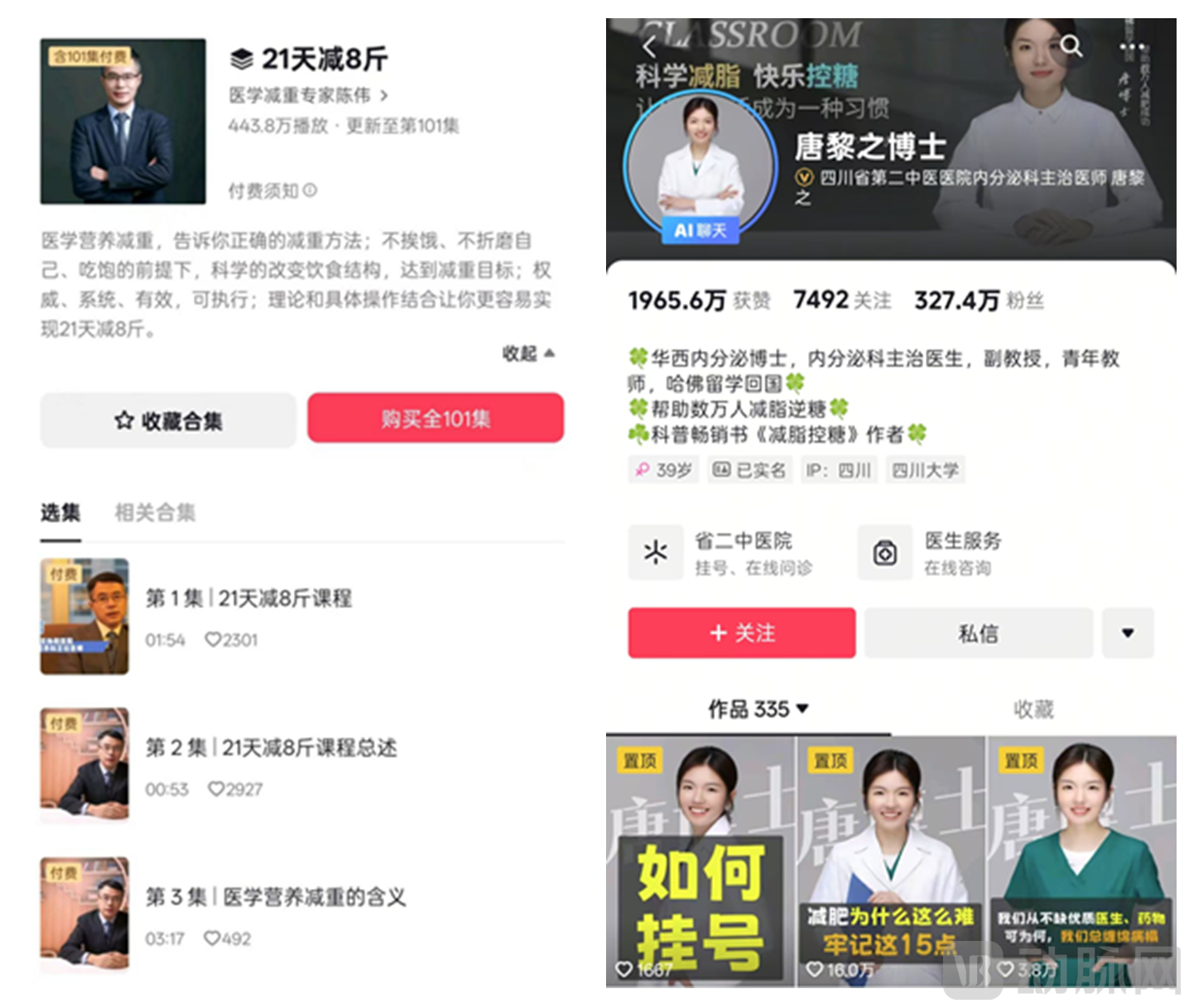
(Medical Weight Loss Expert Chen Wei and Dr. Tang Lizhi)
In addition, fitness influencers with over 10 million followers, such as Liu Genghong and Hua Xiaolong, have successfully established monetization channels through e-commerce livestreaming, live broadcasts, and advertising. Furthermore, numerous endocrinologists, nutritionists, and fitness coaches on major platforms are leveraging weight management content to attract traffic and achieve monetization.
Second, the Implementation Plan for the “Weight Management Year” Campaign proposes mobilizing broad societal participation to enhance the effectiveness of weight management. Specific measures include strengthening the deployment and installation of fitness equipment, weight monitoring devices, and health management services in households, communities, government agencies, schools, medical institutions, health-themed parks, and other settings.
This is expected to drive rapid growth and swift market penetration for fitness equipment, weight monitoring devices, wearable devices, and weight management software.
Furthermore, the implementation of weight management policies,The most direct and rapid impact may be seen in foods and beverages related to weight management.。
On one hand, lifestyle intervention is the first-line approach for weight management, with dietary intervention serving as its primary component. The Weight Management Guidelines (2024 Edition) state that all individuals seeking weight loss should receive comprehensive lifestyle intervention; regardless of whether it is combined with pharmacological or surgical treatment, lifestyle intervention remains the foundation of weight reduction.
On the other hand, three meals a day are a basic human necessity, making dietary changes relatively easier to implement. Weight loss through exercise is often limited by self-discipline, while pharmacological weight management involves additional costs and affordability constraints. In contrast, once individuals acquire knowledge about weight management, modifying cooking methods and dietary structures becomes a more straightforward approach.
Meanwhile, a wide variety of health foods, light meals, and meal replacement products have emerged in the market to meet the needs of individuals seeking weight loss.
Obesity: The fundamental cause is that the body's energy intake exceeds its energy expenditure, leading to the storage of excess energy as fat in the body.
Therefore, the key to weight loss lies in 30% exercise and 70% diet.
Currently, the dietary patterns of Chinese residents are characterized by excessive intake of salt, oil, sugar, and fat, coupled with insufficient consumption of vegetables and fruits. This imbalance is a primary driver behind the continued rise in obesity rates among the Chinese population.
In response, the "Healthy China 2030" Planning Outline explicitly proposes the "Three Reductions" policy of reducing salt, oil, and sugar intake; the "Dietary Guidelines for Adult Obesity (2024 Edition)" compiled by the National Health Commission puts forward six principles and recommendations for daily dietary management of adult obesity patients. The "Guidelines for Diagnosis and Treatment of Obesity (2024 Edition)" also provides multiple medical weight-loss dietary approaches.
Upon review, we find that a healthy diet is primarily associated with ingredient selection and cooking methods. Regarding ingredient selection, priority should be given to vegetables, fruits, whole grains, and high-protein foods (such as beef, fish, and soy products), while fried foods, processed meats, sugary baked goods, candied fruits, candies, ice cream, and sugar-sweetened beverages should be avoided or consumed sparingly. In terms of cooking methods, techniques such as steaming, boiling, quick-frying with sauce, and water-blanching are recommended, with reduced use of oil, salt, and sugar.
Accordingly, individuals seeking to lose weight can prepare recommended ingredients using methods such as steaming and boiling, or directly opt for healthy dietary options and products available on the market, such as light meals and meal replacements.
According to Euromonitor’s report, “Reading the Light Meal Industry’s Deterministic Growth Opportunities Through Data,” the market size of meal replacement and light meals in China exceeded RMB 160 billion in 2023, with an expected average annual growth rate of 30% over the next five years.
Big Fish in Big Waters. Facing this trillion-yuan health food market, companies such as By-Health, Nestlé, Boohee Health, Keep, Shark Fit, Yu Heming, Mengniu, Want Want, Wahaha, Master Kong, WonderLab, Wang Baobao, Super Zero, and Tianyuan Zhuyi are all increasing their investments and launching standardized, industrialized light meal products, including oats, buckwheat, whole wheat, steak, chicken breast, low-calorie baked goods (whole wheat bread), low-salt and low-calorie condiments, Chinese-style salads, meal replacement powders, and meal replacement bars.
For example, Mint Health has launched fat-loss ready-to-eat meals such as oat noodles, konjac rice, and bento boxes; Wens Foodstuff Group and Kunming Pharmaceutical Factory have jointly introduced medicinal diet ready-to-eat dishes like Shenling White-Cut Chicken; By-Health has introduced meal replacement foods such as nutritional shakes and Leduo whey protein bars; Nestlé has launched meal replacement products including bottled instant meal replacement powders and shakes...
It is worth noting that Western-style salads were once widely regarded as light meal replacements. However, upon closer examination, “light eating” essentially refers to a balanced combination of protein, vegetables, and staple foods. Consequently, individuals seeking weight loss who are unaccustomed to consuming raw salads are increasingly turning their attention to Chinese-style light meals. Dishes such as lettuce with oyster sauce, poached prawns, and stir-fried broccoli can all serve as healthy, light meal options. Health-focused light meal products tailored to the Chinese palate will become a key R&D direction for companies, with an emphasis on developing offerings that are both healthy and delicious.
At present, Chinese-style light meal sets are primarily sold through retail channels such as Hema, Lawson, and 7-Eleven; products like chicken breast and whole-wheat bread are mainly offered on e-commerce platforms including Tmall, JD.com, and Douyin; while low-calorie condiments, rice balls, healthy prepared dishes, and wellness beverages are available across all channels, with their respective sales shares not statistically tracked.
In addition, food delivery platforms such as Meituan and Ele.me are also boosting the healthy food market. For instance, the “2024 Research Report on the Development Trends of Nutritional and Healthy Catering Delivery” released by Ele.me shows that, in terms of healthy dietary supply, the number of dishes labeled as whole-grain foods on the Ele.me platform in 2023 was 1.8 times that of 2019; the number of restaurants offering low-calorie foods increased by more than fourfold compared with 2019, while the number of such products rose by 250%.
As public awareness of scientific and healthy eating deepens, the light meal and meal replacement industry is experiencing rapid growth. According to data released by the Future Light Food Industry Research Institute, sales of sugar-free/low-sugar foods reached RMB 253 million in January 2025, representing a year-on-year increase of approximately 20%; low-calorie baked goods saw a significant year-on-year surge of 883%. With the implementation of the three-year “Weight Management Year” action plan, the market size of the light food industry is expected to accelerate its breakthrough.
However, the light meal industry also faces challenges such as low barriers to entry, limited product flavor variety, and relatively high prices. Relevant companies need to develop light meal products with richer flavors and more diverse forms. The explosive popularity of *Ne Zha 2* and the Xiaomi SU7 Ultra clearly demonstrates the strong appeal of high-quality products to consumers.
It should be noted that the "Guidelines for the Diagnosis and Treatment of Obesity" provide various weight-loss dietary approaches; however, no single dietary regimen is suitable for all patients with obesity. Such interventions should be implemented under the guidance of clinical dietitians or physicians and with clinical monitoring, tailored to the patient’s metabolic status and physical condition.
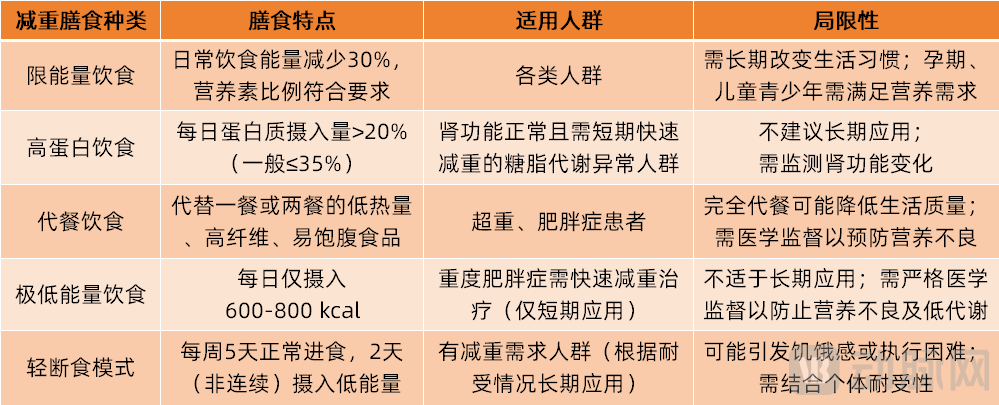
(Common Medical Weight-Loss Dietary Methods, from the Guidelines for Diagnosis and Treatment of Obesity)
In addition to dietary management, active exercise is a key component of exercise intervention for obesity.
"Guidelines for the Diagnosis and Treatment of Obesity" state that, for patients with obesity, exercise intervention programs should prioritize patient safety. Based on exercise risk assessment, individualized exercise prescriptions should be developed according to the patient’s body mass index (BMI), physical fitness, underlying conditions, and obesity-related comorbidities.
It is generally recommended that individuals with obesity engage in strength resistance training combined with aerobic endurance exercise.
Aerobic exercises, such as running, swimming, and cycling, require no specialized skills; however, strength and resistance training have a certain learning curve. Incorrect or compromised form not only diminishes exercise efficacy but may also lead to joint injuries, muscle strains, and other issues.
In light of this, fitness instruction software may be poised for a new wave of user growth. Take Keep as an example: in 2024, the company faced challenges such as declining monthly active users (MAU), a shrinking subscriber base, and lower conversion rates. Keep’s financial report for the first half of 2024 showed that revenue from online memberships and paid content amounted to RMB 437 million, representing a year-on-year decrease of 2.6%.
However, with the implementation of the three-year “Year of Weight Management” action plan and the surging popularity of weight management concepts, Keep’s user base is expected to experience explosive growth.
However, fitness apps such as Keep need to provide more competitive content and services; otherwise, they will face threats from follow-along workout videos and live streams by fitness influencers on video platforms like Bilibili, Douyin, and Kuaishou.
In response, in February 2025, Wang Ning, founder of Keep, issued a company-wide letter titled “A Decade Together, Reborn for the New.” In the letter, Wang stated that Keep will go all-in on AI, leveraging its ten years of accumulated and refined sports data to transition online fitness from recommendation-based to generative models, thereby continuing to lead the sports technology industry. The company will develop a hardware ecosystem centered on data, expand the Keep brand into diverse sports scenarios, and extend its global footprint, allowing Eastern sports philosophy and wisdom to influence the world.
Lifestyle intervention is the first-line approach for weight management. However, for individuals with poor self-discipline in whom lifestyle interventions are ineffective, additional therapeutic modalities beyond lifestyle modification are required.
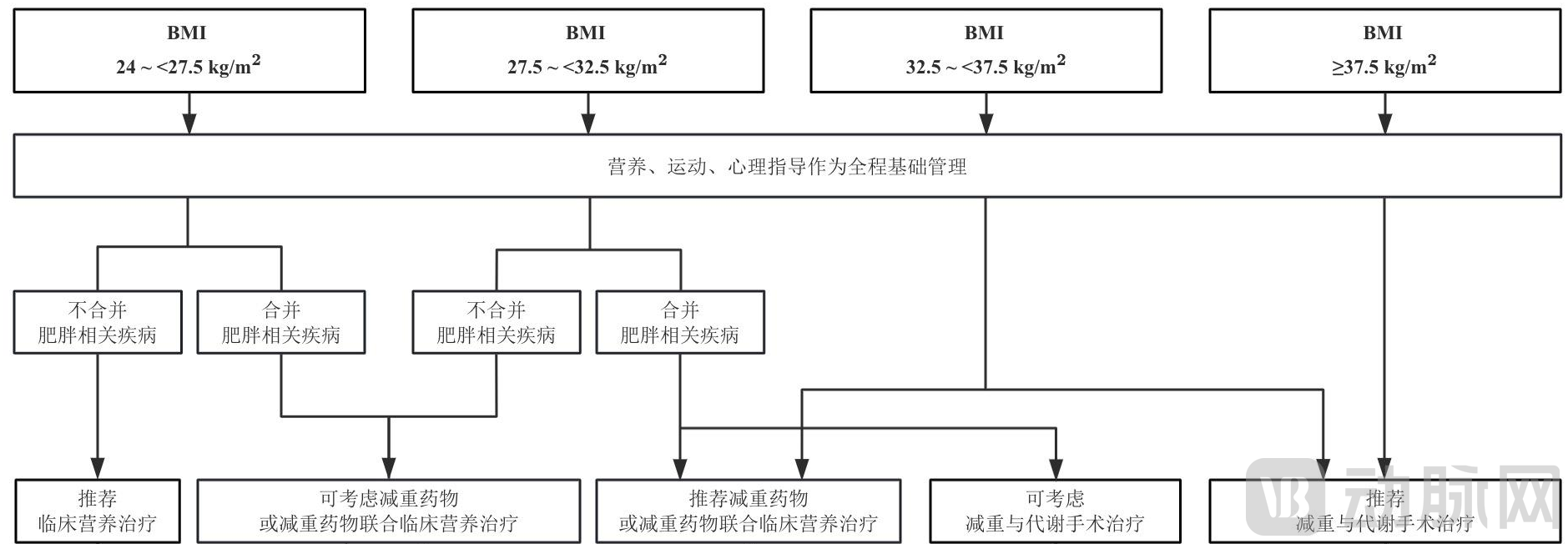
In response, the market offers two “add-on” interventions: pharmacological therapy and surgical treatment. According to the Guidelines for the Diagnosis and Treatment of Obesity, bariatric and metabolic surgery is recommended for patients with a body mass index (BMI) greater than 32.5 kg/m²; for patients with a BMI between 32.5 and 37.5 kg/m², weight-loss pharmacotherapy, either alone or in combination with nutritional therapy, or surgical treatment is recommended…
Regarding pharmacotherapy, five drugs are currently approved in China for weight management in adults with primary obesity: orlistat, liraglutide, benaglutide, semaglutide, and tirzepatide. Among these, GLP-1 receptor agonists have garnered widespread attention due to their favorable clinical efficacy.
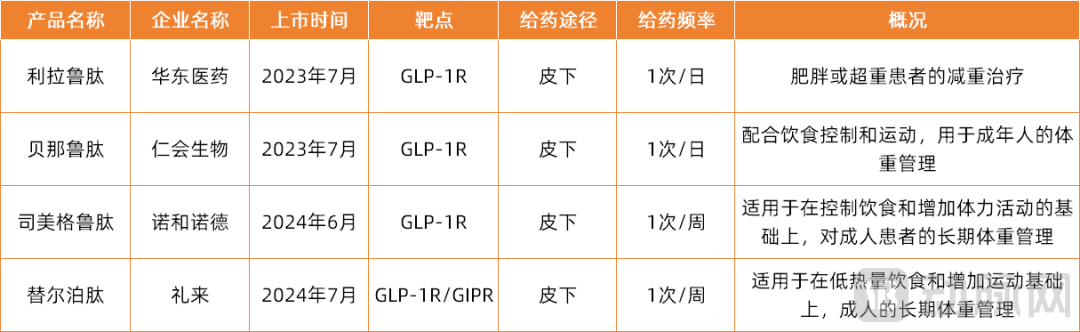
In 2024, Novo Nordisk’s semaglutide injection for long-term weight management was officially launched in China under the brand name “NovoYing.” Following its launch, patients can purchase the product on platforms such as Meituan, Ele.me, Taobao, and JD.com.
This has set a benchmark for subsequent domestically produced GLP-1 weight-loss drugs entering the market. After their launch, these Chinese-made GLP-1 weight-loss medications have also leveraged online channels to bridge the gap with patients and consumers, significantly enhancing the accessibility of weight-loss drugs.
In terms of surgical treatment, bariatric surgery reduces gastric volume and gastrointestinal absorption, and alters gastrointestinal hormone levels. It is a widely recognized therapeutic approach capable of achieving sustained, long-term weight loss. Laparoscopic sleeve gastrectomy and laparoscopic Roux-en-Y gastric bypass are currently the two primary bariatric procedures recommended in clinical practice.
Both procedures require open surgery and are associated with significant trauma. Additionally, various innovative minimally invasive medical devices have emerged in the market, enabling weight loss without the need for gastric resection or gastric bypass.
For example, Tangji Medical has launched a gastric bypass stent system. Drawing on the principles of gastric bypass surgery, this product involves placing a stent in the duodenum and the proximal jejunum to reduce nutrient absorption by the digestive system, thereby achieving the goal of treating obesity. The gastric bypass stent is typically retained in the human body for 3–6 months, after which it must be removed endoscopically via the mouth.
Zhishan Medical has developed an intragastric volume-reducing balloon. The intragastric balloon can be swallowed into the stomach and inflated with saline solution via a catheter. Once filled, the balloon occupies space within the stomach, increasing satiety and thereby reducing food intake, ultimately achieving weight loss. At the end of the treatment period, the device automatically degrades and is naturally expelled from the body.
In September 2024, Epitomee Medical’s weight-loss capsule received FDA approval for market launch. Reportedly, this product is an absorbable hydrogel similar in size to a standard pharmaceutical capsule. Upon oral administration and exposure to gastric acid in the stomach, the capsule automatically expands into a triangular hydrogel that fills the gastric cavity, thereby inducing satiety, suppressing appetite, and reducing excessive food intake.
With the market launch of these convenient and user-friendly innovative weight-loss drugs and devices, coupled with the broader promotion of weight management concepts, it is anticipated that more individuals will opt for pharmacological and surgical interventions. This trend will, in turn, drive rapid growth in both the weight-loss drug market and the bariatric surgical device market.
Finally, by studying the Guidelines for the Diagnosis and Treatment of Obesity (2024 Edition), the Guiding Principles for Weight Management (2024 Edition), and the Dietary Guidelines for Adult Obesity (2024 Edition), DeepSeek helped me develop a weight-loss dietary plan, which I am sharing with everyone.
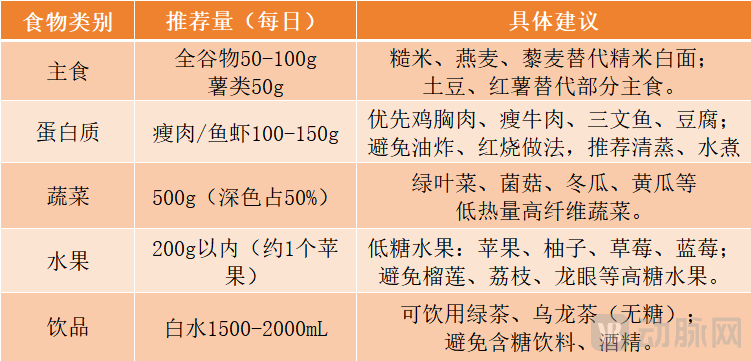
Sample One-Day Meal Plan (1,400 kcal Version)
Breakfast (8:00): 1 boiled egg + 50g oatmeal (cooked as porridge) + 150g cold-dressed spinach.
Lunch (12:30): 100g steamed fish + 80g brown rice + 200g broccoli with minced garlic.
Dinner (18:30): Tofu and Kelp Soup (100g tofu + 50g kelp) + Steamed Pumpkin 150g.