

Ping An Healthcare Achieves First-Ever Full-Year Profit as 'Insurance-Medical Synergy' Enters a Period of Strong Returns

Ping An Healthcare
One-stop Solution Provider for Health Management
In September 2024, the insurance industry’s landmark new policy, the “New National Ten Measures” (the “Several Opinions of the State Council on Strengthening Supervision, Preventing Risks, and Promoting High-Quality Development of the Insurance Industry,” hereinafter referred to as the “Several Opinions”), pointed out that it is necessary to promote the coordinated development of the insurance industry and the elderly care service industry, and to drive the deep integration of commercial health insurance with health management.
Subsequently, the National Financial Regulatory Administration stated that it would issue supporting policy documents for commercial health insurance in accordance with the deployment outlined in the "Several Opinions," promote synergy between health insurance and the health industry chain as well as the biopharmaceutical industry, gradually shift from post-claim reimbursement to value-added services during and before medical events, and continuously optimize comprehensive services integrating health insurance and health management.
From the perspective of market demand, as public health awareness rises, single insurance payouts are no longer sufficient to meet customers’ diversified health needs.
Obviously,The synergy between healthcare and insurance has become an inevitable trend.
As a key member of Ping An Group’s healthcare and elderly care ecosystem, Ping An Healthcare has long established and continues to deepen its integration of medical services and insurance. On March 12, Ping An Healthcare released its annual performance report, showing that the company’s total revenue in 2024 reached RMB 4.81 billion, with an adjusted net profit of RMB 158 million. Among this, the integrated finance client segment (hereinafter referred to as the F-side) and enterprise side ((hereinafter referred to as the B-side)) Business revenue increased by 17.2% year-on-year, and home-based elderly care business revenue increased by 413.5% year-on-year.
Achieving comprehensive profitability for the first time and witnessing rapid growth in its high-potential businesses, Ping An Healthcare’s commercial value through medical-insurance synergy has become increasingly clear.
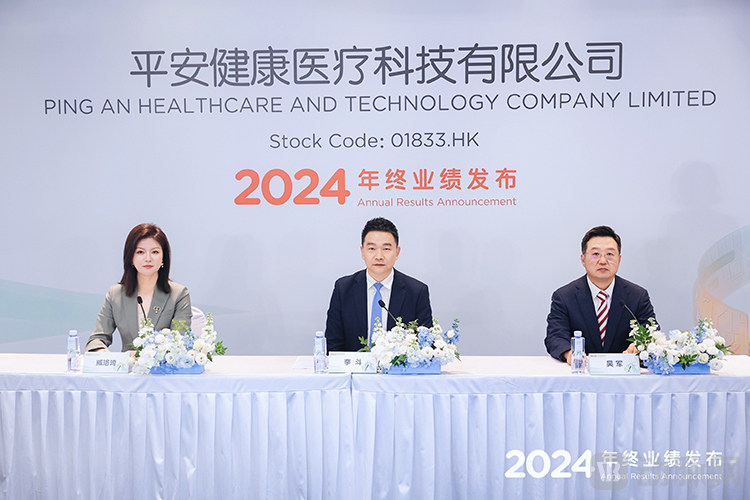
Ping An Healthcare Releases 2024 Financial Results
What Exactly Are We Discussing When We Talk About Healthcare-Insurance Coordination?
From a macro perspective, China has vigorously promoted the coordinated development of medical services, health insurance, and pharmaceuticals during the process of deepening healthcare reform. The essence of this approach is to reduce cost consumption and lower out-of-pocket medical expenses while improving the quality and efficiency of medical services.
For commercial insurance, the fundamental significance of medical-insurance synergy is likewise evident. Overall, Ping An Healthcare has strategically aligned its insurance and healthcare service offerings.Participate in insurance policy services through health risk management, service process management, and medical quality management, thereby achieving a balance between the cost and effectiveness of medical services and the cost and service of insurance policies.
Previously, Ping An Healthcare leveraged its years of accumulated service resources to achieve synergy with Ping An Group’s integrated financial services through business models such as product integration, benefits procurement, and value-added services, thereby providing users of these integrated financial services with full-lifecycle medical, health, and elderly care solutions.
To better integrate into various financial services and establish a closer collaborative model, Ping An Healthcare has developed three core business models since 2024: “Insurance + Medical and Elderly Care Membership,” “Medical Claims Coordination,” and “Healthcare Rights and Benefits Services.” This initiative strengthens synergy with other subsidiaries under the Ping An Group, including life insurance, property and casualty insurance, health insurance, and banking.
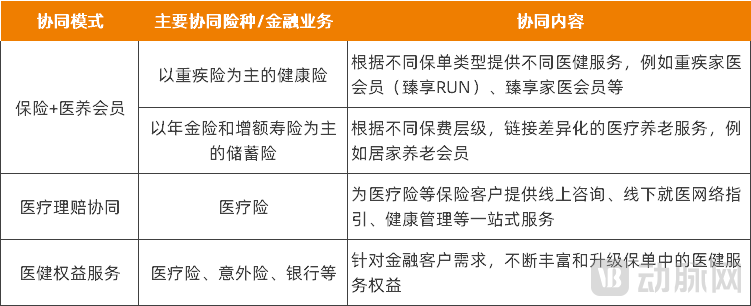
Ping An Healthcare’s Three Major Business Models of “Medical-Insurance Synergy,” Source: Public Corporate Information
Insurance + Medical and Elderly Care Membership ModelFor health insurance customers primarily covered by critical illness insurance, differentiated medical and health services are provided based on policy types, such as the Critical Illness Family Doctor Membership (Zhenxiang RUN) and the Zhenxiang Family Doctor Membership. Meanwhile, for savings insurance customers primarily holding annuity and increasing-term life insurance policies, differentiated medical and elderly care services are connected through home-based elderly care membership.
Medical Claims Collaboration ModelPing An Healthcare provides insurance customers with one-stop services, including online consultations, guidance to offline medical networks, and health management, covering pre-claim reporting, precise medical triage and referral, and full-course disease management.
Medical and Healthcare Rights and Interests Service ModelPrimarily targeting the needs of financial clients in medical insurance, accident insurance, and banking sectors, we continuously enrich and upgrade the healthcare service benefits included in insurance policies.
In short, Ping An Healthcare is accelerating the expansion of synergistic insurance products and the diversification of synergy models., namely: gradually shifting from the synergy of critical illness insurance and million-yuan medical insurance to collaborative innovation in savings insurance products; and evolving from models such as “insurance + healthcare and elderly care membership” to integrated innovations like “medical claims coordination.”
Furthermore, as one of the core drivers of Ping An Healthcare’s medium- to long-term growth, its corporate health management business has also integrated medical-insurance synergy. In 2024, Ping An Healthcare comprehensively revamped its offerings for enterprises and their employees.“Ping An Corporate Health Protection Plan” Product Suite: Delivering Solutions Including Health Trust Account Management, Membership-Based Health Management Services, and “Insurance+” Offerings, by conducting in-depth research and uncovering employee health management needs, we will establish a differentiated product and service matrix with greater competitive advantages to meet the diverse needs of different enterprises.
Continuously expanding the scope and content of medical-insurance synergy has directly broadened Ping An Healthcare’s revenue streams. Financial reports show that in 2024, Ping An Healthcare’s F-side business revenue exceeded RMB 2.4 billion, a year-on-year increase of 9.6%; B-side business revenue surpassed RMB 1.4 billion, representing a year-on-year growth of 32.7%.
Ultimately, only by creating tangible value for customers can a positive cycle between business enrichment and revenue growth be established. Specifically, what value has Ping An Healthcare created for its customers, particularly its integrated finance customers, through the synergy between healthcare and insurance?
First, it is essential to understand two major contextual backgrounds.
First, the deepening aging population has led to a significant mismatch between supply and demand in elderly health and care services.
In 2024, China’s population aged 65 and above reached 220 million, accounting for 15.6% of the total population, with growing demand for integrated medical, health, and elderly care services. The 2025 Government Work Report, delivered at the Two Sessions, once again outlined plans to develop the elderly care industry and support home-based care. However, there remains a shortage of high-quality integrated medical, health, and elderly care services, manifested in insufficient integration of medical and elderly care, fragmented and less specialized service supply, and the absence of a comprehensive payment system.
Second, commercial health insurance is at a critical juncture of transformation and upgrading; it needs to cover more non-healthy populations and more accurately define its position within China’s multi-tiered healthcare security system.
In response, the National Financial Regulatory Administration has proposed the issuance of supporting policy documents for commercial health insurance to further clarify its future development direction and pathway, while expanding the covered population, service scope, and delivery models to meet diverse health protection needs.
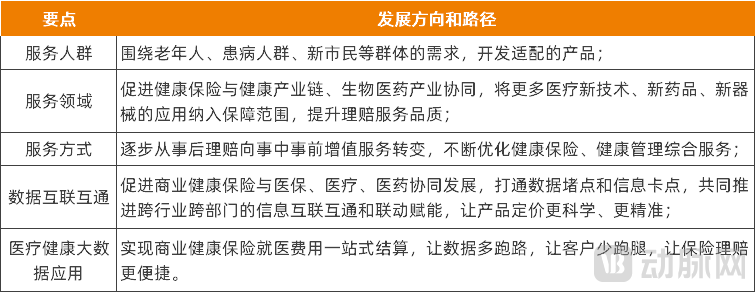
Development Path and Direction of Commercial Health Insurance, Source: Chinese Government Website
When viewed against the macroeconomic backdrop, it is not difficult to see thatAs a payer, commercial insurance assumes the critical responsibility of integrating professional medical, health, and elderly care services. Meanwhile, in the course of its transformation, the health insurance sector must enhance its differentiated competitiveness through high-quality medical, health, and elderly care services, while mitigating claims risks via effective health management.
Ping An Healthcare’s collaborative innovation in medical care and insurance follows the aforementioned trends.
On one hand, Ping An Healthcare extensively integrates internal and external medical, healthcare, and elderly care service resources.As of the end of 2024, the Company has established a team of approximately 50,000 internal and external physicians covering 29 medical specialties, with over 2,900 expert physicians under contract. It has partnered with nearly 4,000 hospitals, approximately 105,000 health service providers, nearly 2,600 physical examination suppliers, and 235,000 pharmacies. Additionally, it collaborates with more than 150 elderly care service providers, covering 75 cities across China and offering over 600 home-based elderly care services.
Focusing on scenarios in healthcare, wellness, and elderly care services, Ping An Healthcare has upgraded its original O2O service network to a “Four-To” service network: to online channels, to physical stores, to homes, and to enterprises.
On the other hand, Ping An Healthcare leverages its two core hub roles—family doctors and elderly care stewards—to help clients enhance the professionalism of healthcare and elderly care services, while balancing standardization with personalization.
In 2024, Ping An Healthcare upgraded its family doctor brand, “Ping An Family Doctor,” establishing a “11312” one-stop proactive health management service system. All family doctor teams are certified by Peking University International Hospital and the World Organization of Family Doctors (WONCA). The service standards and telemedicine management have been separately accredited by the Chinese Medical Association’s Branch of General Practice and the Royal Australian College of General Practitioners.
Meanwhile, Ping An Healthcare continues to develop an integrated elderly care stewardship model comprising intelligent, lifestyle, and medical stewards. By establishing a consortium-based approach and collaborating with various stakeholders to build a standardized service system, it has constructed a multi-modal elderly care service framework encompassing “home-based care, sojourn care, and institutional care.” This framework provides personalized services for the silver-haired population across different age groups and with varying care needs, including smart age-friendly home modifications, emergency rescue, and professional medical nursing.
Given these specific medical-insurance collaborative services, the value that Ping An Healthcare creates for its customers is self-evident.
Including the provision of differentiated services to enhance the competitiveness of insurance products.For example, Ping An Healthcare collaborated with Ping An Life Insurance to deepen the development of the “Insurance + Home-Based Elderly Care” scenario, continuously building a service system encompassing “medical care, housing, nursing, and recreation.” This initiative provides one-stop, differentiated home-based elderly care services to savings insurance customers with higher total premium volumes, thereby enhancing the competitiveness of life insurance products.
It also includes improving the health status of policyholders, reducing health risks, and lowering the incidence of secondary claims.For example, Ping An Healthcare has enhanced the benefits associated with its collaborative product, E-Sheng Bao, developed in partnership with Ping An Health Insurance, creating a closed-loop medical care protection system. This system covers the full spectrum from preventive care and minor illnesses to serious diseases, as well as from outpatient and emergency services to hospitalization, thereby providing more comprehensive health coverage. Furthermore, in 2024, under the claims coordination model, Ping An Healthcare’s family doctor services served over 2.09 million policyholders. These measures have helped mitigate claims-related risks.
It also includes enhancing user stickiness.For example, by continuously strengthening operations for high-value customers such as policyholders, and through product and service innovations like at-home self-testing and cancer screening, as well as proactive and precise health interventions, we aim to enhance the stickiness and value of policyholder users.
Overall, Ping An Healthcare supports Ping An Group’s integrated financial services in customer acquisition, retention, and secondary conversion, while improving users’ health outcomes to reduce insurance claims. This is reflected in the results: as of the end of September 2024, Ping An Group’s individual integrated financial clients who utilized services from its medical and elderly care ecosystem had an average number of contracts per customer and average assets under management (AUM) per customer that were 1.6 times and 3.9 times, respectively, those of other individual clients.
Ping An Healthcare has continuously deepened its two-way synergy with the comprehensive financial services of Ping An Group, achieving significant revenue growth while supporting these integrated financial operations.
After completing adjustments to businesses with low strategic synergy, Ping An Healthcare returned to a growth trajectory in 2024, achieving total revenue of RMB 4.81 billion; among this, revenue from F-end and B-end businesses increased by 17.2% year-on-year, with home-based elderly care revenue showing particularly strong performance, surging 413.5% year-on-year.
What is even more commendable is that the synergistic scale effects between healthcare and insurance have become evident, enabling the company to achieve comprehensive profitability, with an adjusted net profit of RMB 158 million. Given that resources for medical, health, and elderly care services are abundant yet fragmented, dispersed across various service providers, and unevenly distributed in terms of quality, scattered resources require holistic coordination and precise allocation. This poses a significant challenge to the enterprise’s capabilities in resource integration and cost control.
Ping An Healthcare has accumulated strong resource integration capabilities over its ten-year development journey; as its business scale expands, it has also accelerated efforts to reduce costs and improve efficiency.
In the supply chain segment, Ping An Healthcare continuously optimizes resource allocation through centralized procurement and implements cost management by channel and product.As service scale expands, procurement-side bargaining power increases.
In the service segment, AI technology is one of Ping An Healthcare’s key tools for improving quality, enhancing efficiency, and reducing costs.In 2024, leveraging the “Ping An Yi Bo Tong” multimodal medical large language model and the “Ping An Yi Jia Ren” physician workstation, AI significantly improved efficiency and quality metrics across all stages of medical service delivery.
Among these, the AI health checkup analysis achieved a precision rate of 98%, the auxiliary diagnosis accuracy exceeded 95%, the intelligent recommendation accuracy reached 99%, and the chronic disease management improvement rate was 90%.
Meanwhile, with AI assistance, the average service cost per customer for family doctors decreased by 62%, for specialists by 42%, and for health managers by 55%.
Recently, Ping An Healthcare launched "Ping An Xin Yi," a digital avatar of renowned physicians, providing 24/7 health consultation services to enhance the efficiency of expert medical services.
It is understood that Ping An Healthcare will leverage its advantages, including a closed-loop medical and insurance data ecosystem, self-developed large medical models, and vertical domain models trained and adapted for medical scenarios, to accelerate the application of AI large models in complex clinical settings such as multidisciplinary consultations for complex diseases. Meanwhile, with enhanced supply chain management capabilities and the manifestation of differentiated product and service advantages, profitability is expected to further improve.
Currently, health consumption and home-based elderly care are sectors strongly encouraged by the state.Ping An Healthcare is expanding its supply of high-quality health consumption and home-based elderly care services, leveraging its advantages as a payer to foster a virtuous cycle between consumption and payment.From any perspective, the company delivers both social and commercial value. Today, the harvest period for medical-insurance synergy has just begun, with even greater possibilities on the horizon.