

Ya Xiao Le: Building the 'AI Super Employee' for Oral Healthcare

As the premier benchmark competition in the Asia-Pacific region dedicated to digital dentistry innovation, the inaugural Digital Dentistry Innovation Challenge has gathered cutting-edge innovative forces from across the industry. Under the guidance of the Rizhao Municipal Committee and Municipal People’s Government, and with meticulous planning by the Administration Committee of Rizhao High-Tech Industrial Development Zone, the competition convened a professional jury comprising authoritative experts from the Chinese Academy of Sciences and the Chinese Academy of Engineering, top-tier universities, leading Grade A tertiary hospitals, and prominent investment institutions, thereby attracting widespread attention from all sectors of the industry.
After rigorous screening and strict evaluation, 26 high-potential, innovative projects have emerged as finalists. These selected projects not only highlight the vibrant vitality and broad prospects of the digital dentistry industry but also represent the cutting-edge innovation strategies within China’s digital dentistry sector. In the coming days, we will sequentially showcase these outstanding startups and innovative teams to help you stay attuned to the pulse of industry innovation.
By Haodeya
This Issue's Project: Ya Xiaole
*The following content is excerpted from the project roadshow materials
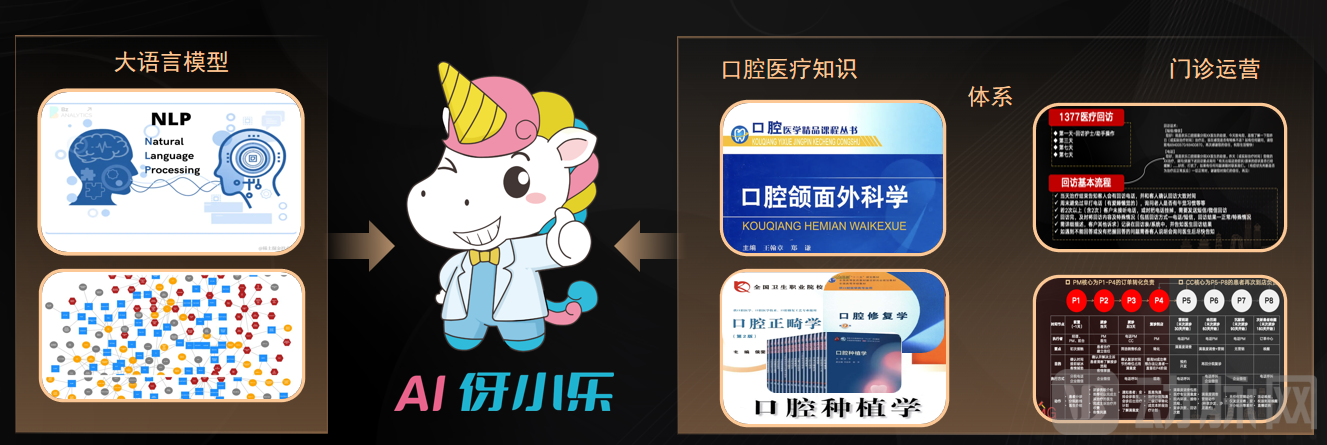
Hai Hengqin YaXiaoLe Technology Co., Ltd. (hereinafter referred to as “YaXiaoLe”), a provider of digital solutions for dental healthcare incubated by Happy Oral Care Medical Group and a professional team from the Department of Computer Science and Technology at Tsinghua University, has built a “Human-AI Collaborative Operations System.” This system is anchored by its independently developed 70B-parameter foundational large language model and deeply integrates specialized dental medical knowledge with clinical practice management expertise.
To date, the company has served nearly 200,000 end-users, integrated over 80 clinics into its system, and established a pipeline of more than 400 prospective partnership opportunities. It has received strategic support from institutions such as the Shenzhen Municipal Government and SenseTime, secured cumulative financing nearing RMB 100 million, and been featured in special reports by authoritative media outlets including CCTV-4 and the Ministry of Industry and Information Technology.
Ya Xiaole believes that China’s dental healthcare market is currently undergoing structural adjustments. Data shows that the overall profit margin of the dental industry has declined from 18% to 12%, with price wars among clinics intensifying. Low-price customer acquisition strategies have disrupted the pricing system for basic services (e.g., the price of dental cleaning has dropped from 99 yuan to 0.9 yuan). Market consensus is shifting toward a new stage of development, where enhancing customer lifetime value (LTV) and maintaining long-term relationships serve as core competitive advantages.
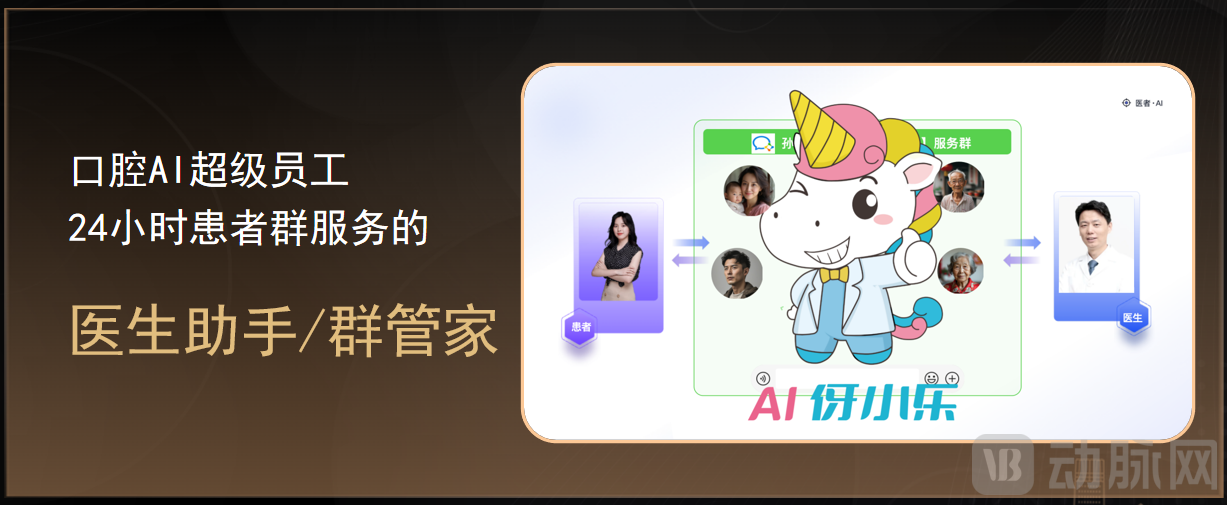
Ya Xiaole pointed out that the traditional operational model of dental institutions is currently facing three systemic challenges: first, Patient Management (PM) specialists are burdened with heavy responsibilities, requiring mastery of a knowledge system covering over 300 SKUs and execution of an eight-step service process across the full P1–P8 lifecycle; second, low response efficiency has resulted in the loss of 35% of effective communication windows; and third, human resource constraints are severe, with each specialist managing up to 3,000 patient groups, leading to a serious imbalance in personnel efficiency.
Through deep learning analysis, Ya Xiaole discovered that 70%-80% of patient interaction needs in oral healthcare services essentially fall under the category of emotional support. Based on this insight, the technical team constructed a deep decision-making network comprising 370 nodes, enabling proactive service capabilities such as responsive consultation, demand anticipation, emotional resonance, and identification of optimal moments for commercial conversion.
In terms of service model innovation, the system breaks through the traditional "passive" response model. In scenarios such as proactive follow-up care three hours after tooth extraction, it has effectively achieved a 20-fold increase in group engagement. Meanwhile, leveraging its robust risk management capabilities, the system transforms potential complaint crises into opportunities for follow-up visits, demonstrating excellent "crisis intervention" capabilities.
Empirical research conducted by the Tsinghua University Human-Computer Interaction Laboratory on 8,962 samples demonstrates that the system effectively optimizes customer operation metrics: the customer reactivation rate increased from 11% to 27.4%, the new customer conversion rate rose from 21% to 33%, and service satisfaction reached 99.8%. These results further validate the technical feasibility of AI systems in driving the synergistic growth of medical service quality and commercial value.
According to its industry research, the current RMB 300 billion market for oral healthcare has an online penetration rate of only 1.5% (RMB 4.7 billion), far below the 20%-30% digitalization level of the food and beverage industry, indicating significant growth potential. Therefore, in terms of business model innovation, Ya Xiaole has innovatively adopted a "asset-light + strong enablement" Digital Service Organization (DSO) model to break through the standardization challenges associated with traditional physical clinic chains, aiming to build a new generation of oral healthcare service networks.
Currently, Ya Xiaole has established traffic-entry-level partnerships with platforms such as Meituan, bringing service touchpoints forward to the patient decision-making stage. In collaboration with upstream suppliers like Invisalign, it is advancing the digital restructuring of clinical workflows, with the aim of building a digital infrastructure platform for the dental healthcare sector.
As the oral healthcare industry grapples with growth anxiety amid a quagmire of price wars, Ya Xiaole’s digital practices offer a new strategic pathway for breaking through: Is the essence of medical services merely the scalable replication of standardized products, or the accumulation of value grounded in professional trust?
Ya Xiaole’s “double helix” collaboration model, integrating AI and human labor, not only unties the Gordian knot of reconciling service standardization with personalization but also validates the commercial viability of affective computing technology in medical scenarios.
As algorithms begin to comprehend patients’ anxiety and expectations, and as data flows reconstruct the pathways for building doctor-patient trust, this technology-driven transformation of the healthcare service landscape may well redefine the underlying logic of value creation in dental care.
2025 High-Quality Development Conference of the Digital Dentistry Industry & Finals of the 1st Digital Dentistry Innovation Challenge
Fruitful Results from Innovative Competitions
The 25 finalist projects span the entire workflow of dental diagnosis and treatment, encompassing innovations in both hardware and software—such as periodontal equipment, 3D printing materials, and orthodontic visualization systems—thereby showcasing future trends in the industry.
Nearly 30 industry-leading representatives, including Happy Dentistry, Taikang Bybo, and Shandong Maier Medical, participated in the event. The discussion focused on the deep integration of technologies such as artificial intelligence, 3D printing, and big data with dental diagnosis and treatment, exploring pathways for the transformation and upgrading toward precise, intelligent, and personalized healthcare.
Release of the “Asia-Pacific Digital Oral Health Innovation Hub” Plan, Signing of Sci-Tech Innovation Projects, and Inauguration of the Innovation Alliance to Promote Synergistic Development of the Industrial, Innovation, and Talent Chains

March 30-31, Rizhao, China
Scan the QR code to register