

Innovative Copper-Infused Antibacterial Titanium Alloy for Dental Implants by IMR, CAS
As the first benchmark competition in the Asia-Pacific region dedicated to digital dentistry innovation,The 1st Digital Oral Innovation ChallengeBringing together cutting-edge innovative forces from the industry. Under the guidance of the Rizhao Municipal Committee of the Communist Party of China and the Rizhao Municipal People’s Government, and with meticulous planning by the Administration Committee of Rizhao High-tech Industrial Development Zone, the competition has invited authoritative experts—including academicians of the Chinese Academy of Sciences and the Chinese Academy of Engineering, leading universities, top-tier Grade A tertiary hospitals, and prominent investment institutions—to form a professional judging panel, garnering extensive attention from all sectors of the industry.
After rigorous screening and strict evaluation, 26 high-potential, innovative projects stood out and successfully advanced to the finals. These selected projects not only demonstrate the vitality and promising prospects of the digital dentistry industry but also represent the cutting-edge innovation strategies in China’s digital dentistry sector. In the coming days, we will sequentially feature these outstanding entrepreneurial ventures and innovative teams, helping you stay attuned to the pulse of industry innovation.
By Haodeya
Current Project: Institute of Metal Research, Chinese Academy of Sciences
*The following content is excerpted from the project pitch materials
In the field of medical devices, material innovation has always been a key engine driving industry progress. Leveraging two decades of expertise in antibacterial medical-grade metallic materials, the Institute of Metal Research, Chinese Academy of Sciences (hereinafter referred to as “IMR”) has developed an antibacterial titanium alloy representing a revolutionary breakthrough, bringing significant innovation to medical devices in the field of dental implants. This groundbreaking achievement not only demonstrates China’s innovative strength in the realm of biomedical materials but also opens up new avenues for addressing clinical challenges related to infections.
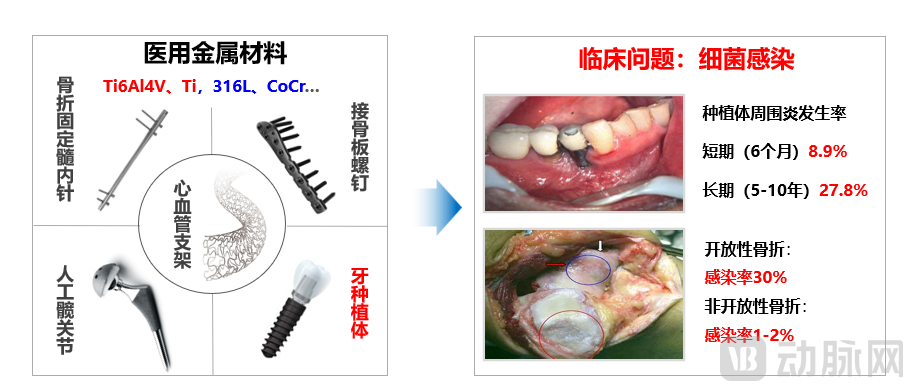
Currently, although medical-grade metallic materials have been widely used in the field of dental devices, bacterial infection caused by their surface inertness remains a formidable clinical challenge. According to data from the Institute of Metal Research, the short-term infection rate for peri-implantitis is as high as 8.9%, with the long-term infection rate approaching 30%, while the infection rate for open fractures exceeds 30%.
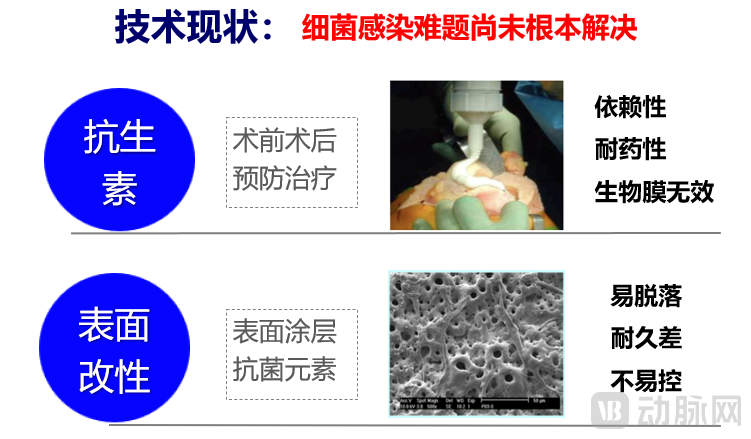
Behind these alarming statistics lie the painful experiences of countless patients. Although current approaches, such as the perioperative use of antibiotics and surface modification, can alleviate this issue to some extent, these strategies have inherent limitations, and the challenge of bacterial infection remains fundamentally unresolved.
Addressing Industry Pain Points, the Institute of Metal Research Launches a Materials Revolution. The research team astutely identified the dual advantages of copper in antibacterial activity and promoting bone tissue growth. Innovatively starting from the fundamentals of material design, they ingeniously incorporated this essential trace element into medical titanium alloys. Through precise control of the melting process, the team successfully developed a series of bulk antibacterial titanium alloys capable of sustainably releasing trace amounts of copper ions.
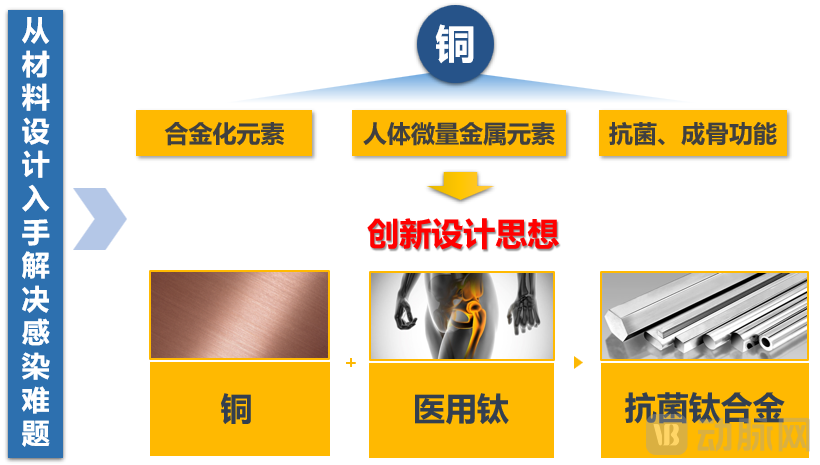
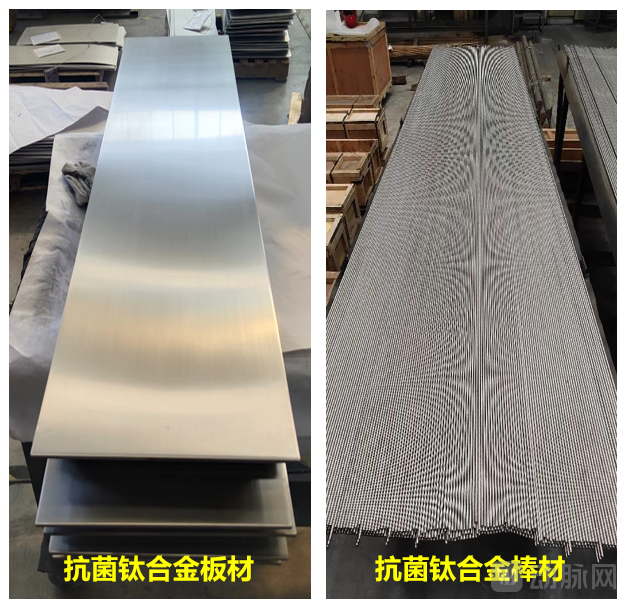
The R&D team demonstrated exceptional technical prowess in overcoming key challenges during the development of an innovative antibacterial titanium alloy. Addressing the critical issue that copper incorporation, while conferring antibacterial properties, may compromise mechanical performance and biosafety, the team achieved a technological breakthrough through in-depth and systematic materials research. This enabled them to attain an optimal balance among antibacterial efficacy, mechanical properties, and biosafety.
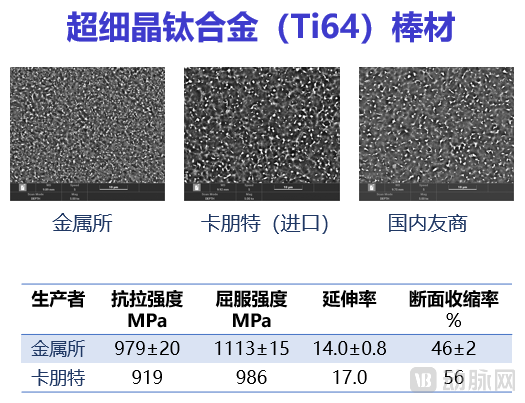
This breakthrough has been effectively validated by experimental data: the novel antibacterial titanium alloy not only inherits the excellent ductility of conventional titanium alloys, but also achieves a 10%–30% increase in strength and more than a 30% improvement in fatigue strength. Notably, by further applying grain refinement technology, the R&D team successfully developed ultrafine-grained titanium alloy products without copper that surpass imported high-end counterparts in performance metrics.
Notably, the team has consistently prioritized biosafety at the core of its research and development. Six-month animal studies, supported by genomic analyses, demonstrated that this innovative material maintains the diversity and balance of the oral microbiome without inducing copper resistance. Their research further indicates that copper from the material is efficiently processed via the hepatic metabolic system and naturally excreted in feces, thereby avoiding the risk of systemic accumulation. Moreover, the material has successfully passed the biological evaluation of medical devices under the Chinese National Standard GB/T 16886, with rigorous scientific data fully confirming its excellent biocompatibility.
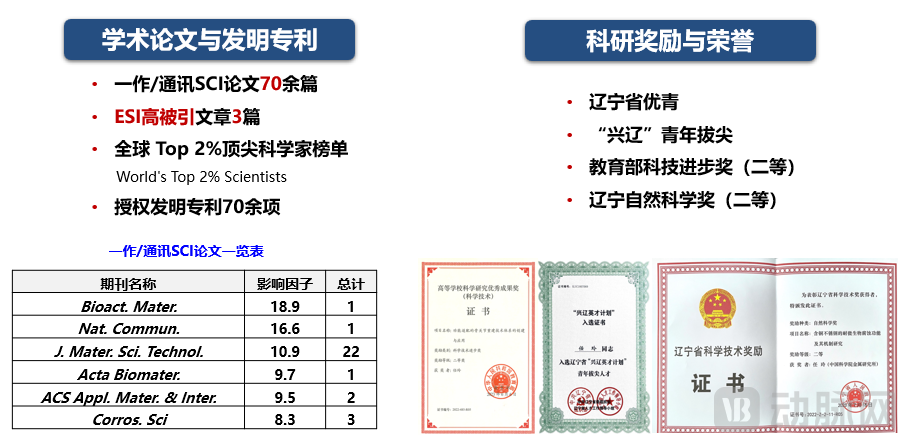
This breakthrough innovation is backed by a robust R&D team. Its leader has dedicated extensive efforts to the research and development of novel medical metallic materials and medical devices, demonstrating significant academic value through solid research achievements. To date, the leader has published more than 70 high-impact papers, obtained over 70 national invention patents, and received numerous honors, including the Liaoning Province Excellent Young Scientists Fund and the (Xingliao) Young Top-notch Talent award. Leveraging two decades of profound expertise in antibacterial medical metallic materials, the team has secured more than 20 independent intellectual property rights, with multiple research achievements being first-of-their-kind globally.
Looking ahead to the future market, with the continuous enhancement of national oral health awareness, China’s oral medical device market is entering a period of robust growth. Leveraging mature large-scale production capabilities for antimicrobial titanium alloys, the project team has established a comprehensive commercial layout. Through multi-dimensional collaboration models—including professional company operations, technology licensing, joint manufacturing, and direct sales of raw materials—the team has laid a solid foundation for the industrialization of innovative medical devices. As an innovative medical material featuring independent intellectual property rights and integrating high quality, high added value, and advanced technology, it is poised to secure a significant position in the increasingly competitive market.
As traditional antimicrobial approaches hit a bottleneck, is innovation in the intrinsic properties of materials the key to breaking through? The Institute of Metal Research’s technical approach of precisely incorporating copper elements into the titanium alloy lattice not only overturns the conventional logic of surface modification for medical metals but also reveals the profound value of materials genome engineering in addressing clinical challenges.
Amid the wave of domestic substitution in dental medical devices, this innovative paradigm—balancing the depth of basic research with the precision of engineering translation—may offer insights for overcoming more “chokehold” technologies. Yet the true test remains: how to build an interdisciplinary collaborative ecosystem that ensures material revolutions truly penetrate the “last nanometer” of innovation in dental care, as laboratory data are translated into clinical benefits?
2025 High-Quality Development Conference of the Digital Dentistry Industry & Finals of the 1st Digital Dentistry Innovation Challenge
Fruitful Outcomes from Innovative Competitions
The 25 finalist projects cover the entire workflow of dental diagnosis and treatment, including innovations in both hardware and software such as periodontal equipment, 3D printing materials, and orthodontic visualization systems, showcasing future industry trends.
Nearly 30 industry leaders, including Happy Dentistry, Taikang Bybo, and Shandong Meier Medical, participated in the event, focusing on the deep integration of technologies such as artificial intelligence, 3D printing, and big data with dental diagnosis and treatment, and exploring pathways for the transformation and upgrading toward precise, intelligent, and personalized healthcare.
Release of the “Asia-Pacific Digital Dental Innovation Hub” Plan, Signing of Sci-Tech Innovation Projects, and Inauguration of the Innovation Alliance to Promote Synergistic Development of the Industrial Chain, Innovation Chain, and Talent Chain

March 30–31 · Rizhao, China
Scan the QR code to register