

Tencent Leads the Medical Large Model Race with Hybrid Yuan + DeepSeek Dual-Engine Architecture

Tencent Healthcare
Developer of Digital Healthcare Products
Due to the non-standardized design of health checkup packages and the complexity of billing methods, young people often pay extra for unnecessary tests, while middle-aged and elderly individuals may miss key screenings such as those for cardiovascular and cerebrovascular diseases, failing to achieve the desired outcomes of health examinations.
To address this structural contradiction, Shenzhen Third People’s Hospital has recently entered into a deep collaboration with Tencent Healthcare to launch an intelligent health examination service. Leveraging the Tencent Hunyuan and DeepSeek large language models, the hospital is employing intelligent solutions to help examinees resolve various challenges encountered during health screenings.
According to Feng Cheng, Director of the Outpatient Department and Head of the Health Management Department at Shenzhen Third People's Hospital, the intelligent health checkup system not only recommends personalized checkup directions based on patient information but also features an AI-powered report interpretation function. This function leverages the clinical expertise of senior physicians to provide patients with easy-to-understand explanations of their results.
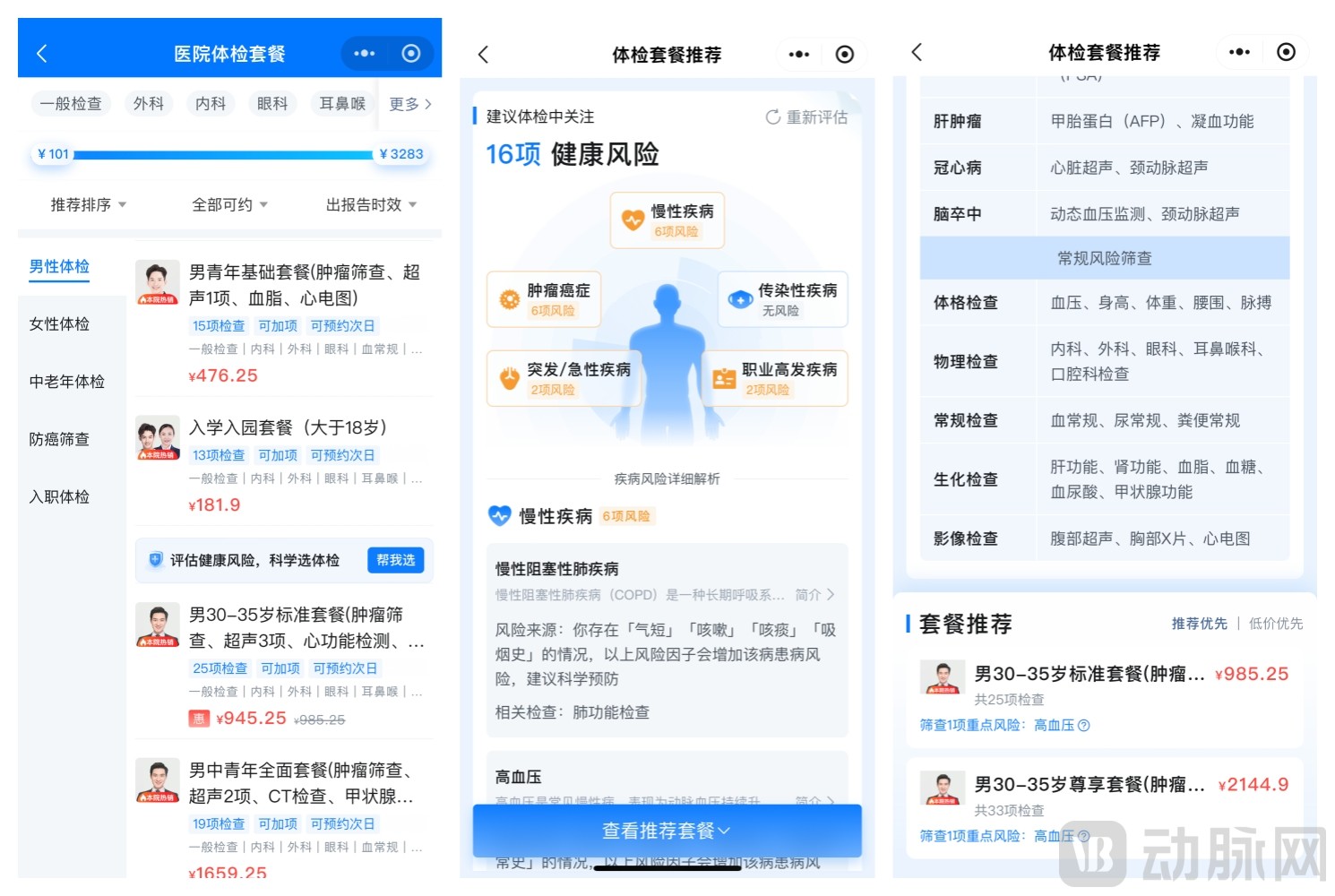
Shenzhen Third People's Hospital “AI Smart Physical Examination” Service
When health issues are detected, AI can provide medical consultation recommendations based on the patient's physical condition. For indicators with minor abnormalities, the algorithm can also advise patients whether to continue monitoring or to undergo immediate clinical intervention.
Bridging the Information Asymmetry in Patient Care: Tencent Takes a Key Step with Large Language Models
Before DeepSeek’s surge in popularity, Tencent Healthcare had already developed a large language model for the healthcare industry, leveraging its self-developed Hunyuan large model to address the specific needs of various medical sub-scenarios.
Healthcare is a field that demands robust communication. In an ideal clinical setting, physicians should engage in thorough discussions with patients, providing detailed diagnostic recommendations based on their current condition and medical history. However, due to scarce medical resources, many doctors are compelled to shorten consultation times and downplay communication to enhance efficiency.
To enhance patient experience, Tencent Healthcare launched applications such as AI-powered pre-consultation, intelligent consultation, and self-diagnosis/self-check last year. After scheduling an appointment, patients can provide detailed responses to pre-consultation questions, submitting information in advance including chief complaints, medical history, and medication contraindications. During the formal consultation, physicians already have a preliminary understanding of the patient’s condition, enabling them to ask more targeted questions and thereby improving diagnostic accuracy. The 5–10 minutes saved by AI can lead to a qualitative improvement in diagnostic accuracy.
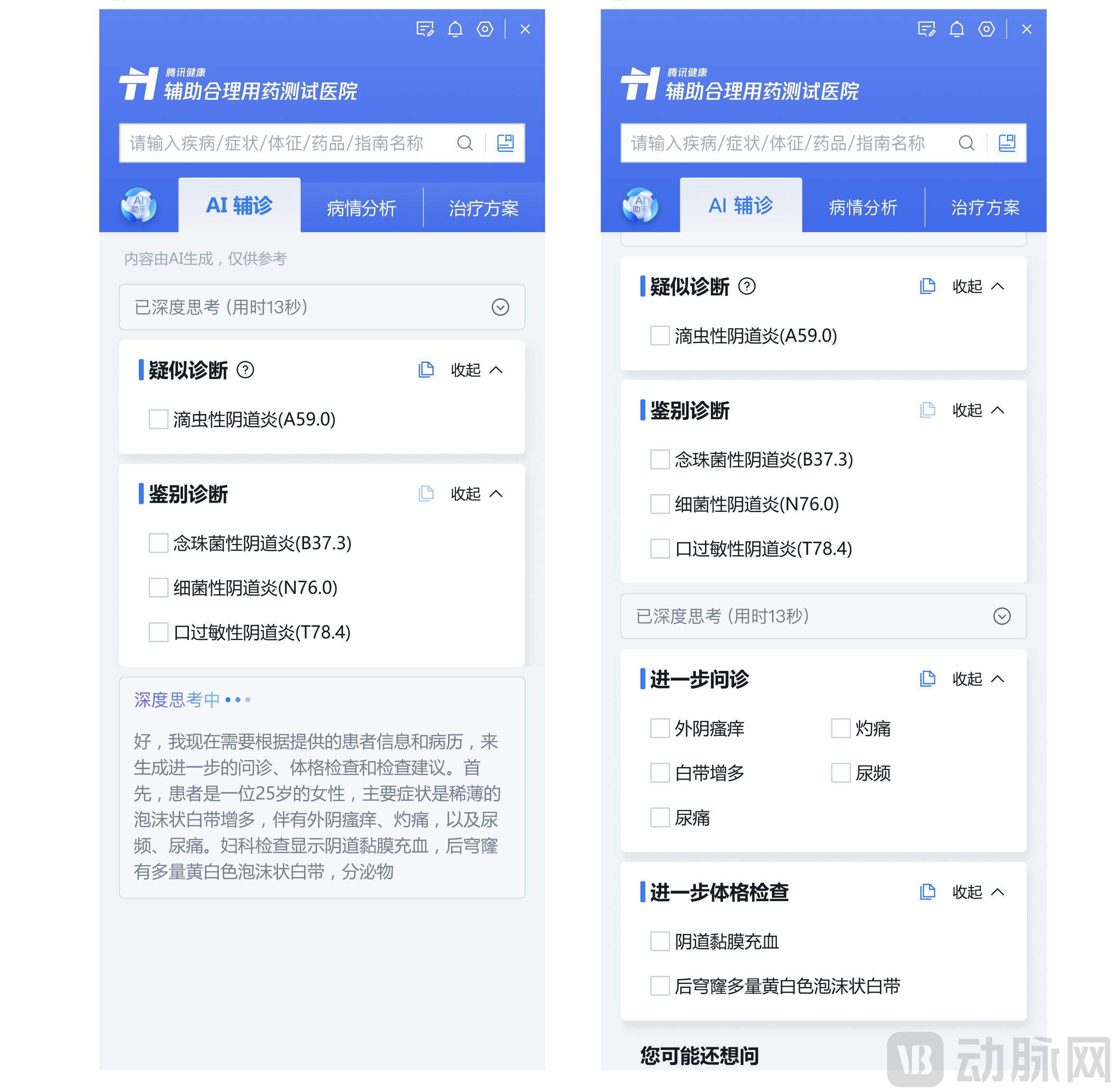
AI-Assisted Diagnosis Application on the Tencent Healthcare Mini Program
Revisiting the hospital setting, the pain points here are also closely tied to efficiency. Taking the ICU as an example, such patients generate enormous volumes of data, and their clinical conditions can change rapidly. Vital signs that are stable one moment may suddenly spiral out of control the next due to factors such as outbreak of infection or acute deterioration of organ function. Consequently, critical care physicians must swiftly and accurately locate and integrate patient information to make timely diagnostic and therapeutic decisions.
In response to this situation, Tencent and Mindray Medical have jointly developed a large language model for critical care. By integrating data from medical device monitoring, electronic health records, and the clinical expertise of ICU physicians, the model can rapidly respond and provide support when patients experience emergencies.
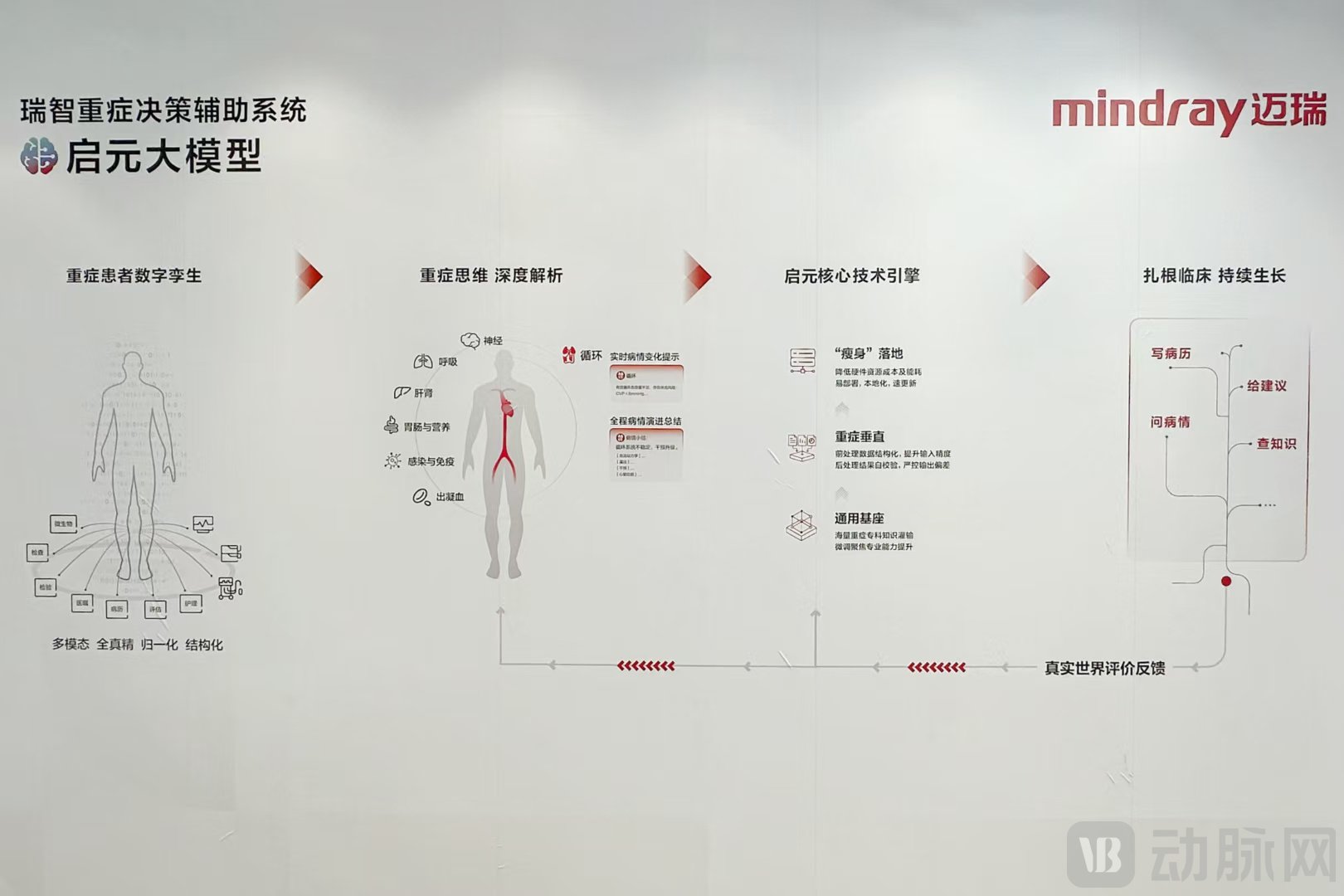
Flowchart of Qiyuan Large Model for Assisted Decision-Making in Critical Care
At the ICU of the First Affiliated Hospital, Zhejiang University School of Medicine, Dr. Li Tong, Deputy Director of the Department of Critical Care Medicine, frequently uses large language models to determine the optimal timing for weaning post-heart-transplant patients off extracorporeal membrane oxygenation (ECMO). “Weaning requires careful consideration and typically involves a multidisciplinary assessment, including consultations with cardiologists, the nursing team, and ICU physicians, along with clinical testing and the integration of all available information.”
With the support of large language models, AI can now assist ICU physicians in making comprehensive decisions on such complex issues. In clinical practice, AI can provide a series of theoretical indicators—including hemodynamics, oxygenation, pulmonary function, and complications—based on a critical care medicine knowledge base, and then make comprehensive judgments by integrating patient-specific data. Li Tong stated, “AI’s analysis is highly comprehensive, reaching the level of specialist physicians and demonstrating strong integrative capabilities.”
Following the release of DeepSeek-R1, Tencent Healthcare promptly integrated its Hunyuan large model with DeepSeek. In addition to upgrading intelligent services at over 1,000 hospitals across China, Tencent Healthcare offers public SaaS, API PaaS, and multi-scale privatized deployment options to B-end users in the medical sector. These solutions are delivered through various channels, including Tencent Cloud APIs, large model knowledge engine invocation, and model deployment on the TI-ONE platform, thereby accelerating the intelligent transformation of the entire healthcare industry.
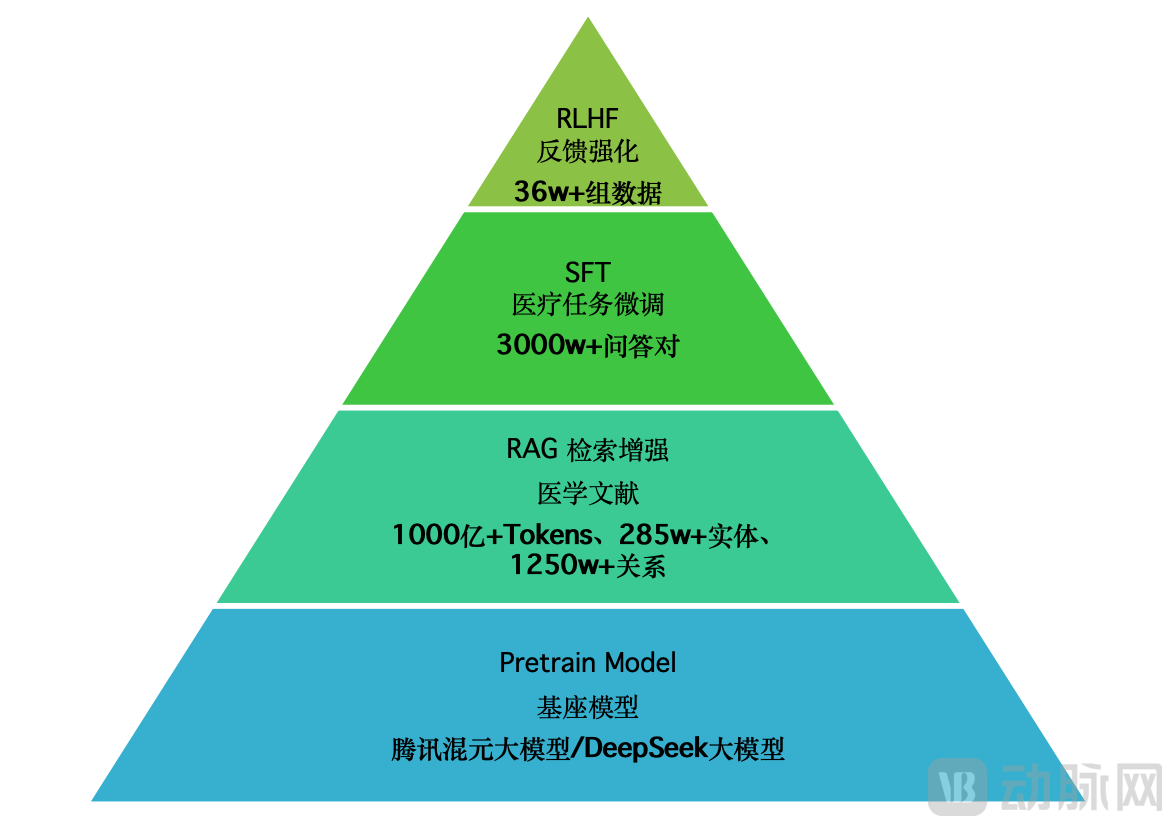
Tencent Healthcare Large Language Model Construction Process
Currently, Tencent Healthcare has partnered with nearly 100 enterprises in the fields of medical technology, biotechnology, and pharmaceutical distribution, including Shanghai Pharmaceuticals, Fangzhou Jianke, Wondfo Biotech, and Dingdang Health. Taking Shanghai Pharmaceuticals as an example, Tencent Healthcare leverages the Tencent Cloud Knowledge Engine to collaboratively invoke the DeepSeek large language model and the Hunyuan large language model, developing intelligent agents with diverse functionalities. This initiative enhances employee efficiency across various scenarios such as intelligent Q&A, document parsing, and data analysis, thereby streamlining internal corporate operations.
Centered on Shanghai Pharmaceuticals Cloud Health’s DTP pharmacies, Tencent has also deeply integrated a RAG-based pharmaceutical knowledge base with the DeepSeek large language model to create an AI Pharmacist Assistant application. This solution empowers Shanghai Pharmaceuticals Cloud Health with more precise and efficient pharmaceutical care capabilities, enabling pharmacists to provide patients with more comprehensive and professional medication advice, while effectively enhancing pharmacists’ data analytics capabilities and the overall quality of pharmaceutical services.
Considering the empowerment landscape for doctors, patients, and enterprises, Tencent Healthcare’s AI strategy remains anchored in the two keywords established years ago: “intelligence” and “connectivity.” In the DeepSeek era, both core capabilities have undergone qualitative improvements.
Although the concept of “Smart Healthcare” has been proposed for over a decade, in practical applications serving doctors and patients, these algorithms have not provided users with a tangible sense of intelligence; more often, they resemble tools equipped with a more complex knowledge-mapping core.
Nowadays, the development of large models has enabled AI to transition from “recognition” to “generation,” and further to “logical reasoning,” truly allowing it to provide thinking outcomes and the process of generating results in a manner akin to human cognition.
Therefore, for Tencent Healthcare, after taking the lead in the field of large language models, its accumulated medical applications have begun to undergo a qualitative transformation. Whether it was the previous pre-registration and pre-consultation services or today’s intelligent health checkups, these tools have bridged the interaction gap between users and algorithms, becoming indispensable assistants for doctors and patients and delivering genuine value.
On the other hand, the customizable advantages brought by DeepSeek have strengthened Tencent Healthcare’s “connectivity” capabilities. Building on its existing connections among healthcare providers, pharmaceutical companies, patients, and insurers, Tencent is able to drive the rapid intelligent deployment of its entire ecosystem, accelerating the “large-model-style” transformation of the healthcare industry.
Despite making breakthrough applications in numerous medical scenarios, Tencent Healthcare continues to emphasize its foundational role as an “assistant,” leveraging AI to help the healthcare industry address practical challenges.
Therefore, at this stage, Tencent Healthcare continues to devote greater efforts to building a professional medical knowledge base and enhancing large language models’ comprehension and reasoning capabilities regarding specialized medical knowledge. This aims to reduce the frequency of “hallucinations” during model operation while ensuring that large-model applications developed by partners closely align with clinical needs.
At last year’s Tencent Digital Ecosystem Conference, Wu Wenda, President of Tencent Healthcare, stated, “There are many scenarios suitable for large language models. We will carefully consider whether we should develop them in-house. For certain deeply clinical and particularly complex scenarios, while we have the capability to address them, we believe they should be left to enterprises with greater comparative advantages.”
After all, the medical field has never lacked creators of specific products and solutions; what it lacks are foundational builders who can optimize the underlying infrastructure for them, accelerate the research and development of these products and solutions, and deliver them to users with genuine needs.