

Taiho Pharmaceutical to Acquire Araris Biotech in $1.14 Billion Deal to Bolster ADC Pipeline
On March 17, Taiho Pharmaceutical, a subsidiary of Japan’s Otsuka Pharmaceutical, announced that it had entered into a definitive agreement to fully acquire Araris Biotech (hereinafter referred to as “Araris”), a Swiss biotechnology company. Subject to customary closing conditions, the acquisition is expected to be completed in the first half of 2025. This transaction follows the research collaboration agreement signed between Taiho Pharmaceutical and Araris in November 2023.
This acquisition follows the research collaboration agreement signed between Dapeng Pharmaceutical and Araris in November 2023. Under the terms of the agreement, Dapeng Pharmaceutical will pay $400 million at closing, with potential additional milestone payments of up to $740 million (totaling approximately RMB 8.888 billion). Araris will become a wholly-owned subsidiary of Dapeng Pharmaceutical and will continue its operations and R&D activities at its existing location in Zurich, Switzerland.
Araris: More Stable, Efficient, and Cost-Effective; Partnership Reached with Roche
Araris was founded in 2019 as a spin-off from the Paul Scherrer Institute (PSI) and ETH Zurich, co-founded by Dr. Dragan Grabulovski, Dr. Philipp Spycher, and Dr. Isabella Attinger-Toller.
Araris is dedicated to developing best-in-class antibody-drug conjugates (ADCs). Its proprietary linker-conjugation platform, AraLinQ, enables the attachment of payloads to specific amino acids on antibodies without the need for antibody engineering. This technology allows for the efficient, one-step conjugation of multiple synergistic anticancer payloads onto a single antibody.
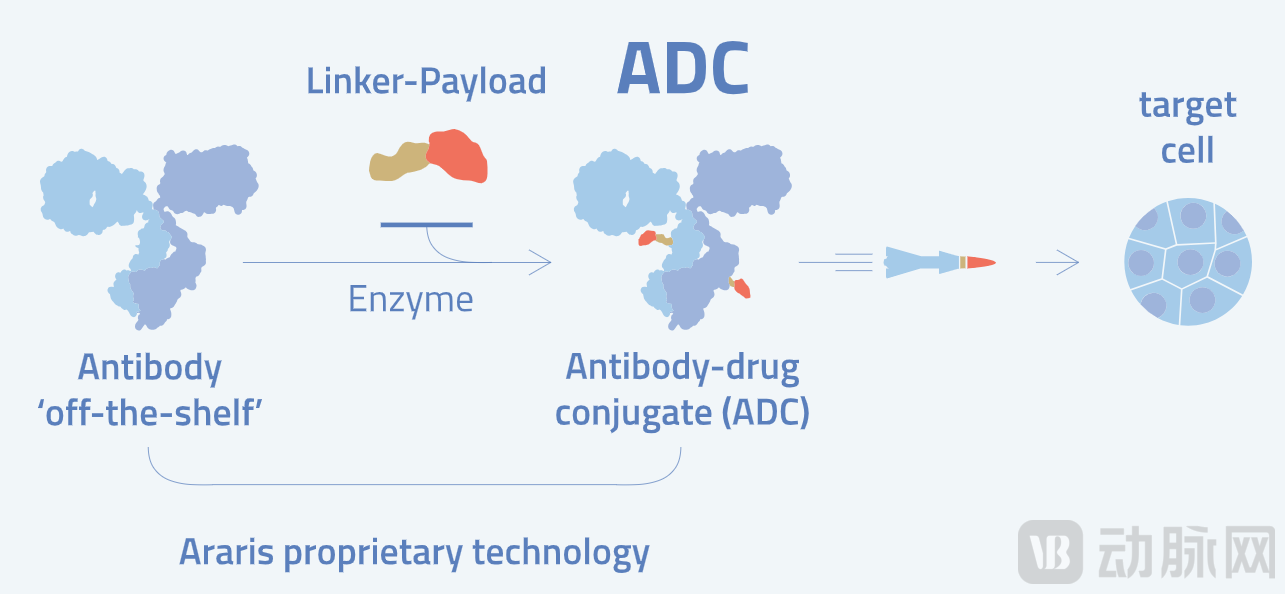
Araris’s novel peptide conjugation technology creatively provides a more stable, efficient, and cost-effective solution for the production of antibody-drug conjugate (ADC) therapeutics, making it straightforward to develop ADCs with favorable tolerability, high potency, and low toxicity. Its proprietary peptide conjugation technology, Araris Linker, enables direct attachment of any payload (i.e., cytotoxic drug) to existing “standard” antibodies without prior antibody engineering, thereby rendering the ADC manufacturing process rapid and efficient.
Site-specific conjugation technology enables the attachment of payloads to specific sites on antibody molecules, resulting in a more defined and homogeneous drug-to-antibody ratio (DAR) and addressing the inconsistent efficacy caused by random drug attachment. Furthermore, peptide bond linkers are highly stable, preventing premature payload release from the antibody and subsequent damage to normal cells, thereby reducing the toxicity of ADC drugs. Hydrophilic peptides exhibit high aqueous solubility, which prevents aggregation and ensures that the intended payload fully binds to receptor sites on cancer cells, allowing for dose reduction and enhanced therapeutic efficacy.
Currently, Araris is advancing three product candidates developed using its proprietary AraLinQM platform for the treatment of hematologic malignancies and solid tumors, which are currently in the preclinical stage. These products are expected to enter clinical trials between 2025 and 2026.
Based on this platform, Araris announced in January of this year that it had entered into a research collaboration and option license agreement with Chugai Pharmaceutical Co., Ltd., a member of the Roche Group. Under the agreement, Araris will leverage its proprietary linker-conjugation platform, AraLinQ, to develop novel antibody-drug conjugate (ADC) therapeutics by combining it with antibodies provided by Chugai Pharmaceutical targeting undisclosed targets.
Dapeng Pharmaceutical: The Hidden Gem Racing in the Oncology Arena
Dapeng Pharmaceutical, a subsidiary of Otsuka Pharmaceutical—one of Japan’s top five pharmaceutical companies by market capitalization—has long held a prominent position in the field of oncology therapeutics, achieving significant advances particularly in the treatment of rare cancers.
In terms of market performance, Dapeng Pharmaceutical’s anti-tumor drugs have received approval in numerous countries worldwide. Its product Lonsurf has been approved in 72 countries globally for the treatment of patients with advanced metastatic colorectal cancer, demonstrating Dapeng Pharmaceutical’s competitiveness in the international market. Meanwhile, Dapeng Pharmaceutical holds a significant position in the field of gastrointestinal tumor treatment. Its originally developed anti-tumor drugs, such as Tegafur/Gimeracil/Oteracil (S-1) and Trifluridine/Tipiracil tablets (Lonsurf), have become indispensable medications for the treatment of gastrointestinal tumors in China.
Dapeng Pharmaceuticals is dedicated to the development of novel molecularly targeted therapies and next-generation cytotoxic agents, continuously strengthening its investment in innovative research and clinical development. Currently, Dapeng Pharmaceuticals has disclosed 28 investigational pipelines that have entered clinical trials, targeting various malignancies including solid tumors and hematologic cancers.
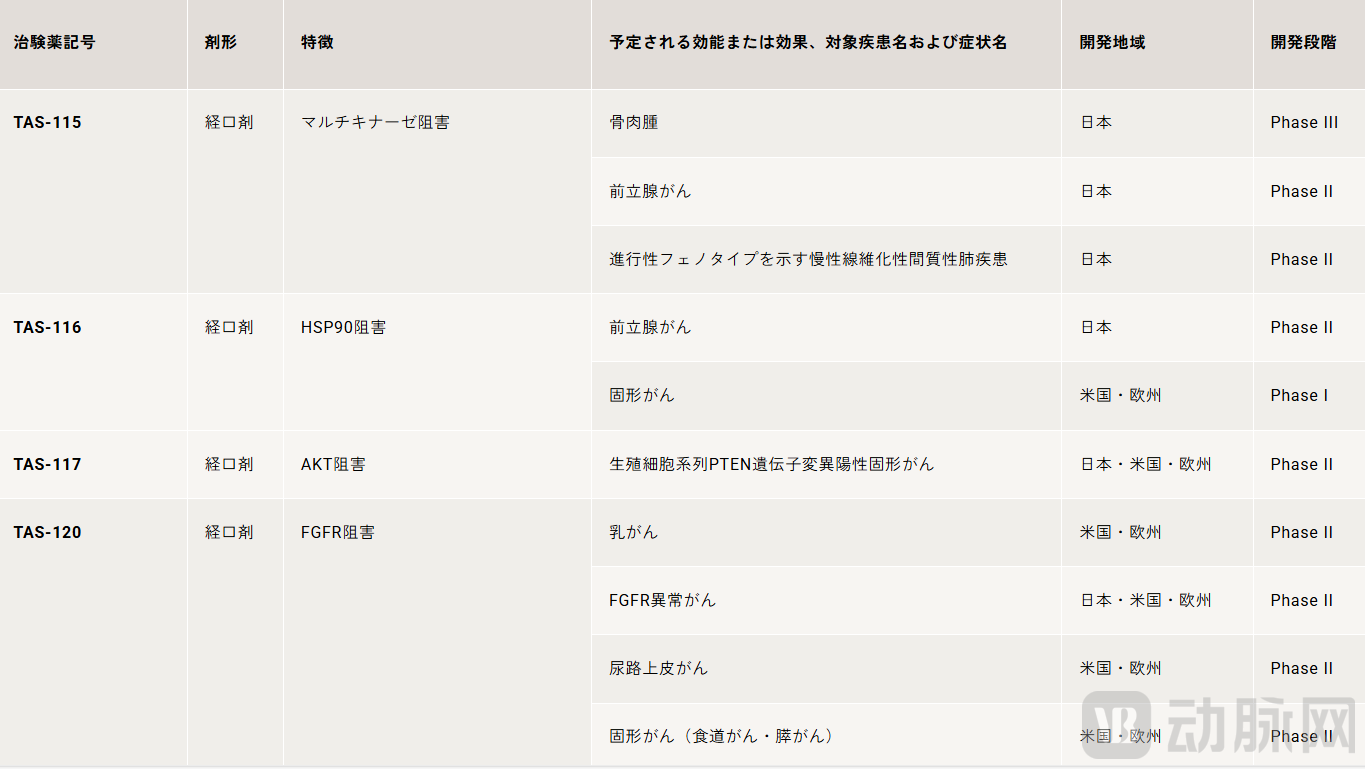 Dapeng Pharmaceutical’s R&D Pipeline (Partial)
According to the announcement, by acquiring Araris’s innovative antibody-drug conjugate (ADC) drug discovery technology platform and integrating it with Dapeng Pharmaceutical’s proprietary small-molecule drug discovery platform, Cysteinomix, Dapeng Pharmaceutical will further expand its ongoing development portfolio in the field of oncology.