

Yazhi Medical: Unlocking the 'Kovacs Code' for TMD Treatment
As the first benchmark competition in the Asia-Pacific region dedicated to digital dentistry innovation, the inaugural Digital Dentistry Innovation Challenge brought together cutting-edge innovative forces from across the industry. Under the guidance of the Rizhao Municipal Committee and Municipal People’s Government, and with meticulous planning by the Administration Committee of Rizhao High-Tech Industrial Development Zone, the competition invited a professional jury composed of authoritative experts from the Chinese Academy of Sciences and the Chinese Academy of Engineering, top-tier universities, leading Grade 3A hospitals, and prominent investment institutions, garnering widespread attention from all sectors of the industry.
After rigorous screening and thorough evaluation, 26 high-potential, innovative projects have emerged as finalists. These selected projects not only highlight the vitality and promising prospects of the digital dentistry industry but also represent cutting-edge innovation within China’s digital dentistry sector. In the coming days, we will sequentially showcase these outstanding startups and innovative teams, helping you stay attuned to the pulse of industry innovation.
Text | Good Teeth
Current Project: YAZHI Medical
*The following content is excerpted from the project pitch deck materials.
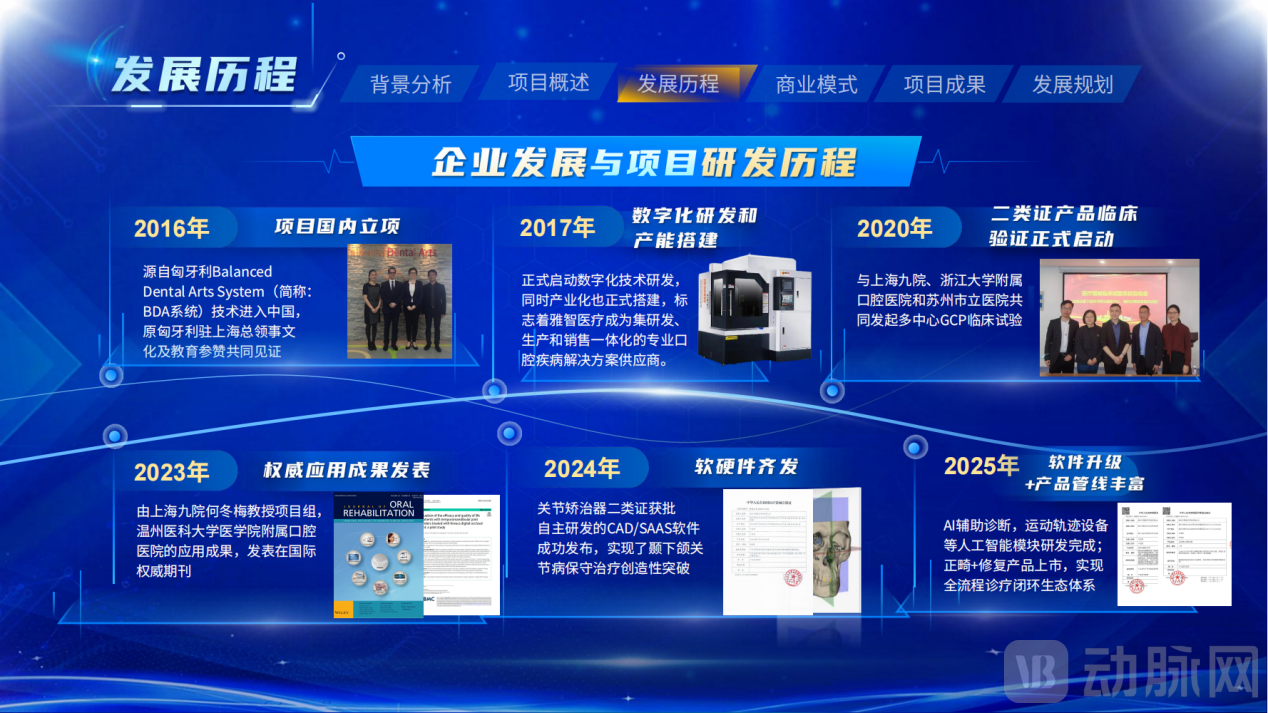
Hangzhou Yazhi Medical Technology Co., Ltd. (hereinafter referred to as “Yazhi Medical”), established in 2016, focuses on innovative digital diagnosis and treatment of temporomandibular joint disorders (TMD). Centered on the European Kovich Balanced Dental Arts System (BDA) and enhanced through localized upgrades, the company is driving the transition of TMD treatment in China from “experience-dependent” practices to “precise and controllable” solutions. The company has obtained more than 70 patents and secured the first Class II medical device registration certificate for a temporomandibular joint orthotic appliance in China (Zhejiang Medical Device Registration No. 20242171453), establishing itself as an industry benchmark for standardized diagnosis and treatment.
As the first provider of a comprehensive non-invasive treatment solution for temporomandibular disorders (TMD) in China, Yazhi Medical is the first enterprise in the country to implement a full-process solution integrating “muscle deprogramming” with “digital jaw position design.” This approach has reduced the clinical recurrence rate to less than 10%, significantly improving diagnostic and treatment efficiency. The technology has been deployed in more than 30 Grade A tertiary hospitals, including Shanghai Ninth People’s Hospital Affiliated to Shanghai Jiao Tong University School of Medicine, Peking University School of Stomatology, and The Affiliated Stomatological Hospital of Guangzhou Medical University. It also covers leading private dental chains such as Topchoice Medical and Arrail Dental, having served over 15,000 patients cumulatively, with a clinical effectiveness rate exceeding 90%. Multi-center clinical trials were conducted in collaboration with institutions such as Shanghai Ninth People’s Hospital Affiliated to Shanghai Jiao Tong University School of Medicine and The Affiliated Stomatological Hospital of Zhejiang University School of Medicine, with results successively published in core international journals.
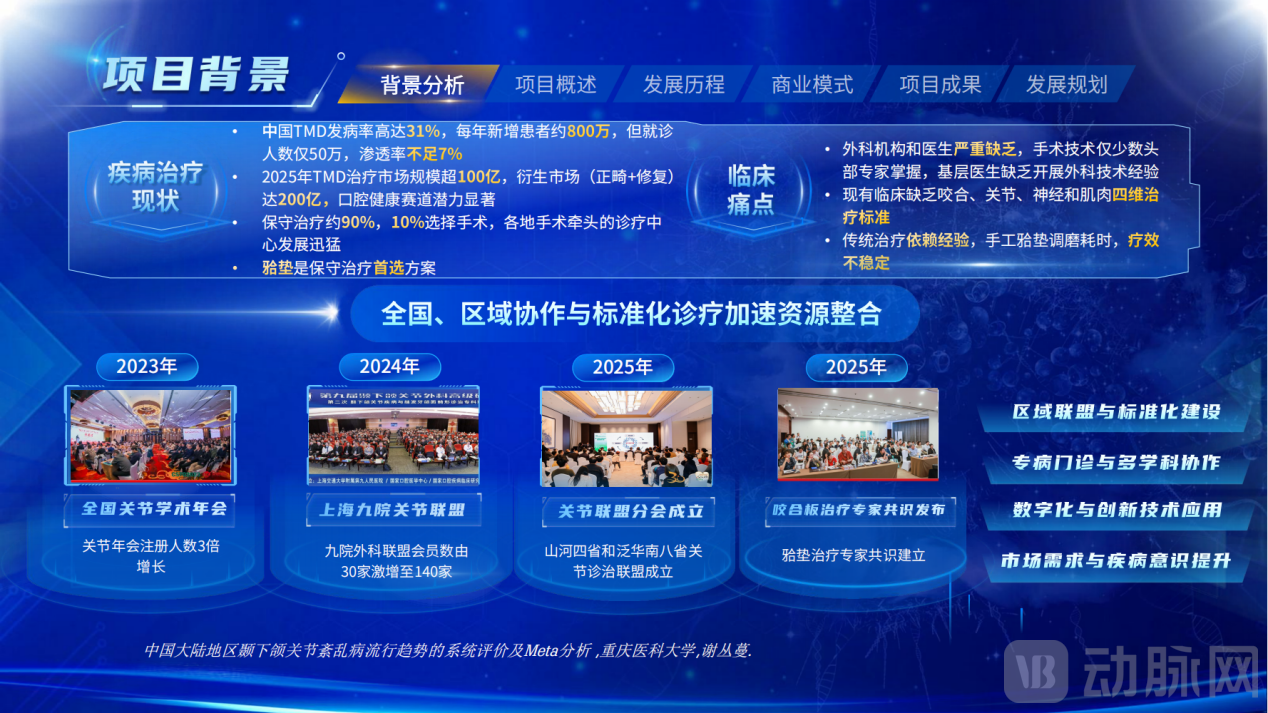
From a macro perspective on industry pain points, temporomandibular disorders (TMD) have been listed by the World Health Organization as the fourth most prevalent oral disease, with a high incidence rate in China. Data from Yazhi Medical shows that the prevalence of temporomandibular joint disorders in China is as high as 31%, far exceeding the global prevalence rate of 6–9%. The market size for primary TMD treatment is expected to reach RMB 10 billion by 2025, and when combined with the comprehensive treatment market involving restorative and orthodontic care, it will approach RMB 20 billion. Currently, more than 20 provinces and municipalities across China have established independent departments for TMD in tertiary hospitals, over 500 medical institutions have opened specialized outpatient clinics, and the professional physician workforce has exceeded 10,000. The annually emerging patient population of over 8 million has an urgent demand for standardized treatment protocols.
In terms of the allocation of medical resources, the registered physician cohort under the Professional Committee on Gnathology and Temporomandibular Joint Disorders of the Chinese Stomatological Association continues to expand, with local committees being established across various regions. Currently, a nationwide alliance system comprising 140 medical institutions has been formed, centered around Shanghai Ninth People’s Hospital, primarily delivering systematic treatment that combines surgical and non-surgical approaches. Notably, data from Yazhi Medical regarding the Department of Stomatology at Zhejiang University shows that annual TMD treatment volume has exceeded 10,000 cases since the launch of TMD therapy in July 2019. However, Yazhi Medical believes that despite significant market potential, medical institutions must still build differentiated therapeutic advantages through technological innovation within the existing policy, regulatory, and market environments, thereby enhancing their core competitiveness.
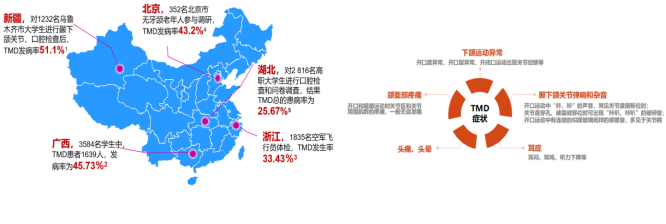
According to the company's clinical data, the clinical manifestations of temporomandibular disorders (TMD) are diverse and complex, involving 11 groups of disease syndromes. Typical symptoms include facial pain, limited mouth opening, joint clicking, and abnormal mandibular movement, often accompanied by complications such as headaches. In China, a provisional dual-axis diagnostic standard is implemented for TMD. Structural clinical conditions are categorized into two main types: reducible disc displacement and non-reducible disc displacement, while pain-related conditions are classified as muscular or osseous pain. Based on the hierarchical management principles of the TMD treatment system, 90% of TMD cases currently adopt conservative treatment strategies, including occlusal splint therapy, pharmacological intervention, and physical therapy.
Limitations of Traditional Therapies: Manual fabrication of occlusal splints relies heavily on clinical experience, with time-consuming adjustment and grinding procedures leading to unstable therapeutic outcomes and a recurrence rate as high as 50%.Lack of Technical Standardization: While 90% of patients require conservative treatment, there is an absence of standardized treatment protocols. Primary care institutions have limited diagnostic and therapeutic capabilities, resulting in an insufficient number of facilities equipped to manage these patients.Insufficient Multidisciplinary Collaboration: The three-dimensional imbalance involving occlusion, temporomandibular joints, and muscles requires cross-departmental coordination, which is difficult to achieve under traditional care models aimed at restoring systemic balance. There is a severe shortage of surgical institutions and specialists, with advanced surgical techniques mastered by only a few leading experts.Meanwhile, national policies promoting the domestic production of high-end medical devices, coupled with alliance-building initiatives, present industry opportunities to facilitate resource decentralization and the implementation of tiered diagnosis and treatment systems.
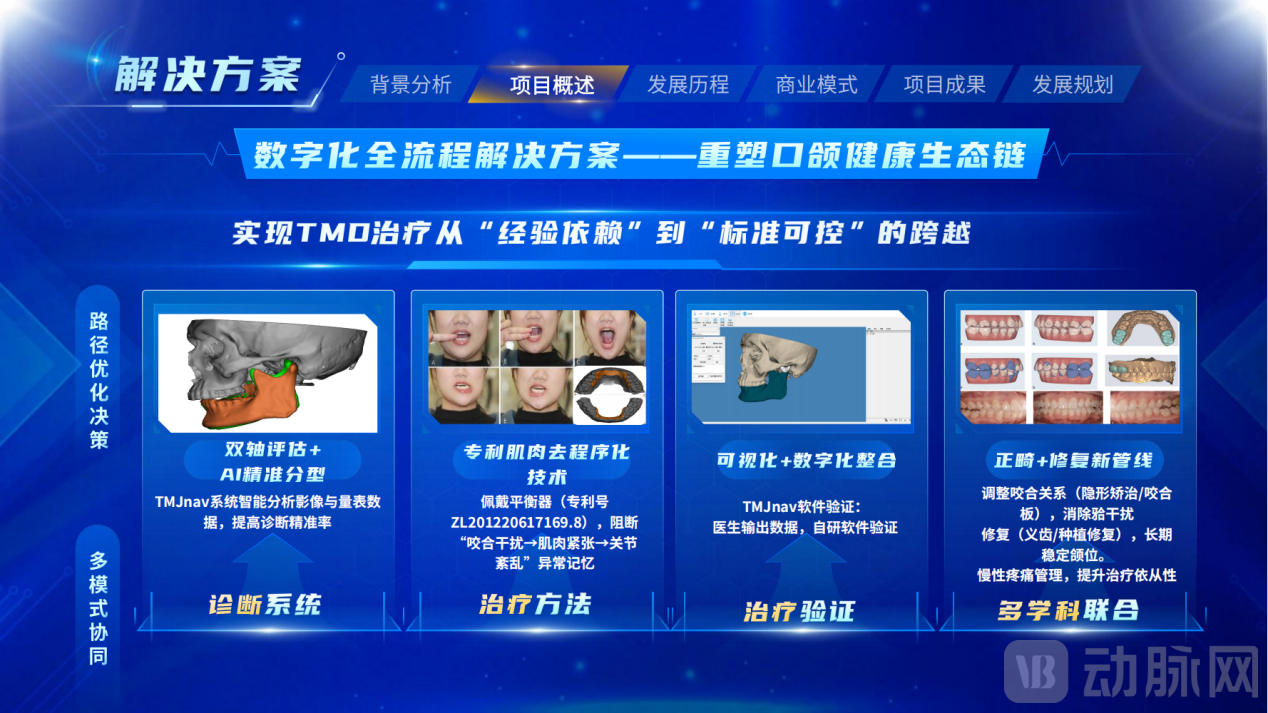
Yazhi Medical’s independently developed Kovics BDA System, rooted in the theoretical framework of Professor Miklós Kovics from Hungary, innovatively establishes a digital end-to-end solution system. By leveraging its proprietary AI navigation system (TMJnav) and CAD/SaaS computer platform, the system reduces the operational threshold for primary care physicians by 80%. Its muscle deprogramming technology (Patent No.: ZL201220617169.8) eliminates abnormal occlusal memory. Through a closed-loop multidisciplinary approach combining orthodontics and prosthodontics, digital technology integrates cross-disciplinary collaboration, enabling TMD treatment to transition from “experience-dependent” to “standardized and controllable.”
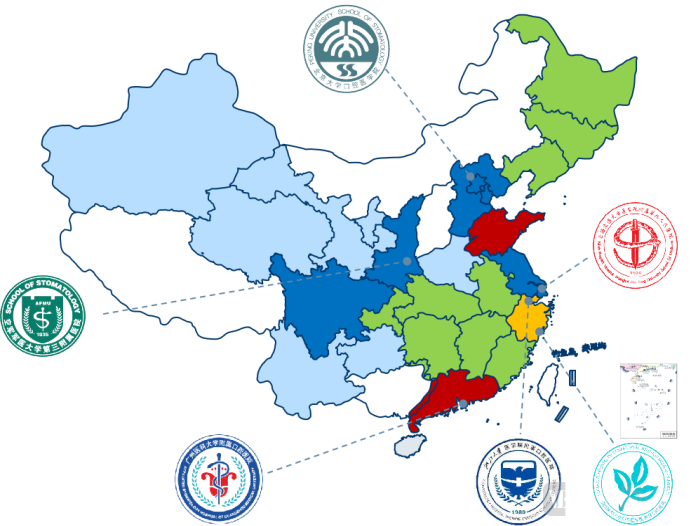
In terms of market expansion, Yazi Medical adopts a dual-drive strategy of "academic leadership + clinical application": on the one hand, it collaborates deeply with leading institutions such as Shanghai Ninth People's Hospital, Peking University School of Stomatology, and Zhejiang University School of Stomatology to jointly build academic platforms and enhance industry influence; on the other hand, it accelerates the coverage of technology in private institutions by establishing a standardized training system, achieving technological decentralization and popularization. The steady advancement of this dual-drive strategy has enabled Yazi Medical to establish a professional and reliable brand image within the industry.
As dental institutions transition from traditional "tooth treatment" to a comprehensive management model focused on "health and aesthetics through orofacial balance," the treatment of temporomandibular disorders (TMD) is becoming a key breakthrough for business upgrades. Accordingly, Yazhi Medical is striving to build a complete medical service ecosystem encompassing diagnosis, treatment, and follow-up care. Building on these achievements, the company is poised to emerge as a new value-growth enterprise in the dental sector, following the success of clear aligner orthodontics, thereby driving the continuous development of TMD diagnosis and treatment in China toward greater comprehensiveness and standardization.
The core breakthrough of Yizhi Medical’s Kovic BDA system lies not only in the engineering precision of micron-level occlusal reconstruction, but also in transforming complex movements into quantifiable data models, thereby converting traditional experience-based medicine into quantifiable and reproducible precision treatment protocols. Yet behind this technological iteration, a deeper question is emerging: as technology penetrates lower-tier markets amid structural imbalances in healthcare resources, can digitalization combined with full-process diagnosis and treatment become the key to breaking the deadlock?
Perhaps the answer lies within the three-dimensional data computations of the Kovici system—the essence of medical innovation is, ultimately, a rational decoding that maintains reverence for the intricate systems of the human body. By constructing an integrated ecological closed loop encompassing “technology, training, and service,” we may enable millimeter-level precision to extend beyond the equipment itself, permeating the underlying logic of dental healthcare resource reallocation.
2025 Conference on High-Quality Development of the Digital Dentistry Industry & Finals of the 1st Digital Dentistry Innovation Challenge
Fruitful Outcomes from Innovative Competitions
The 25 finalist projects span the entire workflow of dental diagnosis and treatment, encompassing innovations in both hardware and software—such as periodontal equipment, 3D printing materials, and orthodontic visualization systems—thereby showcasing future industry trends.
Nearly 30 industry leaders, including Happy Dentistry, Taikang Bybo, and Shandong Mair Medical, participated in the event, focusing on the deep integration of technologies such as artificial intelligence, 3D printing, and big data with dental diagnosis and treatment, and exploring pathways for the transformation and upgrading toward precise, intelligent, and personalized healthcare.
“Asia-Pacific Digital Dental Innovation Hub” Planning Release, Sci-Tech Project Signing, and Innovation Alliance Establishment Ceremony: Promoting the Synergistic Development of the Industrial Chain, Innovation Chain, and Talent Chain.

March 30–31, Rizhao, China
Scan the QR Code to Register