

Fullerene-Based Smart Hemostatic Polymer: A Visible-Light-Responsive 'Instant Hemostasis' Solution for Extreme Environments

As the premier benchmark competition in the Asia-Pacific region dedicated to digital dentistry innovation, the inaugural Digital Dentistry Innovation Challenge has gathered cutting-edge innovative forces from across the industry. Under the guidance of the Rizhao Municipal Committee and Municipal Government, and with meticulous planning by the Administration Committee of Rizhao High-Tech Industrial Development Zone, the competition invited a panel of authoritative experts—including academicians from the Chinese Academy of Sciences and the Chinese Academy of Engineering, leading universities, top-tier Grade A tertiary hospitals, and prominent investment institutions—to serve as professional judges, garnering widespread attention from all sectors of the industry.
After rigorous screening and stringent evaluation, 26 high-potential, innovative projects have emerged as finalists. These selected projects not only highlight the vitality and promising prospects of the digital dentistry industry but also represent the cutting-edge innovation strategies within China’s digital dentistry sector. In the coming days, we will sequentially showcase these outstanding startups and innovative teams to help you stay abreast of the latest industry trends.
Text | Haodeya
Current Project: Natural Resin Dental Materials
*The following content is excerpted from project pitch materials
Amid global economic volatility and escalating geopolitical risks, the project for a novel photosensitive polymer nanocomposite doped with nano-scale fullerenes for rapid emergency hemostasis has emerged to address medical treatment needs in extreme environments. Leveraging core technological barriers established by a team of internationally renowned experts, the project has secured RMB 10 million in self-owned funding. It is projected to achieve profitability in the second year following implementation, recover the initial investment by the third year, and attain an estimated five-year return on investment (ROI) of 356%.
The project team has keenly capitalized on structural opportunities in the global healthcare sector. In recent years, the international landscape has remained volatile, with ongoing conflicts in geopolitical hotspots. Through in-depth, systematic market research and supply chain validation, the team has identified a clear market gap for specialized medical dressings within China’s healthcare system. Given that the price of fullerene, a key raw material for these products, ranges from tens to hundreds of yuan per gram, and considering the low localization rate of high-end products, the team believes this sector offers substantial profit potential.
Furthermore, the project team believes that in extreme environments, wounded individuals often require strong adhesive bandages for rapid hemostasis. However, when patients are transferred to rear-area medical facilities for further treatment, the high adhesiveness of traditional bandages can easily cause wound tearing during removal, leading to secondary injury. Currently, adjustable-viscosity materials on the market rely on high-energy-density ultraviolet (UV) light, which poses potential health risks to humans. Therefore, there is an urgent need for technological upgrades in the industry to address pain points such as secondary injuries caused by highly adhesive dressings.
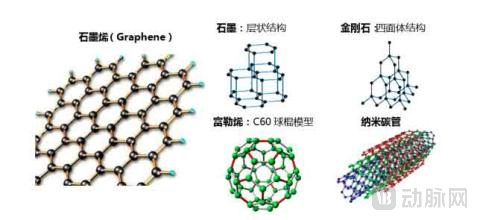
Based on this, the team has developed innovative solutions driven by the translational applications of fullerene materials. As the third carbon allotrope discovered after diamond and graphite, fullerene’s unique cage-like structure endows it with photosensitive properties. Under visible light excitation, surface electrons in fullerene can modulate the activity of oxygen molecules, thereby enabling intelligent switching of material viscosity.

This technical approach effectively circumvents the potential harm to humans and equipment associated with traditional UV-based adhesion modulation, thereby establishing dual clinical advantages: the dressing’s adhesiveness is maintained by an opaque film shield, and upon removal of the film, brief visible light exposure enables atraumatic detachment, ensuring thorough and clean dressing removal. Furthermore, formulation adjustments allow this technology to be adapted to various wound types, demonstrating potential for extended applications in both conventional medical settings and the medical aesthetics sector. Additionally, in the realm of high-end manufacturing, the gentle visible light-mediated adhesion modulation offers superior protection for equipment lifespan and improves product yield compared to intense UV irradiation.

This innovative technology is backed by a robust international team. Led by Dr. Deng Xiao, who holds a bachelor’s degree from Wuhan University and a Ph.D. from the University of Pittsburgh, the team leverages dual R&D systems in China and the United States. His technological innovations have generated hundreds of millions of dollars in profit for U.S. companies. The team comprises cross-disciplinary experts, including Professor Charles Hoyle, an international expert in medical antioxidants; Dr. Wang Shijun, a specialist in new materials; and Ye Jianming, a healthcare industry expert. It also includes market operations specialists such as Xu Yanan, former Sales Director for GE Healthcare in China, forming a comprehensive capability matrix that spans from basic research to commercialization.
The project’s development plan is clear and controllable, adhering to a phased advancement strategy. In the short term, the team will focus on obtaining medical device registration certifications and national defense supplier qualifications, achieving vertical integration of the industrial chain through the construction of production bases. In the medium term, the team will concentrate on capacity expansion and product line diversification, while simultaneously initiating international certification applications to lay the foundation for joint-stock reform and the introduction of strategic investors. The long-term goal is to secure a leading position in the niche market within five years, strive for a successful listing on the ChiNext or SME Board, establish itself as a leading enterprise in the domestic high-end dressing sector, and build brand recognition in the international market.
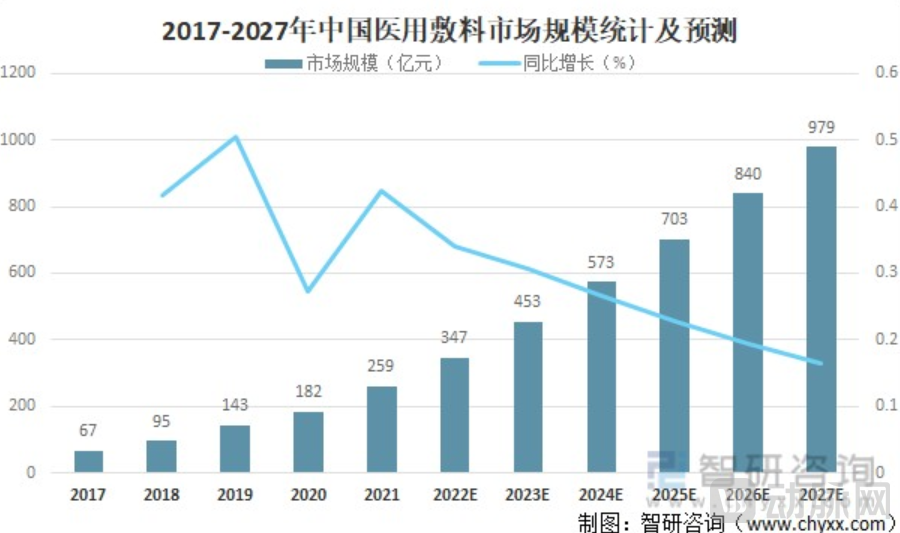
Notably, this innovative project boasts broad market prospects. Data indicate that, driven by rapid national economic growth, the deepening of new healthcare reforms, and expanded health insurance coverage, the medical dressing market—characterized by inelastic demand—has continued to experience robust growth. Under policy incentives, low-end dressings have been incorporated into bundled surgical payment schemes, which has objectively accelerated the shift in procurement preferences among healthcare institutions toward high-end functional dressings.
Although traditional cotton dressings still dominate the market, the high-end dressing segment is emerging as a primary growth driver for the industry amid accelerating transformation and upgrading. In addition to addressing clinical pain points, the project’s visible light modulation technology can be extended to the field of precision equipment manufacturing, creating a multi-dimensional value growth curve.
At the instant fullerene molecules activate ion activity under visible light, the hemostatic material achieves an intelligent transition from rigid adhesion to flexible dissociation—this is not only a sophisticated breakthrough in materials science but also a precise integration of technology and clinical needs at the molecular level. What we observe is not merely a significant improvement in trauma care efficiency, but also a paradigmatic example of extending basic research into deep industrial application.
Amid the accelerating wave of domestic substitution for high-end medical devices, technological leadership must form an “iron triangle” of support together with clinical value and cost control. As the photosensitive properties of the project team’s hemostatic dressings extend into the blue ocean of precision manufacturing and regenerative medicine, the key to the next round of technological iteration may well lie within the quantum transitions of these carbon-cage structures.
2025 Conference on High-Quality Development of the Digital Dentistry Industry & Finals of the 1st Digital Dentistry Innovation Challenge
Fruitful Outcomes from Innovative Competitions
The 25 finalist projects cover the entire workflow of dental diagnosis and treatment, including innovations in both hardware and software such as periodontal equipment, 3D printing materials, and orthodontic visualization systems, showcasing future industry trends.
Nearly 30 industry leaders, including Happy Dentistry, Taikang Bybo, and Shandong Mair Medical, participated in the event, focusing on the deep integration of technologies such as artificial intelligence, 3D printing, and big data with dental diagnosis and treatment, and exploring pathways for the transformation and upgrading toward precise, intelligent, and personalized healthcare.
Release of the “Asia-Pacific Digital Dental Innovation Hub” Plan, Signing of Sci-Tech Innovation Projects, and Establishment Ceremony of the Innovation Alliance to Promote the Synergistic Development of the Industrial Chain, Innovation Chain, and Talent Chain.

March 30-31, Rizhao, China
Scan the QR Code to Register