

30-Year-Old Anti-Hair Loss Drug Becomes Billion-Dollar Hit by Tapping Into Youth Anxiety

Sunshine Mandi Pharmaceutical
Pharmaceutical R&D, Manufacturing, and Sales Companies
Young People’s Hair Loss Anxiety Is Breeding a Massive Market.
Although minoxidil was approved for marketing in the United States in 1997 to treat male pattern hair loss, it is the growing anxiety over hair loss among younger populations in recent years that has truly propelled this longstanding medication into the spotlight. While young people jokingly remark online, “I’ve gone bald, but I’ve also grown stronger,” they are simultaneously seeking medical consultations and treatments far and wide. The demographic structure of the target audience in the anti-hair-loss and hair-regrowth personal care sector is undergoing subtle yet significant changes. Coupled with the rise of out-of-hospital channels such as e-commerce in recent years, these factors have enabled minoxidil, an established drug, to spark new momentum through emerging market pathways.
Taking Mandi, a brand deeply rooted in minoxidil, as an example, its sales have climbed steadily since the product upgrade in 2018, achieving sales revenue of RMB 1.124 billion in 2023 and officially entering the ranks of blockbuster products with annual sales exceeding RMB 1 billion. The company’s name was also changed from Zhejiang Wansheng to Zhejiang Sansheng Mandi Pharmaceutical Co., Ltd. The hair and dermatology sector has become one of the four pillar business areas of its parent company, 3SBio Inc.
On the other hand, according to data from the National Health Commission, the number of people suffering from hair loss in China exceeded 250 million in 2022, with individuals born in the 1990s and 1995–1999 accounting for nearly 40%. Currently, the market penetration rates of major brands remain relatively low, indicating substantial room for growth. Frost & Sullivan predicts that the size of China’s hair loss market will reach RMB 41.2 billion in 2026, with a compound annual growth rate (CAGR) of nearly 12%.
In other words, whoever captures the young demographic can dominate this vast market.
A Legacy Drug, Nearly 30 Years Post-Launch, Still Maintains Double-Digit Growth!
According to the annual report data of 3SBio, the sales revenue of its Mandi brand products reached RMB 1.124 billion in 2023, representing a year-on-year increase of 25.8%, and accounting for approximately 6% of the domestic market share based on statistics from the Chinese Pharmaceutical Association. In the first half of 2024, the sales revenue of its products further increased to RMB 550 million, a year-on-year growth of approximately 10%.
Zhendong Pharmaceutical, another company deeply entrenched in the hair loss prevention and regrowth sector, saw its minoxidil product, Dafeixin, achieve rapid expansion with a compound annual growth rate (CAGR) of 59% from 2019 to 2022. By 2023, sales revenue reached RMB 534 million. According to data from Zhongkang, the product continued to lead the hair regrowth category in Q1 2024, with a year-on-year increase of 19.6%.
Notably, during the 2024 Double 11 shopping festival, Wansheng Pharmaceutical’s Mandi minoxidil products topped the sales charts on major e-commerce platforms including Tmall, JD.com, and Douyin. Furthermore, in previous years’ Double 11 promotions, minoxidil-based products consistently ranked among the top sellers.
It is truly hard to imagine that a drug on the market for over 30 years could perform so well. Even more noteworthy is the fact that numerous manufacturers continue to flock into this space.
In March 2025, Organon China’s over-the-counter hair loss treatment, Baofasheng® Minoxidil Liniment, made its debut on the Alibaba Health Pharmacy.
In March 2025, Mandi officially launched the “Mandi Anti-Hair Loss and Hair-Strengthening Shampoo” containing “Unodil.” Unodil is structurally very similar to minoxidil.
In late February 2025, Fuyuan Pharmaceutical issued an announcement stating that its wholly-owned subsidiary, Fuyuan Pharmaceutical Co., Ltd., had received the Drug Registration Certificate for Minoxidil Liniment from the National Medical Products Administration (NMPA). The product is indicated for the treatment of androgenetic alopecia and alopecia areata.
In November 2024, Conba announced that its wholly-owned subsidiary, Hangzhou Conba Pharmaceutical Co., Ltd., had received the Drug Registration Certificates for Minoxidil Liniment in strengths of 5% and 2%, approved and issued by the National Medical Products Administration.
On July 29, 2024, Lunan Pharmaceutical announced that its product Minoxidil Liniment (brand name: Huifa) had been approved for market launch as a Class A over-the-counter drug for the treatment of hair loss and alopecia areata.
Furthermore, a quick search on e-commerce platforms reveals products from imported brands such as Rogaine (the original research drug under Johnson & Johnson in the US), Kirkland Signature from the US, Bailleul’s “Little White Tube” from France, and Bayer’s Kangwang.
The participation of numerous companies indicates that this category has sufficient market prospects. According to data from Menet, in 2023, the sales of minoxidil liniment alone in China’s “three major terminals and six major markets” reached RMB 688 million. Among this, sales in urban public hospitals and county-level public hospitals amounted to only RMB 57.92 million, while sales in urban community health centers and township health centers were RMB 220,000. The remaining RMB 630 million was generated through physical pharmacies in cities and online channels.
It is evident that the primary sales market for minoxidil-based products is not within hospitals, but rather in the emerging out-of-hospital market. To capitalize on this growth opportunity, companies must implement precise operational strategies and secure target customers through this new channel.
Accompanying customers to alleviate their anxiety over hair loss is the key to the success of this business.
Contrary to intuitive assumptions, the primary demographic affected by hair loss is not the elderly but young people. For this increasingly younger customer base, how to precisely reach them through out-of-hospital channels and thereby drive consumption is a challenge faced by every brand in the industry.
Young consumers are characterized by a blend of emotional appeals and rational criteria.
Hair Loss Is “Invading” the Under-30 Demographic: According to CBNData, Post-95s Have Become the Primary Group Plagued by Hair Loss, Surpassing Other Age Brackets. Anxiety Over Thinning Hair Is No Longer Exclusive to Middle-Aged and Older Adults; Instead, It Has Emerged as a Top Concern for Young People.
Especially in first- and second-tier cities, where life moves at a fast pace, the gradual thinning and widening of hair partings, along with receding hairlines, have become the “last straw” that crushes young people’s social confidence. Beyond its physiological impact, hair loss also exerts multifaceted psychological effects. According to a survey by CBNData, over 60% of consumers lack confidence in their appearance due to hair loss, leading to emotional distress and anxiety, and even hindering work performance.
In such circumstances, seeking solutions for hair loss prevention and regrowth has become an emotional appeal among the younger demographic.
Meanwhile, their higher level of education makes this group less susceptible to being swayed by blunt and aggressive advertising “bombardment.” They are more receptive to the concept of pharmacological treatment and more likely to be persuaded by active pharmaceutical ingredients backed by scientific evidence. Therefore, building awareness of hair loss prevention and regrowth, along with establishing initial trust in minoxidil among the target audience, has become a top priority for manufacturers.
Step 1: Further segment the target customer base.
According to survey data from the National Health Commission, women account for 35% of the hair loss population in China, with over 60% of female patients experiencing widening and thinning of the hair part. Furthermore, Alibaba’s consumer insights also indicate that women are driving faster growth in the minoxidil market.
Furthermore, there are significant differences in the primary application areas of minoxidil-based products between male and female consumers. Women typically experience milder hair loss symptoms and mainly apply the product to small areas such as the temples and hair partings. In contrast, men tend to apply it to larger areas on the crown, such as the M-shaped receding hairline. This suggests that while the clinical model of prescribing treatment based strictly on “symptoms” works in hospital settings, the consumer market for hair loss prevention and regrowth may require an additional logic of tailoring solutions to the “individual” to be effective.
Step 2: Clarify outreach channels through audience profiling.
Although minoxidil-based products, as star offerings in this category, have attracted consumer attention across multiple channels, the avenues through which consumers of different genders acquire relevant knowledge and build awareness differ significantly beyond traditional social media. For instance, female consumers place greater trust in recommendations from professionals; science-based content endorsed by medical experts on emerging social media platforms such as Xiaohongshu (Little Red Book) and Douyin (TikTok), as well as on science-popularization platforms like Zhihu, serve as important sources of information for them.
Male consumers tend to rely on relatively traditional information channels, such as official account push notifications, e-commerce platform recommendations, and promotions on video platforms. These differences have also led to shifts in purchasing channels: traditional hospitals and pharmacies are the preferred choice for older age groups, while younger consumers are more inclined toward social content-driven e-commerce channels.
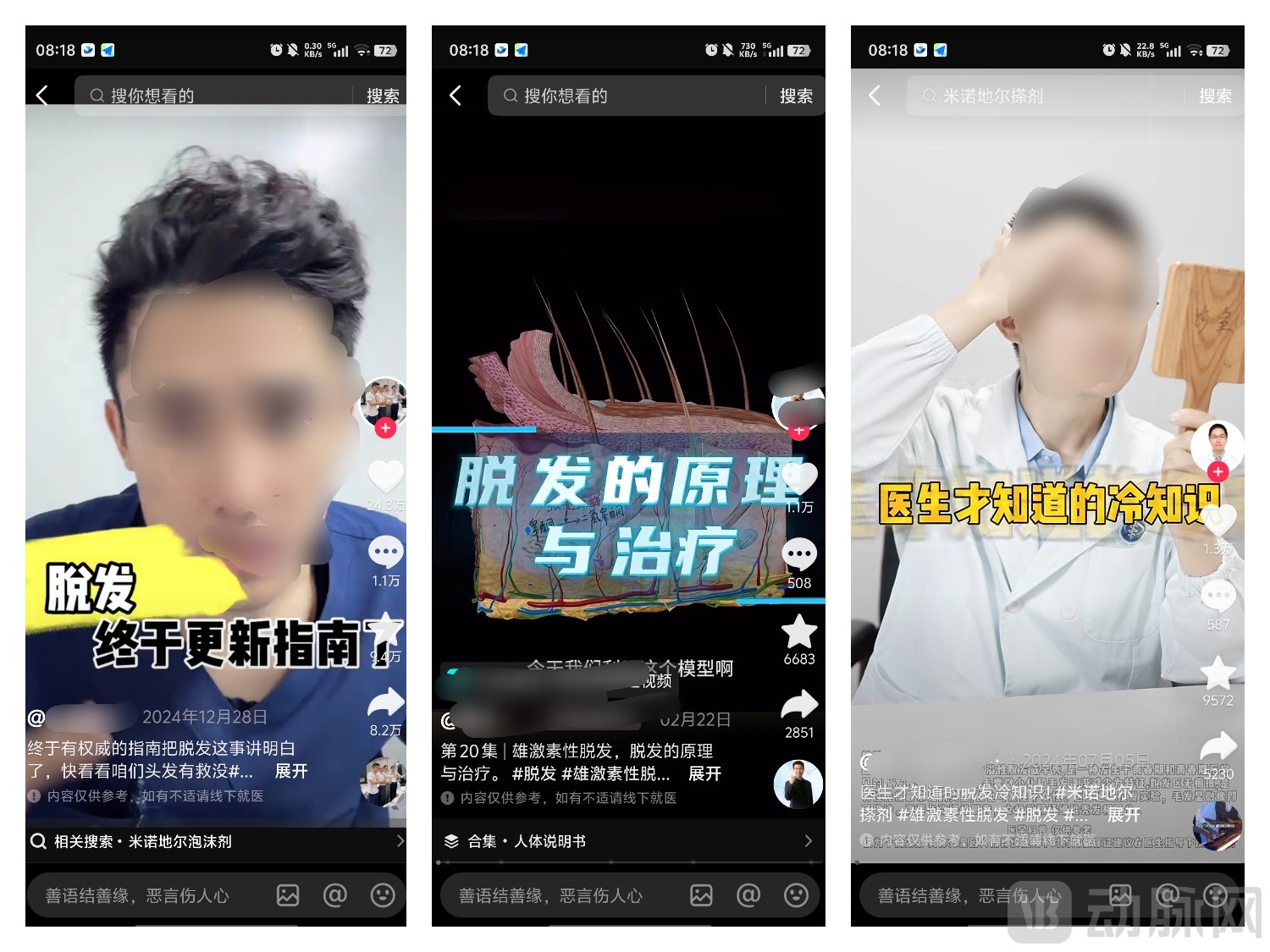
KOL Provides Popular Science Education on Hair Loss Treatment; Image Source: Douyin Screenshot
Step 3: Establish awareness through science popularization and gradually build trust.
Minoxidil, as a medication that has been on the market for many years, has had its efficacy and safety validated over time. Meanwhile, its OTC (over-the-counter) status reduces barriers to promotion, enabling key opinion leaders (KOLs) and influencer physicians to more easily advocate for its use. This shifts the focus of discussion from whether it can be purchased to how it should be used.
Once initial trust is established between the product and consumers, the relationship between both parties can be further strengthened. In this process, a brand’s digital and intelligent marketing capabilities in emerging channels serve as a critical lever for realizing value.
To Build Stronger Ties with Young Consumers, Post-90s Pharmaceutical Companies Are Going All Out.
Zhendong Pharmaceutical, established in the 1990s, has made numerous attempts at precision marketing to ensure its brand Dafexin is embraced by consumers born in the 1990s, mid-to-late 1990s, and even the 2000s. For instance, it launched the “Save Your Hairline” challenge on Douyin (the Chinese version of TikTok), leveraging catchy, addictive music and creative interactive formats, along with promotion by key opinion leaders (KOLs). This initiative not only attracted substantial participation from target customer groups but also achieved widespread dissemination, generating billions of topic impressions. Furthermore, the company customized a special edition titled “Health Weekly: A Guide to Salvaging Your Hair Volume” for Douyin Toutiao, which was simultaneously published by hundreds of influencer doctors. This effort helped shape the brand’s professional image and garnered significant attention.
On Xiaohongshu, leveraging influencer-driven word-of-mouth marketing through campaigns such as “Treasure Ingredients in China,” the brand spurred 25,000 user-generated posts, generating widespread impact and establishing Dafeixin as a top-selling product in the hair loss prevention category on the platform.
Not only that, Dafeixin deeply understands the approach of growing alongside its consumers. When podcasting first emerged, Dafeixin curated extensive content on platforms such as the Ximalaya app and sustained these efforts for several years. Focusing on deep market penetration, the brand leverages every consumer touchpoint to build awareness around hair loss prevention associated with its brand, thereby driving conversion.
On the other hand, to further strengthen its brand image, Dafeixin has partnered with platform providers such as JD Health. By releasing industry white papers and other initiatives, it conducts in-depth analyses of the development of the hair loss prevention and regrowth market and the consumer demographics for topical hair regrowth products, thereby gaining insights into consumption trends within this category and embedding itself deeply in consumers’ minds. Furthermore, through exposure across channels such as television, high-speed rail, and Focus Media, the brand ensures direct visibility among its core consumer base in scenarios including urban transportation networks, residential communities, and office buildings.
3SBio, also established in the 1990s, has spared no effort through its Mandi brand in “building friendships” with young consumers. Since 2021, Mandi has assembled a live-streaming team, maintaining a multi-platform live-broadcast schedule of approximately 12 hours per day. Through real-time interaction with consumers, Mandi has not only provided more convenient access to its products but also delivered companion-style post-purchase services. For instance, the customer service team conducts high-frequency follow-ups, subtly guiding consumers toward adhering to full treatment courses. This approach has yielded satisfactory therapeutic outcomes while driving sustained product sales and building brand trust.
Furthermore, Mandi has partnered with the JD Health platform to gain deep insights into the consumption demands of younger user groups. Leveraging the characteristics of JD Health’s user base—namely, a high proportion of male users and strong purchasing power—the company has positioned the Mandi Minoxidil Tincture 3-Month Course Pack (90ml × 2) as a flagship “blockbuster” product, implementing precision marketing both on and off the platform. Centered around the core theme of “Making Hair Regrowth Easier for Chinese People,” Mandi drives product discovery through topics and short-form videos on platforms such as Douyin and Xiaohongshu. By leveraging influencer reviews, ranking lists, and word-of-mouth marketing, the brand effectively captures external traffic and boosts user conversion.
Meanwhile, in alignment with the product lifecycle stages—“incubation, seeding, nurturing, conversion, and empowerment”—targeted user operation and management strategies are implemented at each phase to continuously improve user conversion and retention rates. By leveraging JD Health’s medical and healthcare service capabilities, professional health education expertise, and comprehensive health resource matrix, we further deepen users’ brand awareness, establish trust-based loyalty, and thereby achieve comprehensive growth in product sales.
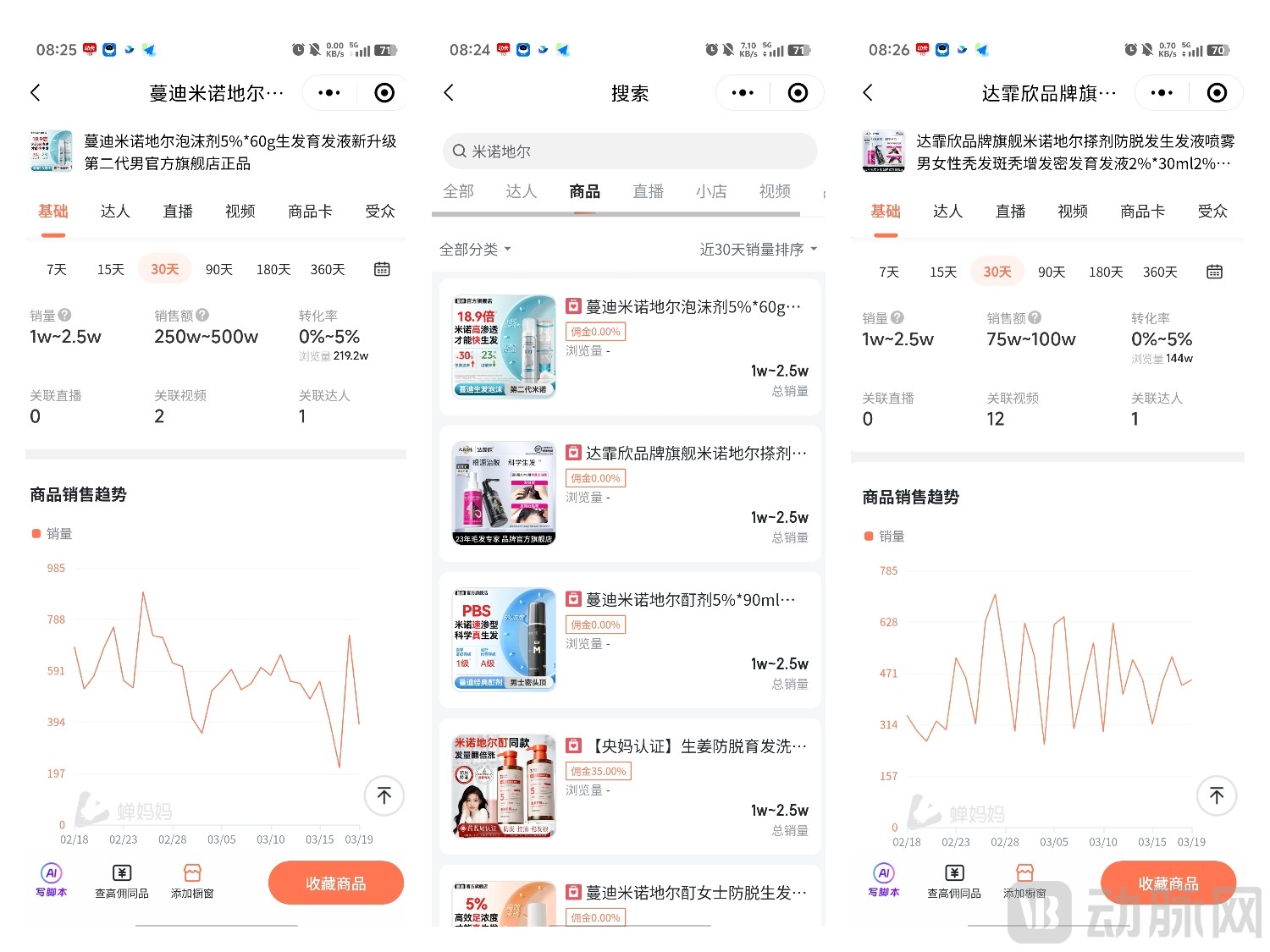
Minoxidil Product Sales on Douyin, Source: Chanmama
It is precisely due to investments in digital marketing through these emerging channels that minoxidil products have experienced explosive growth. Taking data from the Douyin Mall, as compiled by third-party data platforms, as an example, it is evident that products under leading brands have achieved robust sales figures. Using Mandi as a case study, its minoxidil products on the official Douyin Mall consistently maintain average monthly sales exceeding 25,000 units. Furthermore, it is worth noting that sales conversions driven by video content are also on the rise; for instance, in February, 12 videos generated nearly 500,000 in sales conversions. Overall, even when examining sales data over an annual cycle, the trend reveals a relatively stable sales curve. This indicates that brands’ efforts in cultivating these emerging channels are beginning to yield tangible results.
As announced by 3SBio, during the 2024 Double 11 promotional campaign, the Mandi brand topped the cumulative paid gross merchandise value (GMV) rankings for OTC brands on Tmall, the paid GMV rankings for individual OTC products on JD Pharmacy, and the paid GMV rankings for pharmaceutical and health brands on Douyin Mall.
Certainly, in addition to channel integration, product alignment is also crucial; it is the combination of suitable products and strong channel execution that creates a blockbuster hit.
In addition to channel-side efforts, the product side has also made significant strides in integrating with younger demographics.
Taking Mandi as an example, although it launched its minoxidil solution as early as 2001, becoming the first minoxidil product marketed in China, it did not truly unlock market potential until 2018, when it introduced a formulation with PBS patent technology that addressed the issue of traditional minoxidil’s susceptibility to inactivation at room temperature. Subsequently, in 2024, Mandi officially launched Mandi Foam, the first minoxidil foam formulation approved for marketing in China. Its propylene glycol-free formula reduces skin irritation, further enhancing the user experience.
The launch of the foam formulation has also enabled Mandi to evolve from merely preventing hair loss and promoting regrowth to focusing on consumers’ scalp health care. Subsequently, Mandi introduced a product combination of minoxidil foam and selenium sulfide shampoo, providing consumers with a healthy scalp environment conducive to hair growth.
By 2025, Mandi officially launched an anti-hair loss and hair-strengthening shampoo containing "Unoxidil," providing consumers concerned about scalp health with a safe and multi-effective hair care experience. Unoxidil is structurally very similar to Minoxidil but has a smaller molecular weight, allowing for its safe and efficient use in daily chemical products.
Since then, Mandi has established a product portfolio comprising minoxidil tincture, foam formulations, multi-dose packaging, selenium sulfide shampoo, anti-hair loss daily care products, and medication-assistive devices.
Dafeixin, on the other hand, adopts a gender-specific treatment approach, launching a 5% concentration formula for men and a 2% concentration formula for women. Subsequently, the brand leveraged its minoxidil liniment as an entry point to provide contracted services, matching consumers with corresponding physician consultation and treatment services at different stages of hair regrowth. It also expanded its product portfolio into five categories: shampoo and hair care, oral supplements for hair health, diagnosis, treatment, and massage.
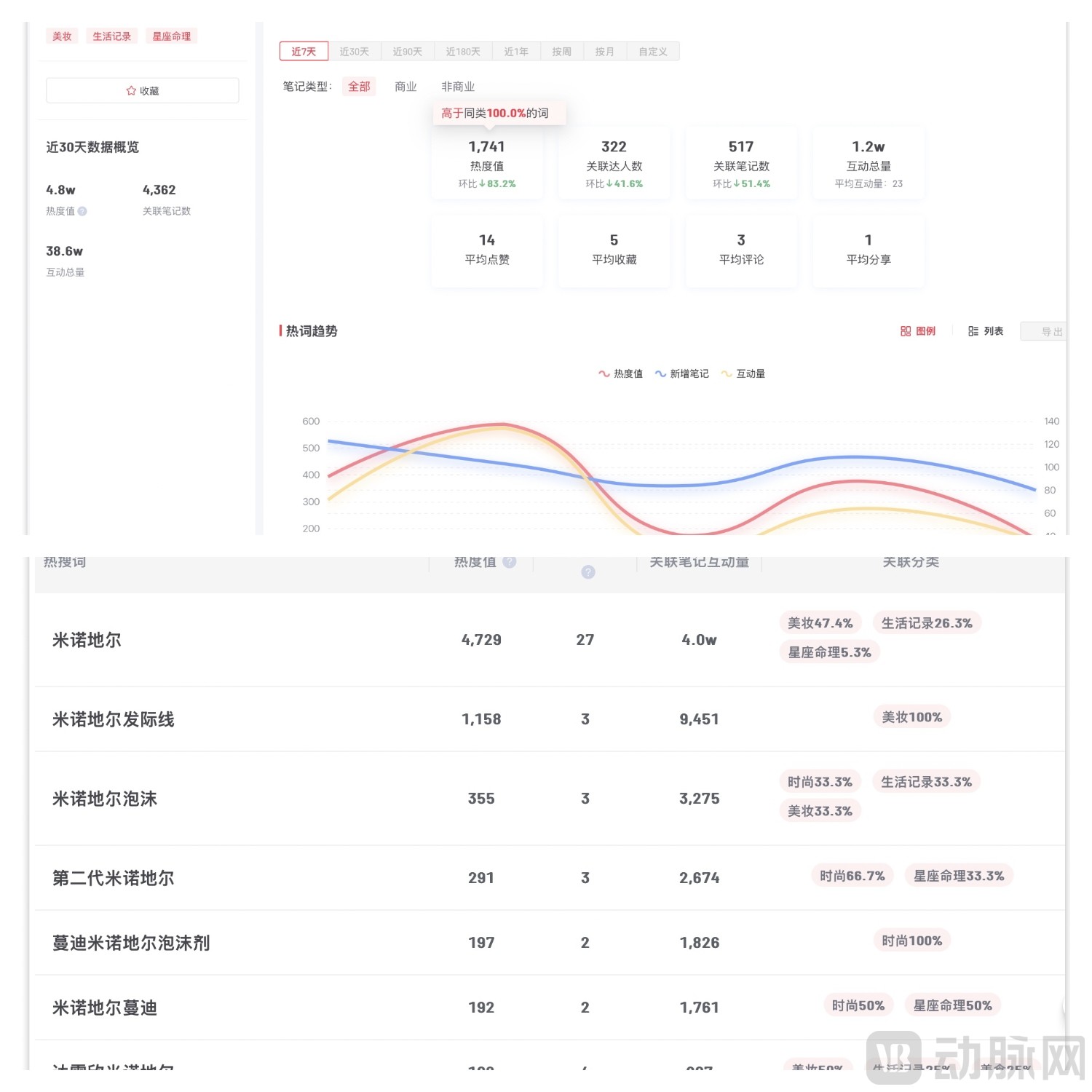
Minoxidil Discussion Index on Xiaohongshu, Source: Huitun Data
Taking minoxidil as a keyword example, over 300 influencers were associated with it on Xiaohongshu in the past seven days, generating more than 500 posts and surpassing 10,000 interactions. Extending the timeframe to the past month, the number of related posts exceeded 4,300, with total interactions nearing 400,000. Through continuous awareness education, the target audience has not only shed any sense of stigma but also adopted a positive attitude toward their condition, engaging with others facing similar challenges through sharing, thereby establishing a positive feedback loop. Even a pharmaceutical term like minoxidil has become integrated into the daily lives of young consumers, thanks to the brand’s meticulous cultivation.
It is evident that leading brands have integrated products and services to cater to the younger generation’s pursuit of physical appearance, successfully extending the specialized niche of hair loss prevention and regrowth into the broader lifestyle domain. Analysis from third-party data platforms also reveals that contextual associations with minoxidil tend to revolve around keywords such as beauty, lifestyle documentation, and fashion. On Xiaohongshu (Little Red Book), shared content has gradually shifted from merely documenting the therapeutic act of treating hair loss to normalizing appearance management as part of everyday life.
The shift from clinical treatment settings to everyday life scenarios also signifies a subtle transformation in product attributes. For a product that can accompany consumers over the long term, even if it is an established medication that has been on the market for more than 30 years, its vitality and commercial prospects remain immeasurable.