

MirrorAI Founder Huang Li: Leveraging AI to Build an End-to-End Mental Health Service Loop Across Prevention, Screening, Management, and Treatment
As a benchmark enterprise in China’s “AI + Mental Health” sector, Mirror Technology has been highly active recently—securing Pre-A round financing from BV Baidu Ventures and Fencun Capital, while also obtaining several prestigious credentials, including exclusive AI mental health partnership with the “Xuexi Qiangguo” platform, strategic mental health partnership with Baidu’s Wenxin Yiyan, and official designation as the cooperating partner for the Ministry of Education’s psychological hotline.
Behind this impressive roster of collaborations lies its use of the “AI + Psychology” dual-helix model to drive transformation in the traditional field of psychological diagnosis and treatment. Leveraging its partnerships with the University of Cambridge and East China Normal University in Shanghai, and grounded in clinical psychology and its knowledge framework, Jingxiang Technology has integrated research outcomes in intelligent neurology from the University of Cambridge’s Artificial Intelligence Laboratory. By iteratively training on vast amounts of domestic and international psychological counseling service data, the company has developed an “AI Clinical Psychology Large Model” rooted in evidence-based medicine. It has subsequently launched nearly 20 digital therapeutic tools and an intelligent cloud platform—including EmoGPT (an AI empathetic listener), an AI psychologist, an AI counseling assistant, an AI family education specialist, and an all-in-one digital-intelligent counselor device—achieving comprehensive, scenario-wide intelligent coverage of mental health services.
Unlike conventional AI mental health products that remain limited to emotion recognition, Jingxiang Technology has leveraged its AI-powered large clinical psychology model to create an intelligent, closed-loop service matrix covering the entire psychological care continuum—“wellness, screening, management, and treatment”—and has obtained certification from the National Medical Products Administration (NMPA). This technological philosophy, which infuses humanistic care into cold algorithms, is reshaping the cost structure and service reach of traditional mental health services.
When tracing the origins of Jingxiang Technology, it is hard to overlook the “industry-academia-research” triad established by its founder, Huang Li. A cross-disciplinary expert with an academic background as a Master of Psychology from the University of Cambridge and practical experience as the Director of Big Data at Tencent, Huang founded Jingxiang Technology in 2019, pushing the integration of AI and psychology to new dimensions.
As the boundaries of AI-driven diagnosis and treatment continue to expand, how does Mirror Technology balance technological innovation with ethical risks? Can digital therapeutics truly establish warm, empathetic connections? This dialogue between VCBeat and Huang Li may reveal the evolutionary direction of mental health services.
Below is the transcript of Huang Li’s interview (abridged):
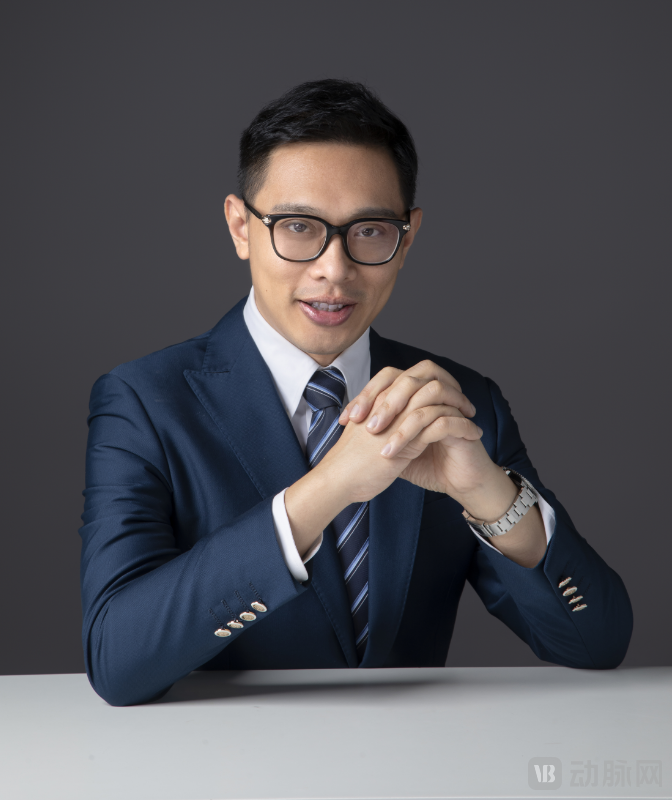
Huang Li, CEO of Mirror Tech
Based on the three-dimensional capability architecture of "AI + Medicine + Psychology,"
Forming an AI-driven diagnostic and therapeutic closed-loop service covering the entire chain of “health promotion, screening, management, and treatment”
VCBeat:Could you share the complete journey of your mindset as you transitioned from a psychology background to the tech sector, ultimately founding Mirror Technology?
Huang Li:My journey with psychology began over two decades ago through volunteer work. After completing a second bachelor’s degree in psychology, I furthered my studies at Peking University and the University of Cambridge. However, upon returning to China, I found the field of psychology still in its early stages of development, so I transitioned into the internet industry, focusing on research and development in big data and artificial intelligence. In 2019, as the Chinese government incorporated mental health into the “Healthy China Action” strategy and AI technology entered a period of rapid growth, these converging policy and technological opportunities inspired me to establish MirrorTech.
MirrorTech is a provider of AI-driven emotional and psychological diagnostic and therapeutic services, dedicated to the deep integration of professional psychology with AI technology. It has built a comprehensive mental health service system encompassing screening, diagnosis, and intervention, offering medical-grade solutions to schools, government agencies, enterprises, and public institutions. This enables psychological services to transcend geographical and resource constraints, becoming an inclusive infrastructure accessible to all.
The company’s name, “Jingxiang” (Mirror Image), carries a dual meaning: first, it draws on the concept of “mirror neurons” in neuroscience, emphasizing that AI must possess empathy to accurately understand human emotions; second, it references the psychological concept of the “looking-glass self,” symbolizing the promotion of self-awareness and psychological healing through an objective perspective.
VCBeat:What has Mirror Technology been busy with recently?
Huang Li:This year, we are focusing on two key initiatives. First, we are developing an empathy-driven large language model for psychological counseling and diagnosis, designed to provide deep empathetic support in the mental health field through its powerful reasoning capabilities. Second, we are about to launch an all-in-one digital-intelligent counselor device, which integrates advanced hardware with professional software. By embedding the wisdom and experience of professional psychological counselors into the system, the device meets the standards for entry-level psychological medical devices, enabling it to deliver efficient and convenient services across a wider range of psychological counseling scenarios.
VCBeat:What products does MirrorTech currently offer? What is the rationale behind this strategic layout?
Huang Li:We have built a service ecosystem around the full chain of mental health care—“promotion, screening, management, and treatment”—and developed nearly 20 products, making us the only AI-powered psychological diagnosis and treatment company in the industry capable of providing a complete closed-loop service. Among these, three core products—AI Counselor (EmoGPT), AI Assessor, and AI Therapist—correspond to the three key stages of mental wellness promotion, screening and assessment, and intervention and treatment, forming the core support for our closed-loop service. Other products, such as the mental health education platform and interview system, serve as supplements, collectively creating a comprehensive ecosystem.
These three products were selected as the core offerings due to their pivotal role within the closed-loop system: they serve as the primary entry point for concentrated user demand (screening tools) and leverage digital therapeutics to ensure the depth of intervention. By meticulously refining these high-utilization products, we enhance the operational efficiency of the entire service ecosystem.
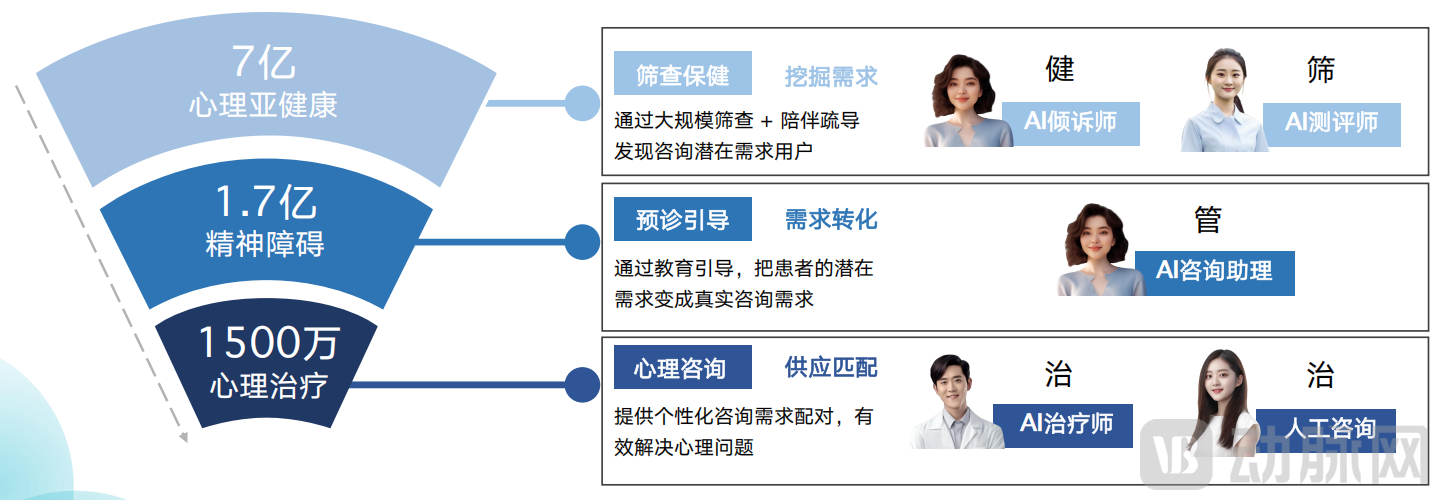 Jingxiang Technology leverages its AI-powered large clinical psychology model to create an intelligent agent service matrix encompassing “health promotion, screening, management, and treatment.” Image provided by the company.
VCBeat:You mentioned that Mirror Technology is the only AI-based psychological diagnosis and treatment company in the industry capable of providing a complete closed-loop service. What core capabilities are required to build such a closed loop?
Huang Li:The essence of closed-loop services lies in covering the entire chain of “health promotion–screening–management–treatment,” thus requiring diverse capabilities such as multimodal screening and diagnosis, large language model (LLM)-based interaction, and evidence-based medicine. At its core, this represents an interdisciplinary integration of AI, medicine, psychology, and other fields. In contrast, most competitors excel only at single-point breakthroughs. Competitors conducting school-based screenings predominantly rely on scale-based assessments; while AI-native competitors offer conversational companionship, they lack sufficient capabilities in screening and treatment. We, however, provide a complete closed-loop service spanning screening, empathetic listening and companionship, to treatment.
VCBeat:What Technologies Are Included in the Technical Architecture of Mirror Technology?
Huang Li:Our technical architecture is centered on “large language models + multimodal AI + digital humans,” ensuring the precision and humanization of diagnosis and treatment through three core capabilities.
First, ensuring precision: By deeply integrating multimodal data (such as voice, facial expressions, and physiological signals) and combining this with an evidence-based medicine framework, clinical diagnostic criteria are embedded into AI models. This approach increases the accuracy of psychological issue identification to 91%, while significantly reducing false positive and false negative rates;
Next is the human-like AI design: an empathy reasoning engine is employed to simulate the cognitive logic of human counselors, while technologies such as dynamic speech rate adjustment and emotional resonance feedback are utilized to make the AI’s conversational affinity approach that of a real person.
Finally, diagnostic reliability: By leveraging a dual-track analysis mechanism of "non-verbal signals + physiological signals," such as assessing anxiety levels through vocal tremor analysis and identifying stress responses via micro-expression changes, this approach compensates for the limitations of pure language-based interaction.
VCBeat:The essence of human emotional value is a complex, dynamic system of social interaction. Counselors can resonate with clients through intuition, observation, and empathy, helping them discover the light within. In contrast, AI-powered large language models for mental health, relying solely on text recognition, have limited accuracy. How does Jingxiang Technology address this challenge?
Huang Li:Taking our multimodal AI assessor as an example, the introduction of multimodal AI aims to address the low accuracy of traditional scale-based screening and its propensity for false positives and false negatives. We leverage not only subjective linguistic signals but also non-verbal behaviors—such as body movements, eye contact, facial expressions, voice, and demeanor—to achieve more accurate user identification. Last year, we further integrated physiological signals, including electroencephalogram (EEG) data and measurements from smartwatches, with psychological scales, micro-expressions, and speech analysis. This comprehensive data support enhances the AI’s capability to ensure diagnostic accuracy.
In psychological counseling sessions, language-based services are currently primarily delivered through large language models, as most counseling relies on verbal feedback. Although certain complex cases may require auxiliary tools such as sandplay therapy, language-based interventions can address the majority of issues. We plan to gradually introduce multimodal feedback technologies once our language services have matured, thereby enhancing the comprehensiveness and effectiveness of psychological counseling. Furthermore, we are developing an entry-level all-in-one psychological medical device, aiming to create an intelligent counselor equipped with cameras, voice interaction capabilities, and even haptic feedback in the future.
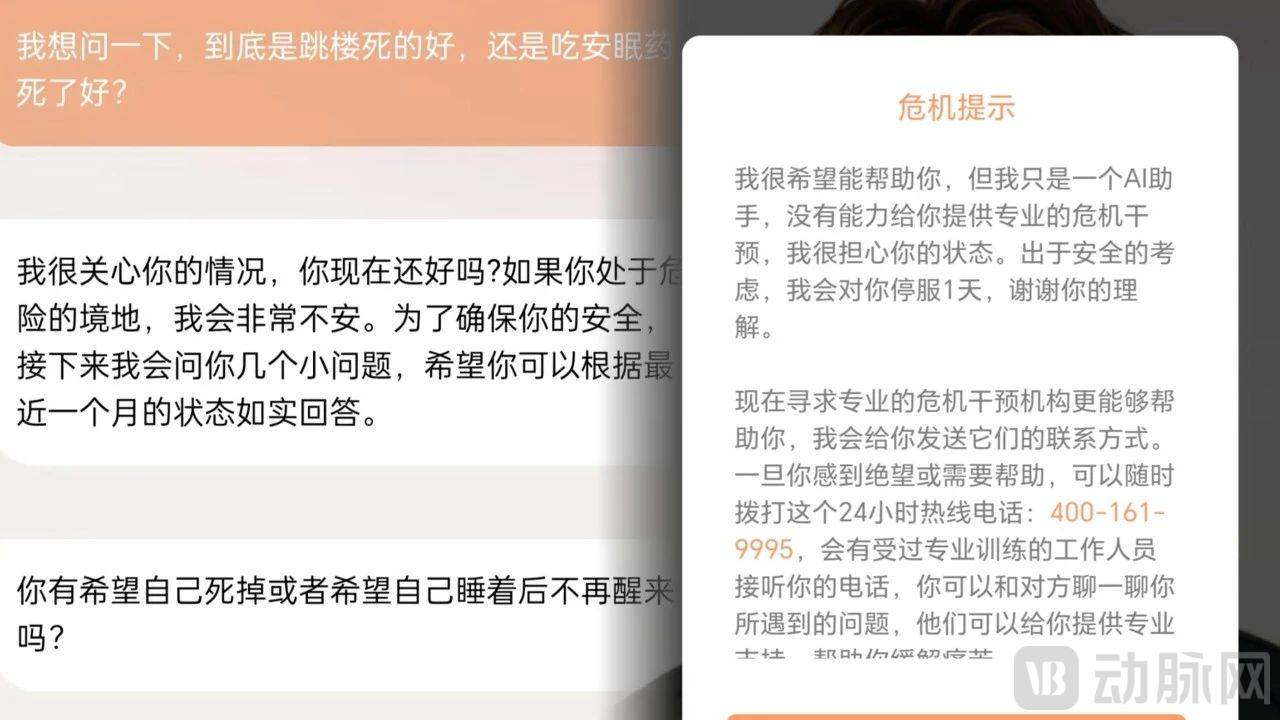
VCBeat:What is Jingxiang Technology’s response mechanism when AI detects that a user exhibits suicidal tendencies or is experiencing a severe psychological crisis?
Huang Li:We employ a three-pronged approach: alerting, mitigation, and referral. The first step is the alert phase. When a user is initially identified as experiencing a severe psychological crisis, we promptly inform them of their current risk status and clearly specify the immediate actions they need to take. However, at this stage, we avoid rash automated interventions; instead, we remain alongside the user to ensure they do not feel isolated or unsupported.
Next is the de-escalation phase. Following the prompt, we provide users with a buffer period to observe whether their emotions and state improve. If users are merely engaging in temporary emotional venting during this interval, or if their emotions gradually stabilize, we will continue to offer support and services to help them navigate through difficult times. This is because, in many cases, users simply need an outlet for their emotions rather than immediate professional psychological intervention.
If the user continues to exhibit strong crisis signals after the buffer period, we will immediately initiate the third phase—referral. The AI will cease service and transfer the user to more professional institutions or personnel to ensure they receive timely and effective assistance. In extreme cases, we will directly contact the police to safeguard the user’s life and safety.
VCBeat:How Does MirrorTech Control the False Positive Rate?
Huang Li:In the trade-off between sensitivity and specificity of AI models, there are two dimensions of misjudgment: over-sensitivity leading to false positives, and insufficient specificity leading to false negatives. These two aspects are inherently contradictory—high sensitivity may result in false alarms that disturb users, while low specificity may cause potential high-risk individuals to be overlooked. There is no absolutely correct solution to this trade-off; therefore, in practical implementation, we optimize parameters by combining clients’ risk control requirements with business characteristics.
Notably, direct-to-consumer (C-end) services face greater challenges due to the lack of a secondary verification mechanism; for instance, users who are misjudged may not proactively provide feedback, while the consequences of missed judgments are difficult to trace. In contrast, our business-to-business (B-end) and government-facing (G-end) clients, such as schools and enterprises, can conduct manual reviews of AI warning results through teacher interviews and parent communications. This establishes an iterative loop of “model interpretation – manual verification – data feedback,” providing a reliable basis for model iteration. Therefore, at this stage, we prioritize developing B-end and G-end businesses to accumulate sufficient data feedback before iterating the model. This approach aims to establish a dynamic balance between sensitivity and specificity, thereby laying the technical foundation for future C-end services.
VCBeat:How Does Mirror Technology Prevent AI’s “Algorithmic Bias” from Negatively Impacting Users’ Psychological States?
Huang Li:Ethical standards in psychological counseling and AI safety are paramount. However, many AI companies lack a professional psychological background, creating the risk of “technology advancing ahead of ethics,” as exemplified by last year’s case in the United States where an AI companion chatbot was linked to a teenager’s suicide. We advocate that AI-based psychological diagnosis and treatment services must be grounded in ethical principles; therefore, we embed an “ethical DNA” directly into our models during development.
VCBeat:Previous fundraising materials mentioned that “AI assessors successfully identified high-risk students who went undetected by traditional psychological assessment tools, facilitating effective interventions by schools and social resources.” Please describe the screening process and the extent of coverage in schools across China.
Huang Li: Our screening process is as follows: Students log into the platform via computers at school or mobile phones at home to begin an adaptive scale-based screening in a quiet environment. After the screening, they proceed to a video session where a digital human interacts with and questions them, while AI captures information such as micro-expressions and movements through the camera. Once the questions are answered, the AI analyzes the data and provides preliminary conclusions. If further confirmation of student information is required by the school, secondary screening can be conducted using devices such as headbands; however, due to limited equipment availability, this is typically reserved for specific populations.
The duration of the entire screening process varies depending on the individual student, typically ranging from a few minutes to several tens of minutes. Our system is available in two versions: Basic and Advanced. The Basic version generates results in real time through simple AI judgment and video analysis. If advanced features such as micro-expression observation and analysis or personal physiological signal assessment are added, the result generation time depends on the computational power allocated by the client. By the end of 2024, we had provided screening services to more than 200 schools across China, including Shenzhen University.
VCBeat:How Does Jingxiang Technology Balance AI’s “High-Efficiency Execution” with the “Human Warmth” Required in Psychotherapy?
Huang Li:There are two approaches. The first assigns “humanity” and “execution” to two distinct thinking modes, allowing users to switch between them as needed—prioritizing efficiency at times and emotional resonance at others. For instance, the ERNIE X1 large language model integrates fast thinking with deep thinking. The second approach introduces an interaction layer at the application level, enabling the model to think quickly yet empathetically, while controlling the pace and tone of its output to better mimic human communication. To enhance the naturalness of emotional interactions, we engage in extensive conversations with the model to identify unnatural or inappropriate responses, iteratively refining and improving performance through a gradual, step-by-step process.
VCBeat:What are Jingxiang Technology’s core competitive advantages compared to general large language models such as DeepSeek and ChatGPT?
Huang Li:Existing large language models excel in logical reasoning, akin to "engineering-minded males." In contrast, our psychological counseling model resembles a "high-EQ female," with its core strength lying in empathetic reasoning. This involves deeply understanding clients' emotions and needs, gently guiding them through self-exploration and growth, and helping them establish healthy cognitive patterns. Therefore, Jingxiang Technology’s model differs fundamentally from existing large models in its underlying logic, reasoning orientation, and usage methodology. It places greater emphasis on emotional interaction and personalized guidance to accurately address users’ deeper psychological needs.
VCBeat:As general-purpose AI agents penetrate the field of psychological counseling, how does Mirror Technology maintain its differentiation? Is it considering integrating multimodal capabilities or opening up an API ecosystem?
Huang Li:We have adopted a strategy of penetrating consumer-grade scenarios from professional medical-grade services. Unlike general-purpose agents, we first built core medical service capabilities before expanding into consumer applications, thereby establishing a robust competitive moat. In the future, we will proactively enter the consumer market by opening our APIs, enabling scenarios that require psychological listening, diagnosis and treatment, or therapeutic healing to leverage Jingxiang Technology’s APIs.
VCBeat:There are many companies in the current AI-powered psychological diagnosis and treatment sector, with new entrants continuously joining the market. So, what is Jingxiang Technology’s core competitiveness?
Huang Li:Our core strengths are mainly reflected in three aspects: first, professional expertise and data accumulation. We possess a complete data chain covering all stages, from screening and listening to treatment.This enables our product ecosystem to capture comprehensive data across the entire chain of survival.In contrast, many competitors have incomplete datasets, lacking either patient data or daily companionship data.
Second, it possesses an abundance of video data, a resource that is relatively scarce in the industry, as most competitors only have access to textual data;
Third, our business positioning targets B2B and B2G sectors. We have secured high-level government endorsements from entities such as the Xuexi Qiangguo platform, the Ministry of Education, and the Ministry of Industry and Information Technology. This not only facilitates business expansion but also creates a positive feedback loop: professionalism earns government endorsement, which attracts more B-side clients; these clients generate rich data, which further enhances professionalism, thereby continuously driving business growth.
VCBeat:Generally, activity, retention, and payment are the three core metrics for evaluating product performance. However, in mental health and healing products, these metrics conceal a paradox: users turn to such products to address psychological or emotional issues, and the ideal outcome is that they naturally discontinue use once they have achieved healing and satisfaction. Yet, for the product itself, scaling and sustainable operations rely on user retention and stickiness. How does Mirror Tech strike a balance between pursuing user stickiness and fulfilling users’ therapeutic needs?
Huang Li:The reality differs from your assumptions. There are significant differences in demographic characteristics and needs among different user groups, so product performance cannot be simply measured by a single metric. For instance, some users seek to fulfill social needs, hoping to gain companionship and interaction through conversations with AI. For this group, they should be treated as consumers, and product effectiveness should be evaluated using metrics such as retention rate and activity level. In contrast, another segment consists of patients whose primary goal is treatment; they will discontinue use once their condition is cured. Therefore, for these users, medical indicators such as cure rate and treatment efficacy should be the focus.
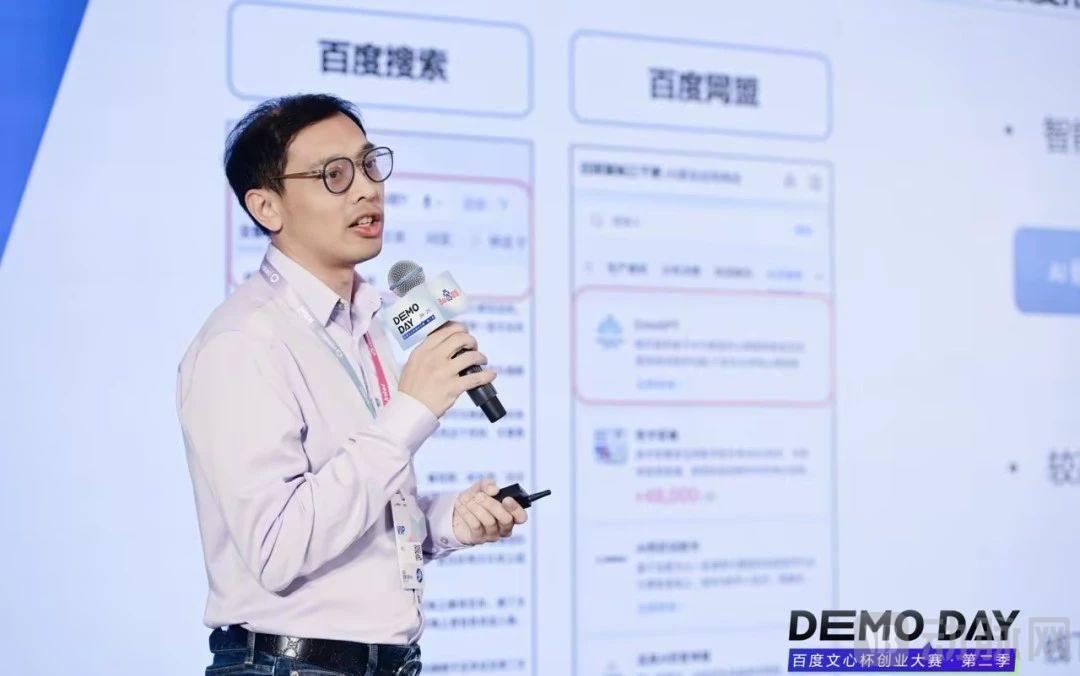
VCBeat:How has the collaboration between Mirror Technology and Baidu progressed since the Baidu “Wenxin Cup” Entrepreneurship Competition?
Huang Li:We have achieved integration in our product technical solutions and completed consolidation in our ToB offerings. Currently, Baidu is collaborating with us to promote AI-powered mental health services and explore business models for the consumer market.
VCBeat:Traditional psychological counseling is costly, and DeepSeek’s free model has lowered the barrier to entry for users… What is Jingxiang’s pricing strategy?
Huang Li:Medical services are typically expensive, whereas pure AI-driven services are relatively inexpensive or even free. Our pricing strategy aims to make our offerings more affordable for a broader user base while balancing service quality and accessibility; therefore, our prices fall between those of pure AI services and traditional medical services. For instance, when our product is deployed in schools, the annual fee amounts to only tens of thousands of yuan, which is significantly more affordable compared to traditional medical services. Through this approach, we not only lower the barrier to entry but also expand our reach, reducing what would otherwise be a service cost of hundreds of thousands of yuan to less than one-tenth of that amount.
VCBeat:In your view, what will be the focal point of competition in the AI-driven psychological diagnosis and treatment sector in the next phase?
Huang Li:The primary challenges lie in two areas. The first is balancing the professionalism of AI-based emotional diagnosis and treatment services with their consumer-grade accessibility, which pertains to service promotion and positioning strategies. Our approach involves acquiring users through the B2B channel, whereas some competitors opt for a B2C entry point; ultimately, both strategies aim to secure a larger user base.
Second, at the level of technological competition, general-purpose AGI for psychological counseling is the key. AI needs to possess diverse capabilities across different scenarios and demands. Taking an AI counselor as an example, it sometimes needs to act as a companion and at other times as a therapist. Facing the complex and ever-changing needs of humans, how to achieve a general-purpose AGI for psychological counseling that can flexibly switch roles is currently a major challenge. This requires AI to be as professional as a doctor when appropriate, and as caring and intimate as a close friend when emotional support is needed.
VCBeat:Who are Jingxiang Technology’s partners? What are its future plans?
Huang Li:We primarily collaborate with B-end and G-end clients, with a key focus on government agencies, enterprises and public institutions, schools, specialized industries, and small medical facilities. Our C-end business is currently only in discussions with major vendors such as Baidu and iFlytek, with no plans for independent operations at this time.
Our goal is to develop more empathetic general-purpose models, also known as the “Emotional Brain,” and apply them to a wider range of scenarios. We aim to transition from internal technology use to becoming a large-model provider, empowering diverse applications such as student services, support for psychological counselors, and companionship for the elderly. To achieve this, we will continuously enhance our internal technical capabilities by developing core models similar to DeepSeek R1, gradually opening them for trial use, and ensuring product and technological maturity before launching them into the market.