

Ruiyu: Composing a "Poem of Orthodontics" in 3D Space
As the first benchmark competition in the Asia-Pacific region dedicated to digital dentistry innovation, the inaugural Digital Dentistry Innovation Challenge brought together cutting-edge innovative forces from the industry. Under the guidance of the Rizhao Municipal Party Committee and Municipal People’s Government, and with meticulous planning by the Administrative Committee of Rizhao High-Tech Industrial Development Zone, the competition invited a panel of authoritative experts—including academicians from the Chinese Academy of Sciences and the Chinese Academy of Engineering, leading universities, top-tier Grade A tertiary hospitals, and prominent investment institutions—to serve as professional judges, garnering widespread attention from all sectors of the industry.
After rigorous screening and strict evaluation, 26 high-potential, innovative projects have emerged as finalists. These selected projects not only highlight the vitality and promising prospects of the digital dentistry industry but also represent the cutting-edge innovation strategies within China’s digital dentistry sector. In the coming days, we will sequentially showcase these outstanding startups and their innovative teams, helping you stay attuned to the pulse of industry innovation.
By Hao de Ya
This Issue’s Project: Ruiyu
*The following content is excerpted from the project roadshow materials

Amid the current wave of digital healthcare, Ruiyu (Nanjing) Digital Medical Technology Co., Ltd. (hereinafter referred to as “Ruiyu”) has demonstrated strong development momentum in the field of digital dental care through its forward-looking technological innovations, aiming to reshape the orthodontic diagnosis and treatment system with cutting-edge technologies.
Ruiyu boasts a robust academic foundation and professional expertise. Under the guidance of academicians, the company has assembled specialized talent in artificial intelligence, clinical medicine, and management. It has established a Joint Research and Development Center for Medical AI with Southeast University and forged a deep strategic partnership with the French National Institute of Health and Medical Research (INSERM).
Ruiyu is anchored in clinical needs, focusing on technological breakthroughs to address the global challenge of diagnosing and treating dentofacial deformities. Data indicate that the prevalence of dental malocclusion in China is currently approximately 45%–55%, while the incidence of skeletal malocclusion stands at around 20%–40%. This translates to an affected population of 300 to 600 million people. Of greater concern is the fact that, as of 2022, there were fewer than 10,000 registered orthodontists in China, a figure far below clinical demand. In first-tier cities, patient wait times can extend from one to three years, reflecting a severe imbalance between the supply of medical resources and clinical needs. Against this backdrop, technology-enabled solutions may become the key pathway to resolving the industry’s predicament.
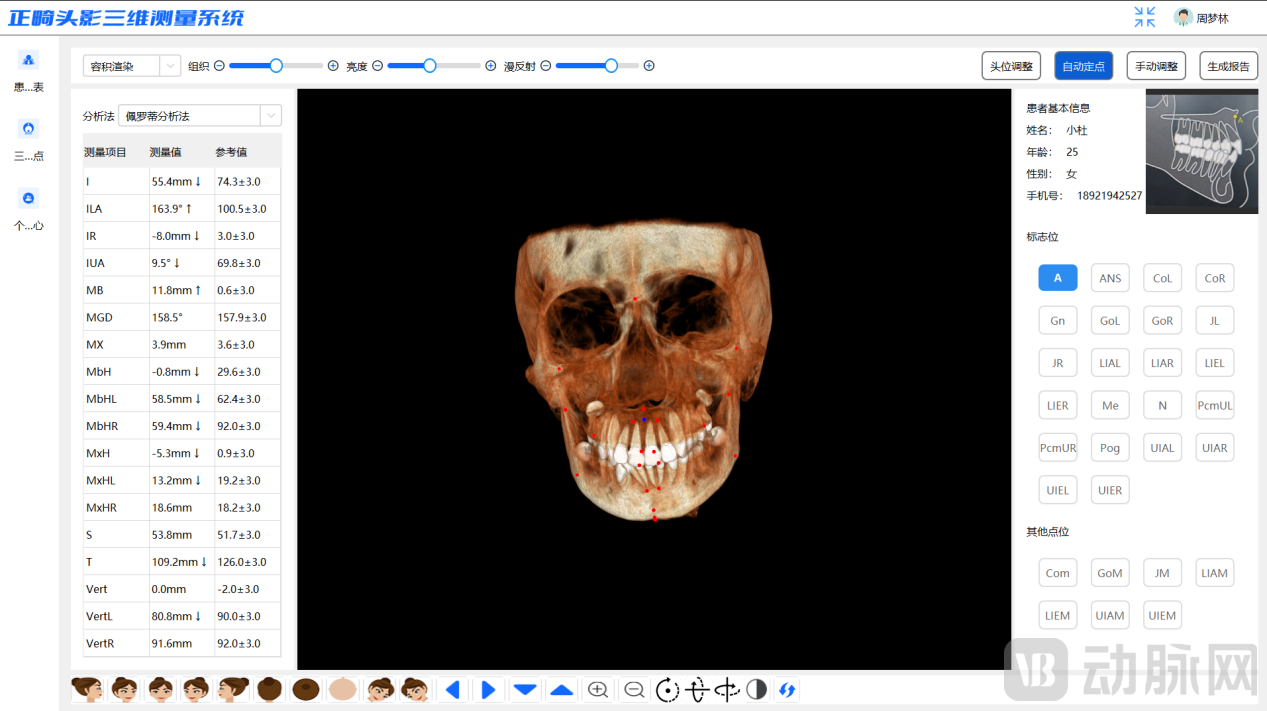
There is a consensus in the orthodontics industry that traditional two-dimensional landmarking techniques are limited by insufficient precision in three-dimensional spatial localization. This limitation, compounded by the subjective variability inherent in manual operations due to individual experience and operational habits, has significantly compromised the consistency and accuracy of diagnosis and treatment. To address these clinical pain points, Ruiyu has independently developed the world’s first 3D automated landmark measurement and analysis software for orthodontic and orthognathic applications. The core technology patents for this product are currently under examination, signaling that 3D precision diagnosis and treatment technologies in dentistry are poised for further advancement.
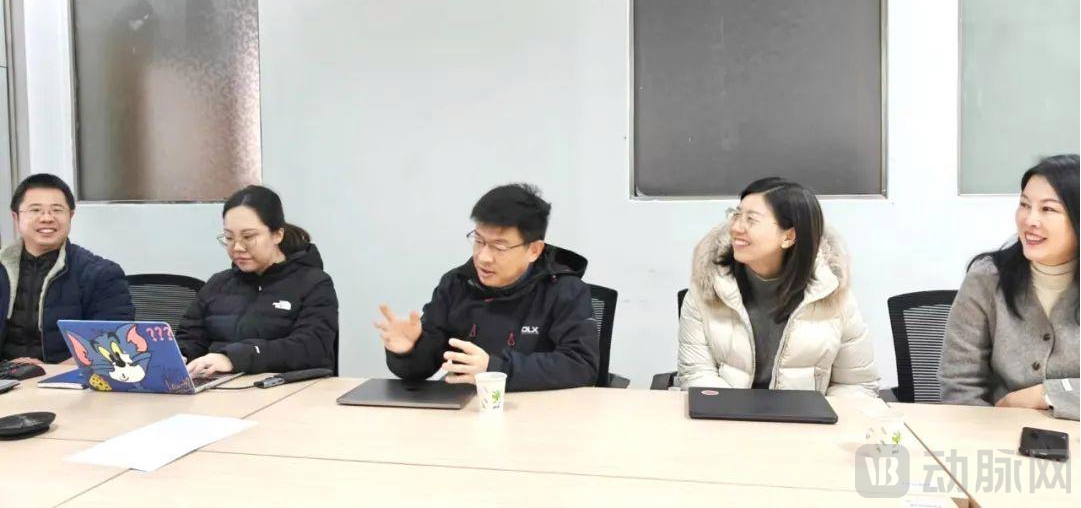
In terms of technological innovation, Ruiyu has pioneered the construction of the first knowledge graph for dentofacial deformities and established a specialized database for such conditions. Coupled with the continuous optimization of its deep learning algorithms, the system has achieved significant breakthroughs in the automatic landmarking of hard tissues on 3D CBCT scans and soft tissues on 3D facial images. Clinically validated by the Jiangsu Provincial Stomatological Hospital, this technology has been shown to effectively reduce landmarking errors and has received technical endorsement from a panel of clinical experts. This AI-based precision diagnosis and treatment solution provides robust technical support for addressing key challenges in orthodontics, such as low standardization and limited diagnostic and therapeutic efficiency.
Notably, the project has received support from the “Jiangsu Province Innovation Support Program for International Scientific and Technological Cooperation” and has secured strategic endorsements from institutions including Southeast University, the University of Rennes 1 in France, and the Affiliated Stomatological Hospital of Nanjing Medical University. This innovative model, characterized by deep integration among industry, academia, research, and healthcare, not only ensures the cutting-edge nature of technological development but also establishes robust professional barriers for product iteration and market promotion through clinical validation by authoritative medical institutions.
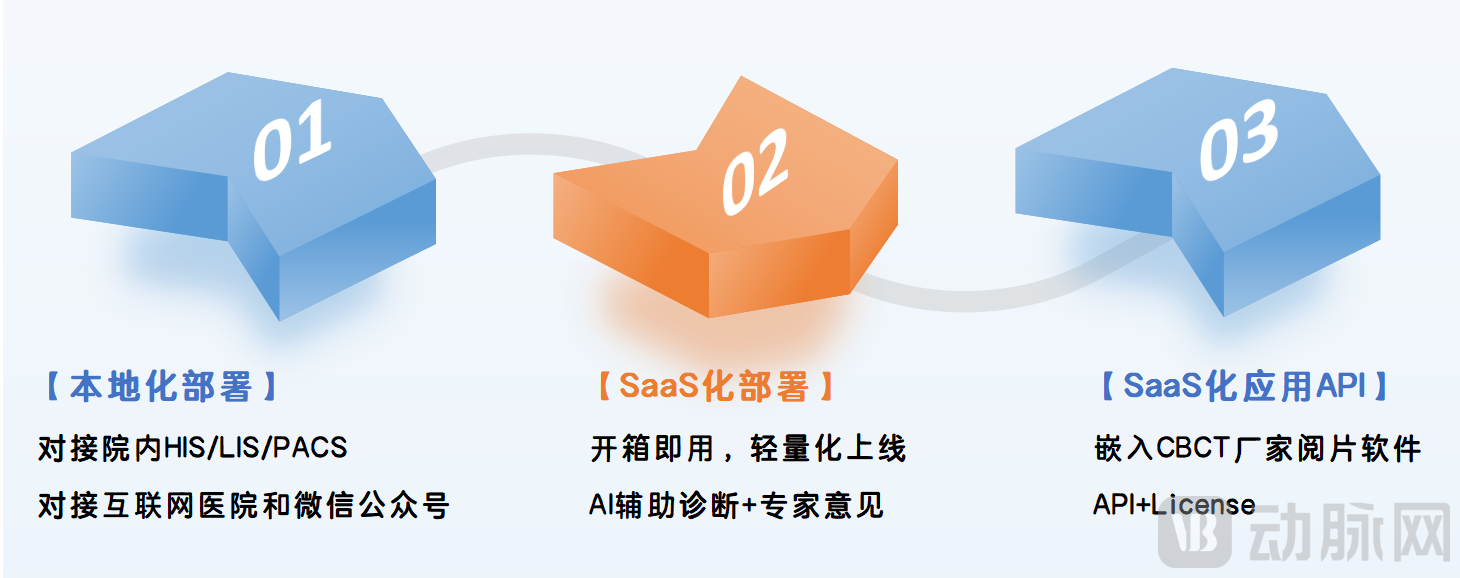
In terms of business model design, Ruiyu has adopted a flexible and diversified differentiated deployment strategy. It provides localized system solutions for large and medium-sized general hospitals, launches a SaaS cloud service platform for small and medium-sized medical institutions, and simultaneously opens up embedded cooperation mechanisms with specialty alliances and CBCT equipment manufacturers. This multi-dimensional market penetration model not only meets the technical needs of medical institutions at different levels but also forms a synergistic industrial ecosystem, providing strong support for the market penetration of its products.
Looking ahead, Ruiyu is focusing on building a comprehensive digital diagnosis and treatment ecosystem. With its 3D automatic positioning system as the technological foundation, the company is progressively advancing the R&D of an AI-assisted diagnostic system and plans to integrate multi-modal image analysis and orthodontic aesthetic measurement modules into its product suite, ultimately achieving a closed-loop service through its post-diagnosis patient management system. According to its market forecasting model, this product matrix is expected to generate over RMB 80 million in output value within the next three years. Therefore, the company plans to establish five benchmark hospitals in the first half of the year to lay the operational groundwork for nationwide market expansion across China.
As the digital wave transcends the boundaries of traditional diagnosis and treatment, Ruiyu—with its profound technological expertise, professional team structure, and forward-looking strategic layout—maps not only the precise coordinates of dentofacial anatomy but also the underlying logic driving profound transformation in orthodontics: How can clinical practice paradigms be reshaped through technological rationality? By addressing industry pain points through technological innovation and enhancing diagnostic and therapeutic efficiency via digital empowerment, Ruiyu is making significant contributions to advancing the standard of oral healthcare in China.
From 3D automated landmarking to a closed-loop post-treatment management system, this technological iteration reflects a profound balance between the universal accessibility and precision of medical resources. With fewer than 10,000 registered orthodontists serving 600 million patients, we may need to reconsider: In the cross-validation of algorithms and clinical practice, should medical AI serve merely as a tool or as a collaborator? Ruiyu’s practice offers an answer—technology will ultimately return to the essence of healthcare, while true innovation always emerges from the resonance between science and humanism.
2025 High-Quality Development Conference of the Digital Dentistry Industry & Finals of the 1st Digital Dentistry Innovation Challenge
Fruitful Outcomes from Innovative Competitions
The 25 finalist projects cover the entire workflow of dental diagnosis and treatment, including innovations in both hardware and software such as periodontal equipment, 3D printing materials, and orthodontic visualization systems, showcasing future industry trends.
Nearly 30 industry leaders, including Happy Dentistry, Taikang Bybo, and Shandong Myall Medical, participated in the event. The discussion focused on the deep integration of technologies such as artificial intelligence, 3D printing, and big data with dental diagnosis and treatment, exploring pathways for the transformation and upgrading toward precise, intelligent, and personalized healthcare.
“Asia-Pacific Digital Oral Health Innovation Hub” Planning Release, Sci-Tech Project Signing, and Innovation Alliance Establishment Ceremony, Promoting the Coordinated Development of the Industrial Chain, Innovation Chain, and Talent Chain.

March 30–31, Rizhao, China
Scan the QR code to register