

ZhiZhiLi: Empowering Invisible Orthodontics with Intelligent Force-Sensing Technology
As the premier benchmark competition in the Asia-Pacific region dedicated to digital dentistry innovation, the inaugural Digital Dentistry Innovation Challenge has gathered cutting-edge innovative forces from across the industry. Under the guidance of the Rizhao Municipal Committee and Municipal People’s Government, and with meticulous planning by the Administration Committee of Rizhao High-Tech Industrial Development Zone, the competition invited a professional jury composed of authoritative experts from the Chinese Academy of Sciences and the Chinese Academy of Engineering, top-tier universities, leading Grade A tertiary hospitals, and prominent investment institutions, garnering widespread attention from all sectors of the industry.
After rigorous screening and stringent evaluation, 26 high-potential, innovative projects have emerged as finalists. These selected projects not only highlight the vibrant vitality and promising prospects of the digital dentistry industry but also represent the cutting-edge innovation strategies within China’s digital dentistry sector. In the coming days, we will sequentially showcase these outstanding entrepreneurial ventures and innovative teams, offering insights into the pulse of industry innovation.
By Hao De Ya |
This Issue’s Project: ChiZhili — Redefining the Technological Boundaries of Orthodontic Treatment
Beijing Chizhili Technology Co., Ltd. (hereinafter referred to as “Chizhili”) is injecting new momentum into the field of orthodontic treatment in China with its innovative visualized diagnosis and treatment system for orthodontic forces. Leveraging advanced sensor technology and personalized 3D printing solutions, the system enables real-time monitoring and precise control of orthodontic forces, opening up new avenues for clear aligner therapy. With its groundbreaking visualized diagnosis and treatment system for orthodontic forces, Chizhili is reshaping the technological ecosystem of orthodontic care in China. Based on innovative sensor technologies and personalized 3D printing solutions, the system achieves real-time, precise monitoring and dynamic control of orthodontic forces.
From the perspective of industry fundamentals, VBInsight points out that the significant supply-demand contradiction between China's existing population of 1.042 billion patients with malocclusion and the scarce resources of orthodontists is driving the rapid and sustained development of the clear aligner market. Furthermore, the current treatment cost range of RMB 30,000 to 40,000 per patient highlights the substantial market value in this field. Survey data shows that the market size for clear aligners reached RMB 14 billion in 2023, and it is expected to maintain a compound annual growth rate (CAGR) of 16%, surpassing RMB 40 billion by 2030.
However, as the market size expands rapidly, industry pain points have become increasingly prominent—the “black box” treatment model of traditional diagnosis and therapy can no longer meet the precision requirements of modern healthcare, with patient relapse rates reaching 30–50%. The root causes can be traced back to three systemic challenges: excessive reliance on physicians’ experience, lack of a quantitative assessment system for orthodontic forces, and an imperfect follow-up evaluation system.
In response to these challenges, Chizhili has proposed an innovative solution. The company has successfully developed a groundbreaking wireless passive mechanical sensor. This sensor is capable of real-time monitoring and measurement of the forces exerted by aligners on teeth, transmitting data wirelessly. By placing sensor chips between the teeth and the aligners, the system can precisely measure the force at multiple points on the teeth, providing a comprehensive understanding of the distribution of orthodontic forces across the tooth surface.
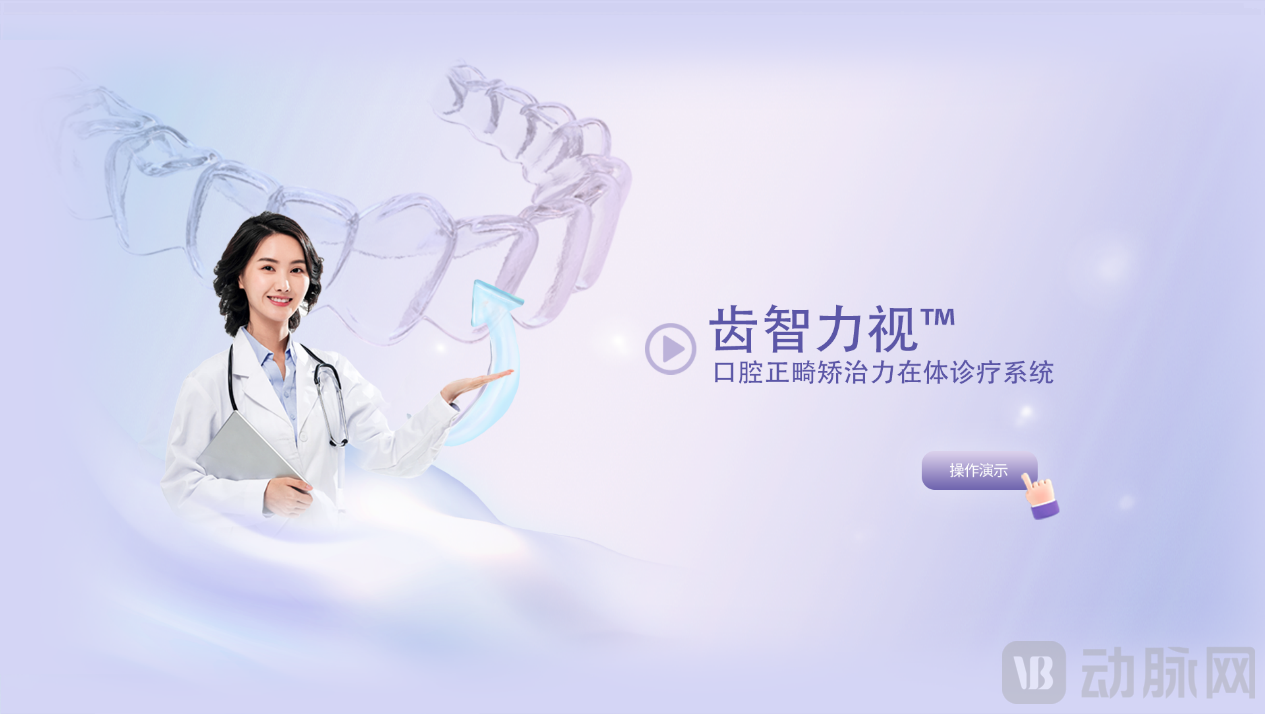
To address the aforementioned industry pain points, Chi Zhili has developed solutions through technological innovation. Notably, its independently developed personalized 3D-printed aligner technology has garnered significant attention. Unlike common polyurethane vacuum-formed aligners on the market, this technology enables precise control over the hardness and thickness of different regions, thereby achieving more accurate treatment outcomes. Leveraging real-time monitoring systems and biomechanical analysis data, dentists can precisely manage every step of tooth movement, eliminating the need for traditional experience-based judgments reliant on visual observation.
This project originated from the clinical needs identified by Professor Han Jianmin of Peking University School of Stomatology. The core research and development were carried out by Li Jiebo’s team at Beihang University, resulting in an intellectual property portfolio that includes two granted patents and three pending patent applications. Currently, the engineering prototype has been completed and has successfully passed toxicity and skin sensitization tests at Peking University School of Stomatology, laying a safe and reliable foundation for its subsequent launch.
In terms of its commercialization strategy, the company adopts a dual-drive model of "capital equipment + consumables." Based on the average patient follow-up interval of once every 6–8 weeks, the company estimates a market potential of approximately RMB 800 million for chips and RMB 6 billion for capital equipment. Consequently, the company has decided to rely primarily on research-oriented procurement orders to drive product iteration during the two-year period prior to obtaining medical device registration certificates.
Looking ahead, as invisible aligners are endowed with "smart-sensing" capabilities, the data-driven transformation in orthodontics is quietly breaking through the boundaries of experience-based medicine. By deeply integrating a matrix of force sensors with digital diagnosis and treatment systems, ChiZhili converts the elusive "tactile feel" inherent in traditional clear aligner therapy into quantifiable and traceable mechanical data. This represents not only an innovation in technological pathways but also a reconstruction of the industry’s underlying logic.
Can this scientific, data-driven approach to treatment become the key to bridging the supply-demand gap? From the “black box” of biomechanics to visualized diagnosis and treatment, technological innovation is redefining precision standards in orthodontic care. However, achieving value resonance between cold sensor data and warm, human-centered healthcare may be the deeper reflection this transformation leaves for the industry.
2025 Conference on High-Quality Development of the Digital Dentistry Industry & Finals of the 1st Digital Dentistry Innovation Challenge
Fruitful Outcomes from Innovative Competitions
The 25 finalist projects cover the entire workflow of dental diagnosis and treatment, including innovations in both hardware and software such as periodontal equipment, 3D printing materials, and orthodontic visualization systems, showcasing future trends in the industry.
Nearly 30 industry-leading representatives, including Happy Dentistry, Taikang Bybo Dental, and Shandong Meer Medical, participated in the event. The discussions focused on the deep integration of technologies such as artificial intelligence, 3D printing, and big data into dental diagnosis and treatment, exploring pathways for the transformation and upgrading toward precise, intelligent, and personalized healthcare.
“Asia-Pacific Digital Dental Innovation Hub” Planning Release, Sci-Tech Project Signing, and Innovation Alliance Establishment Ceremony to Promote the Coordinated Development of the Industrial Chain, Innovation Chain, and Talent Chain.

March 30–31, Rizhao, China
Scan QR Code to Register