

MedAI and Chongqing University Cancer Hospital Unveil "LingMou" Multimodal Pathology Foundation Model to Advance Intelligent Oncology
On March 26, 2025, Hangzhou Yice Technology Co., Ltd. and Chongqing University Cancer Hospital formally established a strategic partnership and jointly released “Lingmou,” a diagnostic-grade multimodal pathology large language model. This significant collaboration marks the commencement of in-depth cooperation between the two parties in the field of AI-enabled intelligent oncology, aiming to advance the application of AI technologies in pathological diagnosis, scientific research innovation, and clinical decision-making, thereby jointly promoting the intelligent and precise development of pathology.
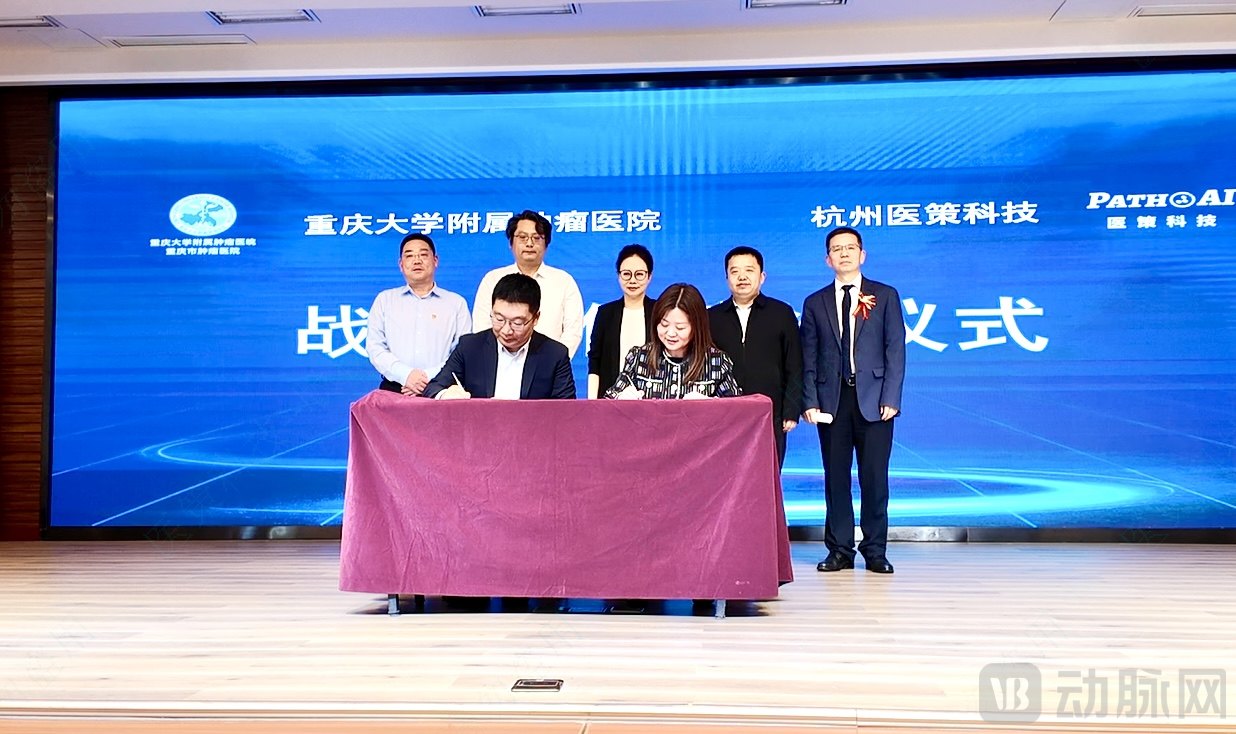
Chongqing University Cancer Hospital × Hangzhou Yice Technology Strategic Cooperation Signing
At the signing ceremony for this strategic partnership, Xu Bo, President of Chongqing University Cancer Hospital, and Wang Xiaomei, Founder and CEO of Hangzhou Yice Technology Co., Ltd., jointly witnessed this significant moment. This collaboration not only promotes the deep integration of industry, academia, and research but also fully leverages the hospital’s advantages in clinical resources and the company’s capabilities in technological innovation, as both parties join hands to explore the development path of “pathology diagnosis + AI.”
“Lingmou” Multimodal Pathology Large Model Officially Released
As the centerpiece of this collaboration, the “Lingmou” Multimodal Pathology Large Model has been officially released. By integrating diverse data types, including text and images, and leveraging extensive training on a vast corpus of specialized pathology literature alongside high-quality pathological slide images, the model aims to optimize pathology workflows. It provides pathologists with professional question-answering support, assisted diagnosis, and intelligent workflow management.
At the press conference, Cai Wenli, Head of the Ministry of Education’s Innovation Center for Basic Medical Research in Intelligent Oncology, and Jiang Qingming, Director of the Department of Pathology at Chongqing University Cancer Hospital, provided an in-depth analysis of the core technologies and application value of “Lingmou.” They also conducted live demonstrations showcasing its practical applications in tumor pathology analysis, support for scientific research and teaching, and optimization of intelligent workflows.
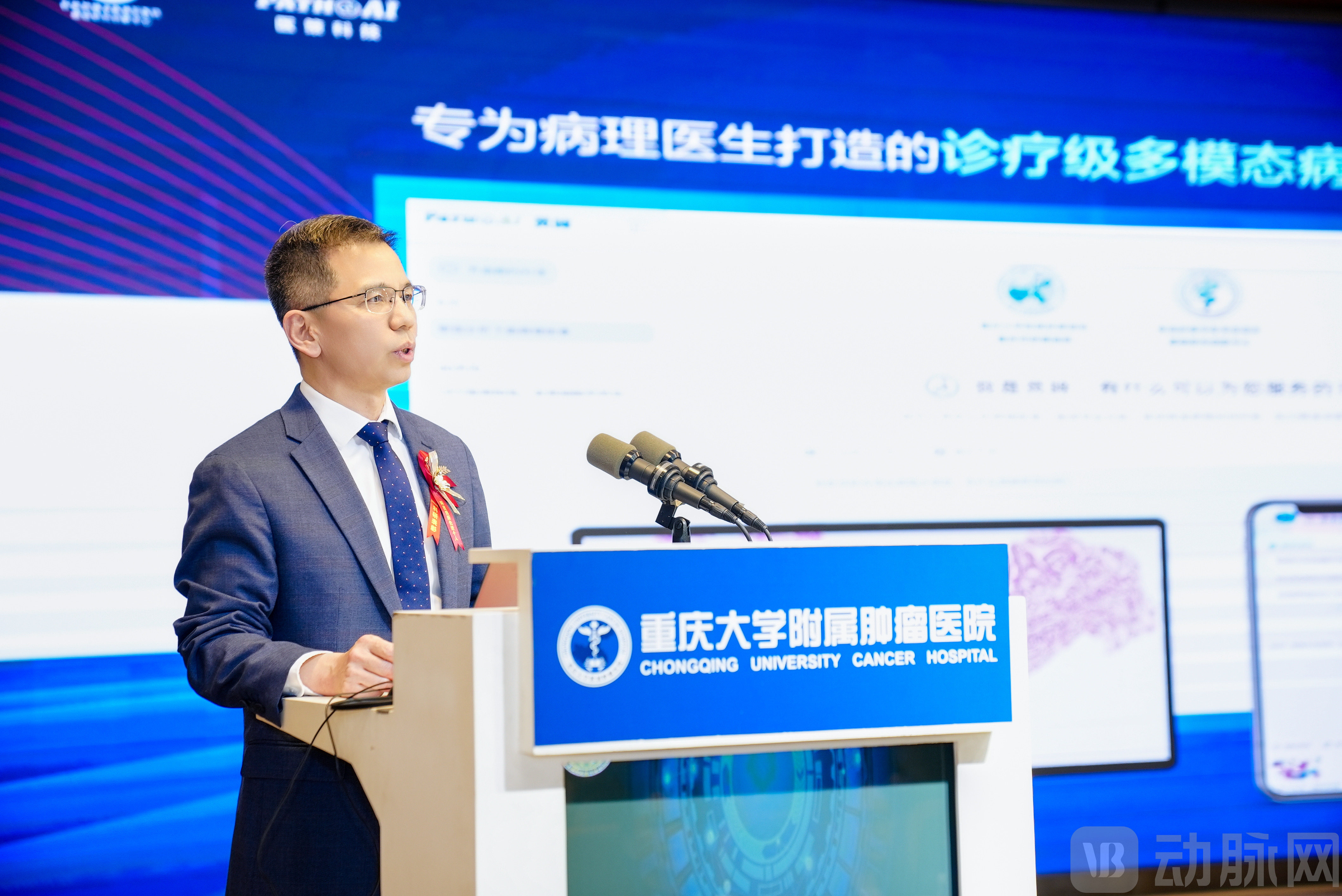
Cai Wenli, Head of the MOE Medical Basic Research Innovation Center for Intelligent Oncology
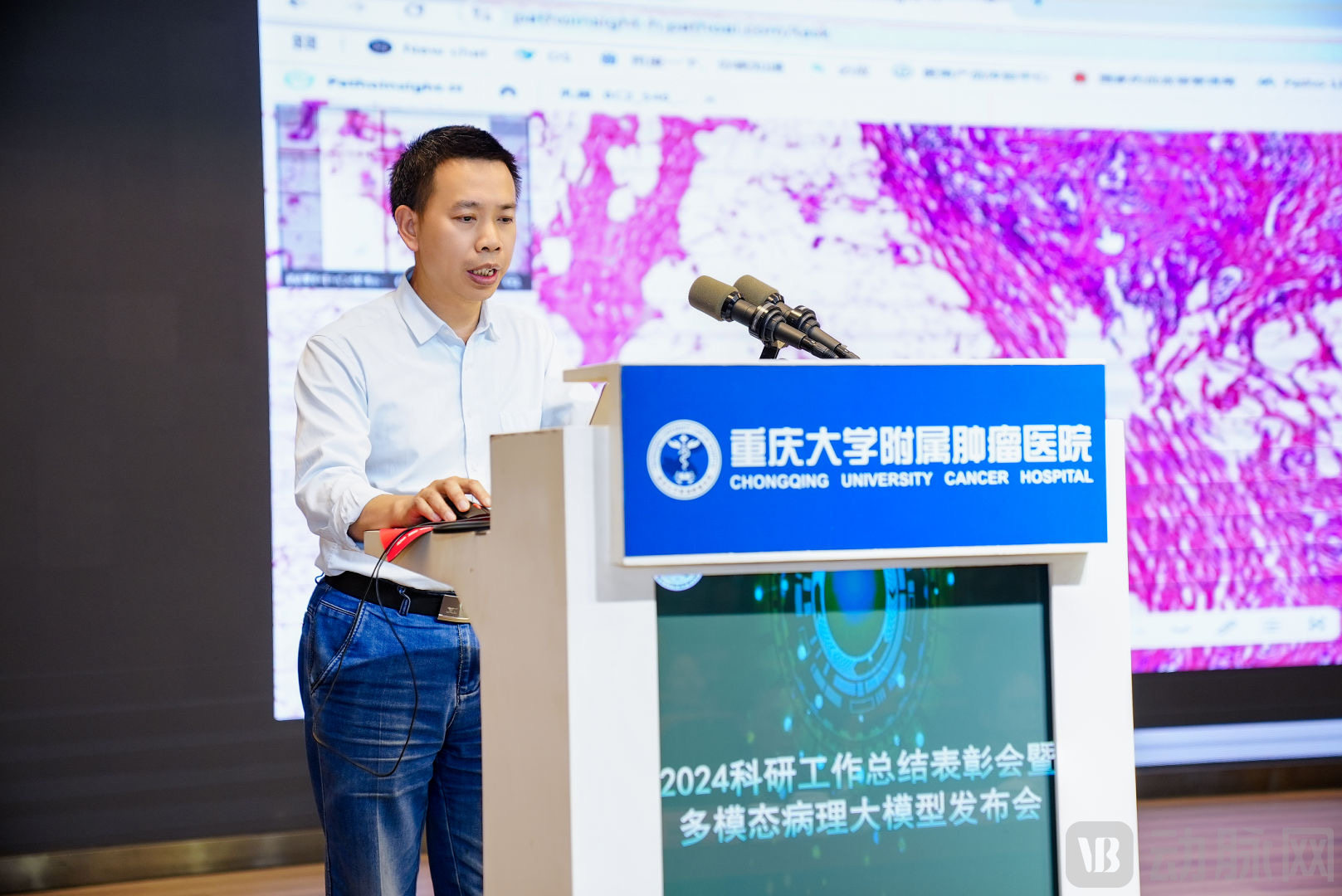
Jiang Qingming, Director of the Department of Pathology, Chongqing University Cancer Hospital
An In-Depth Analysis of the Core Advantages of “Lingmou,” a Diagnostic-Grade Multimodal Pathology Large Language Model
High-Quality Data as the Foundation: Building a Diagnostic-Grade Multimodal Pathology Large Model
“Lingmou” strictly adheres to the “Guiding Principles for Registration Review of AI Medical Devices,” ensuring that the data used to refine its large model products meets high-quality medical data standards. Leveraging expert annotation, clinical feedback, and iterative AI training, “Lingmou” has established a positive cycle of data accumulation, model optimization, and precise feedback, creating a “data flywheel effect” that continuously drives the evolution of intelligent pathological diagnosis.
Its high-quality data system encompasses globally authoritative pathological and medical knowledge data, including core databases such as PubMed, Embase, and CNKI. It covers highly influential literature from the past decade, 36 pathology journals, and over one hundred specialized pathology textbooks, extracting millions of high-quality image-text pairs in pathology. Meanwhile, it has established professional pathological image datasets comprising millions of cytopathology, histopathology, and immunohistochemistry images, providing a solid foundation for efficient model learning and optimization.
Precision Diagnosis of Multiple Organs, Comprehensive Perception of Pathological Features
“Lingmou” features multi-organ precise diagnostic capabilities. By constructing an Organ-Specific Feature Pyramid Network (Organ-Specific FPN) and employing organ-specific feature extraction techniques alongside a hierarchical adaptive fusion mechanism, it comprehensively captures cellular, structural, regional, and whole-slide image features.
Its technology spans multiple pathology domains, including cytopathology, histopathology, and immunohistochemistry. It can assist in the diagnosis of more than 57 types of tumors and cancers, with interpretation accuracy meeting clinical-grade application standards, thereby supporting physicians in making scientific decisions and significantly improving diagnostic efficiency.
Align with Clinical Reasoning Pathways, Empower Professional Q&A
“Lingmou” features the capability to visualize pathological diagnostic reasoning pathways. By innovatively constructing a Pathology Chain-of-Thought framework and employing layer-by-layer reasoning analysis integrated with explainability mechanisms, it accurately reconstructs the clinical reasoning pathway of pathological diagnosis.
Its technical depth is closely aligned with the clinical decision-making process, comprehensively demonstrating the model’s entire workflow from problem analysis to conclusion derivation. This achieves reasoning transparency and diagnostic traceability, aligns with the principles of evidence-based medicine, helps pathologists clarify diagnostic bases, enhances confidence in diagnostic decisions, and effectively improves the accuracy and efficiency of decision-making for complex pathological cases.
Supports lightweight private deployment, adaptable to various usage scenarios
“Lingmou” supports lightweight GPU server-based private deployment, with controllable inference computing costs. The product complies with medical device registration and certification standards in multiple countries and regions, ensuring high accuracy, high specificity, and high sensitivity of the model, thereby achieving clinical-grade application performance.
Its advantages, including low cost and high performance, rapid deployment and application, and flexible scalability and upgradability, have lowered the barriers to technology adoption, providing healthcare institutions with safer, more efficient, and cost-effective intelligent solutions.
From Large Language Models to Multi-Agent Systems: Advancing Toward Precision Medicine
In the future, “Lingmou” will further leverage multi-agent technology to integrate multi-omics data—including electronic medical records, biochemistry, imaging, pathology, and genomics—thereby facilitating multidisciplinary team (MDT) consultations in oncology and propelling pathology from single-modality diagnosis toward precision medicine.
Chongqing University Cancer Hospital, Chongqing Cancer Institute, Chongqing Cancer Hospital, and Chongqing Cancer Center constitute a national Grade III Class A specialized oncology hospital integrating medical care, teaching, scientific research, prevention, and rehabilitation. It is a member unit of the Union for International Cancer Control (UICC), a co-constructed unit of the National Regional Medical Center for Cancer by the National Health Commission and the Chongqing Municipal Government, a construction unit of the National Regional Traditional Chinese Medicine (Oncology) Diagnosis and Treatment Center, and a construction unit of the National Project for Enhancing Diagnosis and Treatment Capabilities for Difficult and Complicated Diseases. Furthermore, it serves as a National Clinical Trial Institution for Oncology Drugs, an expert unit of the National Oncology Quality Control Center, a core unit of the National Clinical Research Center for Cancer, the Chongqing Clinical Research Center for Cancer, the Chongqing Oncology Medical Quality Control Center, the Chongqing Oncology Radiotherapy Quality Control Center, and the Chongqing Cancer Prevention and Control Office.
The Ministry of Education’s Innovation Center for Basic Research in Medicine and Pharmaceuticals in Intelligent Oncology was approved for establishment in May 2023. Relying on the Chongqing University Cancer Hospital, guided by the “Four Orientations,” and oriented toward clinical needs and challenges, the Center serves the “Healthy China 2030” plan. Focusing on malignant tumors, it integrates AI-guided basic research in intelligent oncology with drug development. Leveraging the comprehensive interdisciplinary strengths of Chongqing University’s emerging medical disciplines in both basic and clinical research, the Center aims to build an integrated, full-chain research entity characterized by “clinical demand-driven innovation, breakthroughs in basic research, and translational clinical application.” This initiative seeks to accelerate original breakthroughs in pharmaceutical science and technology, promote the translation of innovative basic research into tumor diagnosis and treatment, enhance the level of clinical oncology care, and cultivate high-caliber leading talents in medical and pharmaceutical sciences.
Hangzhou Yice Technology Co., Ltd. is a healthcare big data and artificial intelligence company centered on smart pathology and pharmaceuticals. The company has established strategic partnerships with industry leaders such as Tigermed, AstraZeneca, and Dian Diagnostics, dedicating itself to the research, development, and application of AI-driven products and comprehensive solutions for pathological CRO services in medical diagnostics and pharmaceutical R&D. It provides physicians with efficient and precise diagnostic assistance and intelligent support for scientific research, thereby driving technological innovation and development in the healthcare sector.