

Fangzhou Jianke Reports 139% Surge in Adjusted Net Profit, AI Strategy Enters Harvest Phase

Fangzhou Pharmaceutical
Chronic Disease Service Platform
As DeepSeek ignited the artificial intelligence boom in 2025, the industry underwent rapid transformation, drawing increased investor attention to the “AI+” sector. According to statistics from relevant institutions, global financing in the AI healthcare field exceeded RMB 10 billion in the first two months of 2025.
However, we must emphasize that the gravity of healthcare often requires enterprises to adhere to long-termism and professionalism.
As new entrants flock to the AI-plus-healthcare sector, established players have distinguished themselves through forward-looking AI investments, practical application of technologies, integration with medical insurance payment channels, and collaborative empowerment of ecosystem partners.
Fangzhou Pharmaceutical, known as the “first stock in AI-driven chronic disease management,” is one such example. Recently, Fangzhou Pharmaceutical released its first annual report since going public. The report showed that the company achieved full-year revenue of RMB 2.707 billion, a year-on-year increase of 11.2%. Its adjusted net profit reached RMB 17.119 million, representing a year-on-year growth of 139%.
Behind Fangzhou Pharmaceutical’s Striking Financial Report: What Growth Secrets Lie Within?
Currently, China is facing a severe aging population crisis, compounded by the trend of chronic diseases affecting younger demographics, leading to a sharp increase in demand for services among patients with chronic conditions. According to data from Frost & Sullivan, the digital chronic disease management market in China is projected to reach RMB 655 billion by 2030. The emergence of internet healthcare has significantly addressed the pain points associated with long-term chronic disease management in traditional offline medical services. However, relying solely on increasing the input of medical resources, such as adding more physicians, to resolve chronic disease management issues is clearly time-consuming and labor-intensive. There is an urgent need for the industry to adopt technologies, including artificial intelligence, to reengineer patient management processes and alleviate the burden on the healthcare system.
Fangzhou Pharmaceutical, established in 2015, has long recognized that the integration and empowerment of technologies such as artificial intelligence can better facilitate chronic disease management, while adhering to its “Internet Plus Chronic Disease Management” strategy.
Well before DeepSeek surged in popularity in early 2025, Fangzhou Pharmaceutical’s AI Agent Platform had already pioneered the integration of the DeepSeek-V2 model. In November 2024, Fangzhou Pharmaceutical further launched “AI Agent Platform 1.0” to better serve patients and healthcare providers. To address the widespread issue of “hallucination risks” associated with large medical language models, Fangzhou Pharmaceutical introduced its own countermeasures by rapidly rolling out “AI Agent 2.0.” This version implements a series of measures, including knowledge base optimization and model refinement, and ensures the validity of data outputs through extensive testing and verification. While mitigating hallucination risks, Fangzhou Pharmaceutical continues to empower two core application scenarios—“patient services” and “physician workflows”—with emerging technologies such as large language models, big data, and cloud computing, thereby further enhancing its ecosystem services.
In 2024,Fangzhou Pharmaceutical has iteratively upgraded its original “H2H (Hospital to Home) Smart Healthcare New Ecosystem Innovation Platform,”Building a more professional, intelligent, and efficient “Fangzhou Pharmaceutical AI+H2H Smart Healthcare New Ecosystem” (hereinafter referred to as the “AI+H2H New Ecosystem”), leveraging advanced AI technologies to upgrade doctor-patient services and deliver a seamless healthcare experience from hospital to home for patients.
From the physician’s perspective, Fangzhou Pharmaceutical leverages AI technology to continuously encourage doctors to join its platform, thereby further expanding the provision of diagnostic and therapeutic services for specialty diseases and indications beyond chronic conditions.
As the primary providers of medical services, physicians are influenced by multiple factors when choosing to practice on internet healthcare platforms. Among these, two core concerns stand out: whether the platform can help physicians better address patient management issues and whether it can more effectively support their clinical research.
Fangzhou Pharmaceutical leverages technological solutions to minimize the "hallucination risk" of medical AI models, establishing them as trustworthy AI tools for physicians. Meanwhile, its platform-developed AI Physician Assistant—an integrated team combining customer service, administrative support, and health advisory functions—helps reduce physicians’ workload in patient management. Furthermore, by empowering knowledge base data cleaning and popular science article generation through its AI agent platform, Fangzhou Pharmaceutical’s new media platforms have produced over 5 million educational articles to date. This initiative has effectively addressed information asymmetry between doctors and patients, further alleviating the burden of doctor-patient communication.
As of the end of 2024, Fangzhou Pharmaceutical had 223,000 registered physicians; 59% of these registered physicians were from tertiary hospitals, and 39% held the title of associate chief physician or higher. Their presence ensures the provision of professional medical services.
In terms of pharmaceuticals, Fangzhou Pharmaceutical continuously enhances its insights into the needs of its vast patient population and steadily improves drug supply to meet the medication requirements in clinical treatment for both physicians and patients—
As of the end of 2024, Fangzhou Pharmaceutical had partnered with more than 1,500 suppliers and over 900 pharmaceutical companies, including many large multinational corporations and leading domestic enterprises. These close collaborations have enabled Fangzhou Pharmaceutical to expand its drug SKU portfolio to 215,000 items, approximately 62% of which are prescription drugs, thereby fully meeting patients’ medication needs.
In the process of building the “AI+H2H New Ecosystem,” Fangzhou Pharmaceutical is accelerating the deployment of AI applications and further mitigating the risk of “hallucinations.” Currently, when addressing patient inquiries about medical conditions, Fangzhou Pharmaceutical’s “AI Agent 2.0” prioritizes retrieving authoritative literature from its internal RAG (Retrieval-Augmented Generation) knowledge base to ensure that responses are evidence-based. For highly specialized questions, “AI Agent 2.0” employs task decomposition, leveraging different expert models to generate responses. Furthermore, Fangzhou Pharmaceutical’s technical team has constructed test sets to validate the output performance of large language models (LLMs). By establishing an “LLM Supervision Mechanism” as a “dual safeguard,” the company implements a two-tier review process for response content, aiming to minimize model hallucinations.
Furthermore, leveraging its AI-driven capability to deliver personalized experiences at scale, Fangzhou Pharmaceutical provides doctors and patients with more tailored AI tools, further enhancing the healthcare service ecosystem. By actively exploring new implementation scenarios, it drives the professionalization, intelligentization, personalization, and efficiency enhancement of healthcare services.
The integration of technologies such as large AI models has further enhanced the platform’s service ecosystem, with the ultimate goal of providing more convenient services to patients. To this end, Fangzhou Pharmaceutical is also actively integrating with the medical insurance system.
From an industry perspective, policies on medical insurance payment for internet-based healthcare have been successively introduced since 2019. The issuance of policies such as the “Guiding Opinions of the National Healthcare Security Administration on Improving Price and Medical Insurance Payment Policies for ‘Internet Plus’ Medical Services” (No. 47 [2019] of the National Healthcare Security Administration) and the “Guiding Opinions of the National Healthcare Security Administration on Actively Promoting Medical Insurance Payment for ‘Internet Plus’ Medical Services” (No. 45 [2020] of the National Healthcare Security Administration) has further facilitated the inclusion of “Internet Plus” medical services into the existing medical insurance payment policy framework for unified management.
Currently, all provinces across China have issued policy documents on pricing for “Internet+” medical services, establishing enforceable standards for online medical service prices and reimbursement scopes in various regions. Medical insurance policies for internet-based healthcare are gradually transitioning from institutional design to practical implementation.
Online reimbursement through medical insurance has significantly enhanced the convenience and willingness of patients to seek online medical care, thereby driving an increase in the volume of internet-based diagnosis and treatment services provided by enterprises. In 2024, in response to national policy initiatives, Fangzhou Pharmaceutical further improved the accessibility of online medical insurance reimbursement for follow-up patients receiving online consultations. By prioritizing the digital management of national medical insurance and online payment integration, the company successfully integrated its service platforms with the national medical insurance system, fully enabling seamless medical insurance payment channels.
In practice, when patients utilize online medical consultation services, their demand for purchasing medications online is even more prevalent than their need for medical services themselves. According to the "2024 Annual White Paper on Innovation in Medical Services" published by VBInsight, policies governing online reimbursement through basic medical insurance are being progressively refined and expanded in scope, further enhancing the convenience of online medication purchases and pharmaceutical services. Since Beijing, Shanghai, Guangzhou, and Shenzhen pioneered the launch of online medication purchasing with basic medical insurance reimbursement in July 2024, medical insurance bureaus in numerous regions across China have successively announced their support for the implementation of this service.
Fangzhou Pharmaceutical had actually been following up on this initiative for quite some time. In 2023, as Guangzhou continued to advance upgrades to convenient medical insurance services and established an online end-to-end purchasing channel for externally dispensed prescriptions under the “Dual Channel” policy, Fangzhou Pharmaceutical became one of the first designated offline pharmacies in Guangzhou for “Dual Channel” drugs covering critical illnesses and social medical insurance. Later, it also launched a real-time settlement function for drugs included in the “Dual Channel” catalog.Patients with chronic diseases can use the “Fangzhou Pharmaceutical Medical Insurance Assistant” mini-program within Yue Yibao to make payments via the medical insurance pooled fund and their personal medical insurance accounts, using dual-channel prescriptions issued by hospitals.
Through the construction of a new AI-empowered healthcare service ecosystem and the further streamlining of payment pathways, Fangzhou Pharmaceutical has seen steady growth in its patient base and enhanced user stickiness.The annual report shows that by the end of 2024, Fangzhou Pharmaceutical’s registered user base grew by 6.5 million, reaching 49.2 million; its monthly active users increased by 20% year-on-year to 10.1 million, leading the vertical niche of internet-based chronic disease management.
The growth in the number of core users has further driven revenue growth for Fangzhou Pharmaceutical.In 2024, Fangzhou Pharmaceutical achieved annual revenue of RMB 2.707 billion and a net profit of RMB 17.119 million. Notably, its online retail pharmacy services, wholesale operations, and customized content and marketing solutions experienced significant growth. In the comprehensive medical services segment, as the Fangzhou platform gained market recognition, the company further focused on enhancing profitability and ensuring sustainable business development, thereby advancing its value-based healthcare service proposition. The gross profit margin for this segment increased from 15.2% at the end of 2023 to 17.2% at the end of 2024.
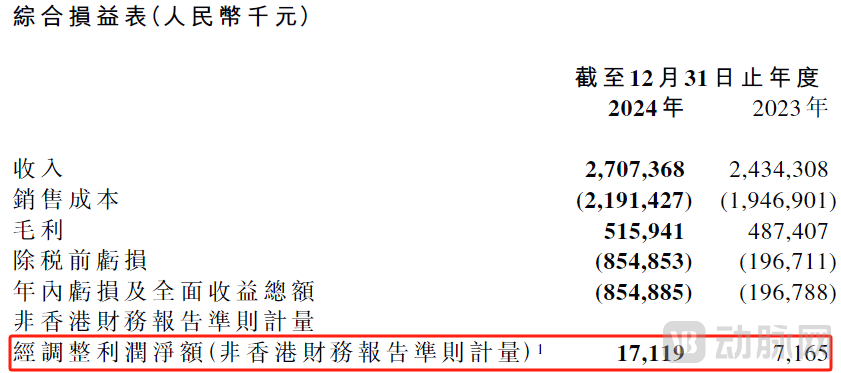
Source: Fangzhou Pharmaceutical 2024 Annual Report
Meanwhile, revenue from online retail pharmacy services grew from RMB 1.297 billion in 2023 to RMB 1.405 billion in 2024.
Obviously, the revenue growth is not solely attributable to factors such as increased loyalty among doctors and patients within the ecosystem and an expansion in drug SKUs; rather, it is also a result of Fangzhou Pharmaceutical’s continuous AI-driven business empowerment and the growing vitality of its ecosystem.
The increasingly vibrant ecosystem has also laid the foundation for the development of innovative businesses such as Fangzhou Pharmaceutical’s digital marketing initiatives. The annual report shows that in 2024, revenue from Fangzhou Pharmaceutical’s customized content and marketing solutions reached RMB 105 million, compared to RMB 87 million in the same period last year.
Currently, with the normalization of measures such as centralized procurement, national reimbursement drug price negotiations, and the two-invoice system, an increasing number of pharmaceutical and medical device companies are urgently seeking more cost-effective and efficient marketing approaches, while demanding greater diversity and systematicity in marketing content and outcomes. According to Frost & Sullivan’s projections, the market size of digital pharmaceutical marketing is expected to further grow, reaching RMB 111 billion in 2025 and RMB 356.8 billion in 2030, with a compound annual growth rate (CAGR) of 33.9% from 2025 to 2030.
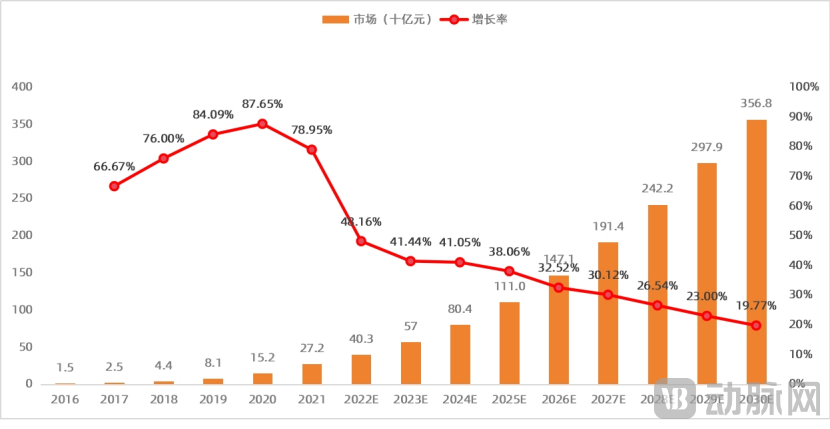
Market Size Trends in China's Pharmaceutical Digital Marketing Industry, 2016–2030
Data source: Frost & Sullivan. Chart by VCBeat
VBInsight’s “2024 Report on Digital Marketing in the Pharmaceutical Industry” further points out that “China has conducted nine rounds of volume-based procurement (VBP) for drugs, covering a total of 374 drug varieties with an average price reduction exceeding 50%. It is expected that, adhering to the principles of ensuring basic needs and clinical supply, drugs with high clinical usage and substantial procurement expenditures that meet eligibility criteria will be gradually included in the VBP scope. Meanwhile, as national reimbursement drug list (NRDL) negotiations have become an annual routine, the pace at which innovative drugs are included in the NRDL has accelerated significantly. The number of successfully negotiated drugs continues to rise, with the average price reduction remaining stable at approximately 60%.” The commercialization journey for pharmaceutical companies’ products, which could previously last up to 20 years, has now been drastically shortened, requiring pharmaceutical companies to “influence more physicians and patients in less time within a limited value cycle.”
Digital approaches and technologies can enhance the efficiency of pharmaceutical marketing, becoming a strategy adopted by many pharmaceutical companies to sustain product sales and drive profit growth.With its accumulated base of 49.2 million users and 223,000 doctors, Fangzhou Pharmaceutical enables the platform to establish effective connections and interactions with physicians and patients, providing them with targeted medical knowledge and content to support pharmaceutical companies’ marketing efforts.
Pharmaceutical companies have undoubtedly recognized the development potential of Fangzhou Pharmaceutical.。A large number of overseas pharmaceutical companies and leading domestic enterprises have chosen to establish strategic partnerships with Fangzhou Pharmaceutical to enhance user reach and improve medication accessibility.Partnering enterprises include, but are not limited to, Gilead Sciences, Bayer, Merck & Co., Novo Nordisk, and Bristol-Myers Squibb. A significant number of companies that failed to win bids in the centralized volume-based procurement (VBP) programs and subsequently shifted their focus to the out-of-hospital market have also chosen to leverage Fangzhou Pharmaceutical’s platform to reach healthcare providers and patients. As Fangzhou Pharmaceutical continues to advance the implementation and exploration of AI technologies, it will further utilize AI and other tools to gain core insights into user needs, thereby better supporting pharmaceutical companies in their transition from traditional marketing to digital-intelligent marketing.
This success is also attributable to Fangzhou Pharmaceutical’s ability to achieve efficient information outreach and conversion among both physicians and patients. For physicians, the company has established an academic community service that facilitates knowledge exchange through the publication of medical articles and short videos, the hosting of online medical conferences, and live video broadcasts with specialists on the Fangzhou Pharmaceutical platform. For patients, its “Yi Liao” (Medical Chat) service delivers tailored educational content based on user interests. Driven by robust physician-patient interactions and a continuously vibrant communication ecosystem, Fangzhou Pharmaceutical has seen sustained growth in platform traffic and enhanced user stickiness. The high level of trust between physicians and patients further underscores the platform’s value.
Continuously deepening the implementation and application of AI technology in the vertical healthcare sector, achieving integration with medical insurance payment channels for “Internet + Healthcare,” and constantly empowering industry enterprises based on platform ecosystem capabilities... Each strategic layout represents Fangzhou Pharmaceutical’s “innovative solutions” crafted through years of dedicated practice in internet healthcare, forming the winning formula behind its revenue and profit growth.
In the future, the value of the “AI + Healthcare” sector will continue to be unlocked, urgently calling for greater participation from more enterprises. As the value of Fangzhou Pharmaceutical’s “AI + H2H New Ecosystem” becomes increasingly prominent, it is poised to usher in a new round of rapid growth, warranting shared anticipation from the market.