

Zdeer's Bone Conduction Hearing Aid Goes Viral on Douyin, Driving Explosive Sales Growth

zdeer
Intelligent Health and Wellness Product R&D and Manufacturer
Recently, a hearing aid product has become a bestseller on Douyin.
According to Feigua Data, on March 7, the Zdeer Medical Device Flagship Store experienced a significant surge in sales on the Douyin platform. Its flagship product, the “Zdeer Gen 2 Bone Conduction Hearing Aid,” achieved daily sales of RMB 2.5 million to RMB 5 million, several times its usual daily turnover. Over the past 30 days, the product’s sales revenue amounted to approximately RMB 10 million to RMB 25 million.
For comparison, a leading enterprise’s offline hearing center generated annual sales exceeding RMB 3 million.
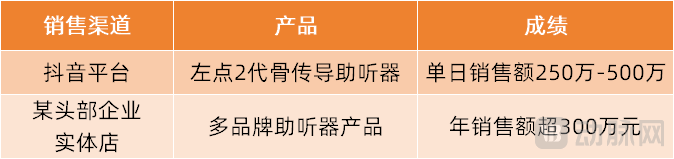
As can be seen, the single-day sales revenue of zdeer’s second-generation bone conduction hearing aid on Douyin has surpassed the annual sales of many physical stores. Additionally, as of March 2025, the historical total sales revenue of the zdeer Medical Devices Flagship Store on Douyin has exceeded RMB 100 million.
According to available information, zdeer was founded in 2014 as an innovative technology brand. It has launched best-selling products such as smart moxibustion boxes, smart cupping and gua sha massagers, and zdeer sleep aids on online platforms including Tmall, JD.com, Xiaomi Youpin, NetEase Yanxuan, and Poizon, accumulating extensive experience in online channel operations.
Meanwhile, zdeer has secured hundreds of millions of yuan in funding across five rounds from investors including Tiantu Capital, CICC Huirong, Hillhouse Investment, Haiquan Fund, Qingliu Capital, Cowin Capital, and Country Garden Ventures.
In recent years, online channels have increasingly become a key focus for consumer healthcare companies. In particular, the Douyin platform, with its massive traffic advantages, serves not only as an interest-based e-commerce channel but also enables brand and product promotion alongside sales.
On Douyin, how can medical device brands start from scratch? How can consumer healthcare products break through to a wider audience? Drawing on the case of zdeer hearing aids, we have summarized four steps for launching medical devices on Douyin, along with a “content marketing + live-streaming monetization” strategy, for industry reference.
On March 12, 2024, zdeer’s second-generation bone conduction hearing aid was launched on the Douyin platform. This product is suitable for patients with moderate, severe, and some cases of profound sensorineural, conductive, and mixed hearing loss.
Since its launch, the product’s sales revenue has maintained a high growth trajectory, with monthly sales rising from RMB 100,000–250,000 to RMB 2.5 million–5 million, achieving breakthroughs in October 2024 and January 2025.。
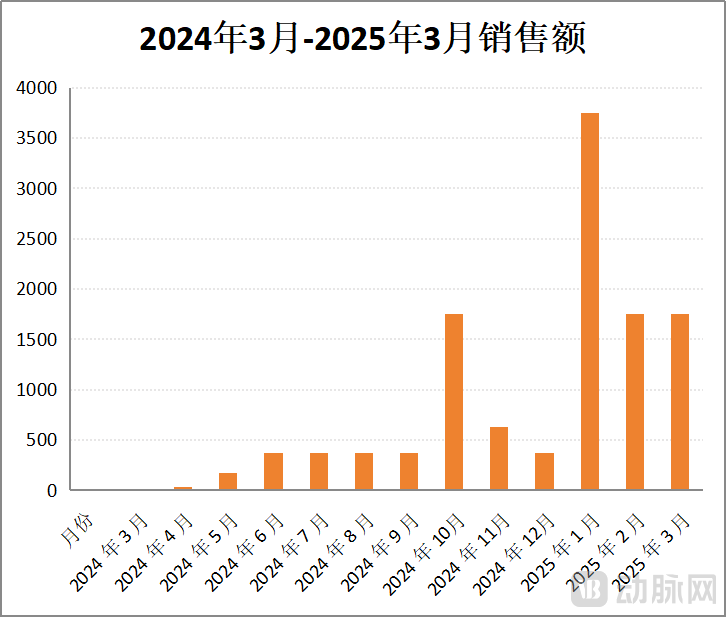
(Monthly sales of zdeer Gen 2 bone conduction hearing aids, with data sourced from Feigua Data. The March 2025 data is as of March 16.)
Currently, the Zdeer Medical Devices Flagship Store has approximately 210,000 followers, while the Zdeer Hearing Aid livestream channel has around 32,000 followers. Leveraging the flagship store’s account, Zdeer achieves monthly sales of RMB 25 million for its second-generation bone conduction hearing aids. How has Zdeer accomplished this?
Step 1: First, break through the traffic bottleneck.Content-Driven Precision Marketing。
It is understood that before the second-generation bone conduction hearing aid was launched, zdeer had already collaborated with bloggers and influencers to promote its hearing aids, build brand awareness, and attract more traffic.。
As of now, videos on the Douyin platform featuring the #zdeerhearingaids topic,Views have exceeded 360 million. Among them, the videos mainly fall into categories such as science popularization, product reviews, first-use documentation, gift-giving, and charitable donations.
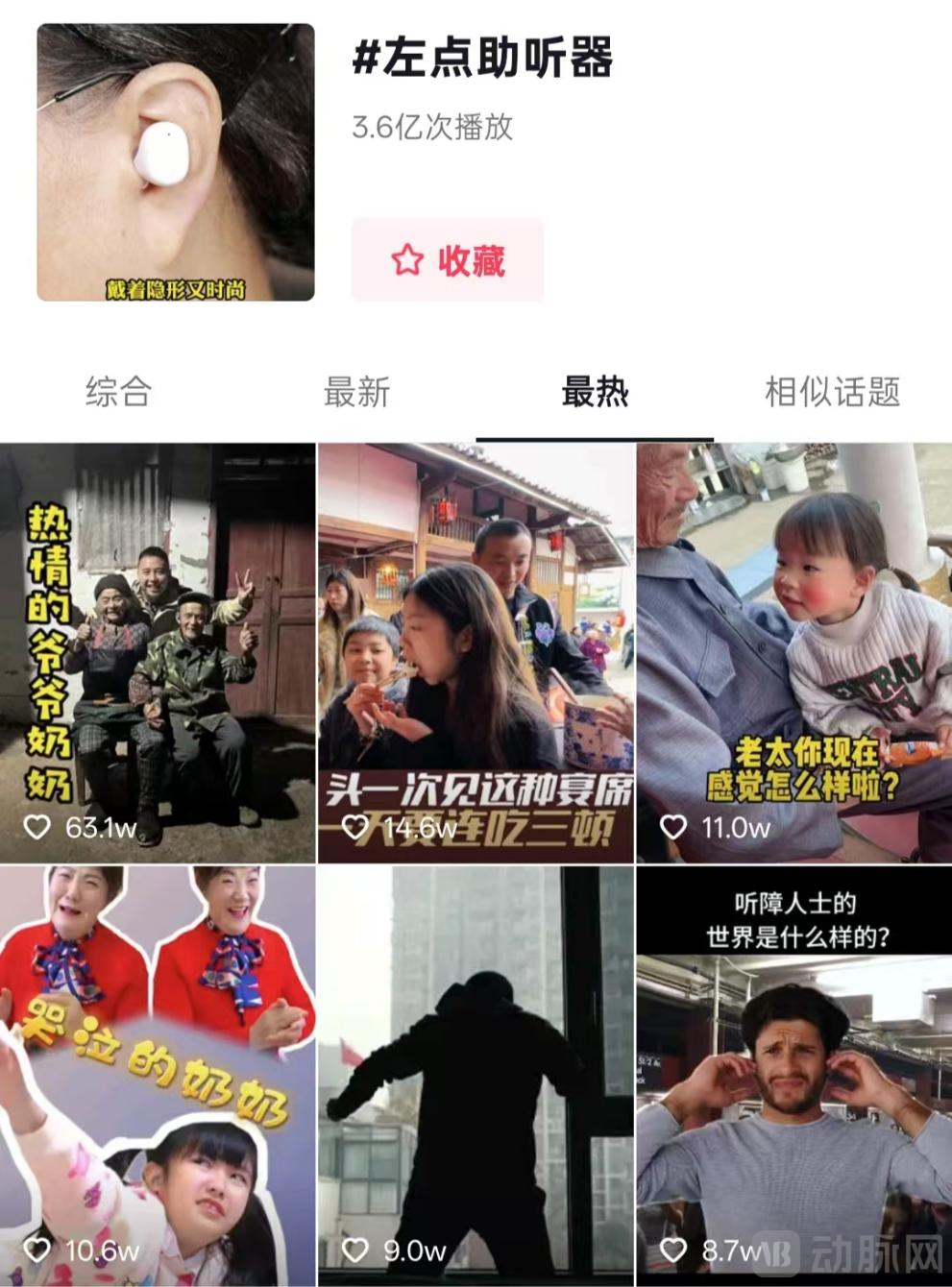
For example, in a hearing aid review video, the content creator adopted an educational approach to introduce the current living conditions of individuals with hearing loss (inability to hear or hear clearly), data on hearing aid usage among this population, and the reasons for the low penetration rate of hearing aids. The video then transitioned to the pain points of traditional hearing aid products and provided a detailed introduction to the advantages and features of zdeer’s bone conduction hearing aids. The video received over 10,000 likes and more than 800 shares.
For another example, in a daily vlog, the content creator showcased their grandmother’s difficulties with hearing loss and communication, raising public awareness of the experiences of individuals with hearing impairment and fostering empathy and filial piety among viewers. The creator then helped their grandmother fit a zdeer hearing aid and engaged in conversation with her, demonstrating the contrast before and after device usage. This highlighted the elder’s emotional response and resonated deeply with the audience. The video garnered over 630,000 likes, 42,000 comments, and 43,000 saves.
Additionally, in October 2024, zdeer collaborated with the influential content creator B Tai (who has 25 million followers) to donate 100 hearing aids. The associated video garnered 645,000 likes, 12,000 comments, and 34,000 shares, achieving significant cross-circle impact. Meanwhile, sales of zdeer’s second-generation bone conduction hearing aids increased approximately fourfold month-over-month in October 2024.
Through diverse video content and Douyin’s recommendation algorithms, zdeer has raised awareness among a broader audience about the challenges faced by individuals with hearing loss, while also generating strong interest in zdeer’s hearing aid products among key groups, including hearing-impaired patients and their children.
Step 2: Assemble a professional team to conduct live-streaming e-commerce.
After establishing its brand and attracting a certain level of traffic, zdeer began selling hearing aids through self-operated channels and live-streaming e-commerce.
On the Douyin platform, products can be sold through brand self-operated stores, influencer promotions, and product card sales.zdeer primarily sells products through its self-operated brand channels.. In 2024, the sales revenue of zdeer's 2nd-generation bone conduction hearing aids was approximately RMB 30 million to RMB 57.5 million, with brand-owned channels accounting for 85.82%, product card sales accounting for 14.18%, and influencer promotions accounting for 0%.
Currently, zdeer has established multiple stores, including the zdeer Official Flagship Store, zdeer Medical Devices Flagship Store, zdeer Healthcare Flagship Store, and zdeer Shengrun Medical Devices Specialty Store, all of which adopt self-operated live streaming for product sales.
Meanwhile, the primary sales channels on the Douyin platform are live streaming, short videos, and product cards.. zdeer primarily focuses on live-streaming e-commerce.In 2024, among the overall sales of zdeer's 2nd-generation bone conduction hearing aids, live streaming e-commerce accounted for 82.1%, short videos accounted for 3.72%, and product cards accounted for 14.18%.
It should be noted that a product card refers to the information cards used by Douyin E-commerce to display product details in shelf-based scenarios, allowing users to directly access the product detail page and complete purchases without needing to go through live streams or short videos. The main entry points include:Douyin Mall、SearchShowcases, product rankings, store homepages, personalized recommendations (“Guess You Like”), event pages, etc.; search and mall recommendations are the primary traffic sources.
Recently, sales revenue for the zdeer Gen 2 Bone Conduction Hearing Aid through the product card channel has increased. Data shows that the share of sales revenue from product cards in recent transactions has risen from approximately 14% to 16.33%. For merchants, the product card channel helps facilitate repeat purchases by existing customers and supports daily sales. As brand influence grows and the base of returning customers expands, sales revenue through this channel is expected to rise steadily.
In terms of live streaming, zdeer also invests in paid traffic acquisition to attract more targeted users.For example, the zdeer hearing aid live-streaming store ran approximately 8,345 ads over the past 180 days, representing a 6,972% quarter-on-quarter increase, with an estimated reach of 2.838 million. Among these, ads driving traffic to live streams accounted for about 40%, product ads for about 37.6%, and general ads for about 44%. Ads driving traffic to live streams refer to short-video ads that direct users to live-streaming rooms; product ads refer to ads that drive traffic to external sites; general ads refer to those with ad delivery activity but not linked to any specific product, live-streaming room, or external link.
Currently, zdeer has established a comprehensive strategy combining “traffic-driven product seeding” with “live-streaming e-commerce,” supported by a specialized team. In the past, traditional e-commerce operations could be managed by a small team consisting of just one operations specialist, one graphic designer, and one customer service representative. However, content-driven e-commerce requires more specialized teams.
According to sources close to the zdeer team, zdeer boasts a content team of nearly 100 members covering scriptwriting, filming, and post-production; a live-streaming team comprising floor directors, operations staff, and anchors; as well as a media (BD) team and a paid traffic acquisition team of dozens.
If consumer healthcare companies wish to explore the Douyin channel, they must first familiarize themselves with content-driven e-commerce and interest-based e-commerce, while ensuring adequate financial reserves. They may either engage a professional team for managed operations or build an in-house team; however, they must commit fully rather than dipping their toes in the water, as half-hearted efforts will ultimately yield nothing.
Step 3: Address pain points to boost transaction volume.
Currently, the hearing aid market faces numerous pain points. zdeer addresses these issues through its pricing strategy, product design, remote fitting services, and tailored sales pitches by live-stream hosts, thereby boosting transaction volume.
Specifically, there is a significant price disparity among hearing aid products, ranging from imported models costing over 10,000 yuan to budget-friendly options priced at just a few hundred yuan. This leaves users struggling to make a choice, torn between concerns over the high cost of premium devices and doubts about the efficacy of low-priced alternatives. In response, zdeer has launched the second-generation zdeer bone conduction hearing aid, priced at 1,999 yuan, promoting it as offering ten-thousand-yuan-level specifications at a thousand-yuan price point.
Another pain point of traditional hearing aids is their conspicuous appearance, which often leads to feelings of inferiority and stigma associated with being labeled as "deaf," thereby discouraging older adults from seeking fitting or wearing them. To address this, zdeer designed its hearing aid with the aesthetic of sports earphones, featuring a fashionable and youthful look that differs significantly from traditional devices. This design alleviates psychological burdens for elderly users, while the ear-hook anti-loss feature further enhances its suitability for this demographic.
Meanwhile, online sales of hearing aids also present fitting challenges. It is understood that professional hearing aids can better serve patients only after proper fitting; hearing aids without professional fitting may fail to provide the intended auditory assistance and could even cause irreversible damage to the user’s residual hearing, potentially leading to deafness.
Based on industry experience, the initial fitting of a hearing aid allows users to achieve basic adaptation. Subsequent follow-ups and fine-tuning are required every one to two months. The entire fitting process typically involves 3–4 sessions over a period of three to six months, enabling users to attain relatively optimal and comfortable outcomes with their hearing aids.
However, the accessibility of standardized fitting services in the market is limited by factors such as distance and cost. To address this, zdeer has assembled an expert team of audiologists and launched a personalized online 1-on-1 fitting service. This service provides consumers with remote online guidance and adjustment, enabling them to undergo intelligent audiometry at home without the need to travel to hospitals or offline stores.
After addressing the aforementioned pain points, zdeer’s live-streaming team then leverages professional sales scripts to close deals.For example, during live broadcasts, the host prominently displays the Medical Device Registration Certificate for the zdeer Gen 2 Bone Conduction Hearing Aid, leveraging this certification to enhance consumer trust. The host also presents invention patent certificates, such as the “Method and Device for Precise Localization and Elimination of Noise in zdeer Bone Conduction Technology,” and explains to consumers the product’s technical principles, innovations, and usage advantages.
Additionally, the host will explain the after-sales policies to users, such as 30-day no-reason returns (30-day trial wear), one-year replacement-only warranty, two-year quality guarantee, free SF Express shipping, complimentary shipping insurance, and one-on-one fitting services provided by certified fitters, thereby alleviating consumer concerns.
According to third-party data, sales of zdeer’s second-generation bone conduction hearing aid have maintained steady growth since its launch.
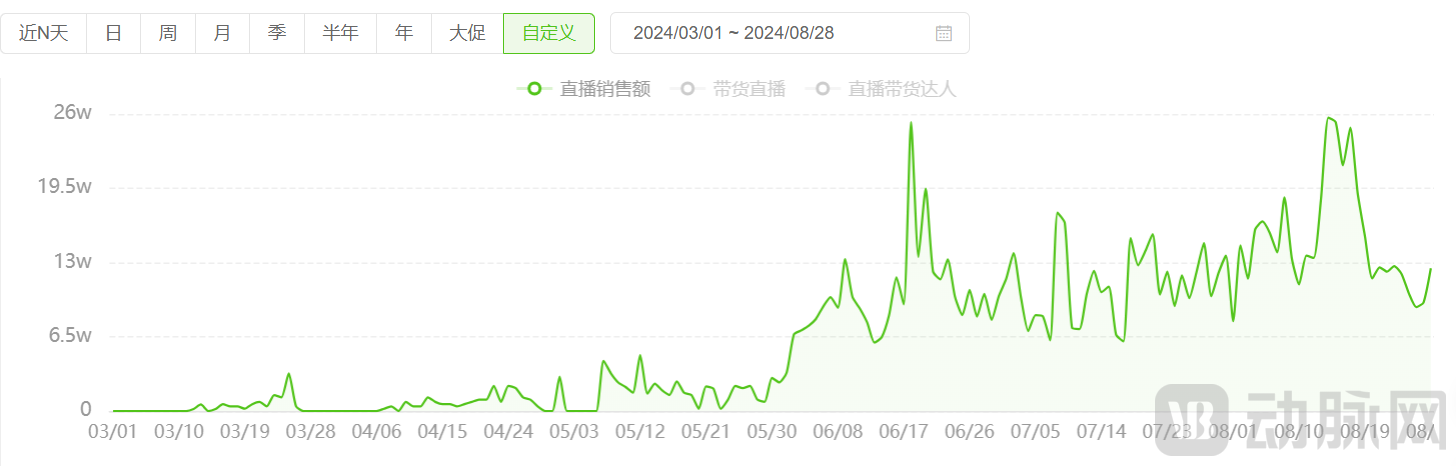
It is worth noting that the product experienced a surge in sales during specific periods, such as October 2024 and January 2025. In addition to factors like marketing, operations, paid traffic acquisition, and holiday gift-giving (e.g., Chinese New Year), promotion by the Douyin platform was also a contributing factor.
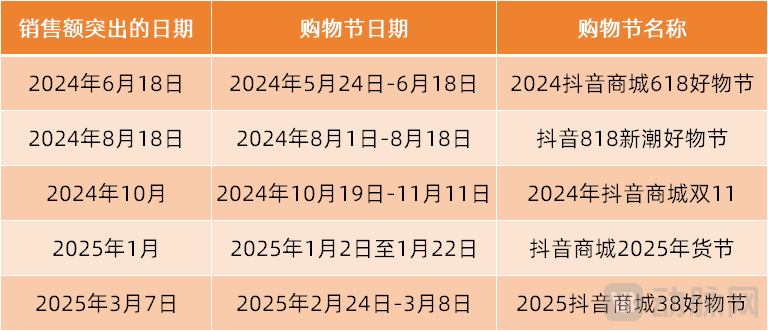
According to the analysis, on specific dates such as June 18, 2024, August 18, 2024, October 2024, and March 7, 2025, the sales volume of this product increased by approximately 10-fold compared to daily transaction levels.
These time points coincide precisely with the shopping festivals hosted on the Douyin platform. For instance, May 24 to June 18, 2024, was the “2024 Douyin Mall 618 Quality Goods Festival,” and August 1 to August 18, 2024, was the “Douyin 818 Trendy Goods Festival”, October 19–November 11, 2024 was the “2024 Douyin Mall Double 11 Festival,” January 2–22, 2025 was the “Douyin Mall 2025 Chinese New Year Shopping Festival,” and February 24–March 8, 2025 was the “2025 Douyin Mall March 8th Good Goods Festival.”
Step 4: Collaborate with key opinion leaders (KOLs) for promotion and sales to accelerate breakthrough into broader markets.
One year after the launch of its second-generation bone conduction hearing aid, zdeer also began to leverage influencer marketing for sales.In recent times, among the sales of zdeer's 2nd generation bone conduction hearing aids, brand self-operated sales accounted for approximately 82.39%, product cards contributed about 16.33%, and influencer-promoted sales increased from 0 to 1.28%.
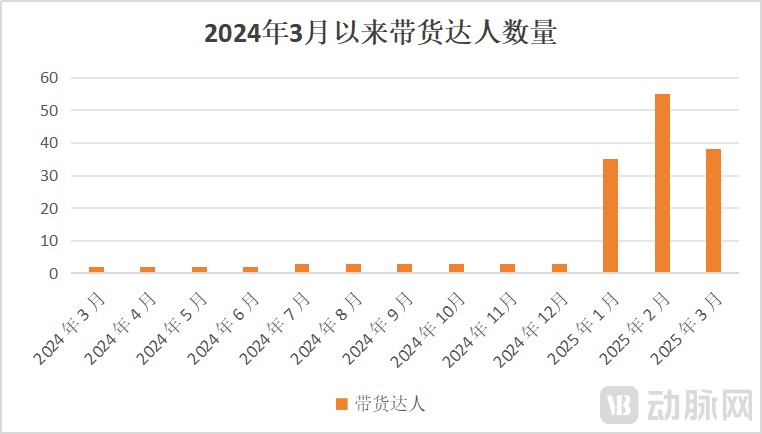
In January 2025, more than 30 influencers began selling zdeer’s second-generation bone conduction hearing aids. As zdeer explores new sales methods and strategies, the sales revenue of its hearing aid products is expected to grow further.
In the hearing aid market, competition is intensifying not only among hearing aid brands but also across sales channels.
In the past, the hearing aid market was monopolized by five major international manufacturers, whose imported devices were priced at over RMB 10,000, with sales channels primarily consisting of offline hearing aid stores. This significantly limited the penetration rate of hearing aids. According to assessments by research institutions, the penetration rate of hearing aid products in China does not exceed 5%.
In fact, the production cost of hearing aids accounts for only 10% of the selling price, with fitting (channel) costs being the primary expense. Today, advancements in remote fitting technology and online sales channels are breaking down channel barriers and unlocking potential.
“Hearing Aid Wars: A 12,000-Word Deep Dive into the Current Landscape and Opportunities in the Hearing Health Sector”The article provides a detailed analysis:Based on sales data from e-commerce platforms (accurate sales data should be calculated based on the chip inventory consumption of each hearing aid manufacturer),2023Year12Month to2024Year11month, on the three major online hearing aid sales platforms111Home Brand Stores, Total Hearing Aid Sales1,573,661units, with sales reaching129,57610,000 yuan. In45%In terms of return rate, online sales of hearing aids account for approximately7billion yuan. The sales volume and revenue of online hearing aids have demonstrated a certain market size and growth potential.
Among online channels, JD.com, Tmall, Douyin, and Pinduoduo are the primary sales platforms for hearing aids. Across these channels, a total of 111 store brands sell hearing aids. Of these, 15 store brands achieved gross merchandise value (GMV) exceeding RMB 10 million in the past 12 months, calculated using a conservative 50% return rate.
Online sales remain largely unfamiliar to most companies in the medical device sector. In addition to analyzing some of the key success factors behind zdeer’s hearing aids, VCBeat will also host the 2025 Top 100 Future Healthcare and Pharma Exhibition in Suzhou on May 9–10, featuring a specially curated"Conference on Growth of New Products and New Channels in the Out-of-Hospital Market"We have invited leading brands and e-commerce executives to jointly explore topics such as “How to Build a Highly Shareable Healthcare Traffic IP,” “Breaking Through the Bottleneck of E-Commerce Channel Growth,” and “E-Commerce Driven: How to Achieve N-Fold Growth for Pharmaceutical and Medical Device Brands and Operations.” Interested friends are welcome to scan the QR code to register for the event.

Currently, online channels such as Douyin, Tmall, and JD.com are also employing various strategies to capture market share.
Douyin is a content-driven and interest-based e-commerce platform, primarily operating on a “products seeking users” model. Beyond its e-commerce functionality, Douyin also serves as an effective platform for brand and product promotion. Consequently, many hearing aid brands are increasing their investments on the Douyin platform.
To address the pain points in the online sales of hearing aids, Tmall partnered with ten major hearing aid brands—Oticon, Skyworth, Hear All, iFlytek, Cofoe, Signia, Siemens Hearing Instruments (Sivantos), Widex, zdeer, and ZhiTing—to establish the “Hearing Aid Action Brand Alliance” on January 6, 2025, and released the industry’s first service standard for hearing aids.
The alliance’s service standards include: 30-day no-questions-asked returns and exchanges, 30-day audiologist support, one-year replacement-only warranty, annual hearing re-evaluations, and a three-year depreciation subsidy. These five core service standards cover the entire customer journey, from purchase and trial fitting to long-term use and replacement.
Brands within the alliance will jointly adhere to standardized service guidelines to enhance consumer experience, which will also help increase the proportion of online channel sales.
JD.com Refuses to Lag Behind. On March 4, JD Health joined forces with WSA, iFlytek, Zhitin, Cofoe, Oticon, and other leading brands in the hearing industry to establish the “JDH+N” Hearing Aid Brand Alliance. According to reports, multiple new products from the alliance’s member brands will make their exclusive nationwide debut on the JD Health platform.
For different platforms, various medical device products and consumer healthcare products need to be deployed in a targeted manner according to the characteristics of each platform, which helps related companies to share a portion of the rapidly growing online channels.