

The Secret Behind Post-RX-to-OTC Blockbusters: How Nearly 100 Drugs Achieved Explosive Growth with 1100% Sales Surge in Three Years
Dual-engine drive within and outside hospitals will become the new ecosystem of the industry.
Behind the rock-bottom prices in each volume-based procurement round lies the pharmaceutical industry’s reluctance yet compulsion to participate. As policies such as volume-based procurement, cost containment, and restrictions on the proportion of drug expenditures create a cumulative effect, the hospital-based market—once reliant on physicians’ prescriptions—has shifted from a “golden track” to a red ocean. Although the out-of-hospital market is also undergoing segmentation, it continues to unlock incremental growth opportunities through various innovations.
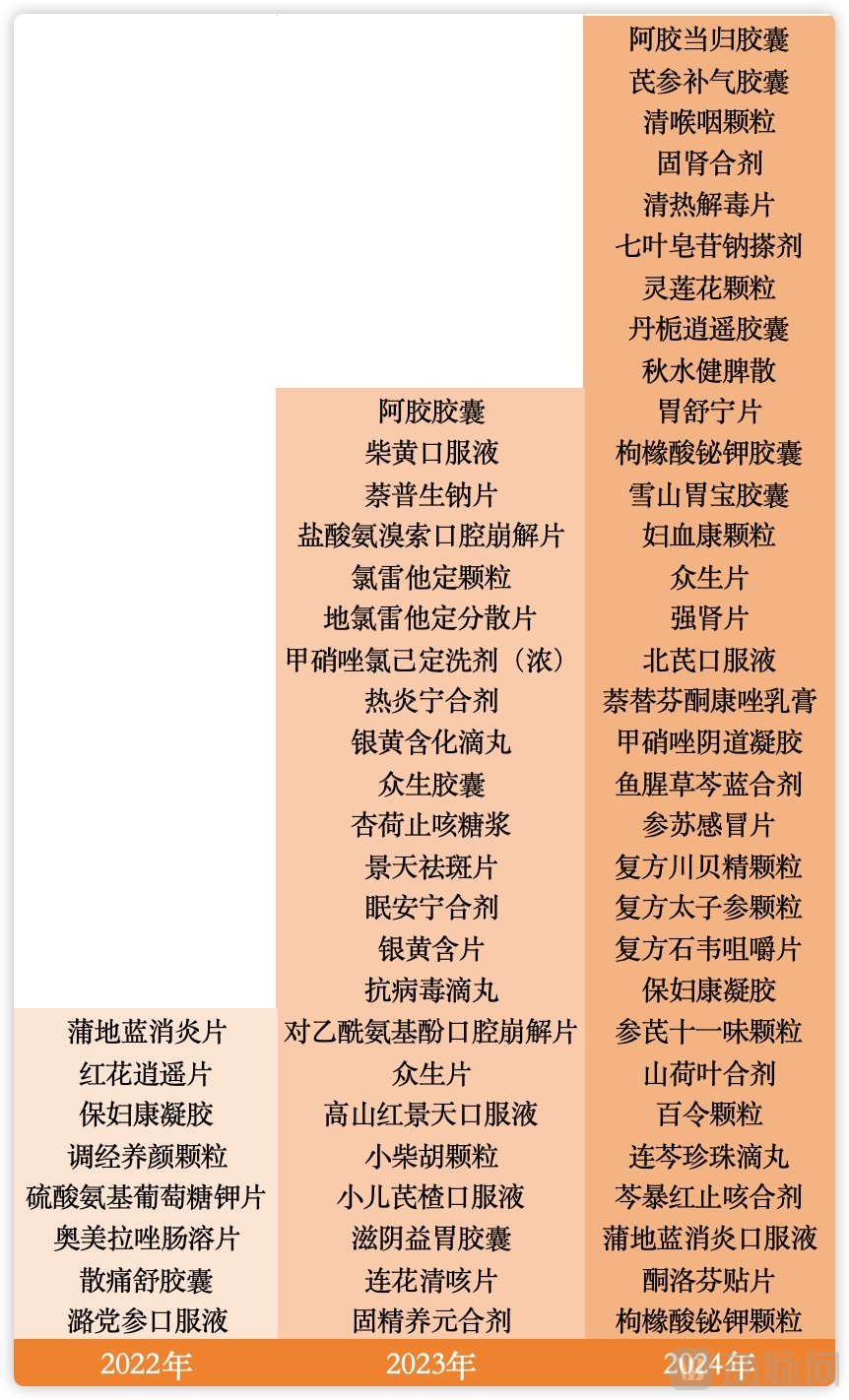
Trends in the Transition from Prescription to Over-the-Counter Status in China and Abroad Over the Past Three Years, Data Sourced from the National Medical Products Administration
In recent years, numerous prescription (RX) drugs have been switched to over-the-counter (OTC) status, expanding into the out-of-hospital market and ushering in a new wave of competition in the retail sector. Meanwhile, out-of-hospital sales channels are undergoing significant transformation. According to data from Menet, the total sales of physical pharmacies and online pharmacies (including pharmaceutical and non-pharmaceutical products) in China reached RMB 923.3 billion in 2023. The market share of offline pharmacies declined to 67.5%, while sales through online channels exceeded RMB 300 billion.
Shifts in market share signal that pharmaceutical companies must adjust their marketing strategies accordingly. Especially in the OTC market, how to better align with current consumer needs has become an urgent issue for every pharmaceutical company, particularly those seeking to transition prescription drugs to over-the-counter status.
The appeal of the out-of-hospital market is accelerating its release.
Affected by policies such as healthcare insurance cost containment and the control of drug-to-revenue ratios, the in-hospital market for certain prescription drugs has faced pressure. The trend of switching prescription drugs to over-the-counter (OTC) status has become pronounced, further heating up the OTC market. According to data from Sinopharm Technology, many prescription drugs that were reclassified as OTC in recent years have seen a significant increase in sales. For instance, products such as Pudilan Anti-inflammatory Tablets, Budesonide Nasal Spray, and Lactulose Oral Solution have all achieved growth rates of nearly 20%.
Taking Lu Dangshen Oral Liquid as an example, the National Medical Products Administration approved its transition to over-the-counter (OTC) status at the end of 2022. According to data from Menet, sales of Lu Dangshen Oral Liquid surged by 1,124.05% year-on-year in the first half of 2023. In 2024, it achieved another year-on-year growth of 151% from the first to the third quarter.
Lu Dangshen Oral Liquid, as the exclusive product of Shanxi Zhenglai Pharmaceutical, was approved for market launch as early as 2005. Although it was included in the National Reimbursement Drug List in 2019, its true rapid expansion occurred only after it was reclassified as an over-the-counter (OTC) drug, thereby enabling access to out-of-hospital channels.
In addition to exclusive products, Pudilan Anti-inflammatory Tablets, as a non-exclusive product, also hold significant representativeness. After being reclassified as an over-the-counter (OTC) drug in January 2022, sales of Pudilan Anti-inflammatory Tablets exceeded RMB 1.5 billion that year, representing a year-on-year increase of more than 60%, according to data from Sinohealth. Among these, related products under Yunnan Baiyao accounted for over 20% of the domestic market share. According to the company’s 2024 semi-annual report, its Pudilan Anti-inflammatory Tablets achieved a near double-digit year-on-year growth.
In addition to proprietary Chinese medicines, some chemical drugs are also transitioning from prescription-only to over-the-counter (OTC) status.
For instance, budesonide nasal spray, which was introduced to the Chinese market in 2004, generated nearly RMB 750 million in domestic sales in 2022, representing a year-on-year increase of over 15%, after its reclassification from prescription-only to over-the-counter status in 2021. This achievement was made despite an overall year-on-year decline of nearly 44% in the broader budesonide inhalant market (including nasal sprays, metered-dose inhalers, dry powder inhalers, and inhalation suspensions) in 2022.
In the first half of 2023, according to data from Sinohealth Technology, Johnson & Johnson’s budesonide nasal spray, Rhinocort, generated sales of RMB 119 million in tiered hospitals in China, a year-on-year increase of 8.93%; its sales in retail pharmacies reached RMB 242 million, representing a year-on-year growth of 13.08%.
As the payment capacity in China’s domestic hospital market gradually “peaks,” pharmaceutical companies are shifting their products from prescription-only to over-the-counter (OTC) status, focusing on the OTC market as a viable path to uncover a second growth curve. However, in this process, companies will face challenges that are entirely different from those encountered previously.
TCM marketing cannot thrive without cultural endorsement.
In recent years, Chinese patent medicines have accounted for more than 70% of drugs transitioning from prescription-only to over-the-counter (OTC) status. If, during market promotion, these products can leverage their inherent characteristics and integrate cultural elements, it will be more conducive to enhancing brand awareness. Relying solely on policy support or the demand growth driven by an aging society will make it difficult for their development to achieve a breakthrough.
According to data from Zhongkang Technology, among the top ten gastrointestinal disease medications by sales in the 2023 annual retail market, in addition to the widely recognized Jianwei Xiaoshi Tablets, which have ranked first for seven consecutive years, the most noteworthy product is Ludangshen Oral Liquid, whose sales increased by 779.4% year-on-year.
The rapid growth of Lu Dangshen Oral Liquid stems from its ability to seize a fleeting window of opportunity.
Following its transition to over-the-counter (OTC) status in 2022, the product was included in December of that year in the “Guidelines for Home-Based Traditional Chinese Medicine Interventions for Individuals with COVID-19” issued by the Expert Committee on Prevention and Control of TCM Epidemics under the National Administration of Traditional Chinese Medicine. It was also incorporated into infection recovery protocols in multiple provinces and municipalities, driving a surge in sales.
The policy’s impetus was limited to the short term, during which local enterprises and the government swiftly seized this window of opportunity to launch a series of marketing campaigns integrating Traditional Chinese Medicine (TCM) culture.
For example, scientific popularization and promotion of the product were carried out on the Douyin platform, with extensive publicity focused on its main raw material, Lu Dangshen (Codonopsis pilosula from Lu’an). During this process, the origin of Lu Dangshen—the Changzhi region in Shanxi Province—was also prominently highlighted. Meanwhile, local authorities formulated the Strategic Plan for the Regional Public Brand of Shangdang Dangshen. Centered on the “Shangdang Dangshen” regional public brand, a series of unified identifiers were designed, including logos, packaging boxes, gift bags, and promotional slogans. These branding elements were licensed to Codonopsis pilosula production enterprises, thereby generating economies of scale.
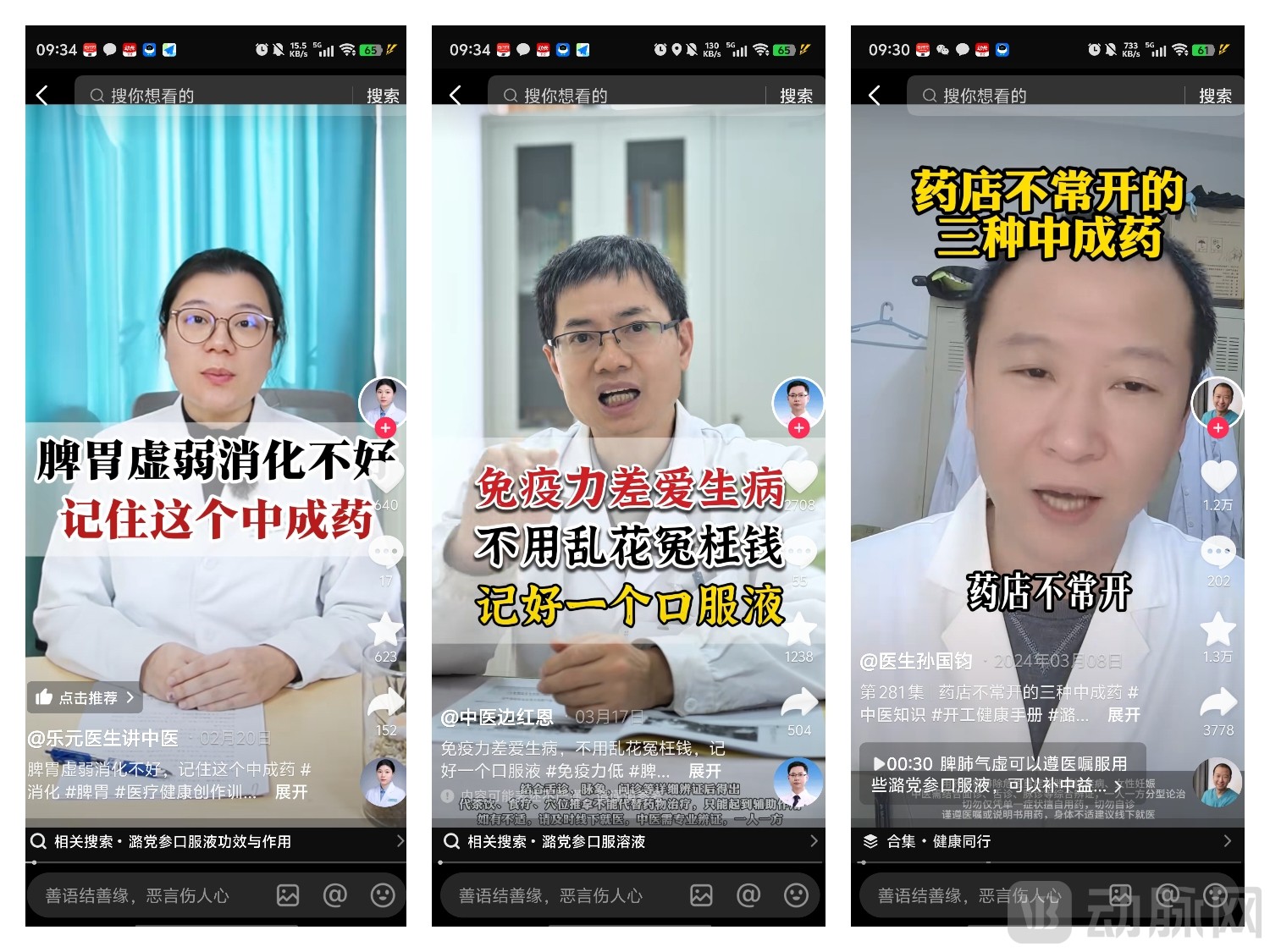
Douyin Platform: Physician-Led Popular Science Promotion, Image Source: Douyin Screenshot
To enhance the appeal of traditional Chinese medicinal (TCM) herb brands, the Changzhi TCM Herb Industry Development Center has personified Lu Codonopsis by creating a cartoon mascot, the “Codonopsis Elf,” to facilitate interactive communication between the brand and the public. Additionally, the center produced promotional materials such as the *Atlas of Changzhi Traditional Chinese Medicinal Herbs*, *Bencao Shangdang: Benefiting All People*, *Shangdang Codonopsis*, the *Shanxi Medicinal Tea Shangdang Brand Series*, and the *Shangdang Codonopsis Sand Animation*. Meanwhile, a short-video competition themed around Lu Codonopsis and other local TCM herbs was hosted on Douyin (TikTok) to promote the TCM herb industry. The center also facilitated the development of related derivative products, such as medicinal teas.
Furthermore, to ensure effective implementation of promotional efforts, dedicated sales counters have been established in airports, high-speed railway stations, and tourist attractions in key cities, while official stores have been launched on major e-commerce platforms such as JD.com and Taobao, thereby building a comprehensive marketing network that integrates both online and offline channels. Meanwhile, in response to market feedback, small-volume bottled products designed for portability and ease of administration have been developed.
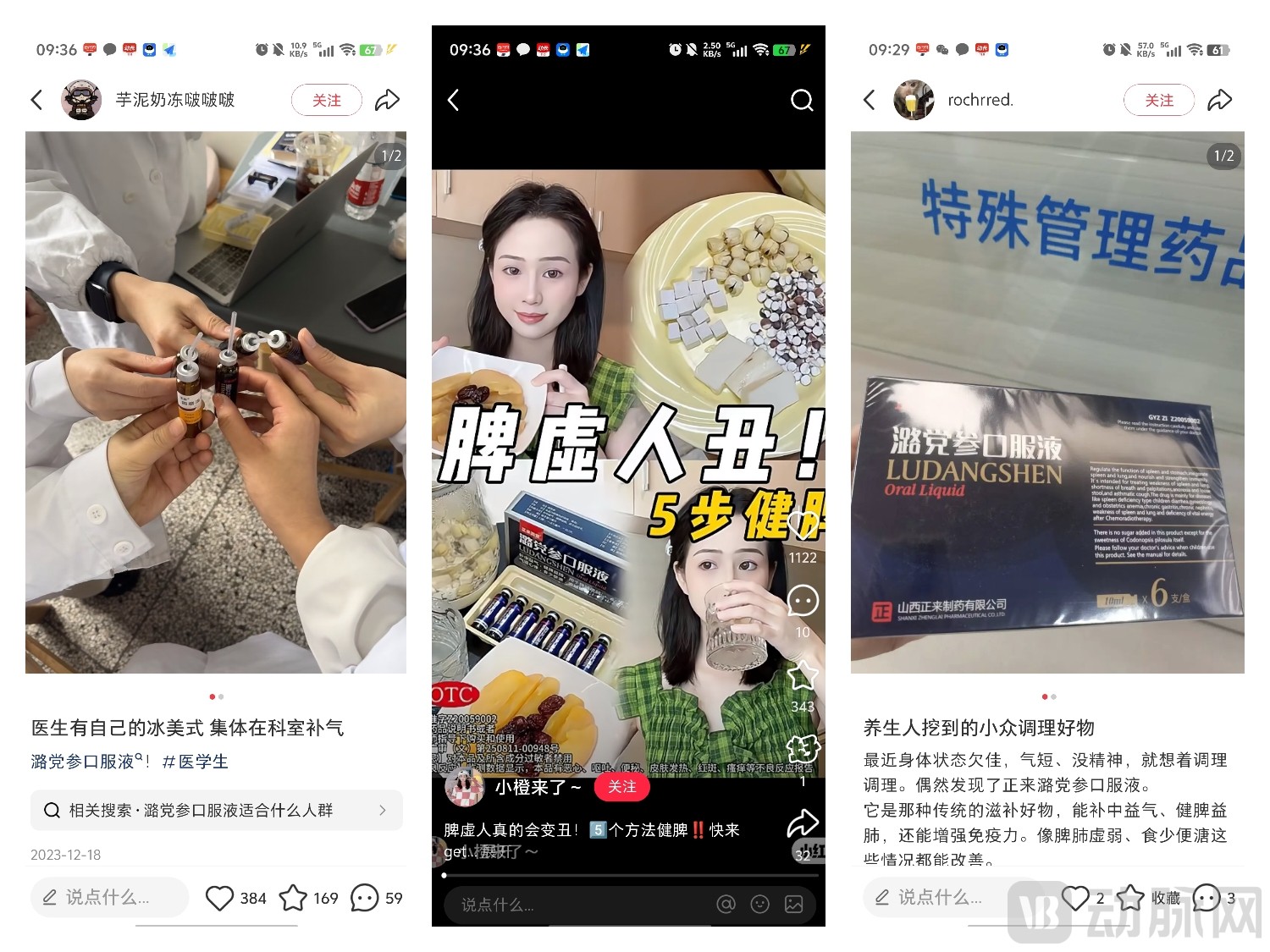
Xiaohongshu Platform Product Recommendation Post Promotion, Image Source: Xiaohongshu Screenshot
It is precisely through this series of operations that the product has leveraged Traditional Chinese Medicine (TCM) culture to build product and brand awareness, thereby achieving a synergistic effect in its promotional campaigns. Copywriting that directly addresses the pain points of the younger generation—such as “Doctor’s Iced Americano,” “alleviating shortness of breath,” and “nourishing blood for spleen deficiency”—has widely circulated among the target audience, driving purchasing behavior.
The success of Lu Dangshen Oral Liquid is not only a triumph for the enterprise, but also a testament to the successful development of the local industrial chain encompassing the cultivation, processing, and sales of Chinese herbal medicines, and moreover, a milestone in the inheritance and advancement of Traditional Chinese Medicine (TCM) culture.
Product application scenarios are the optimal entry point for marketing.
Budesonide Nasal Spray is a topically applied glucocorticoid indicated for the treatment of seasonal and perennial allergic rhinitis, as well as perennial non-allergic rhinitis. Its efficacy has been fully validated through long-term clinical use as a prescription medication.
After transitioning to the over-the-counter (OTC) market, this medication became directly accessible to consumers. Although the prevalence of allergic rhinitis varies across different cities, budesonide, as a first-line therapy, is commonly used to alleviate symptoms during the acute phase. Therefore, the primary use case for budesonide targets urgent situations, emphasizing the convenience of “rapid relief of rhinitis symptoms” to enable patients to promptly manage seasonal allergies.
In other words, products need to demonstrate their unique value at key milestones.
Taking Rhinocort as a case in point, the brand strategically launched a Weibo campaign during the seasonal transition, sparking initial public discussion with the topic: “How Can Allergic Rhinitis Sufferers Protect Themselves Amidst the Double Assault of Willow Catkins and Sandstorms?” It then leveraged news website channels and collaborations with key opinion leaders (KOLs) to delve into the causes of rhinitis flare-ups triggered by seasonal changes, thereby further stimulating public engagement. Subsequently, when a sudden sandstorm in Beijing trended on social media, the brand swiftly capitalized on this trending topic and promptly provided solutions for managing allergic rhinitis.

Brand-related topics alone garnered 60 million views. Image source: Weibo screenshot
Ultimately, through this series of carefully curated activities, the public’s heightened discussion around seasonal allergies was effectively converted into brand visibility and engagement.
Meanwhile, this strategy was not confined to the Weibo platform but was implemented across all major mainstream platforms nationwide.
As the topic gained traction on Weibo, this hot issue was also brought to platforms such as Douyin, continuing to attract attention. After achieving substantial exposure, the brand leveraged Xiaohongshu (Little Red Book) as its primary platform to build user awareness through a “seeding” strategy. By harnessing the visibility and influence of top-tier Key Opinion Leaders (KOLs) for brand endorsement, and combining their efforts with original content created by mid-tier influencers and authentic users, the brand further highlighted product advantages and key selling points, effectively stimulating consumers’ purchase intent.

Xiaohongshu’s product recommendation posts further convert topic-driven traffic into purchasing behavior. Image source: Xiaohongshu screenshot
During the content promotion campaign on Xiaohongshu, high-traffic keywords in popular categories such as rhinitis, allergic rhinitis, and Rhinocort were comprehensively covered, enabling precise traffic capture for the core search term “rhinitis.” At the peak of the campaign, brand visibility occupied 50% of the first five screens of search results. Meanwhile, topics related to the Rhinocort brand remained consistently active, accumulating nearly 4 million views. The entire project generated over 120 million video plays and more than 1.2 million total interactions.
Furthermore, Rhinocort partnered with Tasogare Coffee to integrate its products into various scenarios, including the workplace, social interactions, and sleep. On Xiaohongshu (Little Red Book), users browsing related topics or posts, or searching for Rhinocort keywords, had the chance to trigger surprise blind boxes. Meanwhile, an offline pop-up store event titled “Allergy Sufferers’ Creation Festival” was held, and a public welfare campaign called “A Little Red Flower That Won’t Cause Allergies” was launched in collaboration with Tencent, achieving an integrated online-and-offline marketing promotion.
The ability to execute marketing campaigns at specific junctures and achieve phased results is undoubtedly highly attractive to companies seeking to significantly enhance product visibility and strengthen brand influence on new media platforms. However, this process requires companies to possess keen insights into their target consumer groups, coupled with appropriate marketing tactics and suitable media strategies—capabilities that must be gradually built and refined over time.
“Rx-to-OTC” for drugs is only the beginning; what truly matters is the shift in marketing mindset from prescription to over-the-counter.
When entering the over-the-counter (OTC) market, companies must abandon the mindset previously used for prescription drugs, gain a deep understanding of how the OTC market operates, and develop detailed strategies across multiple dimensions, including product selection, planning, positioning, and communication. Meanwhile, companies need to thoroughly understand the needs of their channel partners. Only in this way can they avoid any delays or bottlenecks in the sales process.
For instance, the product selection phase.
Observing numerous successful cases, it is evident that not all prescription drugs are suitable for conversion to over-the-counter (OTC) status. When making such transition decisions, marketing strategies and market demand must be comprehensively considered. For instance, drugs with high safety profiles, clear indications, and suitability for self-diagnosis by consumers—such as Compound Banlangen Granules—are often the preferred candidates for this transition.
Furthermore, pharmaceutical products with prominent consumer attributes, such as gastrointestinal medications (e.g., Lactulose Oral Solution) and respiratory medications (e.g., Chaiyin Granules), exhibit characteristics of high-frequency and inelastic demand, making them staple items in household medicine cabinets. Finally, products that have already established a certain level of market recognition, such as Jichun Pharmaceutical’s Honghua Xiaoyao Tablets, have rapidly expanded their retail presence after transitioning to over-the-counter (OTC) status by leveraging the brand awareness accumulated through prior hospital sales and conducting public science education campaigns.
The success of transitioning prescription drugs to over-the-counter (OTC) status essentially lies in the comprehensive enhancement of product strength, brand equity, and channel power through marketing activities. Enterprises must plan from a strategic perspective, centering on patient needs, and build a complete marketing ecosystem to stand out in the highly competitive market.
Naturally, this process requires companies to build capabilities that were previously lacking in their in-hospital sales operations.
In short, the significant growth in the out-of-hospital market is largely driven by e-commerce.How Can Brands Achieve N-Fold Growth in Operations?What are the components of the overall operational workflow, and how should these components be effectively integrated and coordinated? In the process of e-commerce operations,How to Deeply Integrate Data Analytics, Technology Application, and User Experience Design, to ensure the effectiveness of e-commerce operations. However, how should this integration be implemented? Furthermore, how to“Creating” Traffic in E-commerce Marketing Campaigns?These capabilities were not addressed in many companies’ past in-hospital sales practices. These topics will beVCBeat's Conference on New Product and Channel Growth in the Out-of-Hospital Market, Held on May 10Detailed explanations are provided above. Enterprises seeking to develop a second growth curve in the out-of-hospital market can register by scanning the QR code on the poster below.
In the past, companies only needed to build strong relationships with physicians within hospitals, while establishing stable connections with end users through out-of-hospital channels. Moreover, this process requires continuous refinement and optimization by enterprises. For instance, once the aforementioned steps are successfully completed and a purchase is made, how to sustain this relationship and how to unlock the customer’s lifetime value remain areas that companies must gradually explore.
Competition in the out-of-hospital market is fundamentally shifting from a battle for traffic to strategic positioning within the ecosystem. Enterprises must build and enhance corresponding capabilities to secure a place in the future ecosystem.