

Kingsoft Cloud and Yichang Central People's Hospital Unveil Jointly Developed Smart Healthcare Core Infrastructure Featuring Next-Gen Integrated Electronic Medical Records
On March 28, the seminar and achievement exhibition exchange meeting titled “Entering Yichang: Practical Exploration and Outcome Showcase of ‘Cloud-Data-AI’ Technologies in Hospitals” was successfully held in Yichang. The event was jointly organized by the Health Information Professional Committee of the Hubei Provincial Health Statistics and Information Society and China Digital Medicine Magazine Co., Ltd., hosted by Yichang Central People’s Hospital, and co-organized by Kingsoft Cloud.
Nearly 300 attendees, including Yang Jian, Member of the Standing Committee of the Party Committee and Vice President of China Three Gorges University as well as Secretary of the Party Committee of Yichang Central People’s Hospital; Hu Jianping, former Deputy Director of the Statistical Information Center of the National Health Commission; relevant leaders from the health commissions of Hubei Province and Yichang City; experts from authoritative medical institutions; heads of informatics departments at Grade A tertiary hospitals in Hubei, Guangdong, and other regions; university scholars; and representatives from technology companies, gathered to explore frontier practices in healthcare digitalization.

As the digital transformation of healthcare enters a critical phase, Kingsoft Cloud, in partnership with Yichang Central People’s Hospital, has leveraged “Cloud, Data, Intelligence, and Blockchain” as technological linkages to innovatively build a smart healthcare foundation. This initiative not only breaks through the limitations of traditional informatization but also ushers in Healthcare Digital Transformation 2.0 by adopting a “Technology + Scenario” model, addressing pain points such as data silos and system rigidity.
As a core highlight of the conference, Kingsoft Cloud and Yichang Central People's Hospital jointly presented multiple co-developed achievements in a systematic manner for the first time.
Joint R&D Achievements Released: Three Core Technologies Build the Foundation of Smart Healthcare
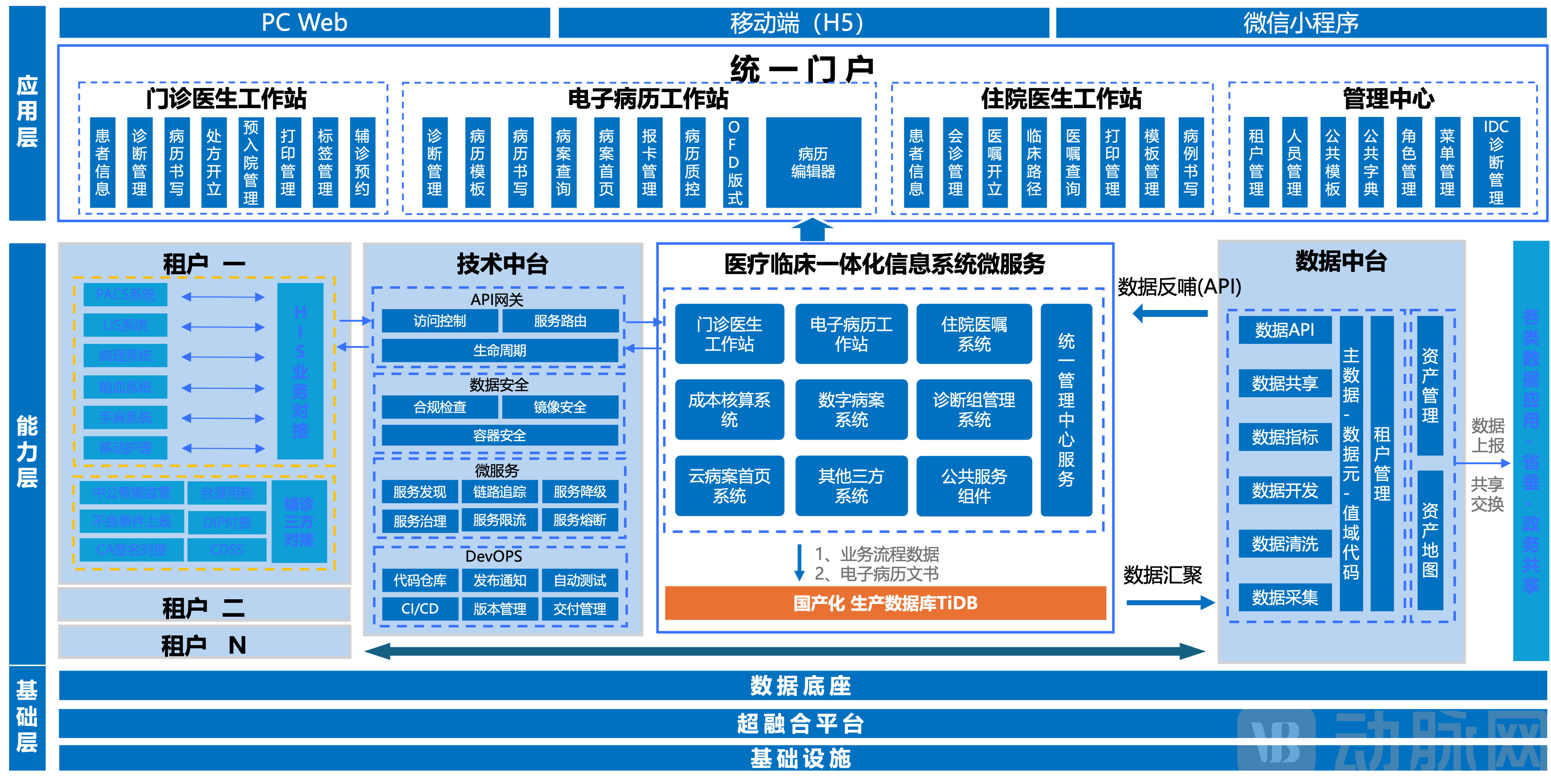 (Overall Functional Architecture)
I. Next-Generation Integrated Electronic Medical Record System: Reengineering the Entire Clinical Care Process
Built upon Kingsoft Cloud’s technology and data middle platforms, it deeply integrates the electronic medical record (EMR) editor customized by Kingsoft WPS for the healthcare industry, as well as the OFD Document Center.
From a technical perspective, the entire system adopts a containerized microservices architecture, featuring the following technical highlights:
● Comprehensive cloud-native distributed technology architecture system, spanning from applications and middle platforms to middleware and databases;
● Supports multi-tenancy mode, enabling unified application deployment across multiple healthcare institutions to achieve standardized modeling and storage of medical data, unified data sharing within the system, and standardized integration with hospital information systems at different facilities;
● B/S architecture, enabling the front-end application to adaptively display across multiple terminals including PCs, tablets, and mobile phones;
● The entire technology stack is fully localized, with the database utilizing TiDB, a domestically developed distributed database;
● Deeply integrated AI models and agents to deliver tailored AI capabilities across diverse application scenarios;
● Leveraging the inherent advantages of WPS, it can directly generate OFD layout files via API, meeting the latest requirements for smart healthcare grading.
The overall system design adopts an internet-centric approach, prioritizing interactive user experience to reduce the learning curve, and features the following highlights:
● Comprehensive Doctor-Patient Management: A patient-centric, multi-dimensional management approach. In addition to outpatients and inpatients, it covers internet-based healthcare, consultations, and chronic disease management, while providing an overview of all pending medical tasks for physicians.
● Order-Driven Medical Records: Instead of physicians proactively seeking templates for documentation, medical record writing tasks are automatically generated based on clinical activities, thereby breaking down the boundaries between outpatient and inpatient care;
● Multimodal Medical Records: Support for inserting images, videos, and audio into medical records to construct more authentic and comprehensive patient histories through multimodal integration;
● Large Model Application: GPT-based AI large models assist in generating draft medical records, improving the efficiency of medical documentation;
● Comprehensive Information Sharing: Achieve interoperability and sharing of medical information to the greatest extent possible, providing comprehensive medical data for reference and decision-making within work scenarios;
● Inheritable Template Management: The template inheritance feature for medical records enables the addition of policy-related document nodes, eliminating the need to manually add them to each individual template.

(Sang Ye, Director of the Information Management Department at Yichang Central People's Hospital)
II. Cloud-Native Technology Middle Platform: Agility-Driven Business Innovation
Leveraging Kingsoft Cloud’s DevOps cloud-native technology middle platform, Yichang Central People’s Hospital implemented an architectural upgrade centered on “cloud-native technology middle platform + microservices application refactoring.” By integrating efficient pipeline management and artifact repositories, the hospital deployed over 40 pipelines to support the rapid iteration of eight application projects, reducing the code-to-release cycle from two hours to under five minutes and improving build efficiency by 75%. The platform employs an API gateway for unified authentication and routing, handling more than 300,000 daily calls to data services and breaking down information silos. Operating with over 30 nodes and 100 containers, the technology middle platform provides full lifecycle management capabilities. Combined with the data middle platform, it enables data API sharing and intelligent decision-making, delivering PaaS-level support for intra-hospital business collaboration and significantly enhancing system stability and agility.

(Yin Panlong, Senior Engineer at Yichang Central People's Hospital)
III. Intelligent Data Middle Platform: Unlocking the Core Value of Data
Addressing the challenges of hospital data integration, Kingsoft Cloud partnered with Yichang Central People’s Hospital to achieve the goals of “unified, timely, collaborative, and continuous” medical data over a one-year period. Leveraging real-time data acquisition technology, patient vital signs data is transmitted from the Hospital Information System (HIS) to the data center in as little as five seconds. An innovative three-tier acquisition optimization mechanism ensures that data is captured comprehensively and accurately. By implementing a lakehouse architecture that integrates both streaming and batch processing, ten years of historical data have been consolidated to support scenarios such as real-time push of laboratory and examination results, retrieval of historical records, bedside decision-making, and infectious disease early warning.Adhering to the philosophy that “complete data + user-friendly tools = autonomous and controllable hospital productivity,” Kingsoft Cloud collaborated with the hospital’s data R&D team. Utilizing the Kingsoft Cloud Data Platform’s capabilities—such as zero-code integration, one-stop asset discovery, and one-click service deployment—they assisted in achieving “autonomous and controllable” data collection and service development for the new campus. Built upon the data center foundation and enhanced with large language model capabilities including intent recognition, code generation, and reasoning-based attribution, an intelligent data analysis assistant was launched. This enables a seamless workflow where conversation leads to analysis, analysis yields insights, and insights drive decision-making.
Currently, the hospital has completed data collection from 61 source systems across its two major campuses, established 900 data models, developed over 300 data services, supported more than 40 applications, and cumulatively processed over 30 billion data records. In this era of rapid digital and intelligent transformation, Kingsoft Cloud will continue to advance the new paradigm of data center construction centered on “AI for Data, Data for AI.”
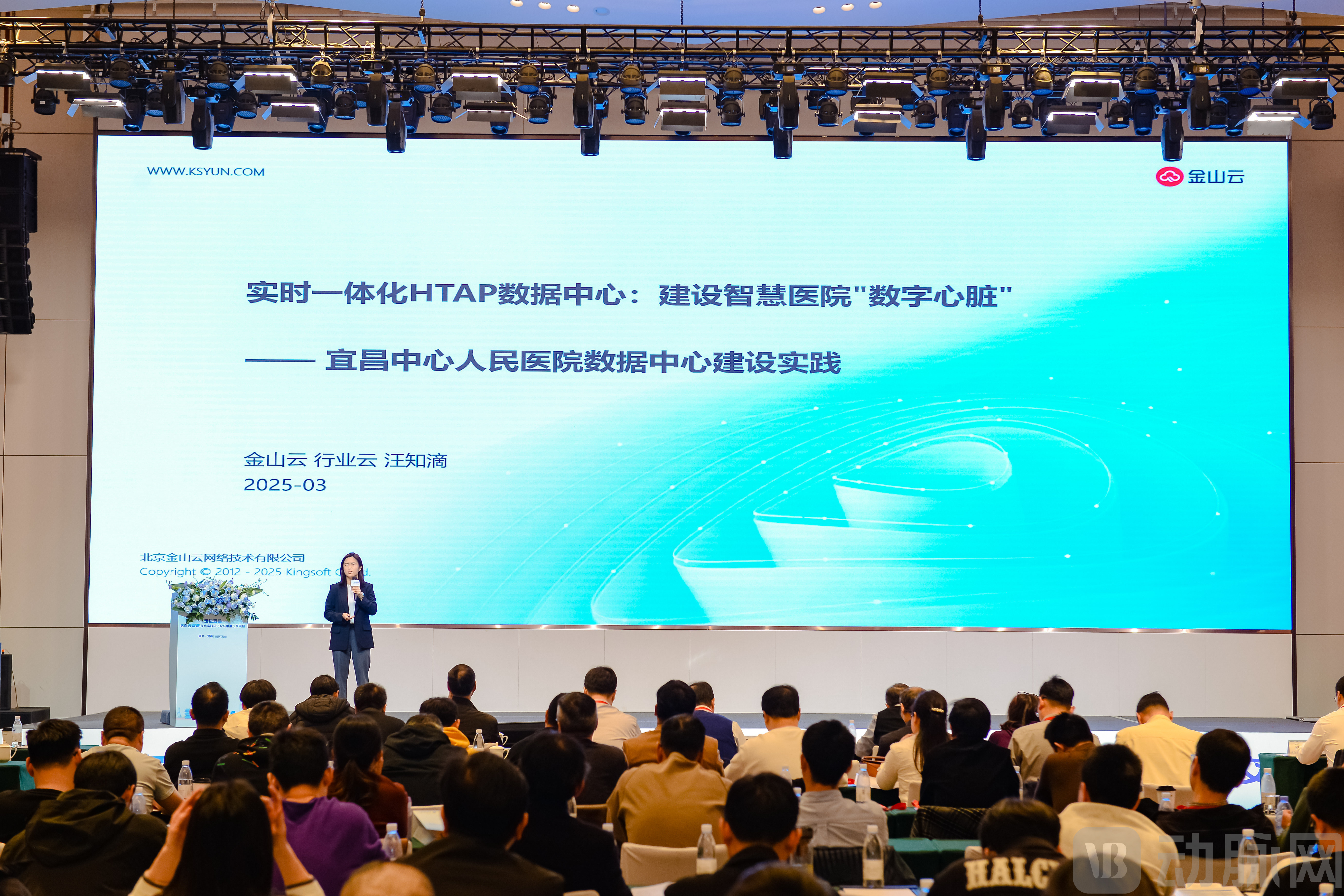
(Wang Zhidi, Technical Director of Intelligent Technology at Kingsoft Cloud Digital Health Cloud)
Keynote Speech
In the keynote address, experts engaged in in-depth discussions on technological frontiers and practical case studies:
Data Governance Special Session
Professor Xue Wanguo from the Chinese PLA General Hospital systematically analyzed common issues in hospital data architecture and proposed a development path for an “Intensive Data Utilization System”; Director Wu Qingbin from Shunde Hospital Affiliated to Jinan University revealed the core causes of sluggish performance in business systems through an analysis of performance data from over 100 hospitals.
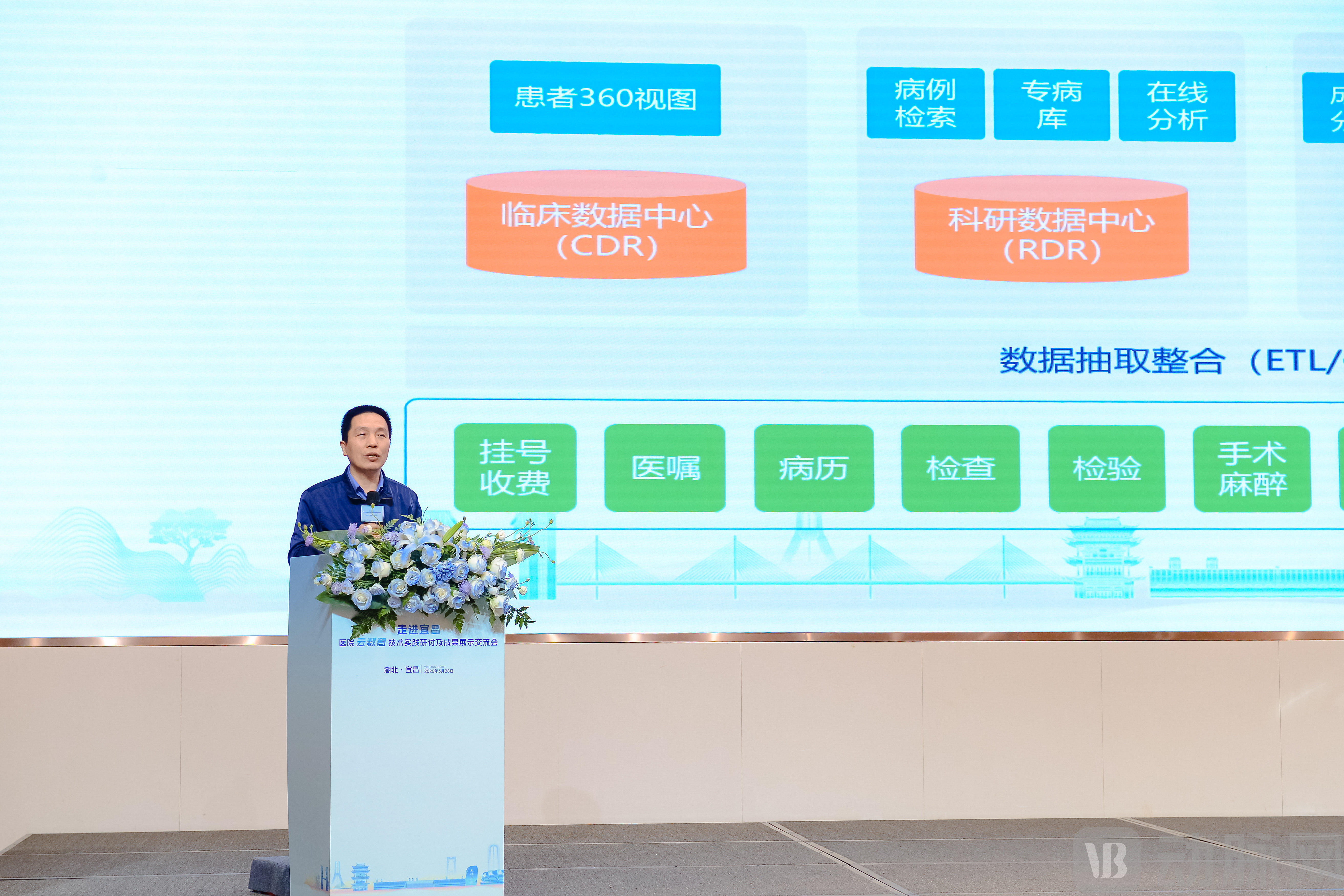
(Xue Wanguo, former Director of the Medical Big Data Research Center at the Chinese PLA General Hospital)
AI-Enabled Special Session
Professor Chen Qingcai from Harbin Institute of Technology compared the technical features of ChatGPT and DeepSeek, proposing a medical large model application paradigm of “Local Transportation + AI High-Speed Rail”; Professor Wang Guangyu from Beijing University of Posts and Telecommunications showcased breakthrough progress in multimodal medical large models for imaging diagnosis and drug development; Zhang Chao from Zuoyi Tech stated that an agent development platform is the key to resolving the current implementation challenges of medical AI.
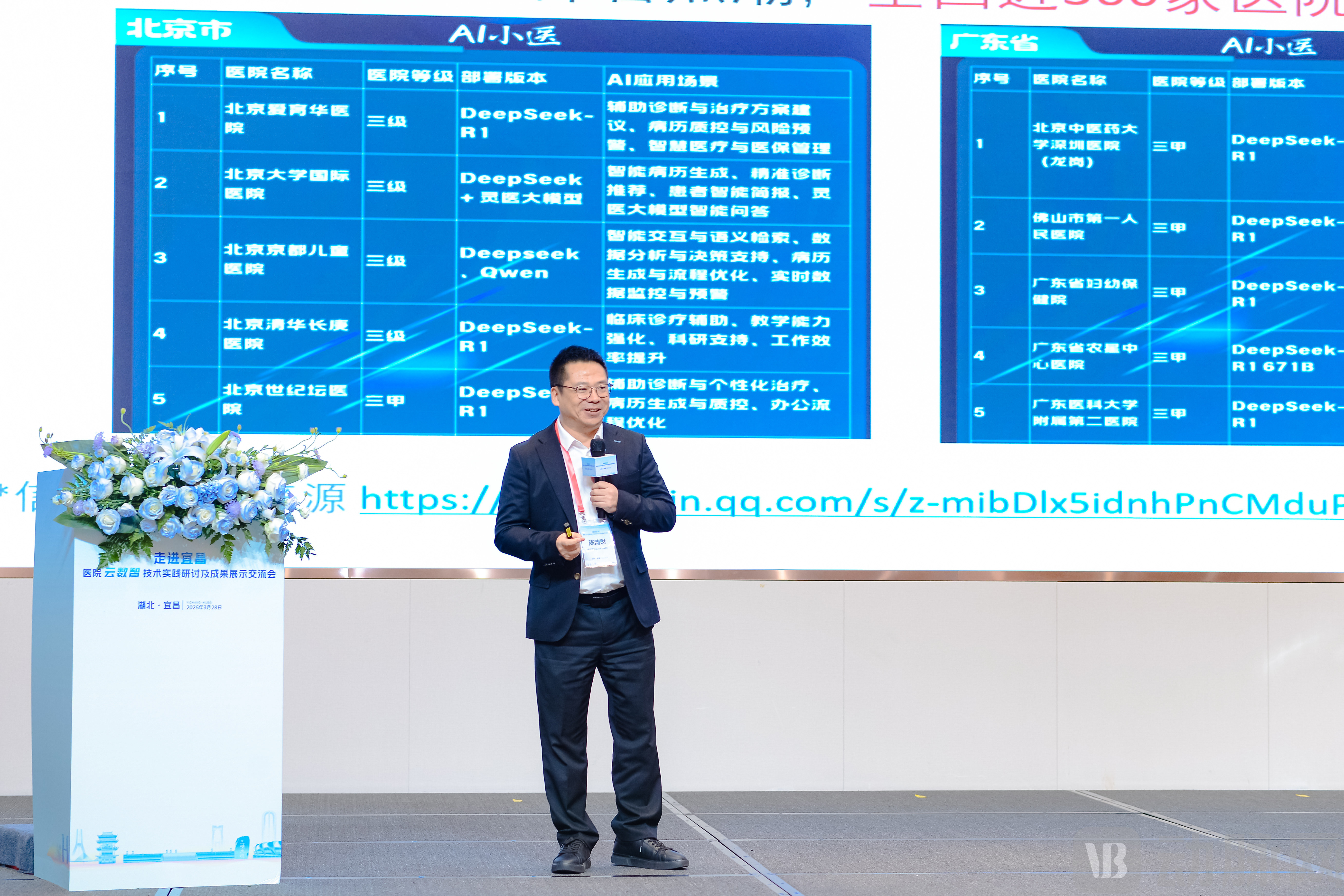
(Chen Qingcai, Professor and Doctoral Supervisor at Harbin Institute of Technology, Shenzhen)
Special Session on Xinchuang Adaptation
Sangfor’s Director Ge Jiang proposed the “One Cloud” architecture concept to help medical institutions achieve resource integration; Peking University StarRock Vice President Liu Song shared strategies for selecting domestic databases; Shuke Wangwei General Manager Kuang Mingyan demonstrated the innovative application of OFD format files in medical document management and emphasized the importance of autonomous controllability for healthcare IT innovation.

(Kuang Mingyan, Deputy General Manager of the Medical Business Division of Beijing Shuke Wangwei)
Interactive Exchange
Feng Hui from Renmin Hospital of Wuhan University, Wang Wei from Wuhan No. 1 Hospital, Wang Mingju from Taihe Medical Group, Liu Xiaodong from Xiangyang Central Hospital, Song Lili from the Third People’s Hospital of Hubei Province, and Zou Zhiwu from Zhujiang Hospital of Southern Medical University engaged in a discussion on “Application Scenarios of Large Models in Hospitals.” The participating experts unanimously agreed that the application of large medical models should be approached with prudence and pragmatism—recognizing their potential to optimize diagnostic and treatment processes and accelerate scientific breakthroughs, while also remaining vigilant against the misconception of “technological omnipotence.” In the future, with the advancement of AI Agent technology, the model of “verticalized small-model clusters + intelligent workflows” is likely to become the mainstream approach to support multi-scenario demands.
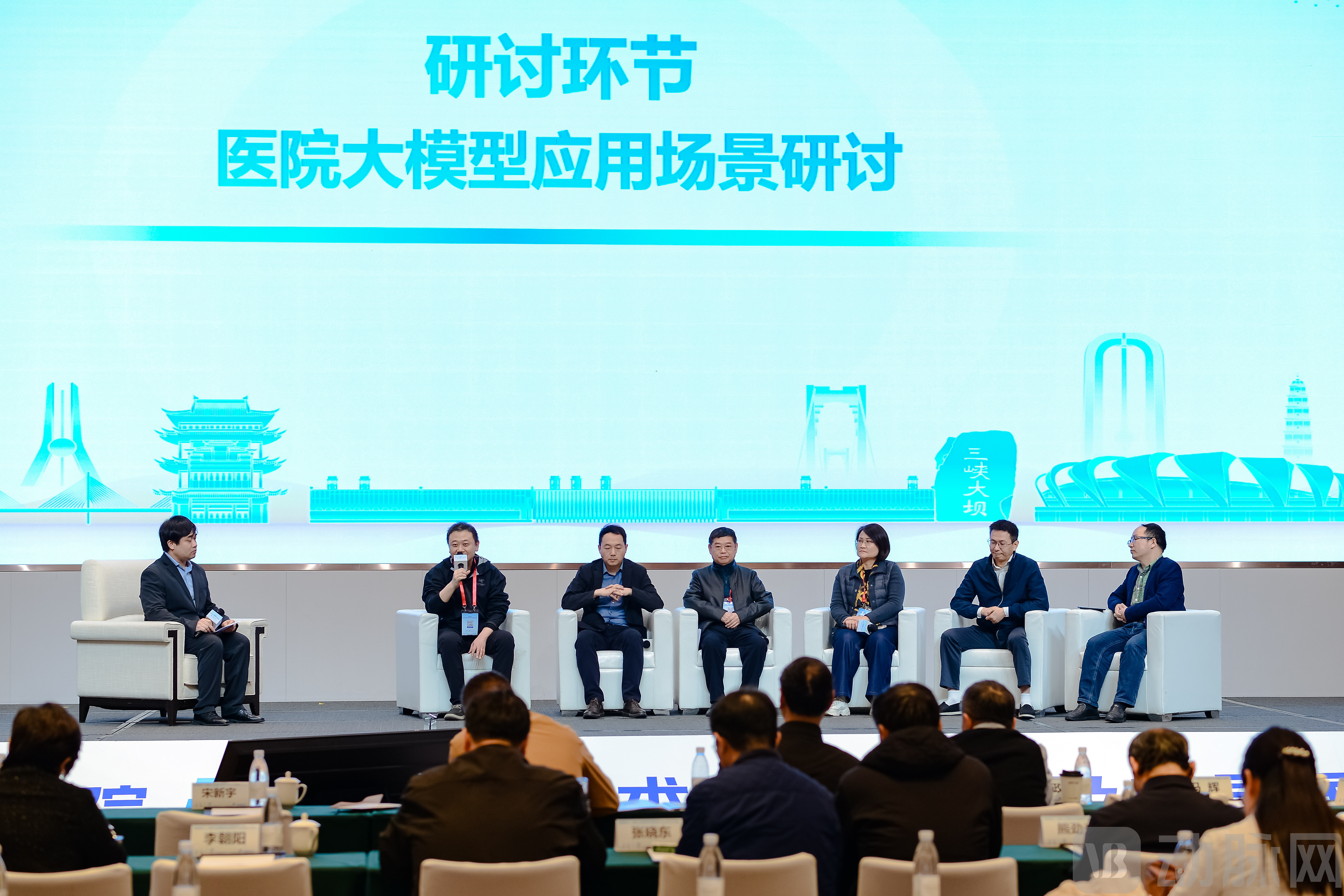 (Seminar Photo)
As a benchmark case for Kingsoft Cloud’s smart hospital initiatives, the practical achievements of Yichang Central People’s Hospital have provided the industry with a replicable paradigm for digital transformation. The successful holding of this conference marks a breakthrough implementation of Kingsoft Cloud’s “technology + scenario” dual-drive strategy in the digital health sector. Looking ahead, Kingsoft Cloud will deepen the technological synergy of “cloud, data, intelligence, and blockchain,” collaborate with ecosystem partners to propel the healthcare industry from “point innovations” to “comprehensive empowerment,” and support the implementation of the “Healthy China” strategy.