

WeDoctor Transforms with AI: Files IPO Prospectus Highlighting Breakthrough Digital Health Model
This article is from Jiemian News, and VCBeat has obtained the right to republish it.
WeDoctor Holdings has exclusively developed a capitation and value-based payment model, extending health management membership services to broader grassroots communities. Within this framework, five intelligent agents—AI Doctor, AI Pharmacist, AI Diagnostic Testing, AI Health Management, and AI Intelligent Control, all built on the WeDoctor Medical Large Language Model—have played a pivotal role.
Since February 2025, the emergence of DeepSeek has reignited a wave of artificial intelligence applications in China, particularly in the healthcare sector. A series of specialized large language models have been unveiled, including the first LLM for critical care medicine, the first AI LLM for rare diseases, the first LLM for peritoneal dialysis, the first pediatric LLM, and an intelligent ultrasound LLM. These developments signal that a new storm of “AI + Healthcare,” driven by large language models as a fresh entry point, is brewing.
Long before the current wave of large language models, China’s “AI + Healthcare” sector had already undergone years of development. In the past, the industry’s business models were highly immature; while most internet healthcare companies enjoyed the reputation of tech unicorns, they inevitably fell into a cycle of “fundraising–cash burn–losses.” Meanwhile, AI applications seemed largely confined to the narrow scope of “prescribing medications” and “renewing prescriptions.” However, as the sector has evolved, its original business models have been overhauled, and the “AI + Healthcare” field has now produced more compelling interim achievements.
After years of deep cultivation in the internet healthcare sector, WeDoctor Holdings has pioneered a shift into the “AI + Healthcare” track, accompanied by an upgrade to its business model, achieving coverage of AI-powered medical services across the entire continuum from clinical diagnosis and treatment to health management. Currently, the company has exclusively developed a capitation and value-based payment model, delivering health management membership services to broader grassroots populations. As an AI healthcare solutions provider, WeDoctor Holdings topped China’s AI medical services industry in terms of revenue scale in 2023. Given the company’s current revenue growth rate, its future prospects are highly promising.
Significant Growth in Revenue-Generating Capacity
According to industry insiders, the total annual revenue of WeDoctor Holdings’ Tianjin AI General Hospital reached RMB 5 billion in 2024. This revenue figure far outpaces others in the “AI + Healthcare” sector, standing at seven times the RMB 734 million in revenue reported by iFlytek Healthcare, currently known as the “first Hong Kong-listed stock for large healthcare models,” in 2024.
On December 31, 2024, WeDoctor Holdings (full name: “WeDoctor Holdings Limited”) published its prospectus, announcing the launch of its listing plan on the Hong Kong Stock Exchange.
WeDoctor Tianjin AI General Hospital is an “AI new species” created by WeDoctor Holdings. Rooted in WeDoctor Holdings’ long-standing accumulation in the field of internet healthcare, it was established in 2022 on the basis of the Tianjin Internet Hospital, with upgrades driven by artificial intelligence.
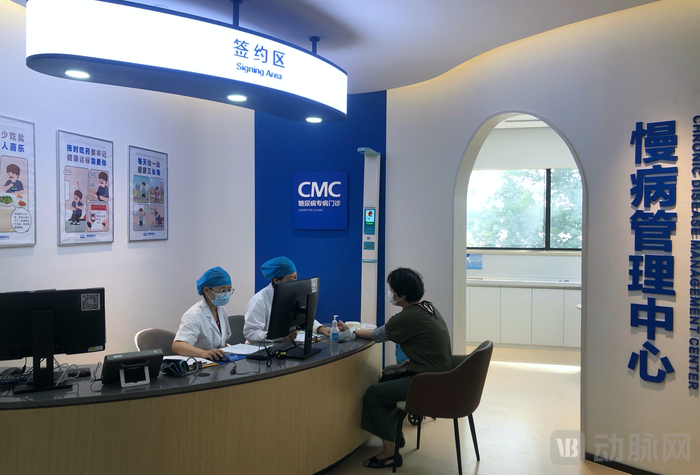
Since 2020, WeDoctor has collaborated with the Tianjin Municipal People’s Government to launch a special healthcare reform initiative known as the “Tianjin Digital Health Community.” Since 2022, the Tianjin AI Digital Health Community, led by WeDoctor Tianjin Artificial Intelligence General Hospital and jointly established with 273 community health service centers and over 2,000 stations and clinics across the city, has been gradually taking shape. WeDoctor Tianjin Artificial Intelligence General Hospital serves as the overall leader in health responsibility, technological empowerment, and performance coordination for the aforementioned primary care consortium.
Tianjin AI General Hospital’s revenue surpassing the RMB 5 billion mark demonstrates that, empowered by WeDoctor Holdings, a large number of patients have not only sought care at primary healthcare institutions but also become contracted members of these facilities. It is reported that within the Tianjin Health Community, more than 60 previously loss-making primary hospitals have achieved profitability.
The “Tianjin Model” is a significant achievement in the recent development of WeDoctor Holdings. The WeDoctor Tianjin AI General Hospital has also become a landmark case. This case signifies not only technological innovation brought by AI, but also a major commercial breakthrough. It indicates that early visions of comprehensively applying AI across healthcare are gradually being realized, and it further suggests that the commercial potential of “AI + Healthcare” can continue to expand.
WeDoctor Holdings’ “Tianjin Model” has established a competitive commercial closed loop. Previously, internet healthcare companies struggled to achieve profitability, characterized by substantial investments alongside a lack of effective mechanisms for generating sustainable commercial returns. WeDoctor Holdings’ success lies in its adoption of capitation and value-based payment models, which have attracted a large member base and driven rapid year-on-year growth in revenue scale.
A deeper analysis of this model reveals that, on one hand, it serves a vast number of patients and stabilizes its core business base by relying on a large membership pool, although this segment operates with lower gross profit margins. On the other hand, having secured a substantial number of contracted members, WeDoctor Holdings is injecting stronger momentum into its own development, as this extensive member base lays the foundation for the company’s future expansion into high-margin value-added services.
Currently, Tianjin’s Health Consortium has provided multi-disease and diabetes management services to approximately 1 million members. This demonstrates the potential for WeDoctor Holdings to create commercial value.
From a timeline perspective, WeDoctor first launched its capitation-based diabetes health management membership service in Tianjin in 2022. This means that within less than three years, this initiative has already attracted one million signed-up health management members, clearly demonstrating the rapid expansion and strong growth potential of the business. Following its success in diabetes care, WeDoctor Holdings is now extending its disease management services to cover a broader range of conditions, which will inevitably further support overall business growth.
According to WeDoctor Holdings' prospectus, the company's revenue reached RMB 1.8 billion in the first half of 2024. Of this, RMB 1.032 billion was derived from health management membership services. Compared with the same period last year, revenue from health management membership services increased nearly sevenfold within one year.
The so-called “revenue from health management membership services” refers precisely to the capitation and value-based payment models. The strong growth in this metric further confirms that WeDoctor Holdings is experiencing rapid business expansion. WeDoctor Holdings is also the only provider in China offering such AI-driven healthcare solutions.
It is worth noting that capitation-based health management, as the foundational business model of the AI Health Community, not only achieves break-even with modest profits but also leverages deep service relationships with a wide range of medical institutions and users to deliver significant advantages in precise customer acquisition, risk control, and efficient service fulfillment. This model not only unlocks a broader market for value-added services in both B2C and B2B segments but also helps enterprises unleash their ecosystem capabilities, further enhancing commercial potential.
Embedded Agents Work Together
Capitation-based health management is the foundational service provided by the AI Health Consortium, with its core operational model centered on leveraging AI tools to deliver high-quality health management to enrolled members. In the operations of WeDoctor Tianjin AI General Hospital, the five currently integrated intelligent agents are the AI Physician, AI Pharmacist, AI Diagnostic Imaging, AI Health Manager, and AI Intelligent Control.
In layman’s terms, the respective functions of these five AI agents are: assisting physicians with patient consultations; facilitating efficient prescription review and supporting medication supply; aiding in the conduct of medical examinations and interpretation of reports; providing patients with health management recommendations; and helping regional healthcare security administration departments and hospitals reduce the risk of insurance fraud and abuse, thereby improving the efficiency of healthcare security fund utilization.
In China, there has long been a shortage of high-quality medical resources and an uneven distribution thereof, leaving primary healthcare services objectively disadvantaged. In 2019, Ma Xiaowei, then Director of the National Health Commission, publicly stated that physicians in China were overly concentrated in tertiary hospitals in major cities, while the number of physicians in urban and rural primary care settings—particularly in rural areas and remote mountainous regions—was extremely limited. Meanwhile, the supply of pharmaceuticals and the capacity for laboratory testing and diagnostics also exhibited uneven distribution across the country.
“Insufficient total volume and uneven distribution”—the current state of medical resource allocation in China—also provides broad application space for WeDoctor Holdings’ five intelligent agents in the field of primary healthcare.
Taking the AI Doctor as an example, with the assistance of the AI Doctor agent provided by WeDoctor Holdings, physicians can rapidly review patients’ basic information, medical history, and diagnostic records, enabling a clearer and more comprehensive understanding of patient status. Meanwhile, the AI Doctor agent supports physicians in disease diagnosis by providing timely recommendations for diagnostic approaches. Backed by the professional expertise of top-tier expert teams and the latest clinical guidelines in medicine, the AI Doctor agent also promotes standardized diagnosis and treatment among primary care physicians, thereby enhancing the rationality and cost-effectiveness of therapeutic and medication regimens.
In the field of health management, AI-driven health management agents can assist health managers in delivering more refined health management services to patients, thereby improving their health outcomes. By implementing targeted health management strategies, it is possible not only to enhance patients’ prognosis and quality of life but also to further optimize the allocation of medical resources—for example, by reducing the incidence of severe complications, stabilizing disease conditions, and preventing disease progression to more severe stages.
To date, WeDoctor Holdings has achieved significant results in this area. For instance, in diabetes management, 44.2% of the diabetes members under management by WeDoctor Holdings in Tianjin had achieved normal glycated hemoglobin (HbA1c) levels as of the end of June 2024, marking a substantial improvement from 17.8% as of the end of January 2023. Additionally, the blood pressure control rate increased from 19.5% to 61.5%, and the lipid profile control rate rose from 24.8% to 27.9%. Currently, the number of members served per health manager within WeDoctor Holdings’ AI-driven health management team has grown from 550 to approximately 2,000.
Additionally, among the five major intelligent agents, the AI Intelligent Control system undertakes the task of “directly safeguarding medical insurance funds.” It provides alerts when physicians issue unreasonable medical insurance prescriptions. For instance, it flags cases where prescribed medications are inconsistent with the patient’s diagnosed conditions, prescription quantities exceed the scope of medical insurance reimbursement, or specific side effects of a single drug may cause adverse reactions in patients with comorbidities.
As can be seen, AI intelligent control not only intercepts doctors’ “excessive prescriptions,” thereby reducing over-examination and over-medication, but also further enhances primary healthcare capabilities and corrects certain unscientific prescribing practices. Data show that after the Tianjin Health Community implemented AI intelligent control, the medical insurance claim rejection rate decreased from approximately 0.52% in the same period of 2021 to about 0.04% by the end of June 2024.
Building a Closed-Loop AI Healthcare Ecosystem
From the perspective of its corporate development history, WeDoctor is among the earliest internet healthcare enterprises in China. In 2015, WeDoctor pioneered the establishment of Wuzhen Internet Hospital, the first internet hospital in the country. The current initiation of WeDoctor’s “Tianjin Model” was also built upon its earlier practices based on the Tianjin Internet Hospital.
As early as 2017, WeDoctor Holdings initiated industrial R&D in “AI + Healthcare” and collaborated with Zhejiang University to establish the Ruiyi Artificial Intelligence Research Center, aiming to advance the research, development, and application of artificial intelligence technologies in the healthcare sector. Today, its research outcomes have been deployed at scale in scenarios such as the Tianjin Health Community Consortium. From a commercial perspective, the medical large language model developed by WeDoctor Holdings is among the few in China that has successfully validated its revenue-generating capabilities.
As one of the most professional application scenarios for AI, the healthcare industry is eager to adopt artificial intelligence technologies while imposing strict requirements on their accuracy and stability. Only by combining rich and accurate medical data with effective and advanced model training and tool development strategies can we create truly reliable, generalizable AI-powered clinical diagnosis and treatment solutions that deliver tangible business value.
To date, WeDoctor Holdings has completed the filing of four self-developed large-model deep synthesis algorithms with the Cyberspace Administration of China (CAC). These filings provide secure and compliant support for WeDoctor Holdings’ industry-leading healthcare large model in terms of data, content, and algorithms. The WeDoctor Healthcare Large Model adopts a multi-base architecture, integrating external general-purpose large models to form an industry-specific reasoning engine base. Leveraging proprietary technologies, it focuses on the deep integration of real-world clinical diagnosis and treatment data with clinical decision-making pathways. For instance, in collaboration with national-level expert teams, WeDoctor has developed unique medical rules, including 13,000 specialized rules covering 308 categories of specific and chronic diseases, 470,000 rational medication use rules, and 2.22 million medical insurance audit rules across 377 categories. This approach embeds medical rigor into the entire AI decision-making process. The model demonstrates outstanding performance across various evaluation dimensions, including medical knowledge Q&A, medical language generation, complex medical reasoning, medical language understanding, as well as healthcare safety and ethics.
Through a multi-base model architecture, the WeDoctor Medical Large Language Model has established an intelligent decision-making pipeline ranging from “open exploration” to “precise targeting,” ensuring evidence-based compliance and thereby achieving breakthroughs in the clinical application of large language models. For instance, the aforementioned AI physician’s auxiliary diagnostic system currently covers four major national chronic diseases—diabetes, hypertension, coronary heart disease, and stroke—effectively “transferring” the expertise of top-tier specialists to primary care physicians.
WeDoctor’s medical large language model has repeatedly topped the rankings of China’s authoritative medical LLM evaluation platforms, CMB (Comprehensive Medical Benchmark in Chinese) and MedBench. Supported by this medical large language model, WeDoctor’s five major AI healthcare agents have demonstrated significant efficacy. Applying AI-driven healthcare capabilities across the entire workflow of primary care services to develop practical and reliable AI-powered clinical solutions represents a key business-level differentiator between WeDoctor Holdings and other AI+healthcare enterprises.
Most domestic companies engaged in AI + healthcare focus on applying AI capabilities to the pre-diagnosis and intra-diagnosis stages of medical services, such as medical image recognition, AI-driven drug discovery and development, and the R&D and manufacturing of AI-assisted rehabilitation devices. Even as numerous hospitals integrate advanced large language models like DeepSeek, these technologies are currently utilized merely as tools for enabling patients to conduct preliminary self-diagnoses or for optimizing doctors’ clinical documentation. In contrast, WeDoctor Holdings is not confined to a business model that leverages AI to enhance isolated aspects of medical service delivery. Instead, it places greater emphasis on harnessing artificial intelligence to achieve a win-win outcome for all stakeholders in the healthcare ecosystem, including patients, hospitals, physicians, and medical insurance funds.
Today, WeDoctor Holdings has completed a full commercial loop for its AI-driven healthcare services, integrating both online and offline processes. Amidst surging health demands and with artificial intelligence designated as a national strategic emerging industry, a new chapter in AI-powered healthcare is unfolding.