

When Punk Wellness Meets New Guochao: The Blueprint Behind Million-Dollar Hit Products
“Punk Wellness” Consumption Trends Are Reshaping the Chinese Wellness Market.
Fried Chicken with Ginseng Tea, Craft Beer with Goji Berries, Late-Night Face Masks, and Knee Pads at the Club: As Generation Z Turns Wellness into Performance Art, the Traditional Chinese Medicine (TCM) Wellness Market Is Undergoing a Disruptive Transformation.
According to the “2024 Insights into Trends of Medicine-Food Homology,” individuals under the age of 35 accounted for 35.9% of the population engaging in dietary therapy and nourishment. Since the second quarter of 2024, Xiaohongshu has seen a substantial increase in posts related to Traditional Chinese Medicine (TCM)-style wellness, with a year-on-year growth exceeding 300% and over 15 billion views on related topics. A survey conducted by the Social Survey Center of China Youth Daily revealed that 78.2% of young respondents had purchased health products, among whom more than 50% were willing to pay for TCM-style wellness solutions.
Various data indicate that the Chinese wellness market, which relies on Traditional Chinese Medicine (TCM), cannot be deemed successful unless it resonates with younger demographics.
The trend of traditional Chinese wellness has captured the hearts of young people.
As views for “wellness tea” topics on Xiaohongshu surpassed 1.2 billion and Douyin playback counts skyrocketed to 7 billion, young people are rewriting the rules of wellness through their consumption habits. Data from Meituan shows that individuals aged 18 to 30 account for 50% of spending on traditional Chinese medicine (TCM)-based wellness products. Melatonin sales have been driven to record highs by post-95s consumers, while even donkey-hide gelatin (Ejiao) and bird’s nest have become essential lifelines for night owls. This is more than just a wellness trend; it clearly reflects young people’s outcry over health anxiety.
Data from Meituan Medicine and Health shows that during the 2025 Online New Year Shopping Festival, sales of health supplements grew significantly, tripling compared to the same period in 2024. Traditional products such as American ginseng, donkey-hide gelatin (Ejiao), protein powder, bird’s nest, glucosamine chondroitin calcium tablets, and ginseng—typically associated with middle-aged and elderly consumers—have now made their way onto young people’s gift-giving lists.
These demand signals were quickly captured by enterprises, with an increasing number of pharmaceutical companies beginning to leverage the “Traditional Chinese Wellness” concept, attempting cross-industry collaborations to “befriend” younger consumers. Their aim is to break away from a monolithic product structure and create a second growth curve. For instance, Tongrentang established an Asian Skincare Center and launched a line of herbal cosmetics; Ma Yinglong, known for its hemorrhoid treatments, introduced an “Eight-Treasure Ancient Formula” eye cream; and China Resources Sanjiu, renowned for its 999 Piyanping (dermatitis ointment) and 999 Ganmaoling (cold remedy), began offering products such as the “Hedinghong” lipstick set.
In the competitive landscape where pharmaceutical companies are proactively expanding into new sectors, gaining deep insights into the “lazy wellness” consumption demands of younger demographics has become a critical imperative for enterprises. Taking the recently surging market for wellness teas as an example, through corporate efforts in optimizing ingredients, enhancing efficacy, and tailoring usage scenarios, complemented by integrated online and offline marketing campaigns, multiple products have emerged as bestsellers with millions in sales, with some even achieving tens of millions in revenue.
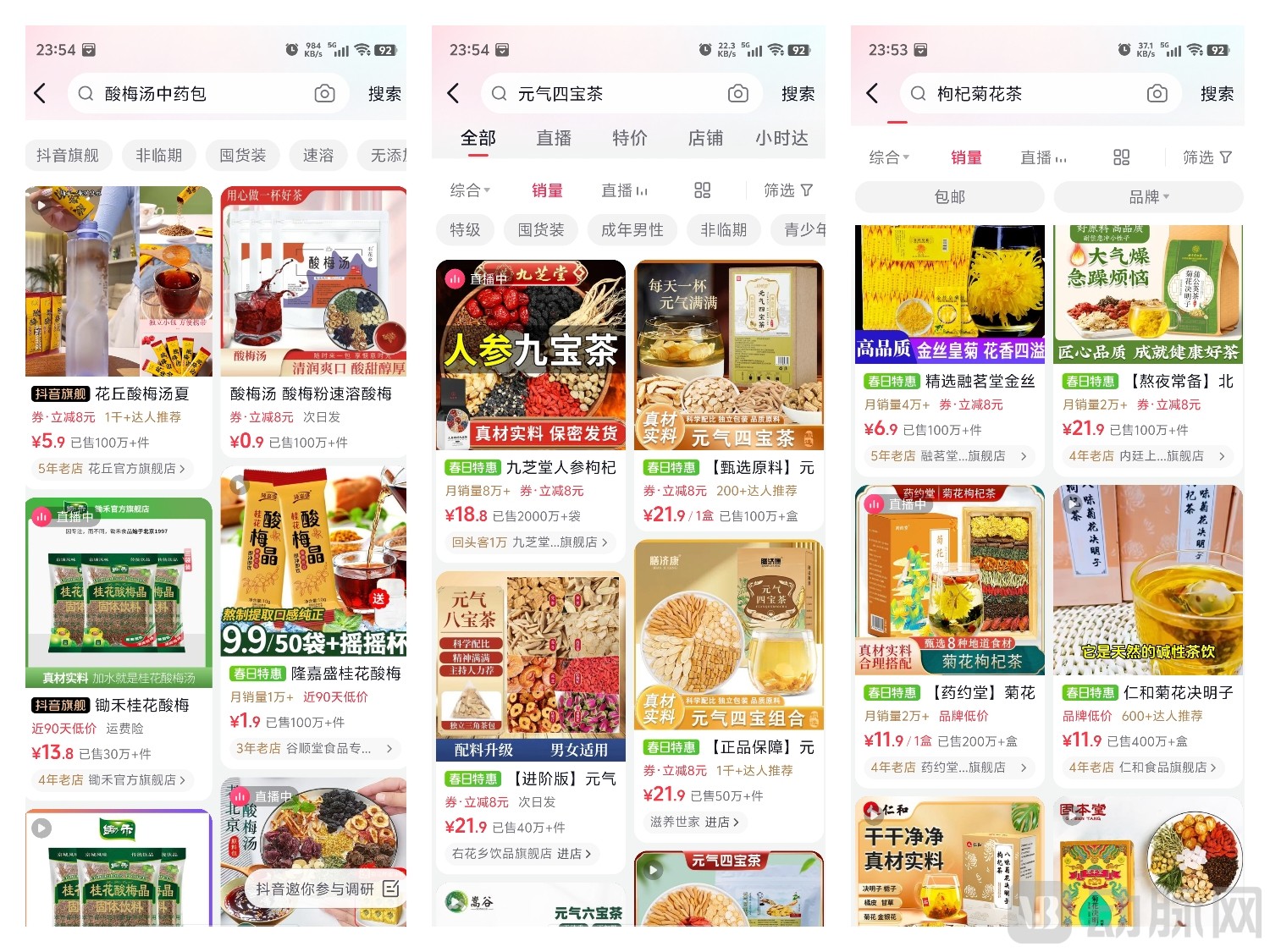
Sales Performance of Select Health-Preserving Herbal Teas on Douyin Mall. Source: Screenshot from the Douyin App
The success of wellness teas indicates that the Chinese health and wellness market holds immense potential. It is foreseeable that a steady stream of wellness products tailored to younger consumers will emerge in the future. The challenge for enterprises lies in breaking through traditional boundaries to effectively reach this younger demographic with their products and brands, which is no easy feat.
Finding cultural identity is an important path for the renewal of traditional IP images.
In conventional perception, the elderly population constitutes the primary consumer base for Traditional Chinese Medicine (TCM), resulting in a deeply entrenched association between TCM’s brand identity and this demographic. Such a stereotypical brand image clearly fails to resonate emotionally with younger generations. In recent years, however, the rise of the “Guochao” (China Chic) trend has significantly bolstered national cultural confidence. The concept of “time-tested ancestral selections” has become a popular topic among young people, creating new opportunities for the revitalization of many traditional brand images.
Taking Yunnan Baiyao as an example, this traditional brand has launched “Bai Xiaoyang,” a sub-brand tailored to young consumers’ health-conscious demands—specifically those who seek wellness supplements and self-care while simultaneously engaging in late-night drinking and staying up late. Addressing young people’s health pain points and their preference for “low-effort wellness,” the brand has developed a series of products under the concept of “light wellness.”
For instance, the Herbal Energy Snack Balls · Fifth Power incorporate the concept of “five colors corresponding to five internal organs” from the Dietary Nourishment chapter of The Yellow Emperor’s Inner Canon, integrating color theory into health and wellness practices. Significant effort has been devoted to packaging design, evolving the product form from traditional Chinese medicine into convenient snack-sized packets. This approach not only supports health preservation but also caters to the younger demographic’s preference for snacks.
Targeting the lifestyle of young adults who frequently consume alcohol and stay up late, Bai Xiaoyang has launched a “punk wellness” product: Kudzu Root and Mulberry Fruit Paste in Mini Jars. Breaking into the mainstream market with the slogan “Drink Without Harm, Stay Up Without Fear,” the product is backed by Yunnan Baiyao’s years of expertise in the combined application of medications for preventing alcoholic liver disease. Featuring compact, individual packaging, the mini jars are portable and ready-to-eat right out of the box. The “one jar per drink” design aligns with the pre-drinking routines of young consumers, making wellness practices part of their daily lives.
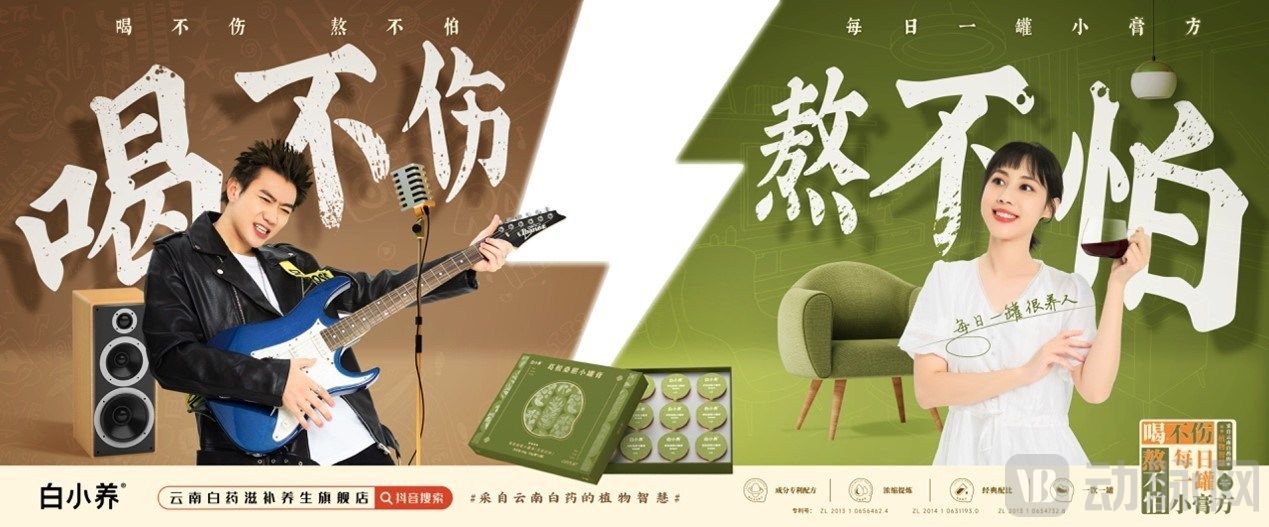
Promotional materials are more closely aligned with younger demographics. Image source: corporate official website
Furthermore, Bai Xiaoyang’s “Chatty Candy” has breathed new life into the saturated throat lozenge market.
The product itself is crafted using freeze-drying technology to extract ingredients such as Yunnan olive, licorice, platycodon root, and monk fruit. It differentiates itself from market competitors that pursue an overly sweet profile by offering a natural, refreshing herbal flavor. Meanwhile, the brand leveraged the hashtag “One lozenge for talkers, two hours of vocal care” to achieve over 100 million views on Douyin in a short period, prompting numerous influencers to emulate the trend. Behind the widespread circulation of various humorous and satirical videos, the product’s core philosophy—rejecting heavy sweetness and returning to its original intent of soothing the throat and enhancing voice clarity—gained broad recognition and resonated strongly with younger consumers.
When “Bai Xiaoyang”’s Five-Color Wellness Pills pack the wisdom of The Yellow Emperor’s Inner Canon into a snack box, and when punk-style wellness pastes in small jars declare “Drink without harm, stay up without fear” to conquer the battlefield of drinking parties, these boundary-breaking innovations are precisely the approach to wellness that the new generation of young people craves.
In marketing to younger demographics, brands have also recognized the effectiveness of new channels, with promotional efforts increasingly encompassing their core brands. For instance, the Douyin hashtag “Let’s Go Play Ball” has garnered nearly 300 million views. This online campaign was complemented by the offline launch of the “Essential Medicines in Every Household” initiative, creating a short-channel operational model that integrates online and offline strategies.
It is precisely through these initiatives that Yunnan Baiyao’s traditional IP image has been refreshed, laying the groundwork for its potential to break out of niche markets and reach a broader audience.
Tools endorsed by young people are also a shortcut to their hearts.
In the past, traditional Chinese medicine (TCM) clinics were filled entirely with herbal medicines. Today, however, “Guochao” wellness products—such as lily bulb and red date eight-treasure rice, turmeric and cinnamon milk tea, and health-focused sour plum drink—have taken center stage. Moreover, recognizing the widespread social anxiety among younger demographics and their acceptance of artificial intelligence, TCM clinics have increasingly adopted AI as a key operational tool.
“We want young people to fall in love with traditional Chinese medicine (TCM) herbal teas from the very first sip,” said Yang Chuyi, General Manager of Que Tang Yu Fang under Dajing TCM, in an interview with VCBeat. To achieve this goal, Que Tang Yu Fang is not content with merely selling TCM wellness tea products; it aims to help young consumers understand their body constitutions through a cup of tea. Here, choosing a tea beverage is not simply a matter of selecting from a fixed menu; customers are also encouraged to listen to their bodies’ “feedback.”
Before drinking tea, the in-store intelligent tongue surface analyzer passes throughTakeTongue imaging analysis identifies the consumer’s constitutional type, followed by recommendations for tailored traditional Chinese medicine (TCM) herbal teas, which are then freshly extracted and prepared on-site. While waiting, customers can freely experience an intelligent pulse diagnosis device, which generates a detailed TCM report and a precise wellness regimen. This end-to-end process not only delivers a strong sense of ritual and novel, engaging experiences, but also ensures that each customer enjoys a wellness tea perfectly suited to their individual needs.
Consumers can read this report in detail while enjoying their milk tea. Based on the consumer’s intelligent diagnostic results, it recommends personalized herbal paste prescriptions for health preservation, which can be purchased at any time via QR code. If there are any questions about the report, consumers can also connect with experts from Dajing Zhongyuntang Internet Hospital through the exclusive space within Quetang Yufang for remote consultation and diagnosis.
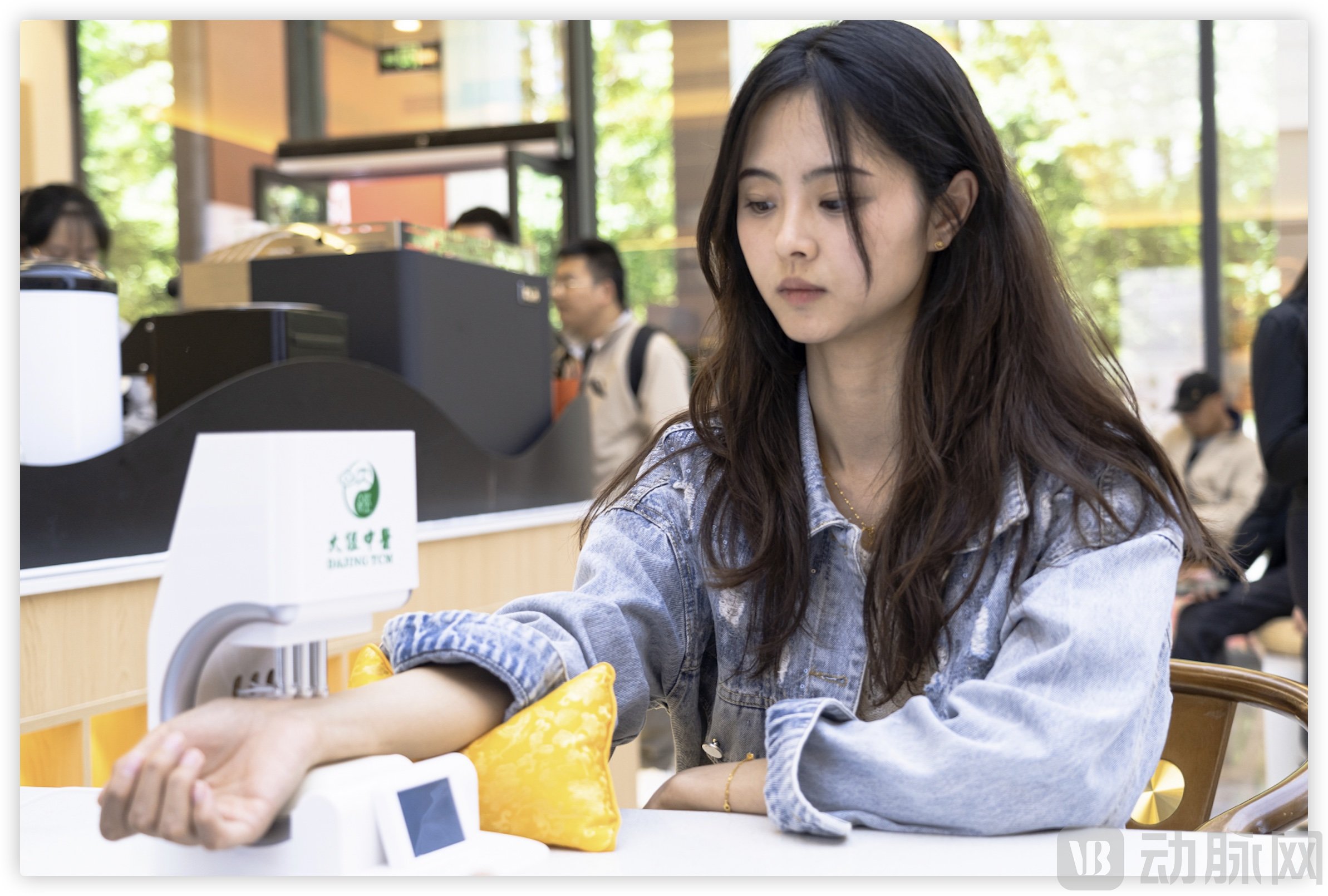
Empowering Young People to Understand and Accept Traditional Chinese Medicine Through AI | Image Source: Company Official Website
Admittedly, achieving personalized formulations for each customer is no easy feat. The bitter taste of traditional Chinese medicine (TCM) poses a significant barrier to consumer repurchase, while adding sugar to mask the bitterness would contradict the original health-oriented intent. To address this, the R&D team at Quetang Yufang, in collaboration with industry experts, has developed a multi-stage extraction process. This approach employs tailored extraction protocols for different TCM ingredients, maximizing the yield of active pharmaceutical compounds while minimizing the bitter taste as much as possible.
More importantly, herbal tea is merely a means to an end; what Quetang Yufang aims to do is to inspire young people to embrace Traditional Chinese Medicine (TCM) wellness services.
When Que Tang Yu Fang leverages AI to create a “cyber TCM clinic,” wellness is no longer about bitter herbal decoctions but rather a tech-infused experience rich in ritual. By transforming the traditional four diagnostic methods of TCM into an accessible daily service, this “trendy wellness approach” is rewriting the essence of Chinese-style health preservation through the language of technology. How could such a modernized form of TCM fail to attract young people to explore and embrace it?
Currently, numerous Chinese enterprises, including Dajing TCM, Wenzhi TCM, Zhiyibang, Yihulu, and Gushengtang, are actively participating in this trend. AI-empowered Traditional Chinese Medicine (TCM) is bridging the gap with younger generations, driving a continuous surge in the popularity of “cyber TCM wellness.”
Traditional Chinese Medicine Has Begun to Integrate into the Lives of Young People.
Many traditional Chinese medicine (TCM) enterprises have begun to develop specialized and comprehensive product lines tailored to young consumers, addressing their specific health needs across various life scenarios—from morning wellness routines and post-late-night recovery to sports rehabilitation and sleep management. Health preservation is becoming a seamless part of daily life. In this process, brands are not only offering functional health management advice through targeted wellness solutions but also forging emotional connections with young consumers, thereby strengthening the penetration of their brands into consumers’ everyday lives.
Taking Tongrentang as an example, this century-old brand of Traditional Chinese Medicine (TCM) has developed a range of targeted wellness products and health management solutions to address the health needs of younger consumers. For instance, with its flagship product “Shengmai Yin” (Pulse-Generating Liquid), Tongrentang has introduced two variants—Red Ginseng Formula and Codonopsis Formula—by refining its functional positioning. The Red Ginseng Formula is designed for individuals with qi and blood deficiency, promoting “abundant vital energy and a calm heart.” In contrast, the Codonopsis Formula targets scenarios such as staying up late, working overtime, and physical exhaustion, highlighting benefits like “robust middle qi and enhanced vitality.”
This functional segmentation not only aligns with the actual needs of modern consumers but has also gained recognition among younger demographics. To integrate into the lives of young people, Tongrentang has expanded the promotion of its Shengmai Yin beyond traditional pharmacies to venues such as youth basketball tournaments and various music festivals. As the brand’s mascot high-fives and interacts with young attendees, this traditional Chinese medicine (TCM) brand is shedding its “elderly” label against the backdrop of these new scenarios.
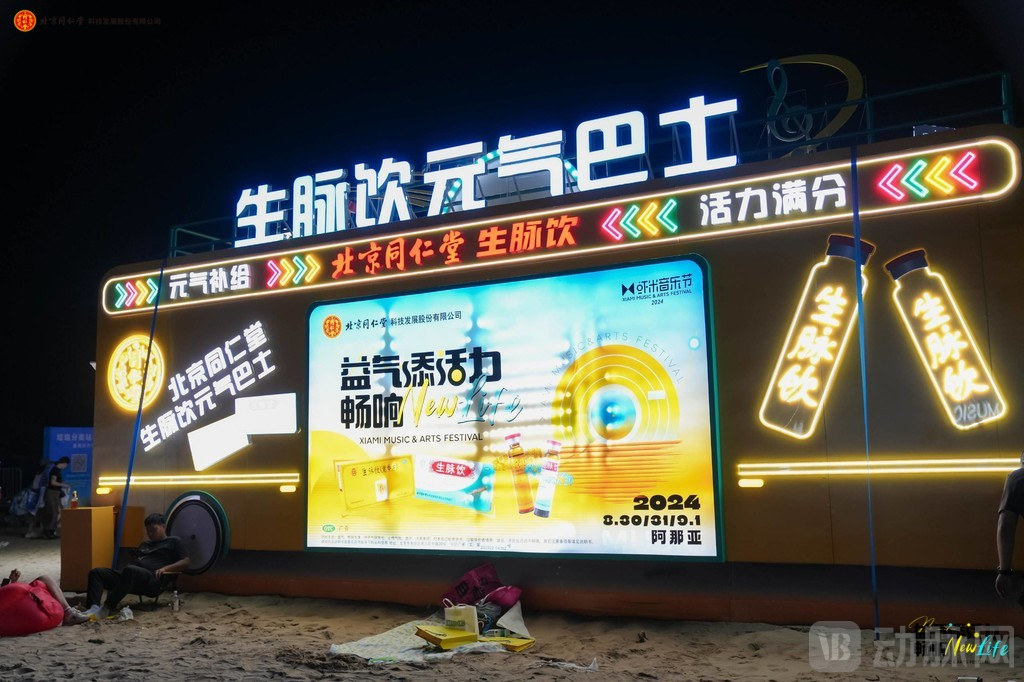
Leveraging music festivals to tap into the health and wellness needs of young consumers. Image source: official corporate WeChat account
Furthermore, Tongrentang has designed multiple health and wellness scenarios for younger demographics, centered on the dual-scenario concept of “prevention + rehabilitation.” These include remedies for staying up late, post-operative recovery, post-exercise replenishment, and protection against high temperatures. This scenario-based segmentation of needs not only enhances product practicality but also makes it easier for consumers to integrate traditional Chinese medicine (TCM) principles into their daily lives, thereby strengthening brand affinity.
Driven by consumers’ diverse and personalized health pursuits, an increasing number of traditional pharmaceutical companies are aligning traditional Chinese medicine (TCM) culture with modern consumer demands, enabling their products to be integrated into various lifestyle scenarios and injecting new vitality into their brands.
For example, Dong-E-E-Jiao leveraged popular TV dramas to implement integrated online and offline marketing campaigns, precisely embedding its products into viewers’ sightlines. By capitalizing on the dramas’ popularity and narrative progression, the brand enhanced its awareness and favorability. Meanwhile, through cross-industry collaborations with trendy milk tea brands to launch health-focused beverages, the company innovated its product presentation and captured the attention of younger consumers.
VC Qingrun Peeling Fruit Gummies, produced by Man Yan Shu Ning, target specific groups such as teachers and sales professionals who need to speak extensively, emphasizing the product’s relief for throat discomfort. Meanwhile, it also covers a broader health-conscious demographic sensitive to smoking, staying up late, and air quality, thereby expanding its adaptability to various consumption scenarios.
Huiren Pharmaceutical, whose brand image of “He’s well, I’m well” is deeply rooted in the public consciousness, positioned its new product, the Energy Black Bottle, as a solution for replenishing vitality across various lifestyle scenarios among young people. Huiren launched a campaign featuring massive outdoor billboards that were only half-posted, accompanied by the tagline, “The ad got tired halfway through posting…” This creative approach precisely resonated with the fatigue experienced by working professionals, instantly capturing pedestrians’ attention and sparking widespread online discussion that trended on social media.
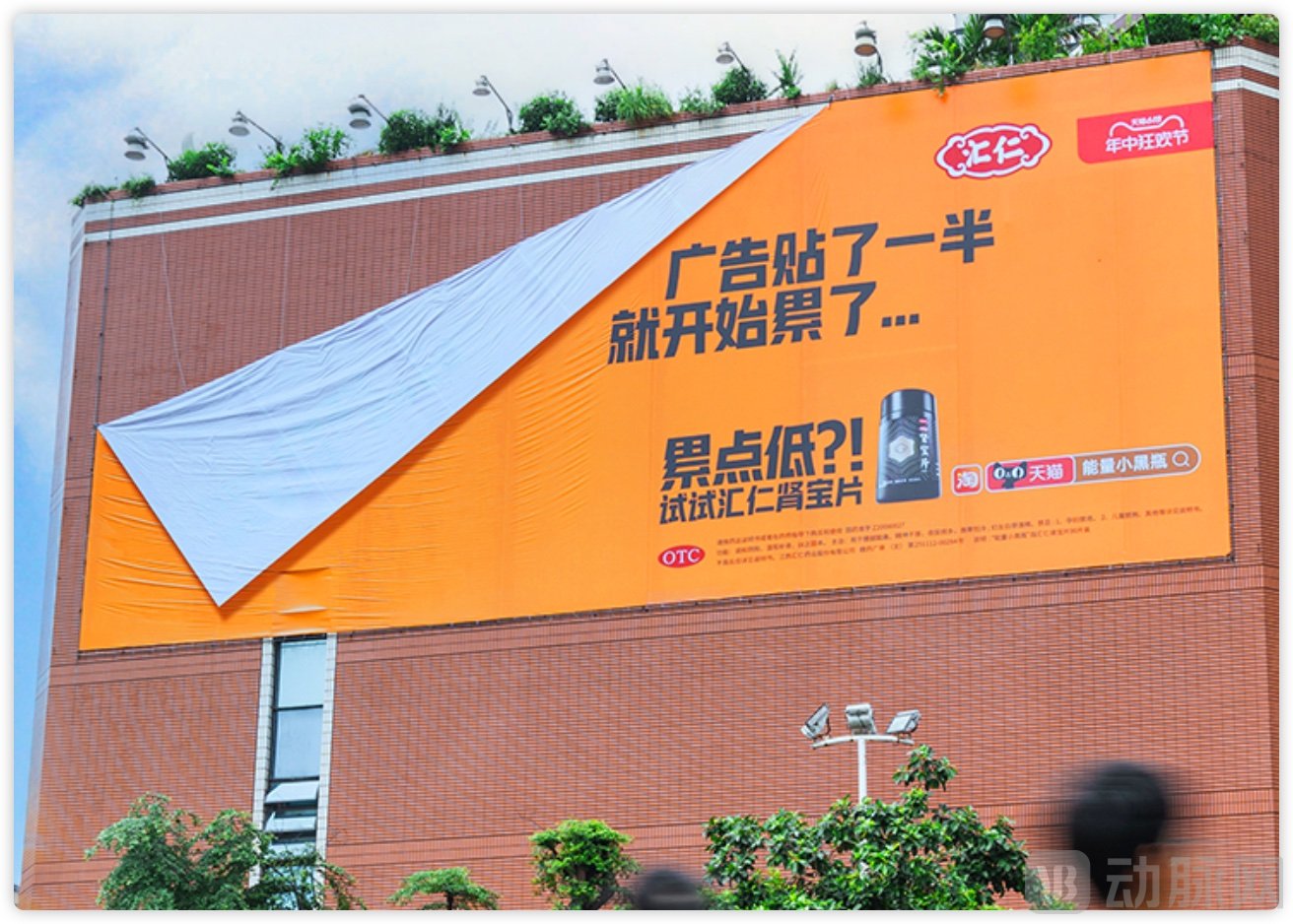
Advertising directly bridges the gap between brands and users. Image source: official corporate WeChat account
Meanwhile, Huiren has precisely identified the pain points of today’s “fragile” office workers, using online videos to authentically recreate the daily lives of those with a low threshold for fatigue, thereby striking a chord and resonating deeply with this demographic. To further embed itself into the workplace context, Huiren even launched a branded “back-support” cushion as merchandise.
In a short period, “low fatigue threshold” became a nationwide topic. A large number of KOLs joined the discussion, and the hashtag “Office Workers’ Fatigue Threshold Is Ridiculously Low” topped Weibo’s trending search list, accumulating nearly 300 million views. Multiple influential WeChat accounts proactively participated in and amplified the spread of the topic. Meanwhile, Xiaohongshu (Little Red Book) and Douyin (TikTok) generated a massive volume of content, achieving billions of impressions.
While Huiren Pharmaceutical’s viral copywriting precisely resonates with the working-class demographic, its health and wellness products have also moved beyond functional differentiation to delve into the complex realm of emotional marketing.
Chinese-style wellness is not merely cold, clinical health management, but a gentle form of care that offers emotional healing.
The rejuvenation of traditional Chinese wellness practices is not only a market opportunity but also a profound integration of cultural confidence and health philosophy. The essence of various customized, personalized wellness products or services lies in addressing specific issues to evoke emotional resonance among consumers.
As brands reshape cultural identity through "Guochao" aesthetics, create novel experiences via technological empowerment, and weave the puzzle of daily life with scenario-based products, the wellness code of the younger generation is being deconstructed and redefined. The future is already here; whoever can encapsulate health anxieties within emotional value will ignite the next blockbuster hit in the new battlefield of wellness.