

Reacool Medical Launches China's First Digital Pain Rehabilitation Product and Files for IPO
Recently, China’s first digital rehabilitation training software for pain management received Class II medical device certification from the National Medical Products Administration.
This approval has sent shockwaves through the market. Targeting patients with chronic pain, particularly musculoskeletal pain, the product leverages XR devices to deliver an immersive, convenient, and safe digital therapeutic experience. It effectively alleviates pain symptoms while reducing the risk of medication dependence. This achievement not only fills the gap in China’s Class II medical device portfolio in this field but also propels chronic pain management into a new era of digital and precision medicine.
It is reported that the product is developed bySuzhou Ruiku Medical Technology Co., Ltd.(hereinafter referred to as "Ruiku Medical")Peikang Medical, a holding subsidiary cooperating with the listed company AnglikangIndependently developed. Suzhou Ruiku Medical Technology Co., Ltd. focuses on digital diagnosis and treatment in the field of pain management, and has designed and developed surgical assistance products for pain management by integrating Extended Reality (XR) technology.“RuiZhu”, Digital Diagnosis and Treatment Products for Pain“Ruimeng”, and pain management skills training products"Rupei"Three core product lines, with continuous exploration in the fields of brain-computer interfaces and artificial intelligence, dedicated to building a digital ecosystem for pain management.
At this year’s Spring CMEF, the company unveiled its innovative achievements and showcased its digital solutions in the field of pain management.
Pain is one of the most common clinical symptoms. In China, there are over 300 million patients with chronic pain, with 10 to 20 million new cases added annually.
Today, pain is recognized as the fifth vital sign, alongside temperature, heart rate, respiration, and blood pressure, with its significance in medical research and clinical practice becoming increasingly prominent.
In 2022, the National Health Commission issued the Work Plan for Pilot Programs on Comprehensive Pain Management, aiming to explore the establishment of hospital-based comprehensive pain management systems, standardize clinical workflows, and enhance the quality and safety of pain management services. In 2023, the National Health Commission, jointly with the General Department of the National Administration of Traditional Chinese Medicine, released the List of Pilot Hospitals for Comprehensive Pain Management, with the intention of accelerating the development of comprehensive pain management. A total of 900 hospitals were included in this list.
In addition to the release of favorable policies and the deepening of clinical practices, this growing importance is also reflected in industrial breakthroughs, such as the research and development of novel analgesic drugs and innovations in digital therapeutics.
With the advancement of information technology, particularly artificial intelligence (AI), AI and machine learning technologies can achieve intelligent quantitative recognition of pain levels through algorithms. This breakthrough overcomes the limitations of traditional assessment methods and provides objective data support for clinical practice. Meanwhile, decision models built on individual patient characteristics, combined with big data analytics in healthcare, can not only uncover patterns and high-risk factors associated with pain occurrence but also generate personalized intervention plans, thereby driving the transformation of diagnosis and treatment from experience-based judgment to data-driven approaches. Furthermore, the application of innovative visualization tools, such as virtual reality (VR) and mixed reality (MR), will further empower physician training and patient treatment.
In the future, as this technology becomes deeply integrated with traditional therapeutic modalities such as physical therapy and pharmacotherapy, it will further enable the formation ofFull-Cycle Management Loop Covering In-Hospital and Out-of-Hospital Scenarios, Reshaping Pain ManagementEcosystem.
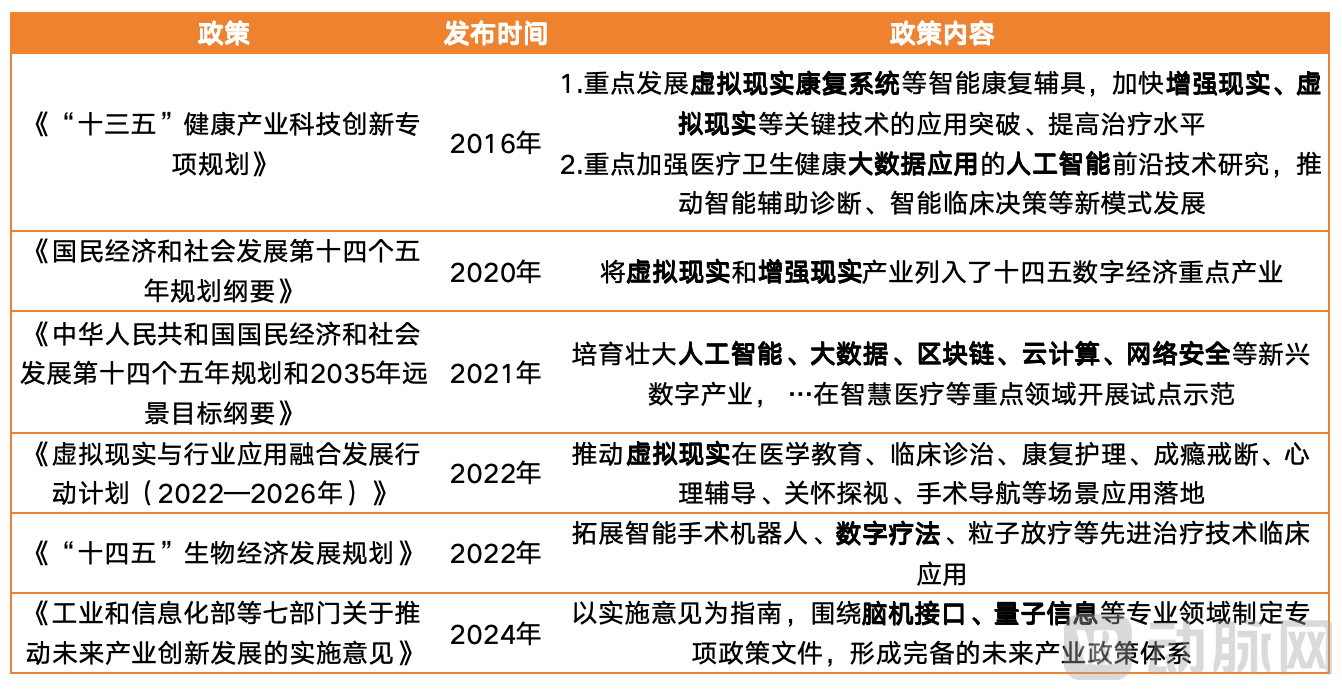
Policy orientation further validates the value of this development trajectory. Across two consecutive five-year plan cycles, from the 13th Five-Year Plan to the 14th Five-Year Plan, virtual reality, artificial intelligence, brain-computer interfaces, digital healthcare, and digital therapeutics have been consistently highlighted as frontier technologies.
Suzhou Ruiku Medical Technology Co., Ltd. did the right thing, with the right technology, at the right time.
Ruiku Medical’s core competitiveness lies in its product portfolio, which deeply integrates medical needs with technological innovation. The company has built three product lines centered around three key scenarios: “surgical assistance, digital diagnosis and treatment, and medical education.”
First, Ruizhu, the physician’s “surgical assistant.”
In the field of traditional minimally invasive pain management procedures, physicians often face challenges such as difficult needle insertion and challenging target localization. The Ruizhu product series successfully overcomes obstacles encountered in high-precision minimally invasive surgery—including difficulty in targeting, complex and variable surgical processes, and the inherent complexity of interpreting medical imaging—by integrating technologies such as mixed reality, medical image-guided localization, and medical image fusion. This enables physicians to interpret medical imaging data more comprehensively, rapidly identify the optimal trajectory for minimally invasive procedures, and ensure the smooth execution of surgical operations.
In September 2024, the “Medical Image Processing Software” in Ruizhu’s product line obtained the Class II Medical Device Certificate from the National Medical Products Administration.
Second, the patient’s “electronic pill,” Ruimeng.
The “Chronic Pain Rehabilitation Training Software,” which has obtained the Class II Medical Device Certificate from the National Medical Products Administration, is a member of Ruimeng’s product portfolio.
The Ruimeng product series is designed based on Cognitive Behavioral Therapy (CBT) and the Theory of Holistic Pain Management proposed by Professor Ma Ke from Xinhua Hospital, Shanghai Jiao Tong University School of Medicine. It employs innovative digital pain diagnosis and treatment technologies, constructing a multimodal large model using electroencephalogram (EEG) data, other physiological data, and pain scale scores. Through proprietary algorithms, it generates a quantitative pain assessment metric known as “Marke.” Operating within a closed-loop therapeutic framework of “Assessment–Treatment–Monitoring–Analysis–Optimization,” the system assists physicians in regulating patients’ emotions, cognition, and behaviors, while promoting lifestyle modifications. The quantitative pain assessment capability of Ruimeng can be integrated with XR-based digital therapeutics or combined with other pain management modalities, such as electrical stimulation and shockwave therapy. It is widely applicable to pain departments, rehabilitation departments, and related specialties across medical institutions at all levels, effectively enhancing the accessibility and efficacy of diagnosis and treatment.
Third, “Rupei,” the all-around teaching assistant for medical students.
Rupei focuses on helping medical students and junior physicians rapidly master professional skills, gain an in-depth understanding of the physiological and pathological mechanisms of pain, and acquire proficiency in pain-related surgical techniques. The curriculum covers a wide range of topics related to both the theoretical foundations and practical procedures of pain diagnosis and treatment. Furthermore, Suzhou Ruiku Medical Technology Co., Ltd. is actively collaborating with hospitals and medical schools to develop customized training products tailored to specific needs.
Unlike the industry’s common “jack-of-all-trades” approach to technology, Ruiku Medical has chosen to focus on the vertical niche of pain medicine. Its three product pipelines are independent yet closely interconnected, built around a digital ecosystem for pain management, with technical coupling achieved across platforms at the underlying architectural level. In the future, the company will further leverage emerging technologies such as artificial intelligence and brain–computer interfaces to innovate and expand its product pipelines.
Ruiku Medical’s ability to precisely identify clinical needs and empower clinical practice with innovative technologies stems from founder Qin Chunhui’s insight into clinical pain points.
Qin Chunhui was formerly an Associate Chief Physician in the Department of Pain Management at Yueyang Hospital of Integrated Traditional Chinese and Western Medicine, Shanghai University of Traditional Chinese Medicine.Over his more than 20-year clinical career, he has witnessed countless patients endure the prolonged suffering caused by chronic pain. “Many patients choose to endure rather than seek treatment. In China, only 14.3% of patients have adequate knowledge about pain, and the consultation rate is less than 60%. Even among those who receive treatment, fewer than 20% achieve complete pain relief,” Qin Chunhui candidly stated in an interview. “Pain is not merely a medical issue; it is also a social problem.”
In 2015, Microsoft released the mixed reality device HoloLens, and its demonstration video for medical scenarios inspired Qin Chunhui. He realized that XR technology could break through the limitations of traditional imaging to achieve precise diagnosis and treatment by “seeing through the human body,” while simultaneously reshaping doctor-patient interactions. He led the development of a prototype system for pain management surgical assistance and completed proof of concept at a hospital. In 2020, Ruiku Medical was officially established, dedicated to integrating technologies such as XR, artificial intelligence, and brain-computer interfaces into the entire process of pain management. That same year, Ruiku Medical became a global partner of Microsoft Mixed Reality.
Currently, the company has established a multidisciplinary team integrating medicine and engineering. This team comprises not only professionals from the healthcare system and technical talent with backgrounds at tech giants such as Microsoft and NVIDIA, but also numerous clinical experts in pain management and resources from top-tier medical institutions. This unique combination enables the team to gain deep insights into clinical pain points while rapidly achieving technological translation. Furthermore, our experienced production management and marketing sales teams ensure stable and reliable product quality, thereby effectively serving both physicians and patients.
Ruiku Medical has aligned its industry and research efforts with Shanghai Jiao Tong University, leveraging the National Major Science and Technology Infrastructure for Translational Medicine (Shanghai) to engage in deep collaboration with the team led by Ma Ke and Zhang Yue at the Institute of Translational Medicine., focusing on the digital needs across the entire pain diagnosis and treatment process, and promoting the implementation of cutting-edge achievements through a dual-drive model combining academic basic research with corporate technological translation. Currently, the company has partnered with Shanghai Ruijin Hospital, Shanghai Xinhua Hospital, Shanghai Huadong Hospital, The Second Affiliated Hospital of Zhejiang University School of Medicine, and otherOver 100 hospitals and more than 10 medical schools have signed cooperation agreements,UndertakeOver 10 provincial- and ministerial-level research projects funded by the Ministry of Science and Technology, the Chinese Academy of Sciences, and other agencies, and by leveraging resources from clinical and research institutions, it has established an integrated platform for industry, academia, research, and sales to drive the development of cutting-edge products.
Suzhou Ruiku Medical Technology Co., Ltd. completed a tens-of-millions RMB Pre-A financing round in 2024, primarily led by state-owned capital from Wuhu, Anhui Province. The company plans to raise RMB 25 million in its Series A round in 2025 to fund research and development and accelerate market expansion.
Moving forward, the company plans to expand its business into more specialized pain management segments and explore new pathways for “non-invasive analgesia” through brain-computer interface (BCI) technology. It has already partnered with the “Da Yi Xiao Hu” Medical Communication Think Tank to conduct theoretical research in the fields of artificial intelligence and BCI, and jointly established the “Industrial Promotion Alliance for New Quality Productive Forces in Healthcare.” With the approval of its second Class II medical device certificate, Suzhou Ruiku Medical Technology Co., Ltd., positioned at the forefront of the digital health wave, will accelerate the innovation of its “data-driven pain management” treatment model.