The Ultimate Showdown in Ultra-High-End CT: Photon-Counting and Phased-Array Technologies Enter the Arena

United Imaging
High-end Medical Device Developer

Neusoft
Comprehensive Solution Provider for Clinical Diagnosis and Treatment

Siemens Healthineers
Medical Solutions Provider
This year at the CMEF Medical Imaging Zone, a smokeless showdown of titans is unfolding.
In previous years, United Imaging and Neusoft consistently occupied the largest exhibition booths, showcasing their latest and most cutting-edge medical imaging hardware and software in direct competition. This year, in addition to reiterating their past strategies, both companies unexpectedly unveiled the latest updates on their proprietary "photon-counting CT" technologies.
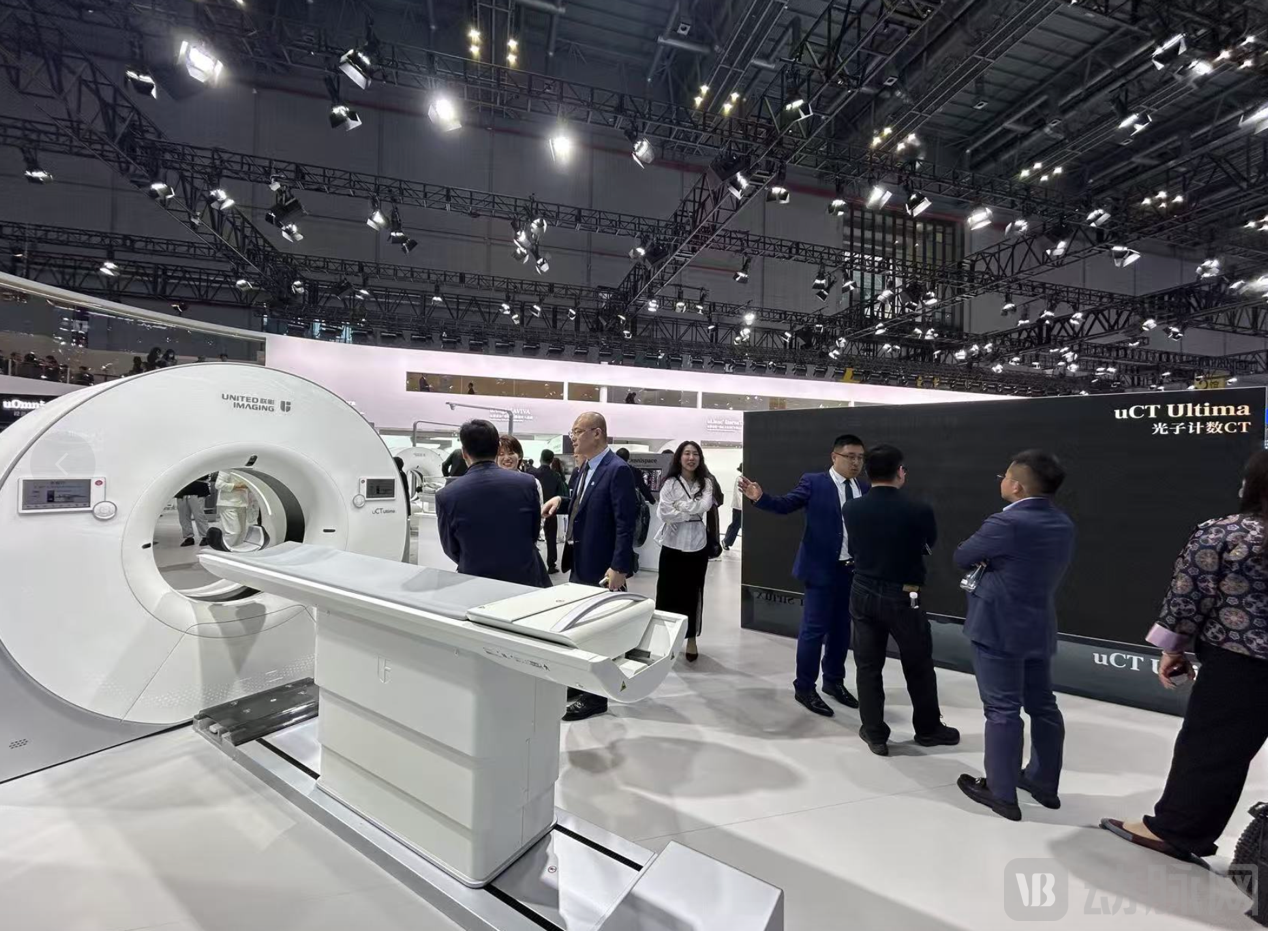
At CMEF, United Imaging uCT Ultima
“In the coming years, every CT scanner will be a photon-counting CT,” stated Professor Krestin, former President of the European Society of Radiology. Although somewhat exaggerated, this remark has indeed spurred numerous manufacturers to engage in breakthroughs in related innovative technologies.
Meanwhile, the market has also embraced this new type of CT. In 2024, leveraging China’s first and only registration certificate for photon-counting CT, Siemens Healthineers swept through the Chinese ultra-high-end CT market, selling double-digit units at an average price of RMB 50 million in its first year on the market, and securing prestigious clients such as Peking Union Medical College Hospital, Ruijin Hospital, and the Second Affiliated Hospital of Zhejiang University School of Medicine.
Prior to CMEF, United Imaging had only disclosed its detector material roadmap and a spectral micro-CT for research purposes, while Neusoft remained largely opaque, merely revealing its participation in the “National Key R&D Program” for photon-counting CT and its subsequent entry into the “Special Review Procedure for Innovative Medical Devices.”
Silently, they have already positioned themselves at the forefront of CT technology.
The emergence of photon-counting CT is primarily aimed at breaking through the imaging bottlenecks faced by conventional CT.
To guide optical signals to optical photon sensors and form pixels, traditional energy-integrating detectors (EIDs) rely on gadolinium oxysulfide (GOS) or cesium iodide (CsI) scintillator crystals, employing an indirect conversion pathway of “X-ray → visible light → electrical signal.” This process requires reflective septa or other structures to cut or segment the detector, ensuring that each pixel independently receives optical signals. However, the photoelectric absorption efficiency is only 60%, and there are losses due to light scattering. Furthermore, as detectors reach 320 rows, the minimum unit for detector segmentation has approached its limit, making it difficult to further increase the number of detector elements.
In contrast, photon-counting detectors (PCDs) employ wide-bandgap semiconductor materials such as cadmium telluride (CdTe) and cadmium zinc telluride (CZT), which can directly convert deposited X-ray energy into electrical signals without the need for anti-scatter grids. Therefore, the use of PCDs allows for a significant reduction in detector pixel size without compromising geometric detection efficiency, with photoelectric absorption accounting for more than 95% of interactions.
Therefore, the revolution brought about by photon-counting CT is not only a revolution in imaging modalities but also a revolution in materials science.
Currently, mainstream detector materials include cadmium telluride (CdTe), cadmium zinc telluride (CZT), and deep silicon (Si). As the only photon-counting CT system currently approved by both the FDA and the NMPA, Siemens Healthineers’ NAEOTOM Alpha and its associated product series all utilize CdTe as the detector material. CdTe features a high atomic number, high density, and a wide band gap. Its optimal operating X-ray energy range covers nearly the entire spectrum used in medical imaging, security screening, and non-destructive testing equipment, making it regarded as the ideal material for implementing multi-energy spectral photon-counting X-ray technology.
Furthermore, the higher atomic number of CdTe detectors implies greater photoelectric absorption efficiency, while high carrier mobility and lifetime ensure that more carriers are transported to the electrodes without being trapped en route, enabling the detector to achieve a detection efficiency of over 95% for 60 keV X-rays. In terms of energy resolution, the high resistivity of CdTe also ensures minimal leakage current under high operating voltages, thereby reducing noise during CT operation.
Neusoft’s NeuViz P10, which entered the special review process this March, utilizes cadmium zinc telluride (CZT) as the detector material. CZT and cadmium telluride (CdTe) are both II-VI compound semiconductors with broadly similar performance characteristics and advantages. In comparison, CZT has a lower density, higher resistivity, and wider bandgap, resulting in superior performance at room temperature.
During CMEF, Neusoft officially disclosed the detailed specifications and advantages of the NeuViz P10. Wu Shaojie, CEO of Neusoft Medical, introduced at the launch event that the NeuViz P10 is equipped with a new-generation cadmium zinc telluride (CZT) photon-counting detector, enabling zero-noise photon-counting CT imaging with a spatial resolution exceeding 46.5 lp/cm.
Furthermore, this photon-counting CT features ultra-high-speed rotation, with a gantry rotation time breaking the 0.23-second barrier. Combined with third-generation coronary motion artifact correction technology, the NeuViz P10 provides robust assurance for ultra-high-definition coronary imaging. During coronary artery examinations, stents, calcifications, and plaques are displayed with greater clarity.
 Neusoft Holds NeuViz P10 Launch Event During CMEF
NeuViz P10 photon-counting CT does not disclose specific metrics for radiation dose and contrast agent volume. However, the imaging mode of photon-counting CT inherently achieves the dual goals of low radiation dose and low contrast agent usage. Furthermore, Neusoft has introduced its AI ClearInfinity deep learning reconstruction technology on the NeuViz P10, which can further reduce radiation exposure while enhancing image quality.
In terms of scientific research, the photon-counting CT NeuViz P10’s spectral imaging capability significantly enhances energy resolution. In research mode, it supports multiple (3+) energy bins and imaging with more than ten pairs of basis materials, enabling physicians to more easily perform multi-contrast-agent imaging for clinical research, precisely analyze material composition, and conduct quantitative and qualitative assessments of tumors, plaques, and other pathologies.
United Imaging currently has deployments in both CdTE and CZT technologies, but did not disclose at this CMEF which specific pathway was adopted for the exhibited uCT Ultima. However, it was revealed that United Imaging has achieved significant results in Ultra-High Resolution (UHR) imaging mode. In addition to performing excellently in routine clinical examinations, United Imaging has successfully broken through the data transmission limitations of existing Photon-Counting CT (PCCT) systems in UHR mode, achieving a larger scan coverage and providing new possibilities for the precise diagnosis of heart diseases.
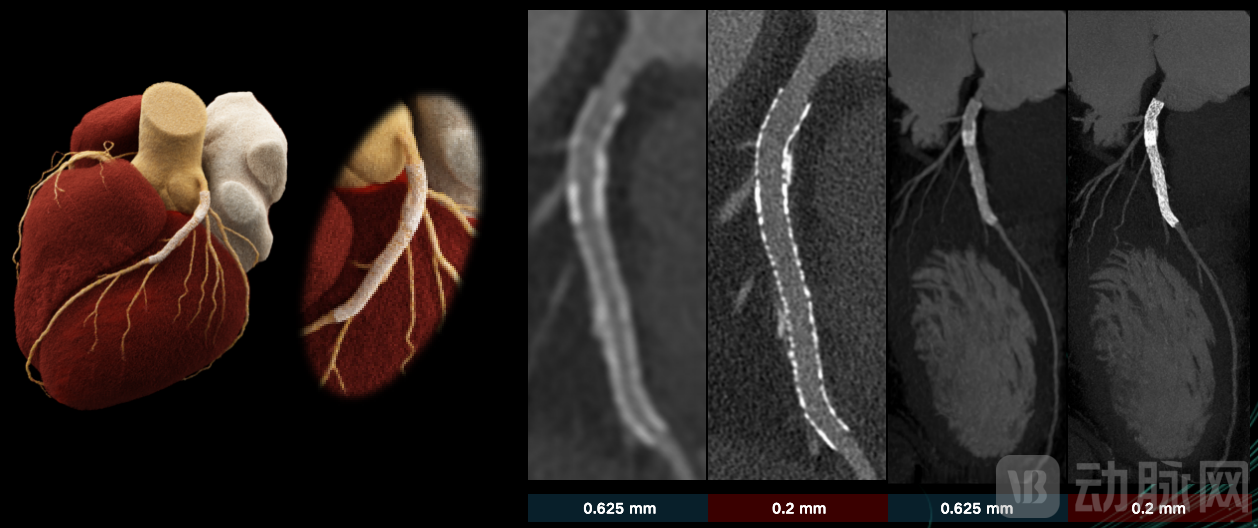
United Imaging Unveils Photon-Counting CT Imaging of Coronary Stent Structures
Currently, only GE Healthcare is pursuing the deep-silicon approach. According to physicians present at the event, GE Healthcare has completed the development of its deep-silicon photon-counting CT; however, it was not publicly displayed during CMEF, with the Apex Quantum Platform series CT showcased instead. Perhaps within one to two years, we will see photon-counting CT systems based on the deep-silicon pathway competing alongside those utilizing CdTe and CZT technologies.
Leveraging Siemens Healthineers’ first-mover advantage, the NAEOTOM Alpha has been widely adopted in both clinical and research settings, driving the development of the entire photon-counting CT category. However, within the ultra-high-end CT segment, photon-counting CT is not the only contender for the title of “next-generation CT.”
In fact, in addition to the difficulty in increasing the number of detectors, the rotation speed of traditional CT scanners has also approached its physical limit. During the operation of a spiral CT scanner, centrifugal force is generated. As the size and mass of the CT scanner are increased to improve imaging quality, the resulting centrifugal force gradually approaches the structural tolerance limit of the CT system, capping the maximum rotation speed at 0.25 seconds per rotation.
To address this issue, the only current solution is to reconstruct the imaging logic of CT.
During this CMEF, NanoVision Imaging, a domestic manufacturer of ultra-high-end CT systems, showcased its reconstruction logic. The company integrated 24 sets of X-ray source rings, featuring an arrayed arrangement of integrated X-ray tubes, and detector rings with 64 detector modules distributed in an array pattern, into the gantry of a single CT scanner. By precisely controlling the X-ray sources in the array via timed electronics to perform sequential pulsed exposures for data acquisition, it replaces the rotation of the X-ray tube and detector with X-ray source flashing, thereby achieving a transition from “mechanical rotation” to “optical rotation.”
Based on this new imaging modality, Nanovision named it “Phased Array CT.”
In terms of the X-ray source, phased-array CT adopts an integrated array design that combines the hot-cathode X-ray tube with the high-voltage power supply to ensure beam energy and penetration capability. By leveraging advanced digital cathode and high-frequency inverter technologies, it achieves precise ultra-narrow pulse exposure and low-dose scanning.
To control the volume of the X-ray tube, NanoVision Imaging adopted an “Intelligent Dual-Cycle Air Cooling System” to address heat dissipation issues by optimizing airflow design, thereby ensuring equipment stability and enabling high-throughput patient examinations. Furthermore, the alternating exposure method reduces the demands on cooling efficiency and thermal capacity, extending the service life of the X-ray source.
Regarding detector materials, Nanovision employs a eutectic material with a microscopically ordered structure. Specifically, the company uses a specialized growth process to integrate two crystalline phases with different refractive indices into a single eutectic material. Due to the difference in refractive indices, under X-ray irradiation, while the scintillator crystalline phase converts incident X-rays into visible light, the visible light propagates directionally along the crystal growth direction via total internal reflection at the interface between the scintillator crystalline phase and the matrix crystalline phase.
In this manner, phased-array CT also eliminates the need for physical segmentation of detector micro-elements using titanium dioxide, thereby achieving smaller pixel sizes and higher spatial resolution. At an MTF of 10%, the spatial resolution of the Phased-Array CT “Compound Eye 24” can reach 25 lp/cm, which is on the same order of magnitude as that of photon-counting CT.
The Fierce Competition in Ultra-High-End CT Scanners Is Heating Up, and the Next Hot Sector Is Imaging AI.
Currently, the resolution of mainstream spiral CT scanners is 512×512, with individual patient image data sizes ranging from approximately 200 to 300 MB. In contrast, some photon-counting CT systems offer a resolution of 2048×2048, while the phased-array CT “Compound Eye 24” achieves a resolution of 3072×3072, with each slice containing over ten million pixels. Consequently, the generated image data for a single patient amounts to approximately 10–20 GB.
For physicians, while the high-definition images from next-generation CT scanners reveal finer patient details, they also bring a workload several times greater than before. In this context, AI-based image preprocessing has become virtually indispensable.
However, the images used for training by AI imaging companies are almost exclusively 512×512 in resolution; many existing algorithms are incompatible with higher-resolution images, necessitating redesign and retraining.
For them, developing algorithms capable of processing high-quality images is both a challenge and an opportunity.
Furthermore, the higher-resolution, higher-quality data provided by next-generation CT scanners is also driving the advancement of digital twins.
Based on these data, future diagnoses and treatments could first be simulated on digital twins, thereby providing patients with more efficient and precise diagnostic and therapeutic services.
According to relevant companies, Nanovision’s phased-array CT system, “Compound Eye 24,” has completed clinical trials and is expected to receive approval from the National Medical Products Administration (NMPA) by the end of this year, thereby officially launching commercial sales. Neusoft Medical’s NeuViz P10 entered the NMPA’s Special Review Procedure for Innovative Medical Devices in March this year, which may enable it to obtain market authorization within next year.
However, obtaining regulatory approval does not guarantee scalable commercialization. Whether for CTZ, CdTe, or deep-silicon technologies, there remains a significant gap to mass production.
Currently, Siemens Healthineers is clearly in the lead, with CdTe production facilities in Okinawa, Japan, and Forchheim, Germany; however, its production capacity still fails to meet demand. Neusoft Medical, United Imaging, and NanoVision are trailing behind and likewise need to proactively address capacity considerations.
Speculation among industry insiders suggests that GE Healthcare’s delay in announcing its photon-counting CT system stems primarily from ongoing considerations regarding the product’s market positioning. The company aims to make photon-counting CT accessible to hospitals at all levels, rather than limiting its application to only the most advanced medical centers. Consequently, GE Healthcare is still seeking an improved “deep silicon” manufacturing pathway that can ensure both high production yields and superior performance characteristics.
Overall, regardless of which of the aforementioned CT technologies achieves a breakthrough, it will inject new momentum into China’s healthcare system.
After all, in 2024 alone, hospitals in China have performed nearly 100,000 scans using Siemens Healthineers’ photon-counting CT systems, contributing to more than 40 papers published in authoritative journals.
As more “next-generation” CT scanners enter the market next year, we may see a surge in outstanding scientific achievements, propelling China’s medical capabilities closer to the global forefront.
On May 9, VCBeat and the Enshe Family Office will jointly host a Medical Device Design and Manufacturing Conference, featuring in-person exchanges in Suzhou. The event will include in-depth discussions on how Chinese imaging innovation companies are achieving breakthroughs in foundational technologies to challenge international giants. Everyone is welcome to scan the code to register.