

Original Branded Drugs Gain Momentum in New Retail Channels Amid China's Healthcare Reforms
With the comprehensive advancement of various healthcare reform measures, the landscape of the in-hospital and out-of-hospital pharmaceutical markets is being reshaped, and the strategic focus of originator drugs is shifting from the in-hospital market to the out-of-hospital sector.
According to recent data released by Menet, the combined sales of Chinese patent medicines, chemical drugs, and biological products (excluding drug combinations) on online pharmacies in China exceeded RMB 70 billion for the first time in 2024, marking a six-year high with a growth rate of over 17%.
In the out-of-hospital market, pharmaceutical e-commerce is rising with vigorous momentum, assuming an increasingly pivotal role; likewise, pharmaceutical e-commerce and internet healthcare platforms are establishing indispensable market channels for originator drugs.
In recent months, in response to the diverse medication needs of the general public, pharmaceutical e-commerce and internet healthcare platforms have been strengthening their product and service offerings around originator drugs. For instance, they have added "Originator Drug" labels on medication pages to facilitate user search and identification, and launched dedicated sections for originator drugs that centrally display products in therapeutic areas such as cardiovascular and cerebrovascular diseases, endocrinology, anti-infectives, respiratory, hepatobiliary, gastroenterology, gynecology, andrology, and dermatology, making it easier for users to locate them.
In the original drug sections of major platforms, the Ping An Health App and the Hao Fulie App under China Ping An have introduced 166 original drugs, covering 92% of the varieties of original drugs available for online sale in the industry, encompassing approximately 70 varieties across 15 major medical specialties. JD Health’s original drug section includes nearly all original drugs compliant with online sales regulations, and it conducts traffic acquisition both on- and off-platform to increase user awareness of original drugs.
Dingdang Kuaiyao has strengthened in-depth collaborations with dozens of originator pharmaceutical companies, jointly establishing the “Originator Drug Supply Guarantee Alliance” and launching a dedicated Originator Drug Zone to enable users to locate medications with a single click. Meituan Maiyao has listed a wide range of products in its Originator Drug Zone, covering specialty drugs for respiratory diseases, medications for chronic conditions, and seasonal household essentials. Additionally, Meituan’s self-operated pharmacy has partnered with originator drug manufacturers to implement direct brand procurement.
“In recent months, original research drugs on the platform have consistently experienced month-on-month growth, outpacing the overall growth rate of the platform’s pharmaceutical retail sector,” said Li Yanping, Procurement and Sales Director of JD Health’s Pharmaceutical Business Division. She added that certain original research drugs also command a high sales share within their respective therapeutic categories.
Which Originator Drugs Are the Most Popular? VCBeat selected the top 10 best-selling drugs from each of four leading platforms that label product pages as “Originator Drug.” The selection was based on B2C retail sales volume after searching for “Originator Drug” and ranking by sales.
In general,Top-selling originator drugs are primarily those for chronic diseases, anti-allergy conditions, and pediatric use. The majority of these are prescription medications, particularly those indicated for hypertension, diabetes, and neurological disorders. Among over-the-counter (OTC) products, the best-selling categories include anti-allergy, gastrointestinal, and dermatological medications.
Whether prescription drugs or over-the-counter (OTC) medications, pediatric medicines are top-selling products. Examples include Zithromax Azithromycin for Oral Suspension, Motrin Ibuprofen Suspension, and Smecta Diosmectite Powder (orange flavor), which are also common staples in household medicine cabinets.
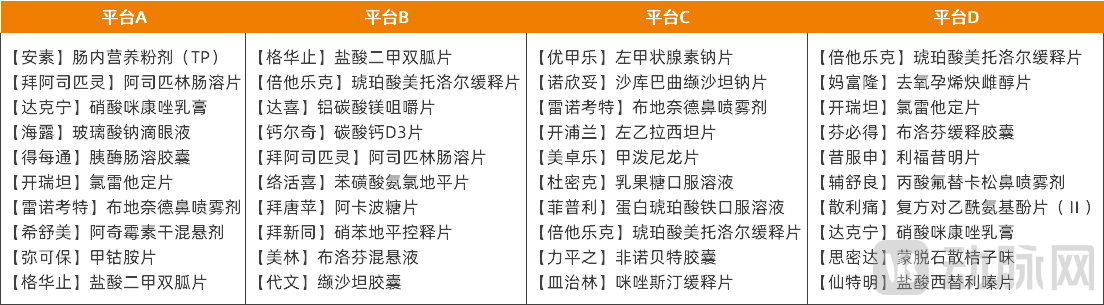
Top 10 Best-Selling Original Brand-Name Drugs on Select Platforms (Data as of April 8)
The popularity of originator drugs is also evident in the medication rankings for diseases in other therapeutic areas.
As thyroid disorders become increasingly prevalent and affect younger demographics, the demand for medication is rising. According to JD.com’s ranking data (as of April 8), the top three best-selling original brand-name drugs for thyroid conditions are Euthyrox (levothyroxine sodium tablets), Methimazole Tablets (Thyrozol), and Letrox (levothyroxine sodium tablets). Other original brand-name drugs in the top ten include Henan Huamei Pharmaceutical’s Propylthiouracil Tablets and Lokelma (sodium zirconium cyclosilicate powder).
Amid the deep penetration of electronic devices into daily life and work, eye health has garnered widespread attention. Taking the JD.com rankings as an example, among the top ten Western pharmaceutical products for ophthalmic diseases (based on data as of April 8), there are numerous originator drugs, including Stulln Escin and Digoxin Eye Drops, Patanol Olopatadine Hydrochloride Eye Drops, Hyalein Sodium Hyaluronate Eye Drops, and Tobrex Tobramycin Eye Drops.
In fact,Private medical institutions, retail pharmacies, pharmaceutical e-commerce platforms, and internet healthcare platforms are all major out-of-hospital channels for originator drugs. Among these, pharmaceutical e-commerce and internet healthcare platforms offer numerous advantages.
Originator drugs encompass a variety of prescription medications for chronic diseases. Patients with chronic conditions require regular follow-up visits and prescriptions. Online platforms provide convenient services such as virtual follow-ups and medication delivery, even facilitating access to high-quality medical resources across China, thereby making healthcare consultations and medication purchases more efficient for patients. Should any issues arise during medication use, patients can also consult pharmacists online at any time.
Chronic disease management is a comprehensive and long-term process that encompasses diagnosis and treatment, medication, health monitoring, diet, and exercise. Factors such as adherence to scheduled follow-up visits, compliance with prescribed dosage and timing of medications, and regular data monitoring with timely intervention for abnormalities can all impact disease stability. Internet healthcare can establish long-term connections with users, providing not only medications but also a complete suite of chronic disease management solutions.
Currently, multiple platforms have established services covering all stages from medical consultation to medication dispensing to address users’ demand for originator drugs.
For example, Ping An Health has built a team of approximately 50,000 internal and external physicians covering 29 medical specialties, with nearly 2,900 expert doctors under contract. It has established 23 specialized disease centers across eight major specialties, developing standardized pre-diagnosis, intra-diagnosis, and post-diagnosis solutions for specific conditions to provide users with refined, whole-course disease management.
JD Health has refined its service loop of “medical consultation + testing + diagnosis + medication,” particularly by vigorously expanding home-based and in-store services on the foundation of its existing specialized medical services and pharmaceutical logistics network. As of December 31, 2024, JD Health had launched 149 rapid testing products, with service coverage across 12 core cities nationwide.
Fangzhou Jianke has established a Chronic Disease Management Service Center to provide patients with post-diagnosis follow-up, medication reminders, and patient education services, while proactively and continuously managing patient care.
Leveraging its integrated online-to-offline operational advantages and the Dingdang Smart Pharmacy network, Dingdang Kuaiyao enables instant delivery of originator drugs. Patients can enjoy door-to-door medication delivery in an average of 28 minutes after placing an order, along with free online consultations with doctors and pharmacists, significantly enhancing the convenience and timeliness of medication purchases.
Even for injectable medications that are prohibited from online sales, the platform better meets users’ demand for originator drugs by collaborating with offline medical institutions.
Undoubtedly, pharmaceutical e-commerce and internet healthcare platforms are becoming important channels for patients to purchase originator drugs. In response, these platforms are also iterating more precise digital marketing services for companies involved in originator drugs.
Li Yanping stated that the industry can clearly sense that originator drug brands and their manufacturers are more actively embracing pharmaceutical e-commerce, particularly platforms with high-quality user bases. “For patients, pharmaceutical e-commerce platforms serve to enhance drug accessibility, enabling them to promptly search for and obtain the high-quality medications they need; for pharmaceutical companies, these platforms act as vehicles to amplify the commercial and social value of drugs through digital marketing.”
Generally, the term “originator drugs” in the industry refers to chemical or biological drugs whose patent protection has expired and for which generic versions are already on the market. A key characteristic of originator drugs is that they have been marketed for many years, indicating that they have undergone thorough validation of their safety and efficacy.
In the process of originator drugs shifting from in-hospital to out-of-hospital channels, patients have gained greater autonomy in medication decision-making, particularly for prescription drugs.Although prescription drugs must be purchased with a valid prescription, patients retain the autonomy to decide which platform to use and which brand of medication to purchase once they have their prescription in hand.
This also means that for patients to choose originator drugs, the prerequisite is that they understand what an originator drug is. However, due to the specialized nature of pharmaceutical knowledge, the concept and advantages of originator drugs are not widely known among the general public. Therefore, the marketing focus for originator drugs needs to extend from physicians to patients.
Certainly, under the framework of laws and regulations, originator drugs cannot be directly marketed to the general public through advertising. However, it is necessary to more clearly communicate to the public popular science information such as the concept and characteristics of originator drugs, and which brand is the originator for a specific medication. Internet healthcare platforms can establish dedicated sections for originator drugs, highlight their advantages, and label originator drug pages accordingly. These measures represent the most cost-effective and efficient approach to public education.
As mentioned earlier,Originator drugs include a large number of medications for chronic diseases, which means that helping pharmaceutical companies achieve continuous patient engagement and management is also a crucial component of digital marketing.
“Digital marketing for innovative drugs requires greater emphasis on physician education to help more doctors understand new drugs and new therapies. In contrast, digital marketing for originator drugs should focus more on strengthening patient education and management,” said Li Yanping.
Currently, pharmaceutical e-commerce platforms and internet healthcare providers are enhancing patients' medication adherence through proactive follow-up management and comprehensive disease-course management.
For example, JD Health’s Single-Disease Care Center enables full-cycle patient management, extending the Duration of Therapy (DOT) by 45%. Dingdang Health leverages its self-developed AI systems, health knowledge graphs, and medical reference databases to assist users with health record management and services aimed at improving medication adherence during DOT.
In short, online platforms do more than just guide patients on how to use a specific medication; they provide comprehensive support throughout the entire treatment journey for a given disease. Originator drug manufacturers can leverage these platforms’ extensive reach and timely responsiveness among both healthcare providers and patients to continuously strengthen their brand influence and market share.
Of course, under the trend of reshaping the pharmaceutical retail ecosystem, there are more topics worth studying in the out-of-hospital market, including marketing compliance, the potential and opportunities of instant retail, and efficient patient outreach and management.On May 10, VCBeat willIn SuzhouCo-hosted the “Conference on New Product and Channel Growth in the Out-of-Hospital Market” with Health Growth Society, facilitating offline exchanges and discussions on industry hot topics to more precisely identify breakthrough opportunities in the out-of-hospital market.Welcome to scan the QR code below to register:

Another notable phenomenon is that the strong online sales of originator drugs (including those featured in the rankings discussed earlier) are almost invariably predicated on non-reimbursement by medical insurance. In other words, consumers are willing to pay for originator drugs even without insurance coverage; despite the impact of medical insurance policies, market demand for originator drugs remains sustained.
As the landscape of the pharmaceutical retail market evolves, although some pharmaceutical companies have abandoned the in-hospital market for certain originator drug products, this does not mean that the market value of the drugs themselves is nonexistent. In Li Yanping’s view, as long as diseases and patients exist, the market value of originator drugs will persist.Pharmaceutical companies may exit certain niche markets due to their own strategic considerations, but the market lifecycle of a drug is tied solely to the iteration of treatment regimens; until superseded by superior therapeutic alternatives, such products remain viable.
Upstream, capital and industry have joined forces to actively foster the “second growth curve” for originator drugs. For instance, in recent years, Qiao Capital, through its subsidiary Haisen Biopharma, has acquired multiple originator drug assets from Takeda Pharmaceutical, Roche, and Merck, achieving substantial profits through intensive management of production, sales, and other operations.
Recently, Qiao Capital acquired the Chinese rights to Eisai Pharmaceutical’s enteric-coated tablets of polaprezinc sodium with an upfront payment of RMB 725 million. As an originator drug, it has maintained relatively stable sales since entering the Chinese market in 2002; however, its market share has declined since 2022 due to competition from domestic generic drugs. Following the commercialization strategies previously employed by Qiao Capital and Haisen Biopharma, polaprezinc sodium enteric-coated tablets are poised for a turnaround.
Furthermore, the Chinese government continues to encourage the transfer of overseas-originated innovative drugs to domestic production. In April 2024, the National Medical Products Administration (NMPA) issued the Announcement on Optimizing Matters Related to Drug Marketing Registration Applications for Transferring Overseas-Produced Drugs Already Marketed in China to Domestic Production. Under this policy, marketing registration applications for transferring originally developed chemical drugs and biological products to domestic production are included within the scope of priority review and approval by the NMPA.
In January 2025, the General Office of the State Council issued the “Opinions on Comprehensively Deepening the Reform of Drug and Medical Device Supervision to Promote High-Quality Development of the Pharmaceutical Industry,” further clarifying the need to optimize the review and approval processes for transferring the domestic production of drugs and medical devices already marketed in China but manufactured overseas, and supporting foreign-invested enterprises in introducing the domestic production of original research drugs and high-end medical equipment.
Encouraging the domestic production of imported original drugs helps reduce drug production costs; especially under the uncertainties brought by tariff wars, "shifting from imports to domestic production" offers greater certainty in controlling the costs of original drugs.
Overall, originator drugs remain an indispensable part of the pharmaceutical market. As medications that have been on the market for many years, they can still regain vitality through transformations across the upstream and downstream segments of the industry chain. In the pharmaceutical retail market, the accelerated growth of e-pharmacy will also serve as a key driver in revitalizing originator drugs.
References:
VBInsight Lab: How Originator Drugs Can Gain a Foothold After Being Squeezed Out of the Hospital Market
Jian Shi Ju: Another Originator Drug Withdraws! How Can Outdated Old Drugs Transform Into “Money-Printing Machines” Overnight?