

Anranfei Secures Tens of Millions in Angel Funding to Advance First-In-Class Parkinson’s Drug Based on Endogenous Neurotransmitter Modulation Platform

ANRANFI
Innovative Drug Developer for Endogenous Regulation of Neurotransmitter Secretion

FreeS Fund
Venture Capital Firms
VCBeat has learned that, recently, the world’s first innovative drug developer focused on endogenous regulation of neurotransmitter secretionAnAnFei (Kunshan) New Drug Development Co., Ltd. (hereinafter referred to as “AnAnFei”)Announced the completion of an angel financing round worth tens of millions of yuan, with this round led byFrees FundExclusive Investment,Gewu CapitalServing as the exclusive financial advisor. The funds from this round will be primarily used for the research and development of a pipeline of First-in-Class innovative drugs for various neurological disorders, represented by Parkinson’s disease.

ANRANFI was founded in 2023. Its founder, Dr. Zhang Yanfeng, is a Professor of Neuroscience at the University of Exeter in the UK and a Visiting Lecturer at the University of Oxford. With over fifteen years of research experience focused on dopamine secretion and function, he has published numerous significant academic papers in top-tier international journals such as Nature Neuroscience, Neuron, and Nature Communications, and serves as a peer reviewer for these publications.
The Oxford Parkinson’s Disease Centre (OPDC), where the founder is based, is the world’s most comprehensive interdisciplinary center for Parkinson’s disease research. ANRANFI is dedicated to developing first-in-class and best-in-class innovative drugs that regulate neurotransmitter secretion. In the future, it aims to address a series of unmet clinical needs globally, drive therapeutic transformation in the field of neuroscience, and benefit a broad patient population.
Abnormal neurotransmitter release has been confirmed to be closely associated with various neurological disorders; for instance, insufficient dopamine secretion can lead to Parkinson’s disease, attention-deficit/hyperactivity disorder (ADHD), addiction, schizophrenia, and binge eating disorder. As of 2021, there were over 470 million patients with neuropsychiatric disorders worldwide, and sales of related medications exceeded $30 billion.
Among them, there are over 7 million Parkinson's disease patients worldwide, with approximately 3.1 million in China. It is the second most common neurodegenerative disease, and global annual sales of Parkinson's-related medications exceed RMB 40 billion.
Currently, pharmacotherapy remains the first-line treatment for central nervous system diseases. Most drugs target neurotransmitters and their receptors, employing mechanisms such as exogenously increasing neurotransmitter concentrations or binding to neurotransmitter receptors to elicit activation or inhibition. However, existing approaches often result in downstream neurons within brain circuits receiving signals that are not encoded by upstream neurons, but rather constitute non-physiological signals determined by drug concentration.
Although these signals can be potent, long-term and non-physiological stimulation can cause significant side effects in downstream neural circuits. For instance, levodopa, currently the only “gold standard” medication for treating Parkinson’s disease, is converted into dopamine in the brain, compensating for the deficiency of this neurotransmitter in the striatum of Parkinson’s patients. However, long-term use of levodopa can lead to severe motor complications (dyskinesia) and other psychiatric comorbidities, limiting its effective duration to just five years.
ANRANFI has established the world’s first technological platform. By modulating the efficiency of conversion from electrical to chemical signals in neurons, this platform enables endogenous regulation of neurotransmitter secretion, thereby achieving physiological modulation of target neurotransmitter release for the treatment of various diseases, without affecting neuronal firing frequency or altering their physiological significance. This approach requires no invasive surgery and offers numerous advantages over traditional therapies:
1) Unlike traditional therapies that continuously and persistently interfere with signal transmission between nerves at high intensity, this treatment provides physiological modulation without altering the intrinsic firing frequency of nerve cells, thereby avoiding functional impairment caused by long-term activation of downstream cells.
2) After treatment, the signals between nerves damaged by the disease will be correspondingly amplified (or attenuated). This therapy ensures that intercellular communication is restored to normal levels, thereby further reducing side effects while guaranteeing therapeutic efficacy.
3) Due to its high specificity and precise therapeutic targeting, the new platform can significantly reduce side effects caused by interference with other types of neural signals, compared to traditional therapies.

These characteristics make this world-first novel therapy applicable to a wide range of diseases, addressing a series of unmet clinical needs.
First-in-class innovative drug development targeting Parkinson's disease as the lead pipeline candidate,
The research findings have been published in the top international journal NATURE NEUROSCIENCE.
It is reported that,The Company’s First Pipeline Targets a First-in-Class Innovative Drug for Parkinson’s Disease, the novel target has achieved direct regulation of dopaminergic neuron secretion for the first time. The therapy’s innovative mechanism overturns conventional understanding of dopamine secretion mechanisms. Once developed into a drug, it can be used as a monotherapy for Parkinson’s disease (without reliance on levodopa). Current preclinical data demonstrate that monotherapy significantly enhances dopamine secretion, and all treated Parkinsonian model mice regained motor function.The relevant research findings have been published in the prestigious academic journal *Nature Neuroscience*, marking the academic community's recognition of the underlying neurobiological mechanisms.
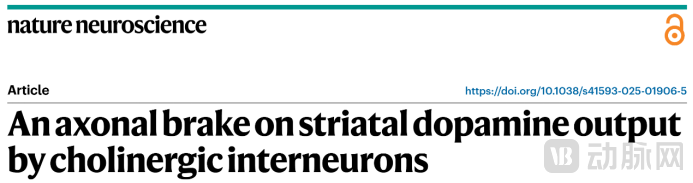
Leveraging this technology platform, ANRANFI has initially established a drug pipeline focused on Parkinson’s disease. It is reported that the novel target enables direct regulation of dopaminergic neuron secretion, allowing for monotherapy treatment of Parkinson’s disease once developed into a medication.Relevant research findings have been published in NATURE NEUROSCIENCE.。
Currently, ANRANFI has filed multiple international patent applications for its lead compounds. The optimization of these lead compounds is nearing completion, with the preclinical candidate compound (PCC) expected to be identified in 2025.
For this round of financing,Zhang Yanfeng, CEO of ANRANFIstated appreciation for FreeS Fund’s support of the company. With this capital infusion, the company will soon complete the Preclinical Candidate (PCC) confirmation for its first pipeline innovative drug for Parkinson’s disease, as well as expand its neurophysiological platform represented by Fast-Scan Cyclic Voltammetry (FCV). In the future, the company will also leverage its technological platform based on the novel mechanism of endogenous dopamine regulation to expand R&D pipelines for multiple indications, including attention-deficit/hyperactivity disorder (ADHD) and tic disorders.
Dr. Xie Da, FreeS FundIt was stated that there is a substantial unmet clinical need in central nervous system (CNS) diseases. However, drug development for neuropsychiatric disorders continues to face significant challenges due to the complex pathology of brain diseases and limitations in research methodologies and sample availability. ANRANFI is developing CNS therapeutics based on novel neurobiological mechanisms, with a focus on modulating local brain networks. This approach differs from previous strategies that relied solely on neurotransmitter replenishment or direct intervention at neurotransmitter receptors, thereby holding promise for achieving therapeutic effects closer to physiological levels and offering potential for expansion and validation across different types of neurons and species. Increasing dopamine concentrations in the brain to treat Parkinson’s disease has gained clinical acceptance. Accordingly, ANRANFI’s lead pipeline will focus on Parkinson’s disease, aiming to provide key clinical validation for this new biological mechanism and deliver superior therapeutic options for patients with Parkinson’s disease.
Di Haiming, Partner at Gewu CapitalHe stated that it was a great honor to collaborate with top scientists in the global Parkinson’s disease research field. Dr. Zhang Bo possesses extensive expertise in electrophysiology, electrochemistry, pharmacology, behavioral science, chemistry, and computer simulation. ANRANFI’s lead pipeline for the treatment of Parkinson’s disease features a clear mechanism of action, and preclinical data have demonstrated excellent efficacy. This advancement holds promise for overcoming levodopa phobia and bringing new hope to patients with Parkinson’s disease.The company’s new round of financing has officially commenced, and we look forward to engaging with more investors.