

Linde Membrane Breaks Foreign Monopoly with 30 Years of Nuclear Track-Etched Membrane Innovation
Based on three decades of research, Professor Wang Yulan’s team at the Institute of Nuclear and New Energy Technology, Tsinghua University, has successfully overcome the technological bottlenecks in domestically produced nuclear pore membranes, successfullyThe functional nanoporous membrane achieves a PM2.5 protection efficiency of 98% or higher, providing a high-performance material for the manufacture of air protection products such as PM2.5-protective masks and haze-resistant breathable window screens.
In 2020, Professor Wang Yulan officially retired from Tsinghua University and devoted herself full-time to founding Linde Membrane Technology Co., Ltd. (hereinafter referred to as “Linde Membrane”). The company achieved a globally unique technological breakthrough in asymmetric pore technology, resolving critical challenges such as poor stability, difficulties in controlling pore size and morphology, manufacturing scalability issues, and high costs. This innovation holds promise for breaking the overseas market monopoly on nuclear track-etched membranes.
Professor Wang Yulan mentioned that the company name “Lin De Membrane” is derived from the famous quote in The Analects of Confucius: “Virtue is not left to stand alone; he who practices it will have neighbors.” “The core force behind corporate value creation lies in its possession of breakthrough technologies. Our original intention in founding the company was to make technology benefit more people and serve the public.”
As the technical barriers and mass-production challenges associated with cutting-edge technologies are overcome one by one, the industrial application of nuclear pore membranes has taken a markedly different path: “At the research level, we are relatively in sync with overseas counterparts; however, from an application perspective, overseas markets place greater emphasis on high value-added and high-profit products. In contrast, we prioritize overcoming technical hurdles to ensure these technologies can be utilized as extensively as possible in China, without prioritizing economic value.”
Particularly in the biomedical sector, Linde Membrane has expanded the application scope of nuclear track-etched membranes in high-end filtration through its globally unique asymmetric pore modification technology, demonstrating exceptional performance in key applications such as immune carriers and cell perfusion culture.
1Mastering Key Irradiation and Chemical Post-Processing Technologies to Overcome the “Chokehold” Challenges in Precision and Mass Production
Nuclear Pore Membranes (Nuclear Track-Etched Microporous Membranes) are filtration membranes fabricated by irradiating organic polymer films (such as polycarbonate) with heavy nuclear fission fragments induced by high-energy particles or thermal neutrons in a nuclear reactor, thereby creating radiation-damaged channels along the paths traversed by the atomic nuclei, which are then converted into straight-through micropores via chemical etching. These membranes feature uniform pore sizes, with diameters ranging from a few nanometers to tens of micrometers, spanning four orders of magnitude.
Nuclear pore membranes havePrecisely tunable pore size, high mechanical strength, excellent chemical and thermal stability, and good biocompatibilityWith these multiple advantages, it boasts broad application prospects in various fields such as separation, filtration, and detection. It can be applied in biopharmaceuticals, food, electronics, environmental engineering, and other sectors, as well as in extensive areas including ultra-low temperature insulation materials, synthesis of nano- and micro-scale objects, isotope separation, and gas separation.
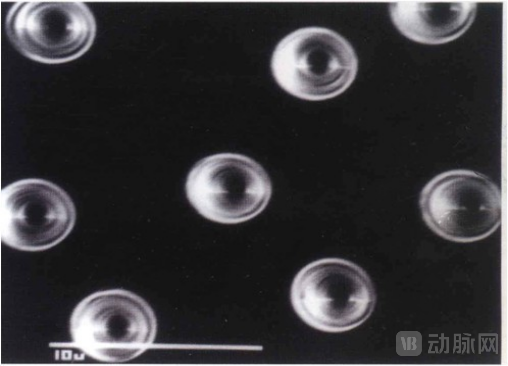
Nuclear pore membrane, image provided by the interviewee
However, this microporous filter membrane, with its unique properties and broad prospects, faces insurmountable technical barriers. “First, the nuclear pore membrane’sProduction costs are relatively high; from high-energy particle irradiation to chemical etching, each step demands a high level of technical expertise and stringent control conditions.“This has also kept its prices high, limiting its scope of application,” said Professor Wang Yulan.
Secondly, due to the intricate interplay of physical and chemical processes involved in the pore-forming mechanism, precise control over the pore size, pore morphology, and pore density of nuclear track-etched membranes, as well as their stable mass production, remains a significant challenge.“From a microscopic perspective, even nanoscale deviations can lead to vastly different performance of nuclear pore membranes in certain applications. This control challenge may result in variations between products from the same batch or across different batches; furthermore, achieving quality standardization for nuclear pore membranes remains a difficult goal,” added Professor Wang Yulan.High-end filtration in biopharmaceuticals requires more precise pore sizes to screen for biological substances of specific dimensions. For instance, in applications such as hemodialysis or protein separation, inaccurate pore sizes may allow harmful impurities to pass through or result in the loss of valuable target biomolecules.
It is particularly important to emphasize that nuclear pore membranes face significant challenges in mass production stability, making the transition from laboratory research to large-scale industrial manufacturing exceedingly difficult. Professor Wang Yulan candidly stated, “It took us approximately five years to progress from researching nuclear pore membranes to achieving scaled-up mass production; on top of that, we spent more than eight additional years continuously overcoming challenges related to stability and process control.” It is precisely due to the arduous nature of the nuclear pore membrane production process that Professor Wang Yulan holds them in such high regard. Whether in the laboratory or on the production line, one can always see Professor Wang Yulan carefully collecting every small piece of nuclear pore membrane.
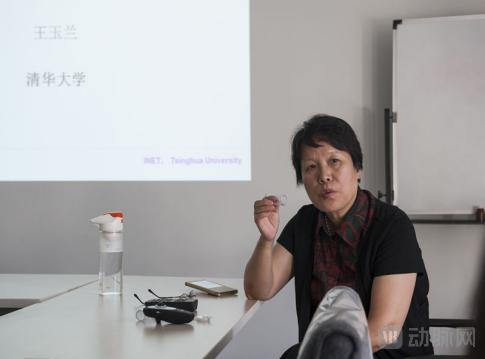 Professor Wang Yulan, photo provided by the interviewee
Technically, Linde Membrane has mastered two perforation technologies: accelerator irradiation and reactor irradiation. The former is a more widely applied nuclear track-etched membrane perforation technology; however, it imposes high requirements on equipment, equipment maintenance, and beam control, as well as stringent storage condition controls. Consequently, achieving nuclear track-etched membranes with density stability exceeding 85% is highly challenging.
Reactor irradiation technology is a perforation technique mastered only by China and the United States. It readily achieves density stability exceeding the 90% technical specification and is also suitable for manufacturing nuclear pore membranes with higher retention efficiency requirements. However, Linde membraneIt not only masters this technology but also possesses the capability for multi-parameter matching and density stabilization and uniformity in accelerator irradiation, thereby resolving the issue of unstable pore density caused by uneven irradiation during nuclear track membrane production.
Qi Jia, co-founder of Linde Membrane, stated, “By precisely controlling the parameters of accelerator irradiation and subsequent chemical processing, we have achieved precise control of nuclear track membrane pore sizes within specific nanoscale ranges and significantly reduced batch-to-batch variations in pore density to minimal levels. This enables us to produce nuclear track membranes with high performance and consistency. This means that Linde Membrane has further expanded the exploration of nuclear track membrane applications in high-end filtration fields, accelerating their deep integration and application in cutting-edge industries such as biopharmaceuticals and semiconductor manufacturing, with the potential to break the long-standing monopoly held by foreign companies on nuclear track membrane technology in these sectors.”
2World’s First “Bladder Cancer Tumor Cell Collector” with Globally Unique Asymmetric Pore Structure Approved for Market Launch
In terms of nuclear pore membrane modification, Linde Membrane further possessesGlobally Exclusive Innovative Technology—Asymmetric Pore Structure.Compared with traditional nuclear pore membranes featuring biconical or cylindrical pores, asymmetric pore structures offer numerous significant advantages:

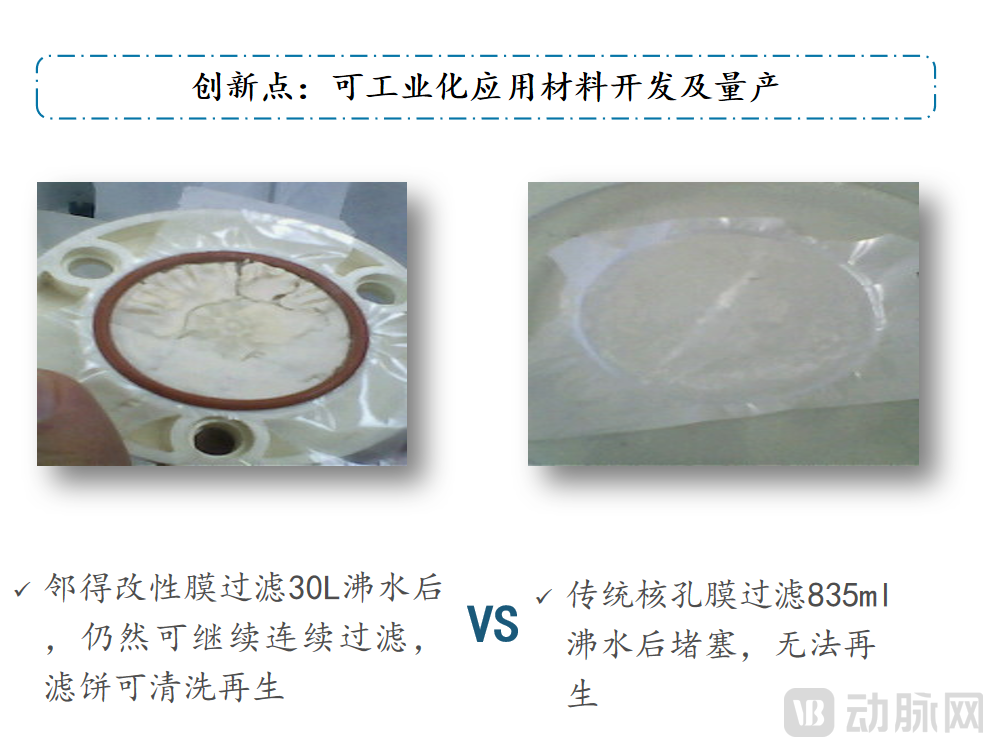
Based on this original modification, Linde MembraneIt has expanded the application scope of nuclear pore membranes in the high-end filtration sector of biomedicine, demonstrating superior performance in key application scenarios such as immune carriers, biochips, and biopharmaceuticals.In filtration processes within the biopharmaceutical purification workflow, modified nuclear pore membranes enable precise screening of target substances, significantly improving their yield and providing robust technical support for efficient production and quality enhancement in the biomedical industry.
Its first-generation product—The first-generation bladder cancer tumor cell collector has successfully obtained NMPA approval for market launch. It is currently undergoing continuous optimization and upgrades, with a commitment to further reducing clinical application costs and enhancing the product’s cost-effectiveness and practicality.
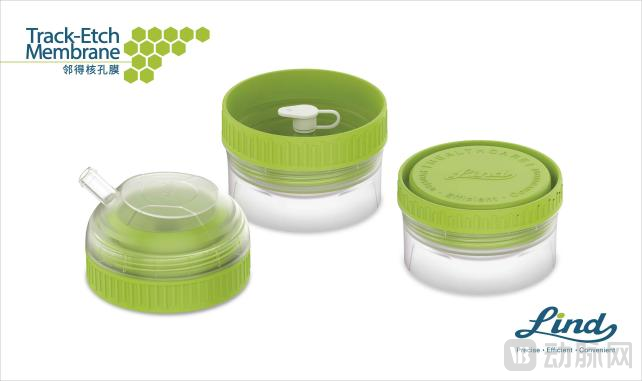
Bladder Cancer Tumor Cell Collector, Photo Provided by the Interviewee
Specifically,Bladder Cancer Tumor Cell Collector can be applied to early screening of urothelial carcinoma and enrichment of circulating tumor cells (CTCs) in liquid biopsy.“When tumors are present in the urinary tract (including the renal pelvis, ureters, and bladder), tumor cells shed into the urine. The collector utilizes nuclear pore membrane technology to enrich these exfoliated cells, thereby facilitating pathological slide preparation, cellular morphological analysis, and cancer staging and typing,” pointed out Qi Jia. Historically, there have been two methods for enriching and detecting cells in urine: the centrifugal sedimentation method and the thin-layer liquid-based cytology method. The former may suffer from missed detections or compromise cell integrity, while the latter is widely adopted but relies on membrane materials that are prohibitively expensive.
In addition to the continuously iterated and upgraded urothelial carcinoma tumor cell collector, Linde Membrane has also developedMultiple upstream life sciences product pipelines, including planar single-use cell perfusion culture filters, cell perfusion culture filter cartridges, and microfiltration and ultrafiltration membrane cassettes.Currently, multiple products have completed relevant performance testing and product supply in collaboration with leading upstream life sciences companies.
3From Scientific Innovation to Industrial Pathways: Exploring the Commercialization Potential of Foundational Technologies
After graduating with a degree in Nuclear Physics from Peking University in the 1980s, Professor Wang Yulan went to Japan to pursue a Ph.D. in Nuclear Physics and Nuclear Engineering at Waseda University. Upon returning to China, she worked at Tsinghua University for nearly two decades. In the field of nuclear track-etched membranes, Professor Wang started with fundamental research, led her team to overcome critical technological bottlenecks, and achieved large-scale production. She participated in the development of two recommended national standards for nuclear track-etched membrane technology in China and holds more than 50 related patents.
Now, Professor Wang Yulan, who has been deeply engaged in the field of nuclear pore membrane materials for 30 years, has embarked on a new journey in the industry, dedicated to applying world-class nuclear pore membrane technology to more fields. Currently, Linde Membrane has not only achieved large-scale mass production of nuclear pore membranes through technological breakthroughs, significantly reducing product costs; but also enhanced the performance of nuclear pore membranes through multiple original technologies,Expanded applications to over 6 fields。
In the agricultural sector, to address issues such as high spoilage rates and excessive energy consumption in the fresh produce supply chain—problems stemming from the current structure of China’s agricultural economy—Linde Membrane has developed an ambient-temperature physical preservation technology. By precisely controlling the micropore parameters of its membranes, this technology extends the shelf life of fresh fruits and vegetables, reduces spoilage and energy use, and mitigates environmental pollution. The solution has gained strong recognition from agricultural practitioners and has been widely adopted for branded local fruit products.
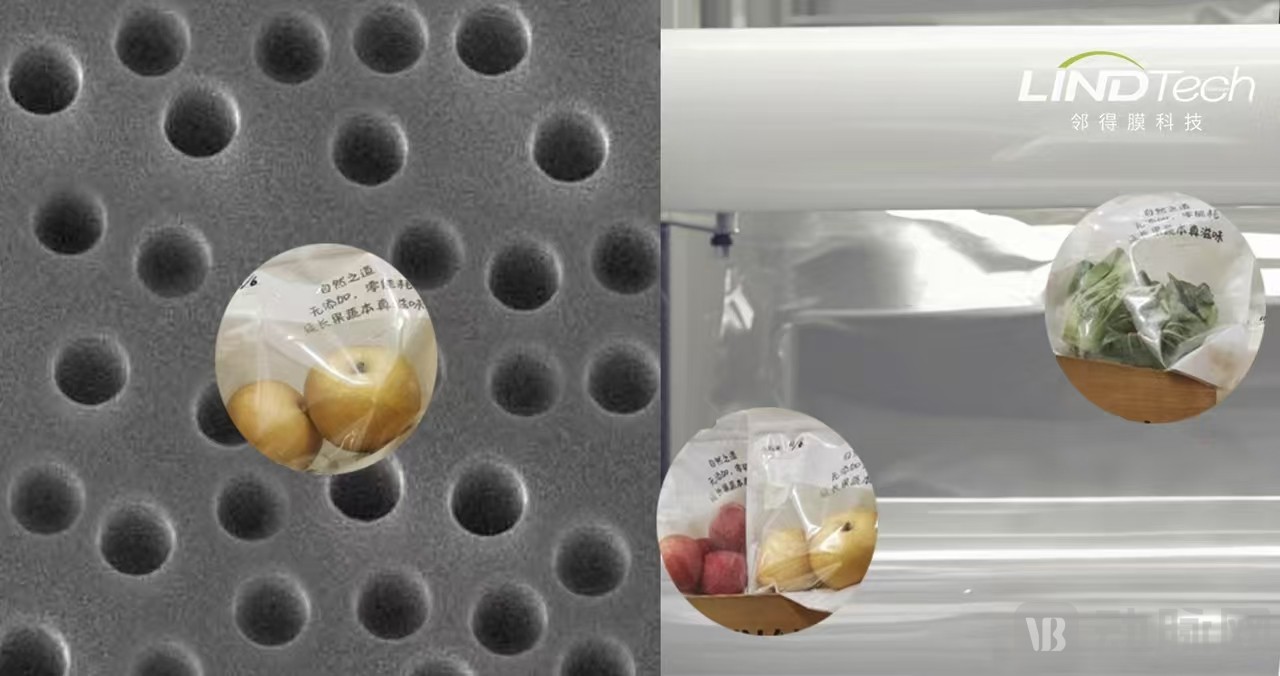
Application of Nuclear Pore Membranes in the Field of Freshness Preservation, Photo Provided by Interviewee
Compared with traditional preservation packaging, nuclear track-etched membrane (NTEM) packaging offers superior breathability, long-lasting effectiveness, and strong adaptability. It reduces reliance on refrigeration, providing a convenient and cost-effective solution for the storage and transportation of agricultural products, with broad prospects in fields such as fresh fruits, vegetables, and flowers. NTEM features uniform and controllable pore sizes, allowing precise regulation of gas exchange rates within the packaging according to the respiratory characteristics of the preserved items. For example, when preserving fruits and vegetables, NTEM packaging creates an optimal environment characterized by low oxygen, high carbon dioxide, and high humidity. This inhibits respiration and transpiration, delays ripening and senescence, reduces nutrient loss and water loss-induced wilting, and prevents damage caused by anaerobic respiration.
In product development, Professor Wang Yulan, who has dedicated over 30 years to the study of nuclear pore membranes, has always held a simple yet profound dream: “Demand is the driving force behind innovation and the guiding principle for corporate progress. Since its establishment, Linde Membrane has achieved notable success in several fields. However, from a long-term perspective, we aim to be more than just a membrane material manufacturer; we aspire to apply our advanced original technologies across a broader range of sectors, transforming them into products and commercial offerings that benefit a wider user base. Looking even further ahead, Linde Membrane seeks to evolve beyond being merely a product company into a comprehensive technical solutions provider, thereby ensuring greater vitality and sustainability.”
In recent years, the global market size of the nuclear pore membrane industry has continued to expand, showing a steady growth trend, with a compound annual growth rate exceeding 21%. This vast blue ocean holds infinite potential and opportunities.
Linde Membrane is actively developing more original track-etched membrane products and advancing their commercialization. We sincerely invite medical innovation enterprises, industry pioneers, and sector partners to engage in discussions for expanded collaboration, co-creating a brighter future.