MedAn Medical Devices: China's Market Leader in Non-Invasive Hemodynamic Monitoring Files for IPO

MEDEAN
Non-invasive Hemodynamic Monitoring Products R&D and Manufacturer
How to accurately capture dynamic changes in blood flow in a rapid, accurate, low-cost, continuous, and real-time manner, under non-invasive, painless, imperceptible, and risk-free conditions?
Such a solution, which appears to demand “this, that, and everything else,” might seem like an unattainable fantasy, but Shenzhen MEDEAN Medical Equipment Co., Ltd. (hereinafter referred to as “MEDEAN”) has turned it into reality with its independently developed BioZ non-invasive hemodynamic monitoring system.. It assesses cardiac and vascular system function in real time through non-invasive methods, primarily monitoring key indicators such as cardiac output, thoracic fluid levels, myocardial contractility, peripheral vascular resistance, blood pressure, and blood oxygen saturation. This helps physicians evaluate patients' circulatory status and is commonly used in scenarios including intensive care, perioperative anesthesia, emergency medicine, and the diagnosis of heart diseases.
Compared with traditional invasive hemodynamic monitoring, non-invasive hemodynamic monitoring offers significant advantages. However, its technological development has not yet fully matured due to high technical barriers, the lack of a gold standard for comparison, and insufficient market education and clinical adoption. Recognizing these industry pain points, MEDEAN has chosen to enter this field.
MEDEAN, established in 2005, is an innovative enterprise specializing in impedance analysis technology, dedicated to addressing its clinical application challenges. Over the past two decades, MEDEAN has applied its core technological achievements to the research, development, and manufacturing of non-invasive hemodynamic monitoring devices, achieving significant milestones including the market launch and promotion of its flagship products.Currently the leading enterprise in market share within the field of non-invasive hemodynamic monitoring。
1With 20 years of in-depth expertise, it is one of the earliest companies in China to enter the field of impedance analysis technology.
Mr. Li Jun, CEO of MEDEANHaving served as a senior executive at a renowned foreign-invested medical device company, Mr. Li Jun brings 25 years of industry experience in the healthcare sector. Discussing his original intention behind founding MEDEAN, Mr. Li stated that during his deep engagement with the medical industry, he identified significant development bottlenecks and clinical pain points in the field of medical imaging, and sought to provide innovative clinical solutions.
“Traditional imaging devices, represented by X-ray and ultrasound, rely on morphological detection principles. Although they can clearly present organ contours and tissue boundaries, they are unable to observe dynamic changes within tissues and organs, which is a significant limitation of structural imaging,” introduced Mr. Li Jun. He noted that the scope for innovation in the technical principles of structural imaging has nearly reached saturation. Current improvements are mostly focused on engineering-level optimization and iteration, such as enhancing image quality and increasing detection speed through hardware or software upgrades, yet they still fail to detect pathological changes within organs.
Impedance analysis technology effectively addresses this bottleneck. By detecting changes in the electrical conductivity of human tissues, this technique can precisely capture abnormalities in micro-functional parameters such as cellular metabolic changes and blood flow distribution, thereby compensating for the limitations of structural imaging. Furthermore, this detection method is completely non-invasive; unlike radioactive or invasive testing methods, it poses no harm to either patients or medical practitioners.
According to Mr. Li Jun, hemodynamic monitoring technology initially relied on invasive methods, which required inserting a catheter into the heart via the superior vena cava. Due to the complex operational procedures and high technical barriers, this method had to be performed by physicians with professional qualifications, placing significant demands on the technical expertise of medical staff. Additionally, the incidence of monitoring-related complications in patients was relatively high. These factors have created substantial challenges for the widespread adoption of invasive monitoring technology, limiting its primary application to specialized departments such as intensive care units (ICUs) and anesthesiology departments in large tertiary Grade A hospitals, while basic-level medical institutions or non-relevant departments rarely have access to it. AndNon-invasive hemodynamic monitoring technology features simple clinical operation, a short learning curve for medical staff, and no risk of complications for patients, making it easier to promote and popularize.。
Recognizing the immense clinical value and development potential of non-invasive impedance analysis technology, the MEDEAN medical team entered this field around the year 2000 and established a professional interdisciplinary R&D team. Kong Gang, Marketing Director at MEDEAN, graduated with a degree in Clinical Medicine from China Medical University,One of the earliest professionals in China to engage with non-invasive hemodynamic monitoring systems, with over 20 years of experience in the field of hemodynamic monitoring, and has participated in a national key project—the "Development of a Bedside Non-invasive Visualization Monitoring System for Pulmonary Ventilation/Perfusion in Critical Care."
Led by senior engineers in the field of impedance analysis technology, MEDEAN’s R&D team comprises more than ten members with a balanced mix of mid-career and young professionals, all possessing extensive research and development experience. Furthermore, the company maintains close collaborations with clinical experts from departments such as ICU, anesthesiology, cardiology, emergency medicine, and obstetrics at numerous hospitals across China, thereby gaining firsthand insights into clinical needs and application experiences. Meanwhile, MEDEAN partners with several prestigious Chinese universities to conduct fundamental theoretical research, ensuring the cutting-edge nature and innovativeness of its technologies, and facilitating collaborative innovation and efficient translation among industry, academia, and research. AsOne of the earliest companies in China to enter the field of impedance analysis technology, MEDEAN has witnessed the emergence, development, and bottlenecks of impedance analysis technology, gaining profound insights into customer needs and accumulating extensive experience.
2The world’s first bedside non-invasive hemodynamic real-time monitoring system widely accepted in clinical practice, with accuracy comparable to invasive monitoring
The two major barriers in impedance analysis technology are signal acquisition and signal processing. The core challenges lie in the accurate detection of weak signals, efficient noise suppression and feature extraction, as well as dynamic adaptability to individual differences.MEDEAN has conducted decades of theoretical research and engineering exploration in the field of impedance analysis, closely monitoring cutting-edge international technologies and trends. By establishing a proprietary database for AI-driven deep learning and algorithm optimization, MEDEAN has now largely caught up with foreign competitors in areas such as analog front-end design and signal processing algorithms.These technological breakthroughs have required substantial time and effort, thereby creating unique advantages for MEDEAN that are difficult for late entrants to replicate.
The company’s first product developed in the field of impedance analysis technology is the BioZ Non-Invasive Hemodynamic Monitoring System. This system monitors changes in thoracic electrical impedance by constructing a mathematical model of the human thoracic region and applying low-level currents that comply with safety standards. Due to the differing electrical conductivities of human tissues such as blood, bone, fat, and muscle, four pairs of electrodes are placed on both sides of the neck and chest during operation. This configuration ensures that electrical signals propagate along the aortic pathway, which offers the least resistance within the thorax. By analyzing changes in thoracic impedance, key hemodynamic parameters such as aortic blood flow velocity and volume can be obtained. This enables monitoring of stroke volume, cardiac output, and cardiac function, accurately capturing the effective cardiac output participating in systemic circulation—namely, “forward flow”—thereby providing critical support for hemodynamic assessment.
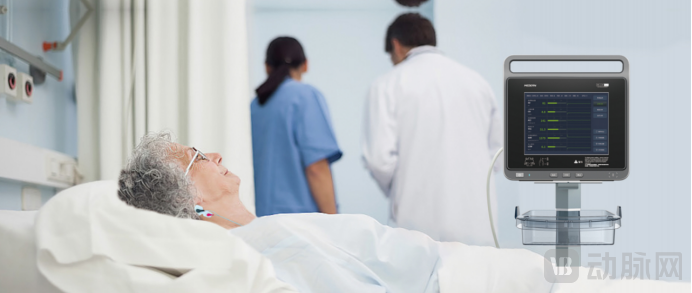
BioZ Non-Invasive Hemodynamic Monitoring Series—Expert in Circulatory Critical Care Management
Furthermore, the BioZ series features a range of proprietary technologies. In terms of signal acquisition, MEDEAN has developed its proprietary Digital Impedance Signal Quantifier technology—DISQ® technology.Capable of increasing the sampling rate to 1,000 samples per second, ensuring that the volume of data collected is sufficiently rich. In terms of signal processing, MEDEAN possesses two core algorithmic technologies: the “ZMARC® Method for Adjusting Aortic Compliance” and the “Bioimpedance Cole® Equation Parameter Algorithm based on Thoracic Impedance.” These technologies maximize the exclusion of noise interference, such as respiration, thereby ensuring monitoring accuracy. This grants the BioZ system two unique advantages: it enables proprietary “forward blood flow” monitoring and can detect changes in myocardial fiber contractility.
According to Mr. Li Jun,BioZ Non-Invasive Hemodynamic Monitoring System is the world’s first bedside, real-time, non-invasive hemodynamic monitoring system to be widely accepted in clinical practice., with the following highlights:
First, completely non-invasive and easy to operate, with no associated examination risks for the patient, all procedures can be performed by a single nurse, featuring a short learning curve.
Second, it enables continuous hemodynamic monitoring.The system operates without the need for staff intervention, enabling continuous monitoring ranging from a few minutes to several hours, which is crucial for clinical diagnosis and treatment. Physicians can perform comparative analyses using continuous data when evaluating medication efficacy, formulating, or validating treatment plans. The BioZ system provides real-time, dynamic, and continuous hemodynamic parameters, thereby enhancing the precision of personalized treatment decisions and the timeliness of clinical interventions. In contrast, invasive monitoring carries a risk of infection, while monitoring methods based on principles such as ultrasound are limited by their technical mechanisms; neither approach can achieve this type of continuous monitoring.
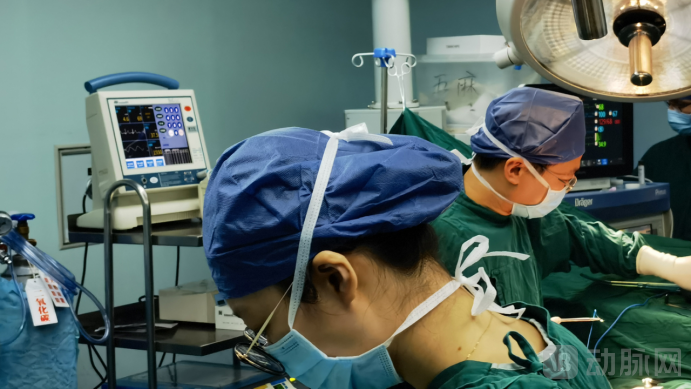
Monitoring with the BioZ Non-Invasive Hemodynamic Monitoring System During Cardiopulmonary Bypass in Cardiac Surgery
Third, it matches the accuracy of traditional invasive methods.According to Mr. Li Jun, the monitoring accuracy of the BioZ system is comparable to that of invasive monitoring, allowing it to virtually replace invasive methods in functional hemodynamic monitoring. Although invasive hemodynamic monitoring has been used clinically for decades and is widely recognized as the gold standard, its data acquisition process is complex and subject to numerous confounding factors. Moreover, it does not constitute a direct, true measurement of physiological parameters; thus, it exhibits significant limitations in functional monitoring compared to non-invasive technologies. In contrast, MEDEAN’s BioZ system can directly measure blood flow volume and velocity, offering rapid results and ease of operation. Through comparative trials and extensive case analysis, the company continuously optimized its algorithms, achieving a correlation coefficient (r) of 0.891 and ultimately attaining accuracy comparable to that of invasive hemodynamic monitoring systems.
Fourth, low cost.Invasive hemodynamic monitoring is costly, as the catheters used are priced at several thousand yuan each and are designed for single-use only. In contrast, the BioZ system’s non-invasive monitoring method eliminates the need for catheters, with its sensor electrodes costing only 1/20th of an invasive catheter, thereby significantly reducing procurement costs for hospitals and medical expenses for patients.
Fifth, rapid issuance of resultsAccording to Mr. Li Jun, the BioZ system requires only 3–5 minutes from patient detection to report generation. In contrast, with invasive monitoring, this timeframe may barely suffice for disinfection, followed by catheter insertion taking an additional ten to thirty minutes or more, resulting in significant time consumption. By comparison, the BioZ system is better equipped to “save critical time” when managing critically ill and emergency patients, thereby facilitating timely diagnosis and treatment.
3No. 1 Market Share in the Field of Non-invasive Hemodynamics: Building a “Small but Beautiful” Industry Benchmark
As an interdisciplinary technology, impedance analysis remains underdeveloped in certain niche segments, necessitating further fundamental theoretical research. Moreover, the sector currently lacks dominant leading enterprises or established technical solutions for reference, thus requiring companies to exercise patience and adopt a cautious, exploratory approach (“crossing the river by feeling the stones”).
“Generally speaking, leading companies may consider this niche market too small to warrant significant strategic investment, while smaller enterprises might view it as capital-intensive with a long payback period, potentially opting for alternatives with higher return on investment,” said Mr. Li Jun. “We, however, are committed to exercising patience and deeply rooting ourselves in the field of impedance analysis technology to tackle the most challenging problems.” According to Mr. Li Jun, currently,MEDEAN is the only company in China specializing in research on electrical impedance tomography technology.
During this process, Mr. Li Jun candidly acknowledged that MEDEAN had encountered numerous pitfalls and taken many detours. However, these “tuition fees” were not paid in vain; the company has developed profound expertise in impedance analysis technology and non-invasive hemodynamic monitoring, particularly establishing unique technical advantages in critical signal processing and algorithm development.
Currently, MEDEAN has become the leading enterprise in terms of market share in the field of non-invasive hemodynamic monitoring.The BioZ series has been adopted by over 1,400 hospitals in China, including more than 400 large tertiary Grade A hospitals. In 2024, nearly 40 of the top 100 hospitals nationwide implemented the BioZ non-invasive hemodynamic monitoring system.
To promote the widespread adoption of non-invasive hemodynamic monitoring technology, MEDEAN has established a professional clinical training team that conducts nearly 200 clinical training sessions annually, supporting the implementation of hemodynamic monitoring in critical care circulation and primary healthcare settings. In addition, MEDEAN organizes academic activities such as the “Lao Kong Lecture Hall,” collaborating with domestic experts to host nearly 10 online and offline academic live streams each year. The company has also founded the Non-Invasive Hemodynamic Clinical Application Academy and Clinical Training Bases, partnering with hospitals to offer “Hemodynamics Workshops” that train nearly 500 clinical application professionals annually. Furthermore, the company leverages Internet of Things (IoT) technology to assist physicians in remotely resolving equipment operation issues.
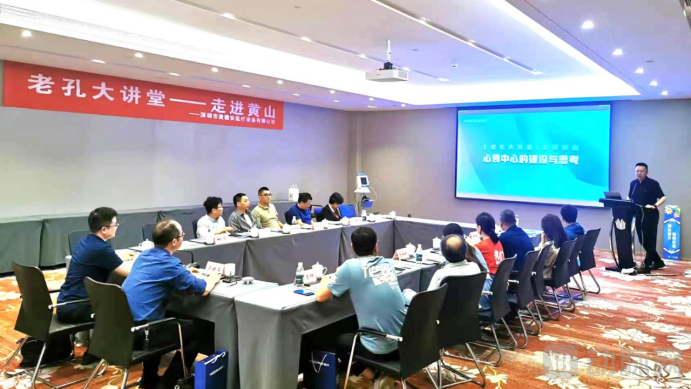
MEDEAN “Old Kong’s Lecture Hall” — Public Welfare Hemodynamics Seminar Forum
“In the future, non-invasive hemodynamic monitoring will inevitably replace invasive monitoring; non-invasiveness is the trend,” stated Mr. Li Jun. He noted that due to advantages such as being non-invasive, simple to operate, low-cost, and having a short learning curve for physicians, non-invasive hemodynamic monitoring is poised for rapid development over the next five years. Furthermore, intelligence represents a major developmental direction for this technology. It aims to minimize the need for complex operations, analysis, and calculations by physicians, thereby reducing their learning curve and saving time, while also assisting in report analysis and providing recommendations for treatment plans. Additionally, non-invasive hemodynamic monitoring will become increasingly specialized, catering to the personalized needs of various departments, including anesthesiology, cardiology, obstetrics, and emergency/critical care.
Next, in the field of impedance analysis technology, MEDEAN will continue to focus on this core technology by launching Electrical Impedance Tomography (EIT) systems for pulmonary ventilation and imaging systems for pulmonary perfusion. These innovations will enable physicians to achieve “visualization” in respiratory therapy and empower rapid detection of conditions such as intracranial hemorrhage, cerebral infarction, breast nodules, and tumors. In the realm of hemodynamic monitoring, MEDEAN will further enhance the intelligence level of its devices and provide more specialized products tailored to the distinct needs of various clinical departments.
Currently, MEDEAN has needs for collaboration in the areas of distributors, overseas expansion, and upstream and downstream supply chains. If you are interested in MEDEAN and its product solutions, please contact us: