

JD Internet Hospital Dermatology Center Breaks the 'Light Consultation' Barrier with Deep, Specialized Care Within Two Years
Each year at this time, the high-incidence season for skin diseases arrives as scheduled.
In today’s era of increasingly widespread internet-based medical services, patients encountering common skin issues such as allergies can simply take and upload a photo for an online consultation to receive nursing guidance or medication recommendations.
However, even though dermatological conditions are inherently well-suited to the internet-based consultation model, not all cases can be resolved through simple “light consultations.” For many chronic, recurrent skin diseases and rare dermatological disorders, diagnosis, treatment, and management are far more complex, and “light consultations” fail to deliver systematic therapeutic outcomes.
From both the demand and supply sides, internet healthcare platforms specializing in dermatology may benefit from adopting a more “asset-heavy” model. JD Internet Hospital’s Dermatology Hospital, which has been operational for two years, serves as a prime example of such “heavy” service delivery.
In recent years, the penetration rate of internet-based medical services in dermatology has risen rapidly. It is no longer novel to simply take a photo for an online consultation; most physical hospitals specializing in dermatology, comprehensive internet healthcare platforms, and vertical skin health platforms offer similar services.
Since its launch in April 2023, JD Internet Hospital’s Dermatology Hospital has established a comprehensive service system for common skin conditions. For instance, it offers routine outpatient clinics for ten major categories of prevalent diseases, including acne, dermatitis and eczema, cutaneous allergies, and hair loss. Leveraging both internal and external teams of physicians, the hospital promptly addresses consultation needs and provides patients with a full range of dermatological medications.
In the medical field, the level of discipline development, the strength of specialized departments, and the ability to tackle complex and rare diseases largely represent the comprehensive capabilities of a healthcare institution.Internet healthcare should follow the same logic. The richness and convenience of services represent the baseline of a platform’s capabilities, while its ability to manage complex diseases defines the upper limit of its professional expertise and serves as a key differentiator from platforms offering only “light” consultations.
Since its launch, JD Internet Hospital’s Dermatology Hospital has vigorously expanded its pool of expert resources and established expert studios through collaborative partnerships.Over the past year, expert studios have been implemented on a larger scale, with 30 new studios added, bringing the total to 78. These studios cover high-incidence and complex conditions such as psoriasis, vitiligo, acne, and atopic dermatitis.
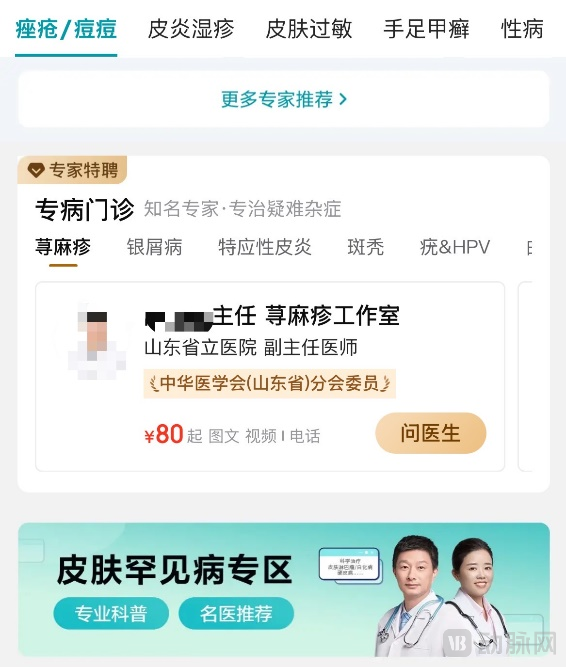
JD Internet Hospital Dermatology Expert Studio & Rare Disease Zone
As the largest organ of the human body, the skin is a major site of involvement in many rare diseases. Rare dermatological conditions not only compromise physical health but also exert profound and long-lasting effects on patients’ appearance and normal social interactions. Due to the scattered distribution of cases across different disease entities, varying levels of diagnostic and therapeutic capabilities among healthcare institutions, and limited physician awareness of rare diseases, rare skin diseases are associated with high rates of misdiagnosis and low accessibility to treatment.
To address the aforementioned challenges, in February 2025, JD Internet Hospital’s Dermatology Hospital launched China’s first online “Specialized Clinic for Rare Dermatological Diseases.” Collaborating with 19 leading experts in the field of rare diseases, the clinic provides remote consultations and whole-course disease management services for patients with six types of rare conditions, including epidermolysis bullosa and pemphigus.
The diagnosis and treatment of complex, refractory conditions and rare diseases involve highly intricate processes and rely on the effective application of cutting-edge medications. JD Health’s integrated “Medical Consultation + Testing + Diagnosis + Pharmaceutical” ecosystem provides robust support for this endeavor, with a particular emphasis on expanding capabilities in testing and pharmaceutical services.
In August 2024, JD Internet Hospital’s Dermatology Hospital initiated improvements in the testing and inspection process by starting with allergen detection, leveraging JD Daojia’s rapid testing and JD Nurse-at-Home services. After users schedule tests online, licensed nurses perform home sample collection, with reports issued by the platform and its partner institutions within an average of five hours, thereby providing critical evidence for physicians’ diagnoses.
In October 2024, JD Health entered into a strategic partnership with Zhixiang Jintai to accelerate the clinical adoption of Secukinumab Injection, the first domestically approved IL-17A monoclonal antibody in China. Leveraging an integrated model comprising an online dermatology hospital, offline DTP (Direct-to-Patient) pharmacies, and JD’s cold-chain logistics, the medication achieved coverage in the vast majority of provinces across China on its launch day. This represents a leapforward in efficiency compared to the traditional hospital entry channel, which typically requires 2–3 years, thereby enabling psoriasis patients to access affordable and readily available novel therapies more rapidly.
In recent years, innovative drugs, represented by monoclonal antibody therapies, have sparked a therapeutic revolution in dermatology. At its core, this shift lies in personalized treatment—selecting the most appropriate therapeutic regimen based on a patient’s disease characteristics, genetic background, and response patterns—to ultimately achieve superior efficacy and fewer adverse reactions. Since its launch, the Dermatology Hospital of JD Internet Hospital has facilitated the online debut of multiple innovative drugs and equipped them with corresponding whole-course disease management services, thereby translating the concept of personalized diagnosis and treatment into clinical practice.
The capacity to serve patients with complex diseases must be built upon a foundation of high-quality physician resources. Across China, the distribution of dermatologists mirrors the overall landscape of medical resources in the country: there is a significant shortage in numbers, with high-quality resources being particularly scarce and concentrated in major cities and top-tier hospitals, while primary healthcare capabilities remain weak and physician competency levels are uneven.
Growing alongside physicians is an inevitable path for internet healthcare platforms.
Tiered empowerment of physician development has long been a key strategy for JD Internet Hospital’s Dermatology Hospital.For instance, young doctors can accumulate clinical consultation experience and increase their compliant income through order-based support programs. For department heads and specialists, customized disease-specific studios and specialized outpatient clinics are established to attract precise patient cohorts, accompanied by an intelligent patient management platform. Additionally, physician-focused events are organized to facilitate professional exchange and mutual growth.
In 2024, the “AI Patient Management Competition” hosted by JD Internet Hospital’s Dermatology Hospital served as a typical case in facilitating physician professional development. Spanning nearly six months, the competition attracted 129 physicians from across China, who launched 231 follow-up care protocols. Chief-level experts from ten leading dermatology hospitals nationwide served as judges, delivering innovative medical solutions to 6,361 patients.
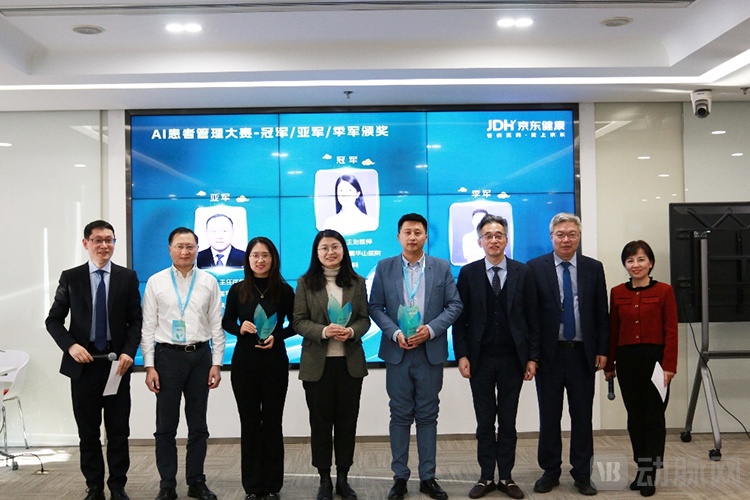
JD.com Internet Hospital Dermatology Center “AI Patient Management Competition” Awards Ceremony
VCBeat noted that among the top three winners of the competition, the champion and runner-up hailed from two premier hospitals: Huashan Hospital Affiliated to Fudan University and Tongji Hospital Affiliated to Tongji Medical College of Huazhong University of Science and Technology, respectively. The third-place winner was an attending physician from the Department of Dermatology at Datong Third People’s Hospital. Dr. Jin, a dermatologist at a Fudan-affiliated hospital ranked among China’s Top 100 and the competition’s champion, stated that this patient management competition was innovative and highly efficient. In particular, the customized dermatological disease management model can provide patients with more precise, efficient, and convenient management services.
Fu Guoliang, the third-place winner of the Grand Competition, told VCBeat that his award-winning proposal was the “Follow-up Management Plan for Herpes Zoster Patients.” The plan categorizes patients’ post-discharge status into phases such as the acute phase, subacute phase, and sequelae phase, with corresponding interventions including antiviral and pain management, pain assessment, and offline follow-up visits. Automated management nodes are established for each phase to push educational articles, medication guidelines, pain scales, and skin lesion assessment tools to patients. Throughout all phases, patients are entitled to free online consultations, enabling timely communication with physicians regarding their condition’s progression.
Notably, the protocol incorporates patient incentive mechanisms of varying intensity at each stage to encourage patients to complete the corresponding management tasks, thereby minimizing loss to follow-up and ensuring patient adherence as well as ultimate management outcomes. In response to the interdisciplinary diagnosis and treatment needs for herpes zoster, the protocol also integrates resources from pain management, internal medicine, physical therapy, and psychological clinics to provide comprehensive diagnostic and therapeutic guidance for patients.
“Times are progressing, and doctors must keep pace with the times,” said Fu Guoliang. He stated that by leveraging internet healthcare platforms, he has gradually accumulated experience in applying internet-based thinking and technological tools to serve patients, enabling him to reach and manage a larger patient population while enhancing his clinical proficiency and professional influence.Taking JD Health as an example, it systematically records patients’ medical histories and examination indicators, supports cross-specialty collaboration, and enables efficient, personalized patient management, thereby overcoming the various limitations associated with follow-up methods such as WeChat and telephone calls.“In addition to herpes zoster, many conditions such as psoriasis, scleroderma, and refractory pigmentary disorders are suitable for online follow-up management.”
Fu Guoliang stated that, in addition to providing tools,The competition also established a platform for communication with tertiary hospitals such as Peking University People’s Hospital and China-Japan Friendship Hospital, from which primary care physicians have benefited greatly.
Furthermore, scientific research constitutes a vital component of physicians’ professional development. Leveraging JD Health’s Real-World Data (RWD) research platform, JD Health Dermatology Hospital has collaborated with leading hospitals on multiple research projects and initiated research collaborations with more than ten centers across Beijing, Shanghai, Guangdong, Hunan, and other regions, thereby enhancing the quality and efficiency of scientific research.
Empowering physician development can attract more outstanding doctors to join the Dermatology Hospital of JD Internet Hospital; from a macro perspective, it helps expand high-quality medical resources in dermatology.
The professional development of physicians is a long-term process. How can this trajectory be accelerated while enhancing the efficiency and quality of clinical practice and scientific research? AI is undoubtedly the optimal solution. At JD Internet Hospital’s Dermatology Hospital, AI boasts a wide range of application scenarios, validating its technical capabilities through practical implementation.
Since its launch, the dermatology hospital has introduced an AI-based skin analysis tool for users, helping them describe their symptoms more accurately and enabling physicians to gain a faster and more comprehensive understanding of their conditions. In essence, this directly equips doctors with tools that enhance quality and efficiency. To date, the accuracy rate of AI multimodal diagnosis supported by the AI skin analysis tool has exceeded 95%.
Meanwhile, JD Internet Hospital’s Dermatology Hospital has integrated AI into the entire workflow of clinical practice and scientific research, including “customized” AI tools.
Currently, large language models have ushered in a new wave of transformation for AI in the healthcare sector. Seizing this opportunity, JD Health unveiled its “AI Jingyi” suite of healthcare-focused large language model products at the Annual Doctor’s Gala in January 2025, with several offerings—including the AI Diagnostic Assistant 2.0, AI Physician Agent, and AI Research Assistant—making their debut at the event.
Specifically, the AI Diagnostic Assistant provides physicians with supportive tools throughout the entire pre-consultation, intra-consultation, and post-consultation workflow, assisting them in completing low-risk tasks such as medical history collection, medical record documentation, and patient management. Previously, AI Diagnostic Assistant 2.0 had already achieved a triage accuracy rate of 99.5%, a 120% increase in electronic medical record (EMR) documentation efficiency, and a 90% first-contact resolution rate for AI-handled inquiries. In 2025, following the integration of open-source models such as DeepSeek, the algorithms of AI Diagnostic Assistant 2.0 were further optimized, significantly enhancing physicians’ diagnostic and treatment efficiency and freeing up more clinical capacity.
The AI Doctor Agent is presented as a doctor’s exclusive “digital twin,” deeply learning the physician’s professional knowledge, thought processes, and communication style to promptly respond to patient inquiries. Meanwhile, built upon a general-purpose medical large language model,The AI Doctor Agent has been further upgraded with a customized version of the Medical Expert Assistant, enabling a more refined “replication” of expert clinical experience. For dermatological conditions, JD Internet Hospital’s Dermatology Division has partnered with Director Lin Zhimiao from the Dermatology Hospital of Southern Medical University to deploy a customized psoriasis medical assistant, which has been adopted by ten young dermatologists.
In the realm of AI-assisted medical research, JD Health has independently developed an AI Research Assistant, creating an integrated platform for medical information retrieval, literature review, and professional writing. By leveraging large AI models, this initiative supports scientific endeavors, enhancing both the efficiency and quality of research.
Benefiting from a dual-pronged approach to enhancing diagnostic and treatment capabilities for both common and complex diseases, JD Internet Hospital’s Dermatology Hospital provided professional, timely, and accessible services to patients over the past year. In 2025, the average daily volume of proactive consultation orders exceeded 10,000, equivalent to the consultation volume of the dermatology departments of several ordinary Grade A tertiary hospitals.
Over the next year, JD Internet Hospital’s Dermatology Hospital will continue to strengthen refined operations for specialized dermatological conditions, broadly deploy services for common diseases with timely iterations and upgrades, and achieve key breakthroughs in characteristic and complex cases, thereby building an irreplaceable core competitive advantage.
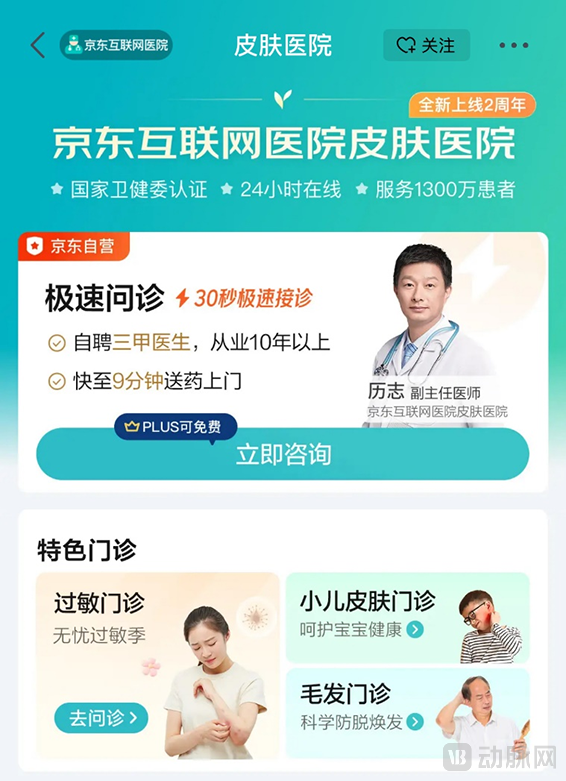
JD Internet Hospital Dermatology Hospital Specialized Clinics
For common dermatological conditions, JD Internet Hospital’s Dermatology Center will focus on three major patient groups—those with allergic and inflammatory disorders, cosmetic concerns, and hair-related issues—and upgrade its outpatient services in allergy, medical aesthetics, and hair care.
The key focus of the upgrade is to elevate service capabilities from a single consultation model to a closed-loop ecosystem encompassing “medical consultation–testing–diagnosis–medication” and integrating “online-to-offline (hospital visit)” services. Unlike the “in-person visit” projects on consumer healthcare platforms, where staff act primarily as sales consultants, the “hospital visit” recommendations by JD Internet Hospital’s Dermatology Hospital originate mainly from physicians. When online services are insufficient to fully resolve a patient’s condition, doctors provide professional recommendations for offline treatment, including medical aesthetics, hair transplantation, or other therapeutic and nursing interventions. These in-person services are delivered through the medical aesthetics clinics or laser centers of public medical institutions. This approach aims to ensure the efficacy of dermatological treatments and reduce recurrence rates.
In terms of specialized dermatology services, the focus is on complex and chronic conditions such as vitiligo and psoriasis. By collaborating with leading hospitals’ dermatology departments, we prioritize expanding coverage for patients visiting clinics in person, particularly those requiring ongoing out-of-hospital management after confirmed diagnosis and in-hospital treatment.
Unlike users with common diseases, who tend to ask questions and make purchases on a quick, transactional basis, patients with specialized conditions can establish higher-frequency connections with doctors and platforms. Through frequent communication and improved adherence, their conditions can be more effectively controlled. Against the backdrop of reforms in medical insurance payment methods, it has become increasingly urgent to integrate convenient and effective out-of-hospital management with high-quality in-hospital treatment. For instance, the AI Patient Management Competition mentioned earlier served as a pilot initiative for JD Health to explore specialized disease services.
The healthcare industry has long debated the concept of “light consultations” in internet-based medical services, arguing that purely online consultations have limited efficacy. Clearly, JD Internet Hospital’s Dermatology Hospital has transcended the scope of “light consultations.”If services for common diseases reflect the breadth of its offerings, then specialized services focused on complex conditions demonstrate the depth and professionalism of its care. The combination of both expands the value boundary of internet healthcare services.In the upcoming new phase, how will JD Internet Hospital’s Dermatology Hospital further lead industry innovation through enhanced service depth and professionalism? It is certainly something to look forward to.