

2025 China Anti-Cancer Association Integrated Science Communication Conference Held in Beijing, Building a New Ecosystem for Nationwide Cancer Prevention
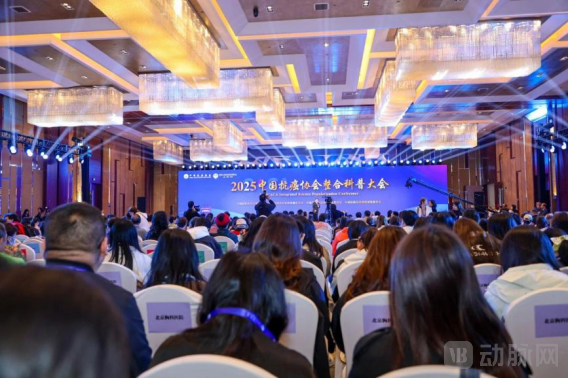
On April 20, the “2025 China Anti-Cancer Association Integrated Science Popularization Conference,” hosted by the China Anti-Cancer Association and co-hosted by the Development Center of the Red Cross Society of China, was grandly held in Beijing. Themed “Cancer Prevention and Control: Science Popularization First,” the conference established a multidisciplinary, cross-sectoral platform for cancer-related science communication through policy sharing, release of achievements, and launch of initiatives.
Co-organized by the Science Popularization Committee, Media Communication Committee, Cancer Prevention and Screening Committee, and Cancer Rehabilitation Committee of the China Anti-Cancer Association, the conference featured one main venue and nine parallel sessions, drawing experts in the field of oncology, industry representatives, and more than 70 media outlets from across China to participate in this grand event.
He Wei, Vice Chairperson of the Standing Committee of the National People’s Congress, Chairman of the Central Committee of the Chinese Peasants and Workers Democratic Party, and President of the Red Cross Society of China; Fan Daiming, Conference Chair, Academician of the Chinese Academy of Engineering, and Chairman of the China Anti-Cancer Association; Academician Cong Bin, Member of the Standing Committee of the National People’s Congress, Deputy Director of the Constitution and Law Committee of the National People’s Congress, and Vice Chairman of the Central Committee of the Jiusan Society; Cao Zeyi, former Vice Minister of Health; Huang Xiaojun, Academician of the Chinese Academy of Engineering from Peking University People’s Hospital; Wang Jianwei, Director of the Chinese Center for Disease Control and Prevention; Qin Deji, Secretary of the Party Committee of China Science and Technology Press; along with other relevant leaders and representatives from organizations including the China Anti-Cancer Association, the Career Development Center of the Red Cross Society of China, the Chinese Medical Association, the China Primary Health Care Foundation, the China Cancer Foundation, the Chinese Association on Tobacco Control, and the Beijing Association for Science and Technology, attended the conference. The opening ceremony was moderated by Wang Ying, Vice Chairman of the China Anti-Cancer Association.
Leaders’ Addresses Anchor Strategic Direction and Build Consensus on Science Popularization
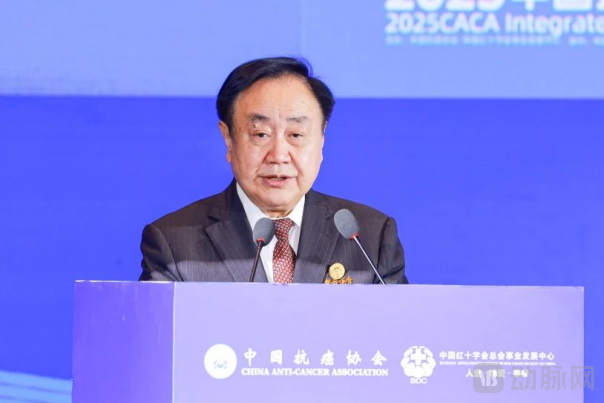
Academician Fan Daiming, Chairman of the Conference and President of the China Anti-Cancer Association (CACA), emphasized that the Association has consistently implemented General Secretary Xi Jinping’s important assertion that “scientific and technological innovation and science popularization are the two wings driving innovative development.” Guided by the newly revised Science Popularization Law, the Association is building a science popularization framework characterized by “government guidance, association leadership, and societal participation.” He recalled that the “National Cancer Prevention and Control Publicity Week,” launched by the Association in 1995, has evolved into a nationwide “health festival.” Through a branded, precise, and multi-dimensional approach to science popularization, the concept that “prevention is more important than treatment for cancer” has been deeply ingrained in public awareness.
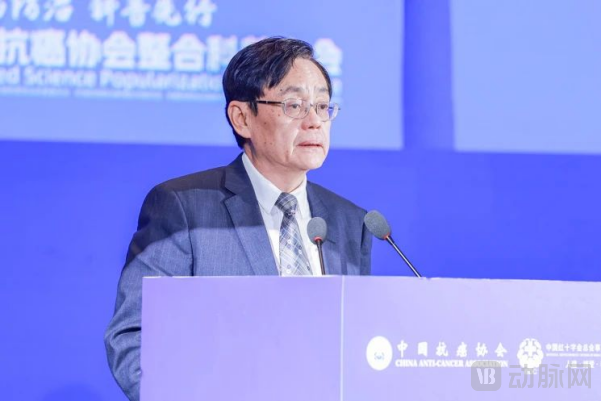
He Wei, Vice Chairperson of the Standing Committee of the National People’s Congress, Chairman of the Central Committee of the Chinese Peasants and Workers Democratic Party, and President of the Red Cross Society of China, pointed out that during China’s stage of high-quality development, it is essential to adopt a “dual-wheel drive” approach combining technological innovation with science popularization. The synergy between these two elements holds strategic significance for enhancing scientific literacy and improving the cancer prevention and control system. Addressing cancer, a global public health challenge, requires a dual-track approach integrating “technology and governance”: strengthening research on gene-environment interactions and promoting the translation of technologies such as genetic testing; establishing a governance pattern led by the government with societal participation, and reinforcing the integration of medical care and prevention through professional platforms. By leveraging artificial intelligence and big data to create a closed-loop data system encompassing “monitoring, early warning, intervention, and evaluation,” prevention and control strategies can be optimized. Furthermore, interconnecting health records with tumor registration systems will enhance the accessibility of early screening at the primary care level.
At the opening ceremony of the conference, six national-level projects on cancer prevention, control, and science popularization were jointly released. Guided by the principle of “integrating resources, extending services to grassroots levels, and ensuring full-cycle coverage,” these projects outline a blueprint for the future of cancer prevention and control. This session was moderated by Professor Zhi Xiuyi, Executive Director of the Media Communication Committee of the China Anti-Cancer Association.
Launch of the National Integrated Cancer Prevention and Control Program (2025–2030)
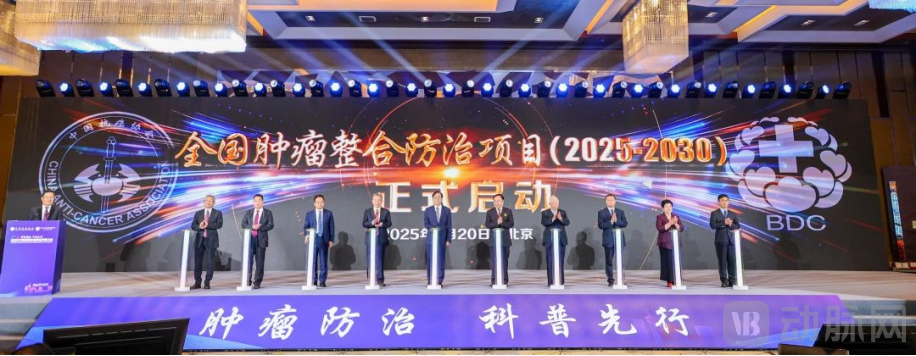
The China Anti-Cancer Association, in collaboration with the Career Development Center of the Red Cross Society of China, has officially launched the Five-Year National Plan for Integrated Cancer Prevention and Control. Focusing on four key initiatives—“public health education for community benefit,” “rehabilitation support for the elderly,” “capacity building for healthcare professionals,” and “development of integrated prevention and control zones”—the plan embodies the core philosophy that “health is the fundamental prerequisite (the ‘1’)” and provides a practical model for the Healthy China Strategy.
Following the project launch, both parties will initially introduce the Digital-Intelligence Interactive Book Corner—“SmartLink Bookshelf.” Through public welfare donations, the project will establish standardized smart service terminals in hospitals across China. By integrating resources such as the “Chinese Guidelines for Integrated Diagnosis and Treatment of Cancer,” real-time updates on cutting-edge academic developments, training and certification programs, scientific research collaborations, and public welfare partnerships, the initiative aims to promote the efficient sharing of oncology diagnosis and treatment resources. It seeks to create an integrated service hub encompassing “prevention, screening, diagnosis, treatment, and rehabilitation,” thereby bridging the last mile to primary healthcare institutions and frontline oncology professionals.
This conference marks a strategic transition in China’s cancer prevention and control efforts from a “treatment-centered” approach to an “integrated prevention and control” model. With the deep integration of policy, technology, and social forces, a cancer prevention framework characterized by “public participation and whole-process management” is accelerating its formation, laying a solid foundation for the “Healthy China 2030” goals.