

Puzzle Medical Secures CAD 43M Series Financing and Advances ModulHeart Towards IPO Following FDA Breakthrough Designation

Puzzle Medical Devices
Developer of Heart Failure Treatment Devices
Recently, medical technology startup Puzzle Medical announced the successful completion of a CAD 43 million (approximately RMB 225 million) financing round. The round was led by KF Matheson and Desjardins Capital, with participation from Lumira Ventures, Longview Ventures, BDC Capital, and existing investors.
This financing round is one of the largest in the Canadian medical device sector over the past two years. The funds will be used to refine Puzzle Medical’s percutaneous heart pump and its new features, advance clinical studies to evaluate its safety and efficacy, and expand the team to support the company’s growth.
How Did Puzzle Medical Secure Significant Funding Amid the Capital Winter? The Answer Lies in Its Forward-Looking Market Strategy and Breakthrough Technological Innovations.
1Interventional Minimally Invasive, Modular Design for Enhanced Safety and Stability, Meeting Patient Needs
Heart failure, as the terminal stage of various cardiac diseases, is seeing a continuous rise in prevalence and has become one of the major cardiovascular diseases severely threatening human health. According to data published by Frost & Sullivan, the global number of heart failure patients reached 29.7 million in 2019 and is projected to increase to 38.7 million by 2030, with a compound annual growth rate (CAGR) of 2.5% from 2024 to 2030.
The therapeutic dilemma in advanced heart failure is particularly prominent. Conventional pharmacological interventions struggle to reverse disease progression, while heart transplantation, as the definitive treatment, is severely constrained by a critical shortage of donor organs, often causing patients to miss the window for life-saving intervention during the waiting period. To alleviate symptoms, improve quality of life, and extend survival, more advanced therapeutic interventions are imperative.
Currently, the existing treatment modalities for heart failure are as follows:
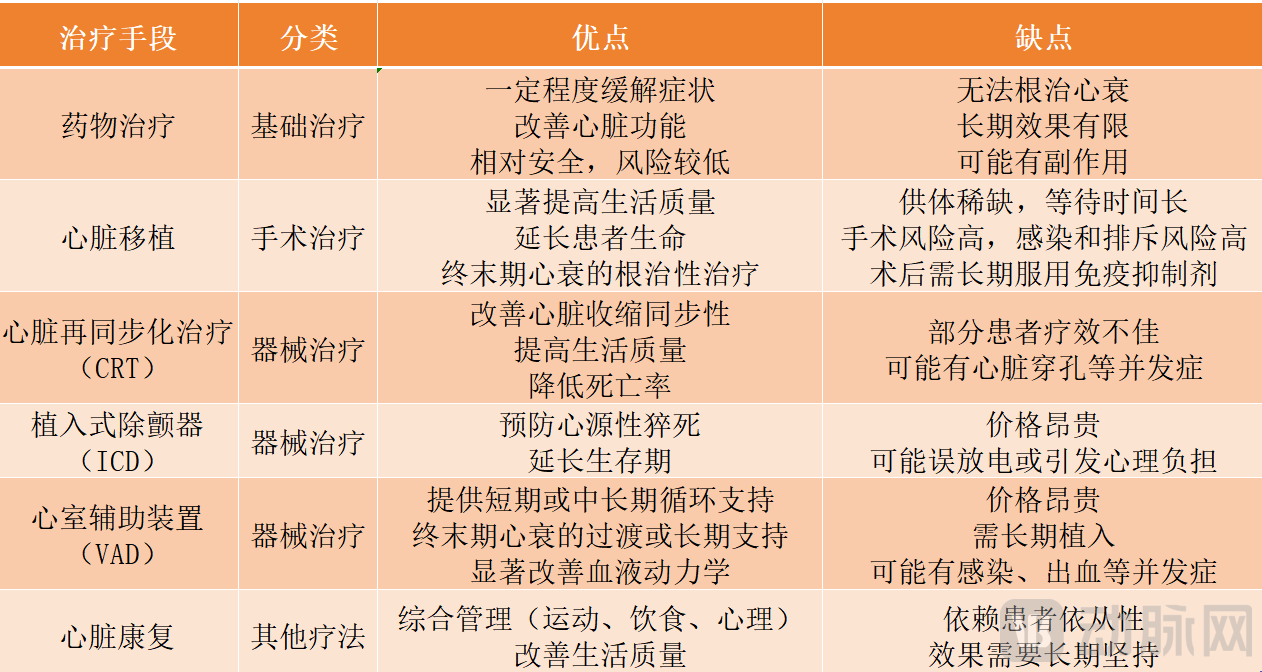
As shown in the table, ventricular assist devices (VADs) have become a key option for end-stage heart failure.
Based on differences in implantation methods and duration of use, ventricular assist devices (VADs) can be classified into implanted, interventional, and extracorporeal VADs. Implanted VADs are typically used for medium- to long-term therapy, whereas interventional and extracorporeal VADs focus more on short-term transitional support.
Among these, the percutaneous ventricular assist device (pVAD) has seen continuous market expansion in recent years, driven by advantages such as minimal invasiveness, fewer complications, and ease of operation.
However, the global population of heart failure patients is substantial. Although existing percutaneous ventricular assist device (pVAD) products have demonstrated certain efficacy, they still exhibit numerous shortcomings. For instance, the duration of use for some products is limited, making it difficult to meet patients’ long-term treatment needs. Additionally, certain pVAD devices face constraints in terms of size and implantation methods, which compromise their clinical effectiveness.
To further address unmet clinical needs in the field of heart failure, Puzzle Medical has entered the market by developing ModulHeart, a novel percutaneously implantable modular cardiac pump.
2Flexible, Minimally Invasive, and Long-Lasting: Five Innovative Designs Improve Treatment Outcomes
ModulHeart is designed to provide long-term hemodynamic support for patients with advanced heart failure. By leveraging interventional minimally invasive techniques and an innovative modular design, it offers a safer therapeutic alternative to heart transplantation, thereby improving treatment outcomes and reducing complications.
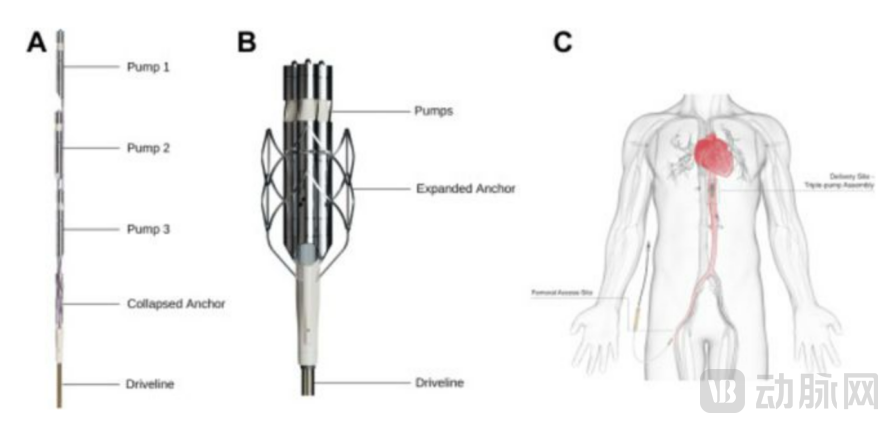 Source: Puzzle Medical Devices Official Website
Flexible implantation methods, safe for long-term use.The device features a modular design that allows for the sequential implantation of pump components via the femoral artery, followed by transcatheter assembly, thereby making the implantation process more flexible and simplified. The device is designed for long-term in vivo implantation, providing patients with a reliable long-term treatment solution.
4 mm pump head, offering superior minimally invasive performance.With a pump head diameter of only 4 mm, it is one of the smallest interventional heart pumps on the market. Implanted via percutaneous puncture, it avoids complex procedures such as open-chest surgery, significantly minimizing physical trauma to patients and reducing surgical risks and the likelihood of postoperative complications.
Parallel multi-pump configuration with low-speed operation.Three vessels are assembled to create a parallel internal pump configuration, enabling multiple pumps to work in synergy. This results in a cumulative blood flow rate higher than that of a single pump, thereby providing more effective hemodynamic support. Each pump operates at a lower rotational speed, minimizing shear-induced damage to blood components caused by high-speed rotation and better preserving blood integrity.
High stability and safety.Anchored within the descending aorta via a self-expanding anchor, ensuring device stability and safety in vivo while mitigating the risk of migration or dislodgement. Meanwhile, the pump head is positioned distal to the cerebral arteries, minimizing impact on cerebral perfusion and reducing the risk of complications such as stroke.
Good portability and monitorability.The controller is designed to be compact and lightweight, facilitating portability for patients and enhancing their flexibility in activities of daily living. It is also equipped with a bedside monitoring station that allows for device programming and monitoring during catheterization laboratory procedures, providing healthcare professionals with real-time data support.
3First-in-Human Trial Achieves 100% Success Rate, Significantly Improving Patient Metrics
Puzzle Medical was co-founded by three entrepreneurs who combine technical expertise with professional proficiency. The core team members possess strong scientific research capabilities and extensive market experience.
From its inception, the company has been fully committed to technological research and development. As early as 2021, Puzzle Medical stood out with its innovative capabilities, earning the FDA’s Breakthrough Device designation for its transcatheter pump, ModulHeart.
In 2022, ModulHeart completed its first-in-human trial, validating its performance in high-risk percutaneous coronary intervention. The findings were presented at the 34th Annual Scientific Sessions of Transcatheter Cardiovascular Therapeutics (TCT) and simultaneously published in JSCAI, the official journal of the Society for Cardiovascular Angiography and Interventions (SCAI).
The study enrolled four patients who underwent high-risk PCI trials with the ModulHeart device implanted via the transfemoral approach.
Trial data demonstrate that ModulHeart exhibits excellent operational performance: the mean delivery time was only 8 minutes, the mean support duration reached 49 minutes, the mean pump removal time was 7 minutes, and the mean pressure gradient across the pump was maintained at 5±2 mmHg.
Notably, this trial achieved a 100% surgical success rate, with all patients surviving during the 30-day observation period.
From a clinical perspective, ModulHeart significantly improved patients' physiological parameters. Cardiac output increased by 25%; urine output rose to nine times the baseline level after 15 minutes of device support; left ventricular end-diastolic pressure decreased by 78%, and central venous pressure dropped by 37%.
Furthermore, no hemolysis, pump thrombosis, device malfunctions, or procedure- or device-related adverse events occurred during the trial, fully demonstrating the safety and efficacy of the device.
This human trial validated that ModulHeart can significantly improve cardiac output, left ventricular end-diastolic pressure, and urine output in patients with heart failure or those undergoing high-risk PCI, providing important clinical evidence for the development of cardiac assist devices and bringing new hope for the treatment of relevant patients.
4The pVAD Market Is Rapidly Expanding, but Product Development Still Needs to Accelerate
According to data from the U.S. market research firm Grand View Research, the global market size for ventricular assist devices was $1.8 billion in 2020, with a projected compound annual growth rate (CAGR) of approximately 17.6% from 2021 to 2028; among these, left ventricular assist devices (LVADs) accounted for a dominant share of 80.5%.
Amid the rapid global growth of the ventricular assist device (VAD) market, percutaneous ventricular assist devices (pVADs), as one of the fastest-growing segments within the heart failure device sector, are emerging as a key driver of clinical adoption. Although they account for a relatively small share of the overall market, their minimally invasive nature, ease of use, and ability to provide immediate hemodynamic support are fueling their expansion.
In the international market, the percutaneous ventricular assist device (pVAD) sector is undergoing rapid iteration, with accelerating technological innovations and product upgrades. Cardiac pump products such as the Impella series and Elevate™ are providing patients with novel therapeutic options. Meanwhile, the domestic pVAD market in China is witnessing a new phase of robust growth, as local enterprises like Tongling Bionics and Fengkaili continue to break through technical barriers and accelerate their product development processes.
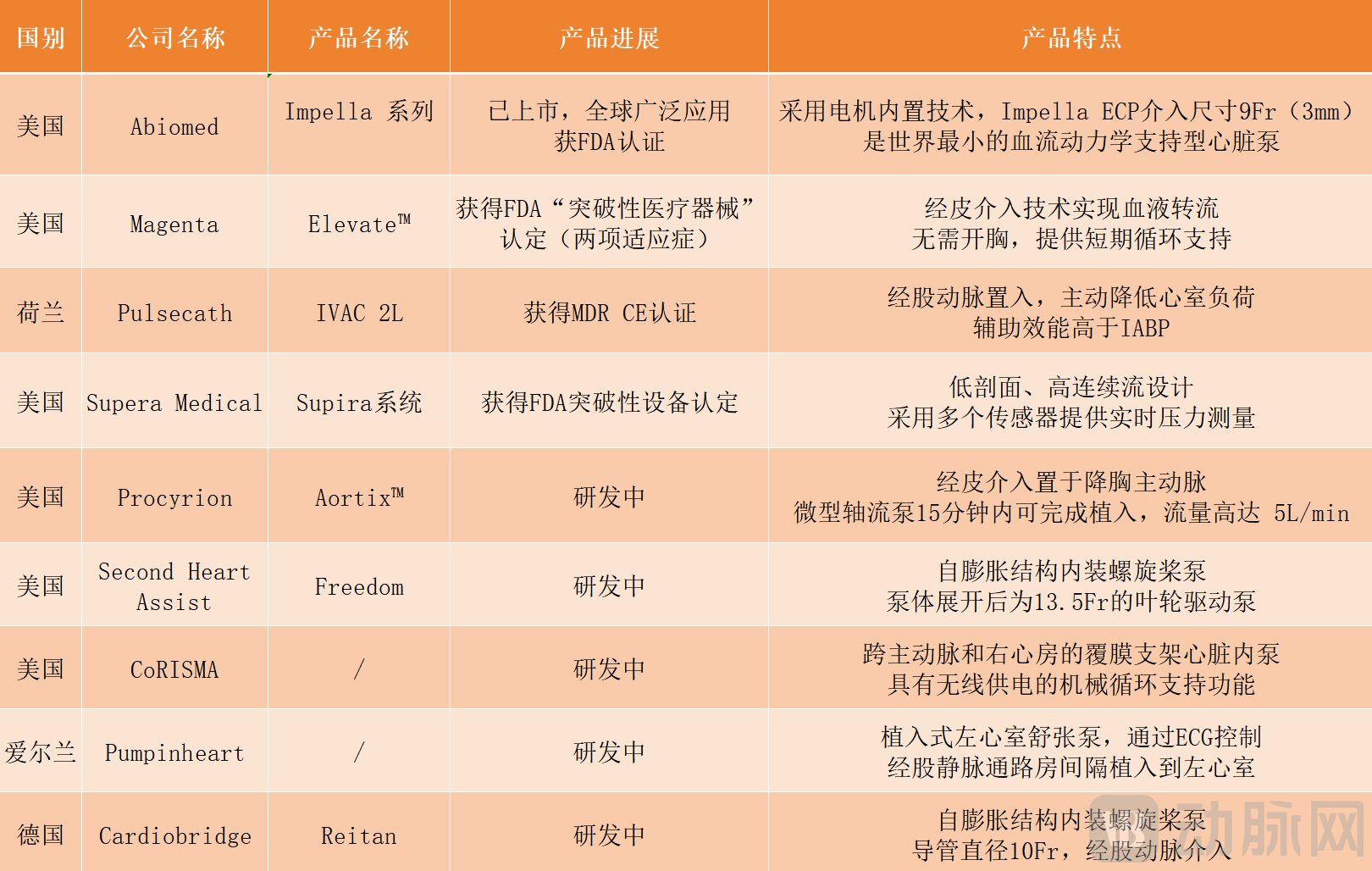 Current Status of pVAD Product R&D in the International Market
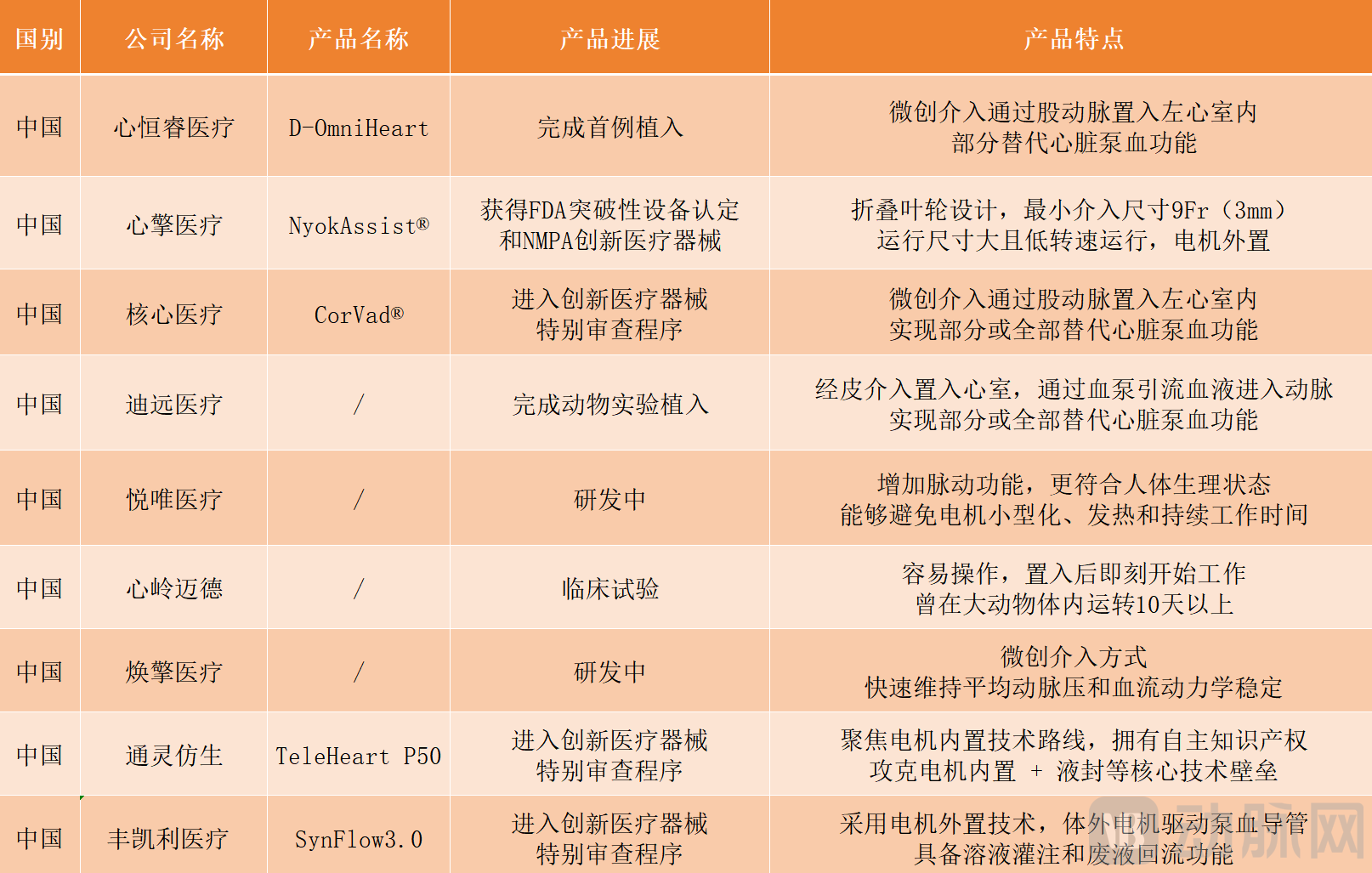
Current Status of pVAD Product R&D in the Domestic Market
Currently, Puzzle Medical has successfully completed multiple rounds of financing, and this CAD 43 million funding round has further injected strong momentum into its development. The ample capital will accelerate the iterative upgrades of its percutaneous heart pump, expand the scale of clinical trials, and generate more robust clinical data to support product commercialization.
As the global population of heart failure patients continues to expand, the market for percutaneous ventricular assist devices (pVADs) presents substantial growth potential. Driven by ongoing advancements in intelligence and miniaturization technologies, will companies specializing in heart failure treatment devices, such as Puzzle Medical Devices, be able to further capitalize on the pVAD market opportunity, accelerate product development and commercialization, and strengthen their strategic presence in the heart failure sector? Only time will tell.
Trial data sourced from the official website of Puzzle Medical Devices.