

Zhongtian Medical Files IPO Prospectus Amid Tariff-Driven Domestic Substitution Surge, Focusing on Clinically Essential Innovations

Zenith Vascular
Cerebrovascular Device R&D and Manufacturer
Recently, tariff policies have become the focus of global attention. After multiple rounds of increases, the U.S. tariff rate on Chinese goods has risen to 145%. On April 11, the Tariff Commission of the State Council issued an announcement raising the additional tariff rate on imported goods originating from the United States to 125%.
The dual convergence of critical clinical necessity and high-end technological barriers has made tariff fluctuations on medical products a focal point of Sino-US strategic competition. As Sino-US strategic rivalry continues to deepen, self-reliance and supply chain security in the healthcare sector have become core national strategic issues. Only by achieving autonomy can one command greater influence.
According to data from China Securities, in 2023, U.S. companies collectively held over 65% of the Chinese market share in the neurointerventional and peripheral intervention sectors. Based on IQVIA data, the market sizes for neurointerventional and peripheral interventions each exceeded RMB 10 billion, indicating that more than half of the procedures in these two major markets rely on supplies from U.S. products.
Against the backdrop of tariff policy adjustments, products with high clinical usage and significant reliance on imports are often the first to be affected. However, amidst the ongoing wave of domestic substitution, products that still exhibit high import dependence are typically those that are more challenging to localize and demand higher standards in terms of performance and quality. On the other hand, the shifts in tariff policies also present a strategic opportunity for domestic manufacturers to tackle these hard-to-crack challenges in import substitution.
Seizing this opportunity, Zenith Vascular is poised to become a leading force in domestic substitution during this window period, leveraging its comprehensive product portfolio, innovative design, and reliable quality.
World’s First: Process Dimension Upgrade
Zenith Vascular™ Braided Microguidewire
In neurointerventional procedures, physicians have begun to express concerns regarding the supply of neurointerventional microguidewires. As critical devices determining the success or failure of these procedures, microguidewires must meet heightened safety and performance standards due to the tortuous and fragile nature of intracranial vessels. They are required to possess sufficient flexibility, excellent maneuverability, and adequate support to facilitate the passage of subsequent devices.
Due to the stringent clinical requirements for product performance, China’s neurointerventional microguidewire market has long relied on imported brands. According to data from the WeChat official account “Yi Xiu Shen Jie Shuo,” one imported brand ships over 300,000 units annually in the Chinese market. However, the current complex international landscape poses severe challenges to the stability of its supply chain.
The R&D of high-performance micro-guidewires faces extremely high technical barriers. One of the core barriers for a certain imported brand’s S-series is its hypotube cutting process. This process ensures the flexibility of the micro-guidewire while achieving 1:1 torque control, enabling physicians to manipulate the guidewire with precision. Furthermore, its patent portfolio covers core designs, further solidifying its market position.
However, there is still room for improvement in hypotube manufacturing processes. Excessive rotation of the guidewire poses a risk of fracture, which, if it occurs, can lead to serious medical incidents.
Among neurointerventional microwires, Zenith Vascular’s Tianzhi™ braided microwire has carved out a unique path; after five years of research and development, this product has become the world’s first braided microwire.Compared with traditional products, the Tianzhi braided micro-guidewire not only achieves 1:1 torque control and superior shape retention, but its performance also rivals that of imported guidewires. More importantly, due to its unique structural design principles, this product completely eliminates the risk of guidewire fracture.
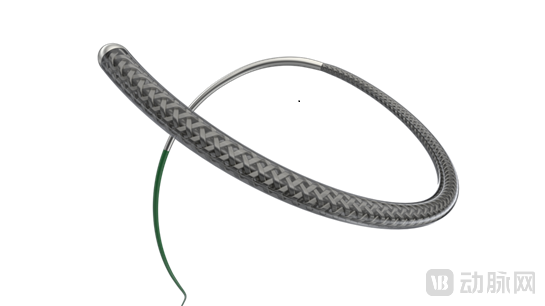
The Zenith Weave™ braided micro-guidewire not only enables import substitution with domestically produced alternatives but also delivers significant performance enhancements. Furthermore, as a product with fully independent intellectual property rights, it is poised to become a true domestically produced alternative in neuro-micro-guidewires, offering safer and more reliable device options for neurointerventional procedures in China.
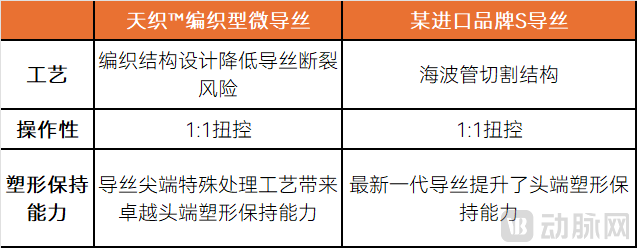
Zenith Vascular Tianzhi™ Micro-Guidewire vs. Features of Imported Brand S Guidewire
As a class of access devices for neurointerventional procedures, high-performance micro-guidewires are witnessing rapidly growing clinical demand, reflecting strong market momentum in the neurointerventional sector and imposing higher requirements on corporate product iteration.By addressing critical gaps in domestically produced medical devices within a highly competitive market, Zenith Vascular leverages its differentiated advantages—comprehensive product solutions and pioneering innovative surgical techniques—to deeply meet clinical needs and lead industry development.

Thrombectomy: The Preferred Domestic Choice
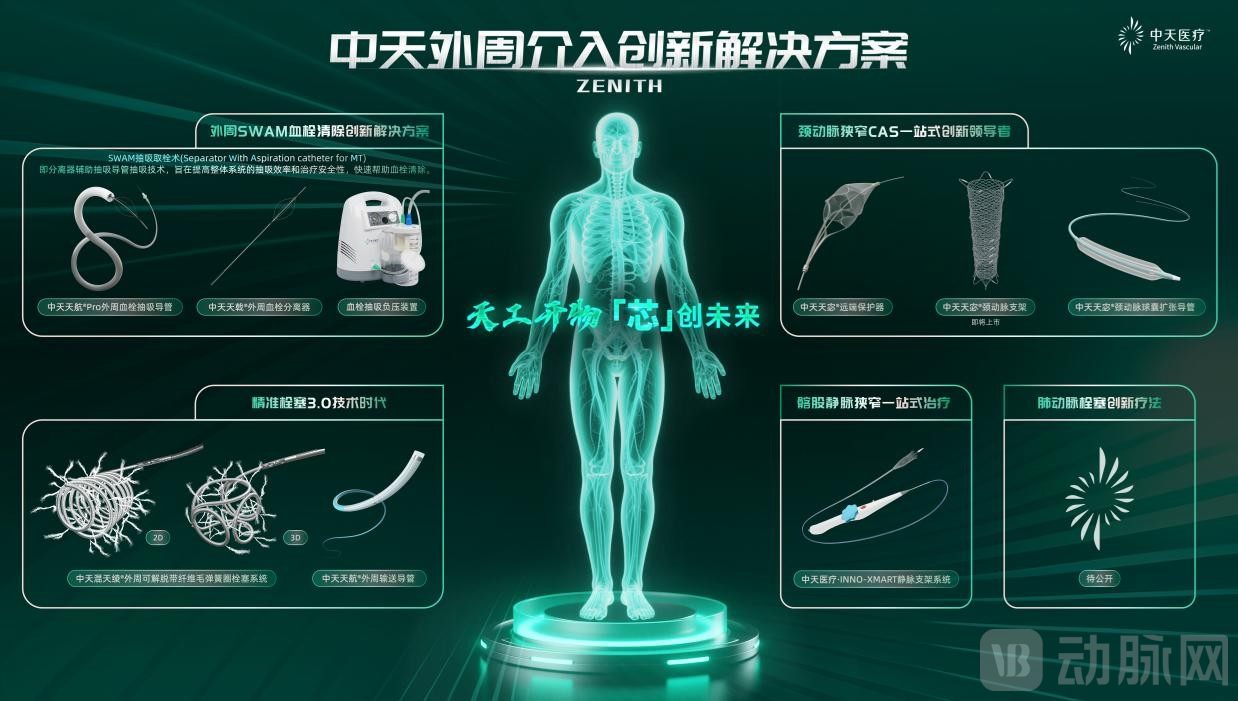
Zenith Vascular’s SWAM Innovative Solution for Peripheral Thrombus Removal
In the peripheral intervention market, key products also rely on imported supply.
The peripheral thrombectomy system market is also dominated by U.S. companies, with an urgent clinical need for safe and effective thrombus removal solutions. According to Frost & Sullivan data, the number of thrombectomy procedures for treating deep vein thrombosis in China is projected to reach 528,000 cases by 2030, representing a compound annual growth rate (CAGR) of 24.4% from 2024 to 2030. Currently, the domestic thrombectomy market is primarily dominated by two major products, Straub and AngioJet, which collectively hold over 50% of the market share.
This field presents high technical barriers, requiring thrombectomy aspiration systems to achieve a balance among catheter trackability, kink resistance, aspiration efficiency, and minimization of blood loss.
In this high-growth procedure, Zenith Vascular has launched the SWAM innovative solution for peripheral thrombus removal (Tianhang Aspiration Catheter + Tianji Peripheral Embolus Removal Device).SWAM integrates the advantages of mechanical thrombectomy and physical aspiration, with its core component, the separator, being a distinctive feature of the system. The Zenith Vascular Tianji Peripheral Embolus Removal Device can efficiently cut and clear thrombi obstructing blood vessels, significantly improving aspiration efficiency, particularly when managing high-thrombus-burden cases.
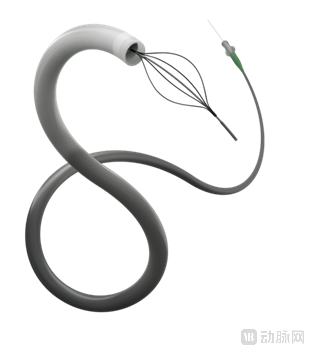
Furthermore, the design of the Tianhang aspiration catheter features several notable highlights. The distal tip offers various aspiration angles, enabling more effective removal of mural thrombi. The catheter adopts a multi-segment structural design, composed of sections with varying hardness (such as a PEBAX distal segment and a rigid proximal segment). This configuration enhances support while maintaining flexibility, facilitating navigation through tortuous vessels or stenotic lesions, and effectively preventing lumen collapse during aspiration, thereby ensuring the stability and efficiency of the procedure.
Fully Controllable, Leading the Market
Zenith Vascular Hun Tian Ling® Peripheral Detachable Fiber-Coated Spring Coil Embolization System
In the field of peripheral interventions, controllable fibered coils remain highly dependent on imports. Coils are used for vascular embolization and are widely applied in peripheral vascular interventions, including: endoleak management in endovascular treatment of abdominal aortic aneurysms, embolization therapy for visceral artery aneurysms, and arteriovenous fistulas.
In the domestic peripheral interventional market, controllable fibered coils are still dominated by imported brands, with semi-controllable products from these imports leading the market. However, imported products have their drawbacks, as their semi-controllable technology carries a risk of unintended detachment during procedures.
A single product dominating the market not only poses a risk of supply disruption, but clinicians also require a fully controllable peripheral coil.
Among domestically produced controllable fibered coils for peripheral use, the Zenith Vascular Huntianling® Peripheral Coil stands out as the preferred choice for domestic substitution. The Zenith Vascular Huntianling® Peripheral Coil enables fully controlled and precise embolization, allowing for multiple retractions and adjustments to achieve accurate positioning and prevent accidental detachment, thereby significantly enhancing the efficacy of precise embolization.
Zenith Vascular’s Detachable Peripheral Fiber-Coated Spring Coil Embolization System achieves precise embolization and safe maneuverability through breakthroughs in three core technologies.First, the innovative mechanically detachable design for controlled and precise embolization features a self-expanding clamp-lock spherical tip, supporting one-click unlocking and retraction. Even after the coil is deployed from the catheter, it can still be adjusted or reshaped, effectively preventing accidental detachment during the procedure. Second, the fibrin-coated design facilitates easier thrombosis, while the fine and smooth fibers significantly reduce delivery resistance. Third, the proprietary high-vacuum heat treatment process ensures the softness of the coils, enhancing operational flexibility and safety.
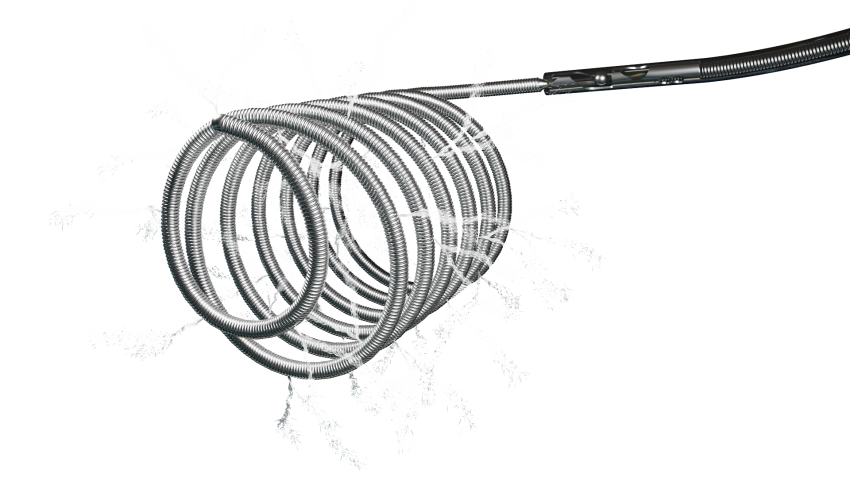
Zenith Vascular’s Huntun Ling® Peripheral Coils have been used in thousands of clinical cases across multiple Grade A tertiary hospitals in China, gaining widespread recognition and paving the way for accelerated large-scale clinical adoption.
With frequent volume-based procurement (VBP) for peripheral interventions and intense market competition, only competitive products can establish a foothold in the peripheral intervention market. Domestic enterprises need to make "additions" in product upgrades while making "subtractions" in their strategic layout, focusing on markets with significant clinical demand and rapid growth. Zenith Vascular has proactively laid out multiple high-barrier, high-clinical-demand products in the field of peripheral interventions, covering various peripheral arterial and venous diseases. Leveraging its leading product development progress, the company has achieved rapid advancement despite entering the market later, quickly gaining a competitive advantage in the peripheral intervention market.
Filling the Domestic Void, Leading with Innovation
Zenith Vascular Tianmi® Carotid Artery Stent
Currently, the remaining challenges in the domestication of the vascular intervention field are all tough nuts to crack, with high demands for differentiation and quality of domestic products.
Taking carotid artery stents as an example, this market currently remains a gap for domestic products. In the process of localizing medical devices, although most categories have achieved full or partial substitution, the field of carotid artery stents still faces a “chokehold” dilemma—no domestically produced products have yet been approved for market launch in China.
Carotid artery stenosis is one of the leading causes of ischemic stroke. The demand for carotid stents is substantial; according to interviews, the annual number of carotid stenting procedures in China exceeds 150,000.
Imported first-generation carotid artery stents are currently among the most widely used products in clinical practice in China. These devices feature large cell sizes, which are associated with a high risk of post-procedural plaque embolization, potentially leading to minor strokes or silent cerebral infarctions, thereby severely compromising patient prognosis.
The imported second-generation product was recently approved. Although it features certain optimizations, it still has shortcomings. The design philosophy of the second-generation carotid stent is to reduce the cell size of the stent mesh, thereby lowering the incidence of postoperative stroke. Imported second-generation carotid stents employ a double-layer stent structure to achieve smaller cells; however, this technical approach inevitably requires the use of delivery catheters with larger diameters, which increases vascular irritation during the procedure. Furthermore, imported second-generation carotid stents generally utilize laser-cutting technology. After deployment in tortuous vessels, stent struts may protrude into the vessel lumen, thereby increasing the risk of thrombosis.
The representative of third-generation carotid artery stents is the Zenith Tianmi® Carotid Stent, a product that has been included in the “Green Channel” for innovative medical devices.
Features of Third-Generation Carotid Artery Stents
In reducing the cell size of carotid artery stents, the Zhongtian Tianmi® Carotid Stent adopts a globally pioneering single-layer micro-mesh hybrid braiding technology. Its cell area is only 1/30th that of traditional laser-cut stents, effectively trapping plaque and significantly lowering the risk of plaque prolapse. Meanwhile, it does not compromise deliverability; it can be delivered via a 5F ultra-slim delivery system (compatible with 6F catheters), enabling flexible multi-access approaches through either the radial or femoral artery, thereby enhancing procedural safety. In terms of manufacturing, Zenith Vascular employs precision braiding techniques to address the vascular irritation caused by laser-engraved stents at vessel curvatures.
This product is not only poised to achieve import substitution but will also introduce an innovative solution to clinical practice, thereby reducing the risk of carotid artery stent supply shortages.
Amid the strategic competition between China and the United States, the race for commanding heights in medical technology has become a key indicator of national comprehensive strength. From neurointerventional to peripheral interventional procedures and carotid artery stents, Zenith Vascular has achieved forward-looking deployment across multiple critical product lines. It pursues differentiated innovation driven by clinical insights rather than mere imitation. This success stems from its tripartite core competitiveness: a technological moat (mastery of underlying technology platforms and independent intellectual property rights), an innovation engine (original innovation capability to overcome “chokepoint” technologies), and value conversion power (the ability to rapidly commercialize innovative products).
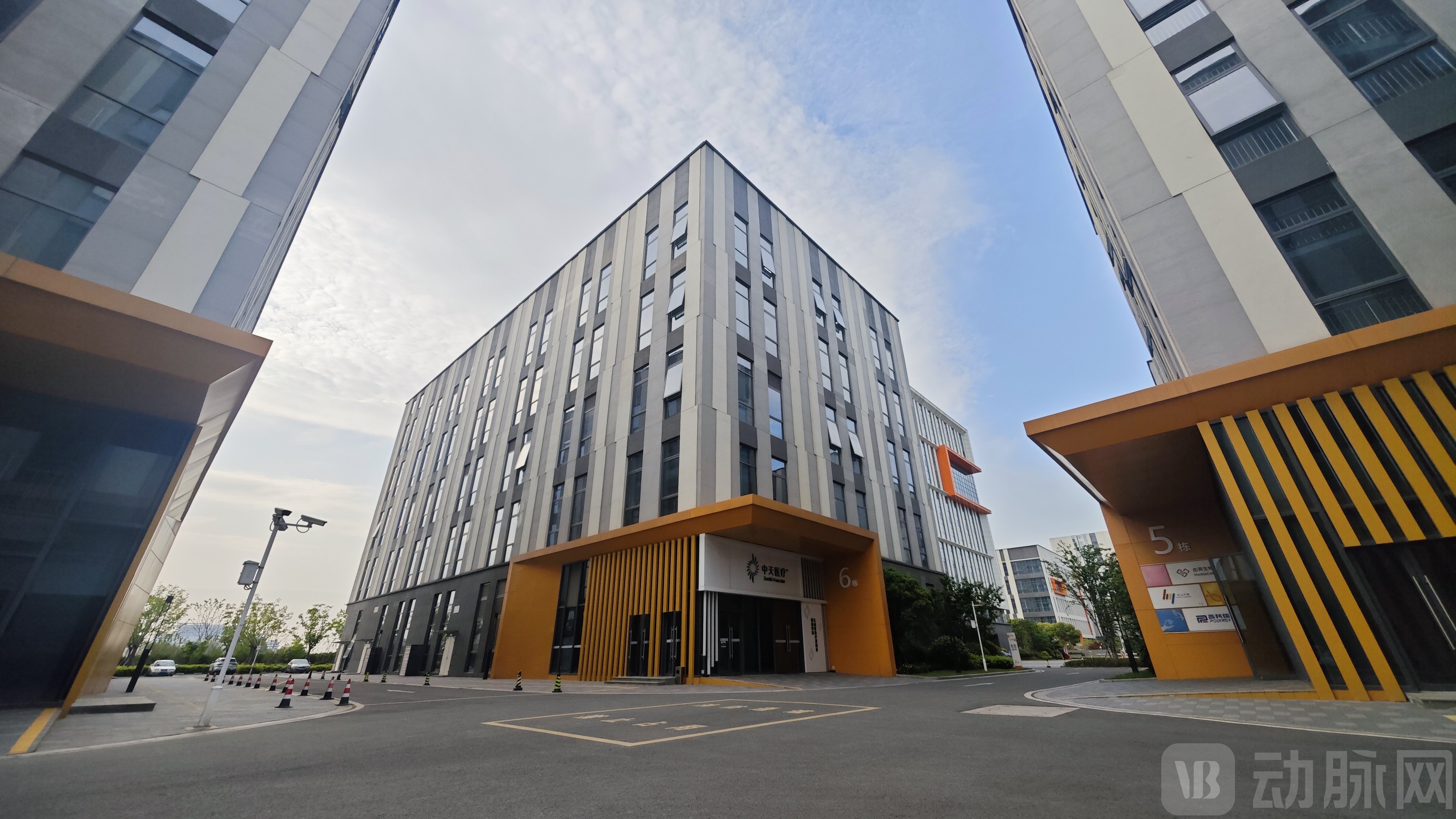
Technological Innovation Holds Great Promise.Zenith Vascular: A Pioneer in the Field of Vascular InterventionIn addition to its robust product capabilities, Zenith Vascular has demonstrated remarkable commercial performance, with annual revenue surpassing RMB 100 million. By examining the key competencies that have enabled Zenith Vascular to transition from technological breakthroughs to industry leadership, it becomes evident that the company has capitalized on multiple growth opportunities. Winning bids in numerous centralized volume-based procurement (VBP) programs has facilitated large-scale hospital adoption and commercialization of its products. Leveraging strong clinical reputation, Zenith Vascular has driven sustained product growth and established a sustainable development model. Through a positive feedback loop encompassing the establishment of technological barriers, economies of scale from VBP, and reinforcement via clinical acclaim, the company has achieved continuous growth, thereby accumulating substantial momentum during the critical window for domestic substitution.