

China Telecom Aba Branch Sets National Benchmark for County-Level Medical Consortium with Rangtang Model
In Rangtang County, Sichuan Province, located in the eastern part of the Qinghai-Tibet Plateau, the vast territory with a sparse population and scarce medical resources have long constrained the development of local healthcare. Across the county’s 6,863 square kilometers, there are only 45,500 permanent residents. The diagnosis and treatment of complex and critical diseases rely on limited offline assistance, while patient referrals are hampered by long distances and difficult travel conditions.
Recently, this predicament has seen a turning point.China Telecom’s Aba Branch achieved seamless integration with the Tibetan Hospital and the Maternal and Child Health Hospital systems by building a county-wide medical information network infrastructure in Rangtang County., extending high-quality medical services to the three sub-center medical facilities in Shangzhai, Nanmuda, and Zhongrangtang, as well as to township health centers, thereby effectively resolving the long-standing challenge of integrating medical resources.
The system has demonstrated significant efficacy.During an on-site visit to the Medical Community Information Platform in Rangtang County, organized and led by the leadership of the Aba Prefectural Committee for the entire prefecture’s health system, the leaders fully affirmed the platform’s practical achievements in integrating medical resources and enhancing the efficiency of primary healthcare services.
Currently,Rangtang County Has Simultaneously Launched the Phase II Construction Plan, and China Telecom’s construction model of “security first, demand-driven, and iterative development,” as well as its system architecture capabilities and the practical application value of its systems, alsoAttracted some districts and counties to proactively inquire about cooperation pathways, and plans to conduct specialized exchanges in Rangtang County in the near future to learn on-site from the “Rangtang Experience” of leveraging informatization to empower the development of medical consortiums.
In 2023, the National Health Commission issued the "Guiding Opinions on Comprehensively Advancing the Construction of Close-knit County-level Medical Communities," proposing to accelerate the development of close-knit county-level medical communities by systematically reshaping the healthcare system and integrating and optimizing healthcare resources, thereby promoting urban-led rural development, township-led village development, and the integration of county and township levels as well as township and village levels.
However, this process is fraught with challenges. Breaking down information barriers between healthcare institutions and achieving resource sharing is an inherently complex endeavor. Healthcare institutions operate like isolated information silos, and enabling data interoperability requires upgrading their information systems in accordance with national standards. The cost of such upgrades for a single county-level hospital can easily reach tens of millions of yuan, far exceeding the financial capacity of county-level institutions.
In view of the current situation, China Telecom's Aba Branch has proposed “Safety First, Demand-Driven, Iterative Development” of the medical consortium solution construction approach, to resolve the challenges of healthcare reform in Rangtang County. How should this be understood?
First, prioritize safety to build a robust data defense line.Establish dedicated data channels connecting county hospitals, township health centers, and the Medical Consortium Information Center via private networks and leased lines; relocate the core data center to telecommunications facilities; deploy security equipment and services in compliance with the National Level 3 Classified Protection standards; implement end-to-end protection spanning physical environments, network transmission, and system applications; and ensure the secure flow of clinical data among institutions such as county hospitals and township health centers.
Second, demand-driven approaches help avoid resource misallocation.In light of the limited funding available for the construction of the medical consortium in Rangtang County, construction content was selected with “business collaboration” as the core focus. Guided by actual needs and tailored to local conditions, solutions were developed accordingly. Focusing on the clinical services actually provided by county-level hospitals and township health centers, priority was given to implementing “essential” applications such as two-way referrals, sharing of clinical data, and regional imaging centers. Meanwhile, a comprehensive regulatory platform for the Health Bureau was established simultaneously to avoid financial waste caused by over-development.
Third, iteratively develop and build a resilient architecture.On the premise of ensuring data security and addressing practical needs, establish a foundational infrastructure for county-level medical data interoperability to achieve seamless data connectivity and business workflow integration between county hospitals and township health centers, thereby enabling region-wide sharing of patients’ electronic health records and laboratory/test results. Subsequently, functions will be gradually expanded in accordance with the needs of local medical institutions. While meeting the current requirements of tiered diagnosis and treatment, this framework reserves room for future upgrades to support integrated medical and preventive care, smart healthcare, and other emerging services.
Three Core Principles Guiding the Development of the Medical Consortium in Rangtang CountyThree core principles have been integrated throughout the entire process of building the medical consortium in Rangtang County. This approach has not only achieved a precise alignment between technological investment and practical effectiveness but also adhered to the policy directive of “scientifically forming medical consortia based on geographical location, service population, and the existing layout of healthcare institutions.” It provides a viable pathway for effectively addressing local challenges such as fragmented medical resources and uneven service capacity.

With the correct development path in place, comprehensive support from robust technical capabilities is also essential. As a technology service provider, China Telecom’s Aba Branch’s practice in Rangtang County is essentially its“Cloud, Network, Data, Intelligence, Security, Quantum, Dataa reflection of the “Zi Platform’s” self-developed integration capabilities.
As early as 2013, China Telecom established a healthcare industry informatization application base to deepen its engagement in the medical sector and expand healthcare IT applications across its provincial branches in all 31 provinces of China. After more than a decade of development, China Telecom Yikang Technology Co., Ltd. (hereinafter referred to as “China Telecom Yikang”) was founded to further strengthen its capabilities in healthcare informatization software services. The company has assembled a professional product research and development team, comprising talents from top domestic and international universities as well as senior experts with over ten years of experience in the digital and intelligent transformation of the health sector. China Telecom Yikang has forged its healthcare informatization“1+2+N” Full-Stack Capabilities, based on China Telecom’s strategic emerging businesses in cloud, network, data, intelligence, security, and quantum technologies, with the addition of"Double Middle-Platform" Capabilities Independently Developed by China Telecom Yikang, ultimately formingA Scenario-Based Application Matrix Covering Four Core Domains: Smart Hospitals, Regional Healthcare, Smart Disease Control and Prevention, and AI+Healthcare。
During the development of the medical community in Rangtang County, it was precisely the synergy between this technical system and the specialized team that facilitated the successful achievement of the county’s medical community construction goals. Based on the current state of medical services in Rangtang County, China Telecom’s Aba Branch has also established a local service team to promptly respond to the needs of various health management teams within the Rangtang County medical community, effectively translating team advantages into tangible value for primary healthcare.
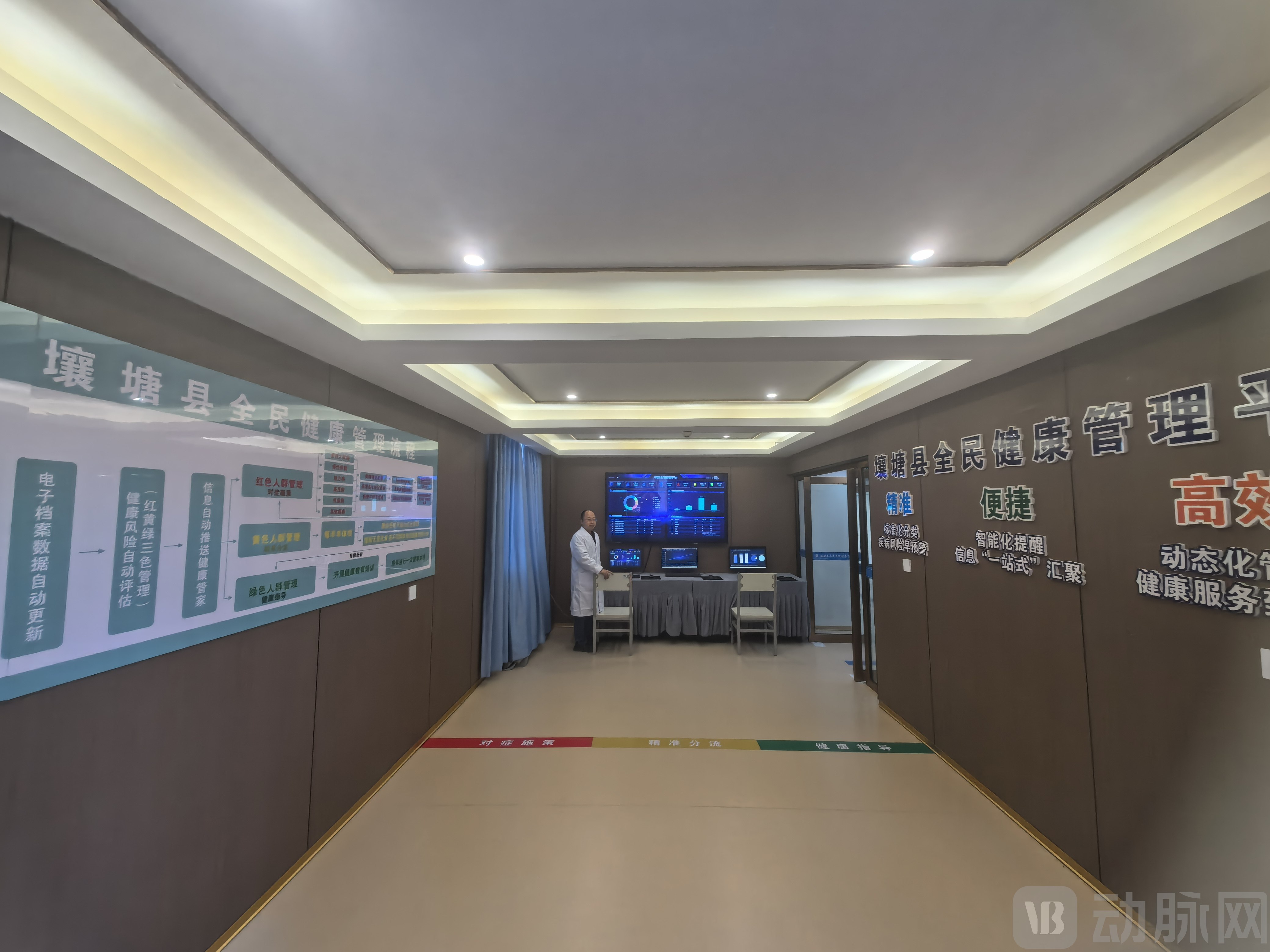
From the perspective of construction effectiveness,Data barriers among local medical institutions have been effectively dismantled. By establishing a unified resource-sharing center and a telemedicine platform, China Telecom Yikang has enabled secure sharing of medical data, comprehensive interoperability of patient diagnosis and treatment information, and mutual recognition of examination and test results. On this foundation, core business scenarios such as remote consultations and two-way referrals have been efficiently implemented, significantly enhancing the overall level of informatization in county-level healthcare.
Following the system’s implementation, the coordination and quality of medical services in Rangtang County have significantly improved. Patients receive coherent and consistent medical care when seeking treatment at different healthcare institutions within the county, thereby alleviating the issue of redundant examinations and diagnoses. Leveraging regional data interoperability, the system provides local farmers and herders with comprehensive, full-cycle health services encompassing disease diagnosis, treatment, rehabilitation, prevention, and healthcare.
The establishment of the Medical Community Information Platform in Rangtang County has undoubtedly become a significant footnote on the map of grassroots medical reform.
This county-wide medical information network has not only achieved data interoperability among the county-level general hospital, the Tibetan Medicine Hospital, and the Maternal and Child Health Hospital, as well as the three secondary medical centers, but also enabled over 40,000 residents of Rangtang County to access full-cycle health management services for the first time. As a result, Ngawa Prefecture has made initial progress in population-wide health management, assistance for disadvantaged patients, service guarantees for special groups, and enhancement of diagnostic and treatment capabilities at grassroots healthcare facilities.
When discussing construction experience, the project leader pointed outThe core of building medical consortiums lies in adhering to a demand-driven development logic, eliminating resource misallocation caused by “building for the sake of building,” and especially strengthening context-specific solution design in ethnic minority regions. These areas generally face practical constraints such as tight construction funding, high costs for information technology adaptation, and the need to improve the digital literacy of grassroots healthcare personnel. Only by addressing local pain points and needs, prioritizing digital connectivity in areas with urgent operational demands, and gradually expanding to in-depth applications can we truly achieve a precise match between technological investment and service effectiveness.
It is reported that China Telecom Yikang will continue to innovate its service mechanisms to enhance the quality and efficiency of tiered diagnosis and treatment. By leveraging technologies such as remote consultations and remote imaging diagnostics, the company aims to explore new pathways for medical services. Capitalizing on the resource advantages of medical consortia, it seeks to develop integrated medical and preventive care solutions with distinct characteristics of China Telecom. Meanwhile, it will deepen the development of four major product systems: smart hospitals, regional healthcare systems, public health systems, and smart medical insurance systems, thereby enabling high-quality medical resources to truly extend from the “cloud” to the “village level.”