

Biolinq Secures Over $140 Million in Funding with Groundbreaking CGM Innovation

Biolinq
Developer of Electronic Sensors for Skin Applications
In April 2025, the continuous glucose monitoring (CGM) sector witnessed a major financing round of $100 million.
U.S. Company Biolinq Announces Completion of $100 Million Series C Funding Round, Led by Alpha Wave Ventures; the CGM Innovator Has Raised Over $200 Million in Total Funding
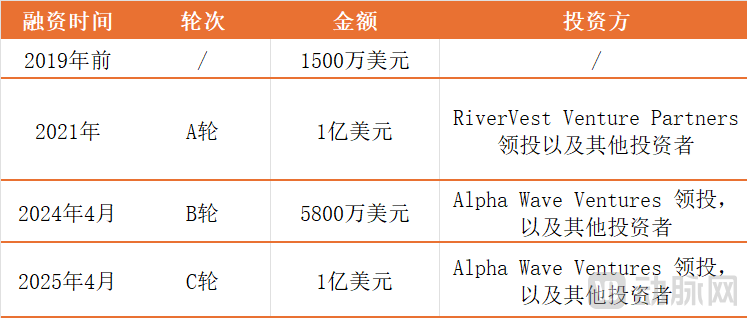
Biolinq Funding History
The global CGM market is dominated by a duopoly of Abbott and Dexcom. Hailed as “the most successful medical device in history,” the combined revenue from CGM products alone for these two companies exceeded $10 billion in 2024 (Abbott: $6.8 billion; Dexcom: $4.023 billion).
The market size created by coin-sized CGM devices has even surpassed that of the massive surgical robotics sector (Intuitive Surgical’s 2024 revenue was $8.35 billion).
In this market with boundless prospects, how will Biolinq challenge the established giants?
Biolinq, based in California, USA, was founded in 2012 (formerly known as Electrozyme), and its core team has been researching biosensor technology for over a decade.
Biolinq’s new CGM is only the size of a coin. It uses an array of dozens of microneedle electrodes, each far less than 1 millimeter in length, to continuously measure glucose in the outer layer of the skin (the dermis). It also tracks sleep and activity data, providing additional insights into users’ metabolic health. Biolinq has also designed a color-changing indicator light to provide real-time feedback on blood glucose changes.
Biolinq’s CGM product is designed for multi-analyte monitoring and is expected to expand to monitor other biomarkers, such as lactate and ketones, which will broaden its appeal in health and wellness applications.
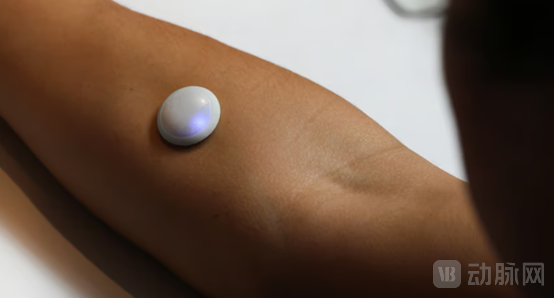
Biolinq Product Schematic
The primary distinction between Biolinq and existing continuous glucose monitoring (CGM) systems is the shallower insertion depth of its probe. Biolinq’s microneedle electrodes penetrate only into the dermis without contacting nerves, thereby ensuring a painless experience. In contrast, traditional CGM probes are longer and flexible, requiring an applicator for rapid and accurate subcutaneous insertion. Meanwhile, Biolinq’s CGM probe is short enough to be installed simply by pressing with a finger.
The skin is divided into three layers: the epidermis, dermis, and subcutaneous tissue. Existing continuous glucose monitoring (CGM) systems use an applicator to insert a soft needle approximately 5 mm deep into the abdomen or the back of the arm to measure fluid in the subcutaneous tissue. Because the subcutaneous tissue is rich in nerve endings, this process can cause slight pain. In contrast, the Biolinq CGM penetrates only into the dermal layer of the skin to measure glucose in the interstitial fluid. Interstitial fluid (ISF) is a major component of extracellular fluid and is abundant in the dermis.
Jared Tangney, CTO of Biolinq, stated: “Beneath the skin lies a capillary bed. Glucose moves from these vessels into skin cells; once it exits the vasculature, it enters the interstitial fluid and then reaches the cells within the skin. Biolinq extracts these molecules to measure glucose concentration in the interstitial fluid. The Biolinq patch uses microsensors to interface with the interstitial fluid, employing a proprietary chemical technology to perform measurements within the skin. It does not penetrate deeply into the subcutaneous tissue where nerves are located, ensuring a completely painless process.”
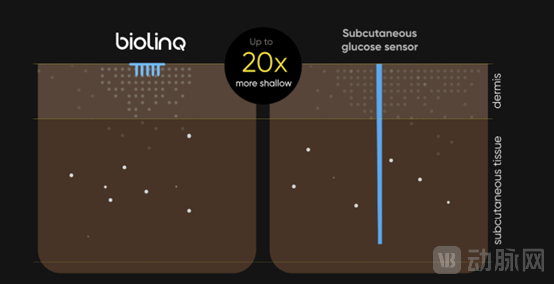
Comparison of Biolinq Measurement Depth with Existing CGMs
Biolinq can measure blood glucose in the dermis, with its core technology being the use of multiple micro-electrochemical sensors.The silicon chip sensor array design in the patch enables redundancy, reliability, and multi-analyte functionality.Electrochemical technology is the core technology of CGM. Through three generations of technological development, CGM has consistently relied on electrochemical reactions by implanting bioenzymes immobilized on sensors into subcutaneous tissue to measure glucose concentration in interstitial fluid. However, Biolinq has not yet disclosed the principles of the electrochemical technology it employs.
As is well known, accuracy is the core competitive advantage of CGM products. Can measuring interstitial fluid in the dermis alone accurately reflect blood glucose changes in real time? Biolinq provided an answer to this question in its early-stage human studies.
Early human studies have demonstrated a high correlation and low lag between glucose concentration in dermal interstitial fluid and blood glucose levels.. Biolinq enrolled a total of 15 participants in its early-stage human clinical studies, including 5 non-diabetic individuals and 10 diabetic patients. The study demonstrated a high correlation between the raw data from the Biolinq sensor and venous blood glucose levels, with negligible lag time, enabling real-time, accurate measurement of blood glucose and providing users with immediate feedback on their glucose levels.
Of course, based on current specifications, Biolinq only supports a 7-day wear time, which is a disadvantage compared to the approximately 14-day wear time of products from Abbott and Dexcom.
Meanwhile, microneedles may also lead to CGM detachment issues. Traditional CGMs use long needles that penetrate deeper into the skin, making them less prone to displacement and subsequent failure. In contrast, microneedles may not provide fixation as effective as that of traditional CGMs, potentially resulting in displacement due to impact and consequent device failure.
Last year, Biolinq secured $58 million in financing. The company stated that it would use these funds to submit an application to the U.S. Food and Drug Administration (FDA) and to complete pivotal clinical trials. Biolinq still needs more data to demonstrate the accuracy and stability of its products before it can effectively compete head-to-head with Abbott and Dexcom.
Although still a startup, Biolinq’s management team boasts an impressive pedigree. Dr. Jared Tangney, the founder of Biolinq, earned his Ph.D. from the University of California, San Diego, and brings ten years of experience in microarray sensor research and development. Most senior executives on the management team have prior experience at Medtronic and Dexcom, with half hailing from Dexcom.
Biolinq’s executive team largely hails from Dexcom, bringing extensive experience in key functional areas such as algorithms, regulatory affairs, sensors, and quality assurance. This deep professional expertise is poised to provide a solid foundation for the successful market launch of Biolinq’s products.
Notably, current CEO Richard Yang previously worked at Dexcom for nearly 10 years. He joined Biolinq in 2020 and brings extensive experience in the field of glucose monitoring, having worked for over 20 years at leading diabetes-related companies such as Medtronic and Dexcom. Mr. Yang brings to Biolinq more than two decades of global experience in medical technology innovation, product development, and commercial strategy.
Biolinq May Benefit from an Executive Team with Dexcom Background.As is well known, Dexcom is a benchmark company in the CGM field. Dexcom’s products have achieved high penetration among patients with type 1 diabetes, offering accuracy that leads contemporary competitors and earning a reputation for precision and stability. The management team’s extensive industry experience may also be one of the reasons why Biolinq continues to attract favor from investment institutions.
Biolinq possesses new technologies accumulated over many years, but as a new entrant, it still faces challenges.
In terms of market positioning, Biolinq primarily targets patients with type 2 diabetes who do not use insulin.This patient population has limited insurance coverage, leading to greater reliance on over-the-counter (OTC) continuous glucose monitoring (CGM) devices. In recent years, Abbott and Dexcom have expressed optimism about the OTC CGM market, with both companies launching OTC CGM products. However, due to the lack of insurance reimbursement, the commercial performance of OTC CGM devices has fallen short of expectations.
Secondly, compared to the prescription market, patient adherence in the over-the-counter CGM market is lower.. The prescription CGM user base typically wears CGM devices on a daily basis, whereas the over-the-counter (OTC) patient population and health-conscious consumers generally use them only a few times per year; consequently, these segments currently contribute limited revenue to CGM manufacturers.
The larger market remains covered by medical insurance reimbursement, but entry into this market is more challenging.
First, CGM devices in the United States are sold through multiple channels, with high barriers to entry for mature distribution channels. U.S. health insurance is categorized into commercial insurance, Medicare (Federal Health Insurance), and Medicaid (Medical Assistance Program). Medicare plays a pivotal role in the CGM market, allowing patients to cover only 20% of the cost through reimbursement.
U.S. Medicare covers patients with type 1 diabetes, those with type 2 diabetes receiving intensive insulin therapy, those with type 2 diabetes treated with basal insulin, and those not using insulin but who have experienced severe hypoglycemic events.
Under U.S. health insurance reimbursement policies, as long as a CGM device has received FDA approval, it will be covered for reimbursement by the Centers for Medicare & Medicaid Services (CMS).However, under Medicare, patients obtain CGM products through two main channels: Durable Medical Equipment (DME) and pharmacies. In terms of revenue from Dexcom’s CGM products, the DME channel is larger in scale, while the pharmacy channel is growing at a faster rate.
Access to these two major channels requires extensive distributor resources.New entrants need to invest substantial time and effort in establishing their own sales channels or competing with existing distributors, which is extremely challenging in a highly competitive market.
In 2024, even industry veterans like Dexcom suffered a major setback in channel management. Dexcom expanded into the high-growth pharmacy channel while neglecting its core Durable Medical Equipment (DME) channel, resulting in a decline in performance.
The second major challenge is the high difficulty in achieving physician penetration.In the promotion of CGM products, physicians play a pivotal role. In the U.S. CGM market, physician key opinion leaders (KOLs) fall into two main categories: endocrinologists with high prescription volumes and primary care physicians. In the United States, most patients with type 1 diabetes are managed by endocrinologists, while the majority of those with type 2 diabetes are treated by primary care physicians.
Physician prescriptions are the key to competing for the U.S. CGM market.Taking Dexcom as an example, CGM prescriptions from US endocrinologists are primarily for Dexcom products, while primary care physicians prescribe Dexcom less frequently. To boost sales, Dexcom began focusing on increasing product penetration among primary care physicians in 2024.
Both endocrinologists and primary care physicians have established strong ties with mature companies. For startups like Biolinq, persuading these specialists to adopt new products also presents challenges.
Of course, the CGM market is still in its early stages of development, leaving ample room for other participants.
The CGM market is fiercely competitive, with major players leveraging years of industry experience to maintain significant advantages over new entrants in cost control, product stability, and channel development.
New entrants can only gain a firm foothold by establishing differentiated advantages. Apart from Biolinq, major global players in the continuous glucose monitoring (CGM) market are pursuing four key directions to build such differentiation: miniaturization, cost reduction, integration with insulin pumps, and multi-parameter monitoring. VCBeat has reviewed the practices of domestic and international companies in these areas.
Integration with Insulin into iCGM for Intelligent Diabetes Management.iCGM can automatically and continuously or frequently measure glucose in interstitial fluid over a specified time period, and reliably and securely transmit blood glucose measurement data to Automated Insulin Delivery (AID) systems, enabling more precise or intelligent management of diseases or conditions related to glycemic control.
China-based Medtrum Technologies is developing an artificial pancreas system, which has been submitted for registration with the National Medical Products Administration (NMPA). The system comprises a continuous glucose monitor, a closed-loop control algorithm, and a patch insulin pump. Under the control of the closed-loop algorithm, the system maximally mimics physiological insulin secretion in healthy individuals, thereby increasing patients’ time in range.
Iterate toward smaller form factors and continuously improve process design.The compact size of CGM devices imposes stringent requirements on sensor dimensions, chip power consumption, and packaging technology. Abbott’s FreeStyle line has consistently reduced its footprint, with the latest FreeStyle Libre 3 achieving a 70% volume reduction compared to its predecessor. In China, Silicon Bio-Mimicry has launched the GS3, featuring an ultra-compact design with a thickness of only 2.9 mm (approximately the size of a small coin) and a weight of just 1.5 grams, delivering a “nearly imperceptible” wearing experience.
Automated Production Lines Reduce Costs, Process Iterations Cut ComponentsCost reduction is also key to the competitive success of CGM products. Initially, the success of Abbott’s FreeStyle system stemmed from its adoption of second-generation wired-enzyme sensor technology, which eliminated the need for platinum electrodes in sensor design, significantly lowering costs and extending product lifespan. Cost reduction is also a focal area being actively explored by domestic companies.
Simultaneously monitor blood glucose, lactate, and ketones to expand into the consumer market.Abbott is developing the Lingo series of consumer biosensing wearables, capable of simultaneously measuring glucose, ketones, and lactate. Biolinq’s product design also aims to measure multiple data points, including lactate and ketones. Abbott has stated that by 2028, users are expected to wake up to an app that recommends personalized breakfast options based on comprehensive monitoring data, current energy needs, and their daily schedule.
Continuous Glucose Monitoring (CGM) has experienced rapid development over the past five years, driven by expanded insurance coverage, leapfrog advancements in CGM products, and extensive market education by industry participants. CGM has also unlocked greater potential for digital health management, indicating a high growth ceiling for the sector. In this vast and open market, companies that possess core technological innovations, cost-effective supply chain advantages, and strong market reputation will be able to maintain their competitive edge in the long run.